
Cute halloween decor keeps the classic spooky shapes and converts them with friendly faces, a softened palette, and soft materials, calibrated to the youngest person in the room.
Cute is not an accident of taste. It is a repeatable system with four levers, and households that learn the levers stop buying random sweet objects and hoping.
The levers also explain the failures. Pastel without Halloween shapes reads as Easter, cute without markers reads as a birthday party, and cheap plush reads as clutter by November.
Timing note, stated plainly: Halloween 2026 has passed. This guide is built for the 2027 season, with Halloween falling on Sunday, October 31, 2027.
The sibling guides on HomeBunks cover the door, the porch, the table, and the vintage register in their own depth, and this guide links them at their decision points.
Cute Halloween Decor in One Line
Definition: cute Halloween decor is the classic catalog of ghosts, pumpkins, bats, and witches, rebuilt with smiling faces, softer colors, and softer materials, so the room celebrates without frightening anyone.
Key takeaways:
- The face rule does most of the work: smiles and rosy cheeks.
- The pastel translation softens color while the shapes stay unmistakably Halloween.
- The softness stack swaps hard, glossy materials for plush, felt, and flannel.
- Age calibration sets the specification: the youngest audience member decides.
The Four Levers at a Glance
Every cute scheme in this guide is set with the same four levers. Change one and the room’s register moves; change all four and even a skeleton behaves.
|
Lever |
The move |
What it fixes |
|
Face |
Add a smile, round the form, add rosy cheeks |
Scariness at the source |
|
Palette |
Soften the colors, keep the shapes |
Harshness and glare |
|
Material |
Swap hard and glossy for soft and matte |
The cold, plastic feel |
|
Age |
Calibrate to the youngest viewer |
Surprises and hazards |
The levers are independent, which is the practical point. A household can run classic orange with smiling faces and stay cute, or pastel with hard materials and land halfway.
Understanding the independence ends most arguments. Partners rarely disagree about Halloween itself; they disagree about one lever, and levers can be split by room or by zone.
The Face Rule: Smiles, Rounds, and Rosy Cheeks
The face rule states the test plainly. A motif is cute when its face is friendly: a smile or a gentle expression, rounded features, and often a blush of color at the cheeks.
Fangs break it. So do hollow staring eyes, realistic skull detail, and gore of any kind. The rule is binary enough to shop by, which is why it leads this guide.
Browsing any retailer’s ghost shelf shows the rule at work. The smiling ghost with rosy cheeks outsells its blank faced twin every season, in every material, at every price.
Faces Children Read First
Young children read faces before objects. A smiling pumpkin registers as a friend; the pumpkin itself is almost incidental to a three year old’s verdict.
Sleepy eyes and surprised little o mouths also pass. The expressions that fail are anger, menace, and the frozen scream, which is why scream faces never appear in cute lines.
Designers of crochet patterns write the rule as specification. One popular garland pattern gives each ghost embroidered sleepy eyes, blush stitched cheeks, and a scalloped hem, cute by construction.
Converting a Face You Already Own
Faces are the cheapest conversion in decorating. A painted smile and two cheek dots turn last year’s plain ghost into this year’s family flagship.
Use paint pens on ceramic and foam, felt cutouts on fabric, and stickers where commitment feels risky. The conversion takes minutes per piece and survives storage.
Test the face at child height, from the doorway, in evening light. Faces that read friendly on a shelf at noon can read hollow at dusk if the eyes are too deep.
The Pastel Translation: Same Shapes, Softer Palette
The pastel translation holds the shapes constant and softens the palette: blush pink, cream, lavender, sage, and soft orange standing in for black, acid orange, and blood red.
The shapes must stay unmistakably Halloween: ghost silhouettes, pumpkins, bats, spiders, and the word boo. Softened shapes plus soft colors is where the season gets lost entirely.
Pink is the translation’s most famous dialect, and it has its own full treatment on this site. That treatment, the pink halloween decor guide, owns the pink palette completely, from blush to fuchsia.
Cute is the wider system around that page: the face and softness rules running on any palette, including palettes with no pink in them at all.
The Palettes That Carry Cute
|
Palette |
Colors |
Best rooms |
|
Pastel core |
Blush, cream, lavender, sage, soft orange |
Living rooms, bedrooms, nurseries |
|
Classic cute |
Orange, white, black accents |
Porches, family rooms |
|
Pastel goth |
Pastel plus black kept in the mix |
Teen rooms, parties |
|
Candy strand |
Bubblegum, sparkle, disco accents |
Parties, playrooms |
Styling guides to the pink shelf mix shades deliberately, running blush through fuchsia with ivory so the palette reads designed rather than accidental. The roundup at the Basic Home DIY pink halloween roundup shows the shelf working piece by piece.
Anchor pastels with a small dose of black: bat silhouettes, lettering, a ribbon. The dark accent is what tells the eye the soft colors are Halloween on purpose.
The grown up styling treatment at the Ashlina Avenue pink halloween styling guide leans on exactly that discipline, pairing rose gold pumpkins and blush garlands with enough classic markers to hold the season.
When Classic Orange Is the Cuter Choice
Pastel is a dialect, not a requirement. Smiling pumpkins in honest orange, with cream textiles and warm light, are cute by the face rule alone.
Orange also solves the matching problem: classic colors coordinate across retailers and years, while pastel shades drift between dye lots and brands.
Choose orange where the house itself is warm (wood, brick, brass) and pastel where the house runs light and cool (white walls, pale floors, gray upholstery).
The Softness Stack: Materials Do Half the Work
Scary decor is hard: glossy plastic, sharp resin, cold metal. Cute decor is soft to the eye before it is soft to the hand, and materials carry that signal.
The stack, in order of impact: plush and velvet figures, felt garlands and banners, flannel and fleece textiles, crochet and knit pieces, then matte painted wood.
Swap materials before swapping motifs. A velvet pumpkin and a felt bat garland convert a mantel faster than any new character purchase, because the room’s texture changes everywhere at once.
The Material Ladder
|
Material |
Cute signal |
Watch for |
|
Plush and velvet |
Strongest; reads cuddly instantly |
Bulk in storage, lint |
|
Felt |
Handmade, warm, flat to store |
Thin felt reads cheap; buy weight |
|
Flannel and fleece |
Cozy textiles, pillows and throws |
Prints can slide juvenile |
|
Crochet and knit |
Heirloom warmth, handmade proof |
Time or price; it is the heirloom tier |
|
Matte wood |
Grown up cute, painted signs and figures |
Gloss finishes undo the softness |
|
Ceramic |
Sweet when faces are right |
Hard; the face must carry it |
The heirloom pole deserves its name. One heirloom pattern, the Crochet Corner ghost and moon garland pattern, builds ghosts in cream yarn with blush moons and sage stars, an object a family keeps for decades.
Craft sits inside the system rather than beside it. Miniature makers at the One Little Project clay pumpkin and ghost tutorial shape polymer clay ghosts and pumpkins at charm scale, faces first, exactly as the rule prescribes.
Textiles: The Fastest Room Conversion
Pillow covers and throw blankets are the highest leverage cute purchases: large, soft, cheap to ship, and flat to store in January.
Ghost print pillow covers and a flannel throw in the palette convert a sofa in five minutes, and the room’s existing furniture never has to move.
Buy covers, not whole pillows, wherever possible. The inserts stay; the season folds into a single drawer, which is the small space strategy in miniature.
Age Calibration: The Youngest Viewer Sets the Spec
Cute decor exists because audiences are mixed. Calibration names the rule: the youngest regular viewer sets the specification for shared spaces, room by room.
|
Audience |
Face rule |
Light |
Materials |
Avoid |
|
Toddler (under 3) |
Biggest smiles, no surprises |
Battery only |
Plush, felt; nothing detachable at reach |
Small parts, cords, real flame, jump anything |
|
Young kid (3 to 6) |
Friendly, slightly silly |
Battery or supervised |
Most of the stack |
Scary sound, sudden movement |
|
Older kid (7 to 12) |
Cute with a spooky edge allowed |
Wider choice |
Wider choice |
Gore; menace at their height |
|
Teen and adult |
Palette led cute, faces optional |
Any |
Ceramic, wood, crochet read grown up |
Anything that reads nursery |
|
Classroom |
Friendly and inclusive |
Battery only |
Paper, felt, decals |
Religious edge, gore, allergens in treats decor |
Battery and flameless light is the standing standard wherever children or fabrics are involved, which in cute decor is nearly everywhere. The glow is the same; the risk profile is not.
Heights matter as much as objects. Keep small parts, button eyes, and cords above toddler reach, and weight porch pieces so small hands cannot pull them down.
The Classroom Rules
Classrooms run the strictest calibration: friendly faces only, no gore, no religious imagery debates, nothing that singles a child out, and decor that survives thirty students.
Paper bats, felt garlands, window decals, and a decorated reading corner carry a classroom completely. Teachers should check school policy first; rules vary and the policy wins.
The classroom is also where cute proves its inclusivity argument: every child can join a friendly Halloween, which is not true of a frightening one.
Room by Room: Cute Doses That Fit the Space
The system lands differently by room. Doses below assume the levers are set; each room then takes its own intensity.
The Porch: Welcome First, Spook Later
The porch is where cute does its public work: signaling to small trick or treaters and their parents that this door is safe and delighted to see them.
Run the door zone fully cute: a friendly doormat, smiling pumpkins, a felt or paper garland, and warm flameless glow. This site’s the halloween door decor guide covers the door itself in full.
Households split between cute and scary use the two zone answer: cute at the door and steps, spookier pieces pushed to the yard’s edge where older kids read them first.
Balloon ghosts and paper lantern ghosts belong to this zone: cheap, huge, unmistakably friendly, and buildable with children in an afternoon.
For the yard beyond the door, the outdoor halloween decor guide and its companion the halloween outdoor decor guide stage the outdoor zones properly. Weather honesty applies: paper and balloons are fair weather pieces.
The full porch composition, doormats to railings, lives in the halloween porch decor guide. Cute porches win their street quietly, by being the door toddlers run toward.
The Mantel and Living Room
The living room carries the fullest scheme: anchor figure, garland, textile layer, and glow, the same four part formula the buying order teaches.
Mantel dose: one anchor piece (a ceramic ghost pair, a velvet pumpkin stack), a felt garland swag, two textile echoes on the sofa, and flameless candles at two heights.
The whole indoor system, room by room, is this site’s the halloween home decor guide. Cute slots into it as the register; the staging discipline is shared.
The Table
Tables take cute concentrated: a pastel runner, smiling pumpkin place markers, candy jars with character lids, and bat napkin folds at child settings.
Fill clear jars with color sorted candy and label them with ghost and pumpkin stickers; the candy becomes decor that depletes gracefully through the month.
The dedicated treatment is this site’s the halloween table decor guide. Keep centerpieces low and flameless; conversation and small elbows both punish tall, lit arrangements.
Kids Rooms and Playrooms
Bedrooms can run cuter than shared rooms: plush ghosts on the bed, a felt garland on the headboard, and prints with friendly witches and smiling moons.
Mind the sleep test: anything in a child’s bedroom must read friendly in the dark at 2 a.m., which is the face rule under its harshest lighting.
Playrooms take the party register: bunting, balloon garlands, the playhouse dressed as a mini haunted cottage with pastel garlands and twinkle lights, all lightweight and safe for play.
Small Spaces and Rentals
Small homes win with flat formats: pillow covers, prints, decals, felt that folds, and one anchor piece rather than a collection.
Window decals and a door wreath give renters a full scheme with zero holes and zero storage. The scheme lives in one box in January, which is the point.
The Conversion Clinic
Three failures account for nearly every cute scheme that disappoints. Each has a named cause and a cheap fix.
The Birthday Slide
Symptom: the room reads as a child’s birthday party. Cause: the Halloween markers got softened along with everything else, leaving pastel and balloons with no season.
Fix: restore one unmistakable marker per surface: a ghost silhouette, black bats, the word boo, a pumpkin shape. Party guides warn about exactly this slide; markers are the season.
The Easter Slide
Symptom: spring. Cause: pastel palette with generic shapes (eggs’ cousins: bunnies, plain florals, soft nothings) and no Halloween silhouettes anywhere.
Fix: the shapes, again. One black bat garland over a pastel mantel ends the argument instantly, because shape carries season and palette only carries register.
The Cheap Plush Problem
Symptom: a pile of thin, shiny plush that reads as clutter. Cause: many low quality pieces bought by count.
Fix: fewer, better pieces: one weighted velvet pumpkin outranks five shiny ones. The heirloom craft tier exists precisely as the antidote, weight and handwork reading as value.
Buying Order and Budgets
Buy in the order the eye reads a room. The order matters more than the budget; a small budget in the right order beats a large one spent randomly.
The Order That Works
- The anchor piece first. One figure or stack in the exact palette; everything else matches it, ending color drift.
- The garland. Felt or crochet; it spans the room’s focal line and sets the softness.
- The textile layer. Covers and a throw in the palette; the fastest whole room change.
- The door kit. Doormat, wreath or sign, and two smiling pumpkins; the public face.
- The glow. Flameless candles and warm fairy lights; always battery where children roam.
Budget Tiers
|
Tier |
Spend pattern |
What carries it |
|
DIY and paper |
Craft supplies, mostly time |
Paper garlands, painted foam pumpkins, balloon ghosts |
|
Mid retail |
Anchor plus textiles plus garland |
Ceramic or velvet anchor, felt garland, covers |
|
Heirloom craft |
Fewer pieces, handmade |
Crochet garlands, quality figures, kept for years |
The DIY outdoor lists price the first tier honestly in effort: paper lantern ghosts and planter pal projects cost little money and a happy afternoon, which for many families is the actual product.
Vintage Companions and Mixed Households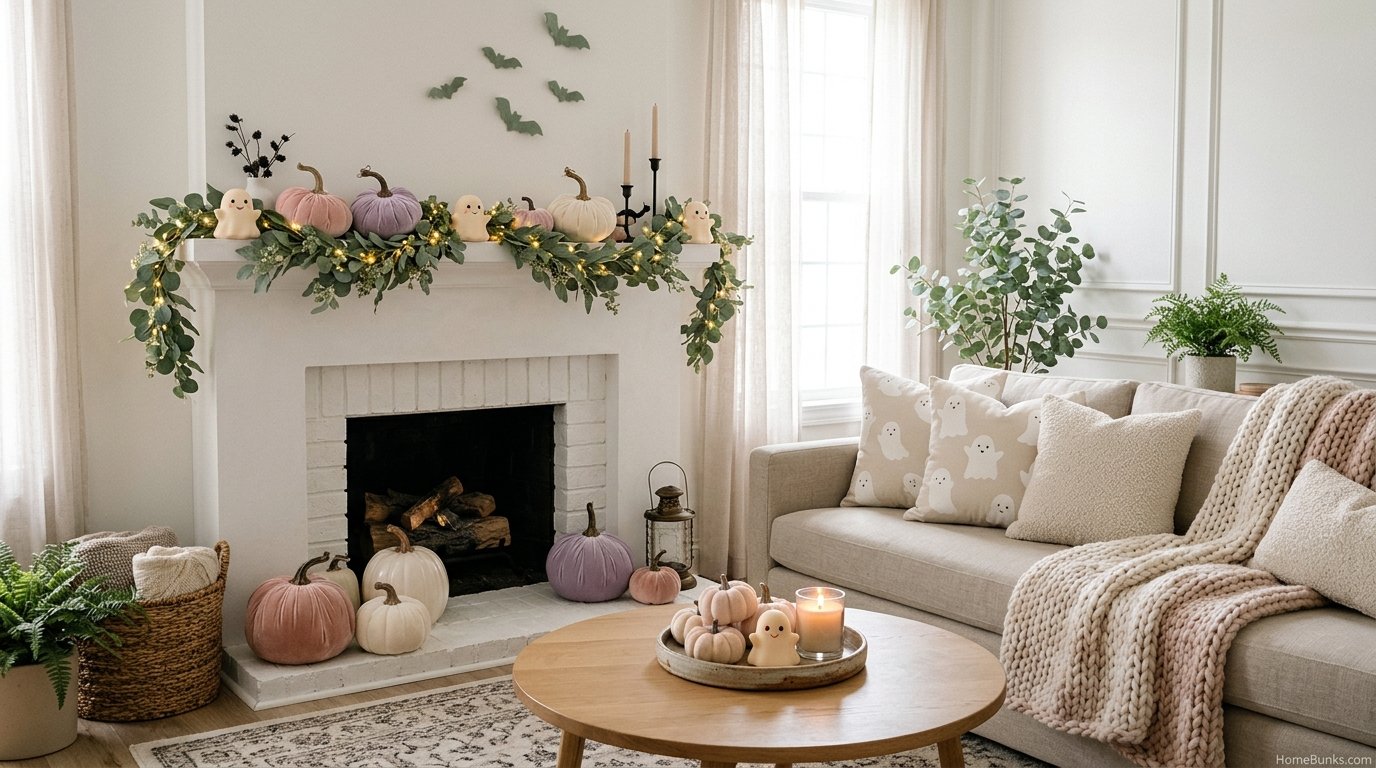
Cute has an older cousin: the vintage register of smiling blow mold style pumpkins and mid century graphics, friendly long before pastel existed.
This site’s the vintage halloween decor guide owns that register. Vintage pieces mix into cute schemes natively, because both registers obey the same face rule across seventy years.
Mixed households split by zone and by room rather than by argument: cute owns the door, the living room, and the children’s rooms; classic and spooky registers take the yard edge and the den.
Storage, Season Length, and the 2027 Calendar
Cute decor earns a longer season than scary decor. It can go up in early September without social friction, where a haunted house front in September reads as a commitment.
Plan the 2027 calendar backwards: shop and craft through summer, scheme built by early September, Halloween on Sunday, October 31, 2027, and the softest pieces (plush pumpkins, cream textiles) bridging into fall hosting afterward.
Storage discipline by material: felt and textiles flat and folded, plush compressed gently in bins, ceramic wrapped as the fragile tier, and the whole scheme ideally in two boxes, labeled with the palette name.
Audit in November while the season is fresh: keep the anchors, donate the tired plush, and note which faces the children loved, because that note is next year’s buying list.
Photograph the finished scheme before teardown, room by room, with one close shot of the mantel and the porch.
Next September’s setup then takes an hour instead of a weekend. The photos double as the shopping list: whatever looks thin in the picture is what the new season’s budget should fix first.
Four Worked Schemes
Systems become real in specific rooms. Four schemes below set the levers four different ways, all recognizably cute, none interchangeable.
Scheme One: The Nursery Soft Living Room
Levers: faces at maximum friendliness, pastel core palette, plush and felt materials, toddler calibration throughout.
Pieces: a cream plush ghost pair on the sofa, a felt garland in blush and sage, velvet pumpkins in cream, battery candles only, nothing small at floor level.
Why it works: every surface a toddler can reach is soft and safe, and the room photographs as calm rather than decorated at. This is the scheme for a first Halloween with a baby.
Scheme Two: The Classic Orange Family Porch
Levers: faces doing all the work, classic palette untouched, mixed materials, young kid calibration.
Pieces: smiling painted pumpkins in honest orange, a friendly doormat, balloon ghosts on fair weekends, warm lantern glow, and black bat cutouts for the marker dose.
Why it works: it proves the guide’s central claim on one porch. No pastel anywhere, and no child has ever been scared of it, because the faces carry the register alone.
Scheme Three: The Pastel Goth Teen Room
Levers: faces subtle, pastel plus black palette, plush and print materials, teen calibration with edge kept.
Pieces: black and blush textiles, a skeleton with a bow, pastel prints with classic markers, purple toned fairy lights, and one or two hard ceramic pieces for the grown up note.
Why it works: the black anchor keeps the scheme moody rather than sweet, which is exactly the register teenagers mean when they ask for cute.
Scheme Four: The Heirloom Handmade Mantel
Levers: faces by hand, cream and sage palette, crochet and wood materials, adult calibration with children visiting.
Pieces: a crocheted ghost garland as the anchor, matte wooden pumpkins, cream candles flameless, dried grasses in a vase, and one vintage smiling piece from the family box if one exists.
Why it works: handwork and weight read as value at a glance, and the mantel survives being looked at closely, which is where cheap schemes fail.
The Cute Test: Five Questions Before You Buy
Every candidate piece gets five questions at the shelf or the screen. A piece that passes four joins the scheme; a piece that passes two goes back, however sweet it looks alone.
- The face question. Is the face friendly at child height in evening light, or only in the product photo?
- The shape question. Would a stranger name the season from this piece alone, with no context around it?
- The softness question. Does the material read soft and matte, or shiny and hard under the room’s real lighting?
- The palette question. Does it match the anchor piece in the hand, not just in the listing’s color name?
- The storage question. Where exactly does it live in January, and does that space actually exist?
The test takes ten seconds per piece once it is habit, and it is the whole guide compressed. Most regret purchases fail question two or question five, season legibility and storage, long before they fail on cuteness.
Run the same five questions over last year’s boxes each September before buying anything new. Households routinely discover a full scheme already owned, missing only an anchor and a garland to feel new again.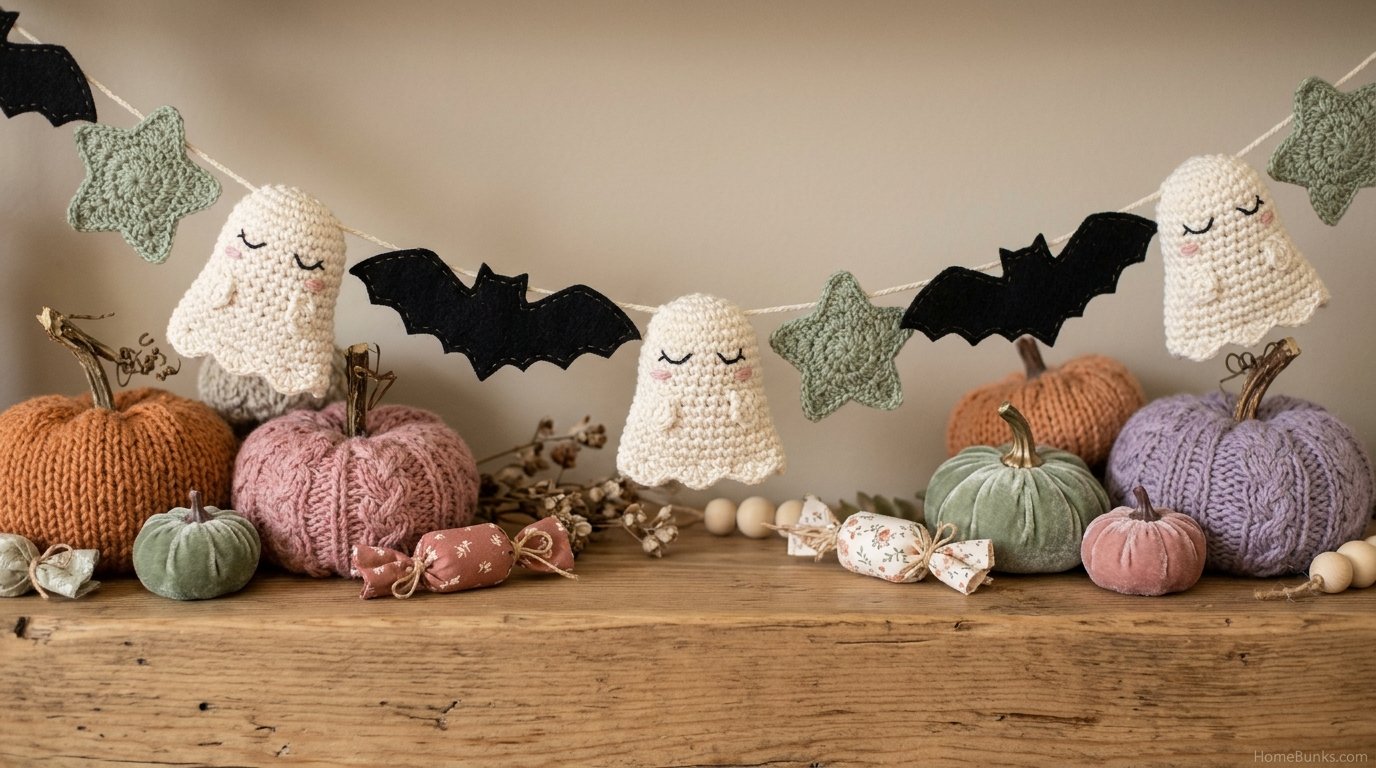
Frequently Asked Questions
1. What is cute Halloween decor?
Cute Halloween decor keeps the classic shapes and changes their treatment. Ghosts, pumpkins, bats, and witches get smiling faces, a softened palette, and soft materials, so the room celebrates without frightening anyone.
2. What is the difference between cute and pink Halloween decor?
Pink is one palette; cute is the whole system. Pink Halloween uses the pink palette only.
Cute runs the face and softness rules on any palette, including classic orange, pastel goth, and cream and sage.
3. How do I make Halloween decor cute instead of scary?
Work the four levers: face, palette, material, age. Add friendly faces, soften the colors, swap hard materials for soft ones, and calibrate to the youngest viewer.
Most scary pieces convert under two of the four.
4. What colors are used in cute Halloween decor?
The pastel core is blush, cream, lavender, sage, and soft orange. Classic cute uses orange and white with black accents.
Anchor pastels with a small dose of black so the season stays legible.
5. What is pastel Halloween?
Pastel Halloween is the palette translation of the classic shapes. The ghosts and pumpkins stay identical while black and acid orange soften into pastels.
It is one dialect of cute, not the whole language.
6. What is kawaii Halloween decor?
Kawaii Halloween imports the Japanese cute aesthetic. Pastel shades, plush characters with silly faces, candy colored ceramics, and paper lantern ghosts.
It is the most character led register of cute decorating.
7. Is cute Halloween decor safe for toddlers?
Yes, with calibration. Choose plush and felt with no detachable parts at toddler reach, battery lights only, no cords across floors, and nothing heavy overhead.
The youngest viewer sets the spec for shared rooms.
8. How can I make a scary decoration cute?
Change its face, its color, or its material. Paint on a smile and rosy cheeks, pastel over the harsh colors, or wrap and soften the hard edges.
Faces convert fastest and cheapest.
9. Why does my pastel Halloween look like Easter?
The shapes went missing. Pastel colors with generic shapes read as spring.
Restore unmistakable Halloween silhouettes: a black bat garland, a ghost shape, a pumpkin.
Shape carries the season; palette carries only the register.
10. Why does my cute Halloween look like a birthday party?
The Halloween markers got softened away. Pastel, balloons, and bunting alone read as a party.
Add one unmistakable marker per surface, a ghost silhouette, black bats, the word boo, or a pumpkin shape.
11. Can adults do cute Halloween without it looking childish?
Yes, through materials and palette discipline. Choose ceramic, matte wood, crochet, and restrained palettes, and let faces be subtle.
Nursery registers come from prints and scale, not from cute itself.
12. What are the best cute Halloween decorations for a porch?
A friendly doormat, smiling pumpkins, and warm flameless glow. Add a felt or paper garland at the door and keep sound and movement gentle.
The porch’s job is to welcome the smallest visitors first.
13. How do I welcome little trick or treaters without scaring them?
Signal safety early and clearly. Bright warm light, visible smiling faces at child height, a clear path, and no jump scares or sudden sounds.
Toddlers read faces first, so friendly faces at their height matter most.
14. Can I mix cute and scary Halloween decor?
Yes, by zones. Put cute at the door, the steps, and the children’s rooms, and push spookier pieces to the yard’s edge.
Mixed households split by zone far better than by argument.
15. What are cute no carve pumpkin ideas?
Paint, decals, and googly eyes lead the list. Painted smiling faces, ghost faces on white pumpkins, planter pumpkins with flowers, and clay or sticker characters.
No sharp tools, and the pumpkins last longer uncut.
16. What cute Halloween decor works in a small apartment?
Use flat formats: covers, prints, decals, and felt. One anchor piece, a garland, and pillow covers give a full scheme that stores in a single box.
Window decals and a door wreath need no holes.
17. Cute Halloween decor for a classroom, what is allowed?
Friendly faces only, under school policy. Paper bats, felt garlands, window decals, and a reading corner work almost everywhere.
Check your school’s rules first; they vary, and the policy always wins.
18. What is the softness stack in cute decorating?
The softness stack is the material method. Swap hard, glossy, sharp materials for plush, velvet, felt, flannel, and crochet.
Softness is a material property, and swapping materials converts half the classic catalog by itself.
19. Plush or ceramic Halloween figures, which is better?
It depends on the audience. Plush is toddler safe, cuddly, and quiet, but bulky to store and quick to look tired.
Ceramic reads grown up and lasts for years, but it is hard, heavy, and breakable.
20. How do I do a cute Halloween mantel?
Anchor, garland, textiles, glow. One anchor figure or pumpkin stack, a felt garland swag, two textile echoes on the sofa, and flameless candles at two heights.
That four part dose carries most mantels.
21. What cute Halloween decor can kids help make?
Paper garlands, painted pumpkins, and balloon ghosts. Add paper lantern ghosts with battery tea lights and no carve pumpkin decorating.
Supervise small parts and paints by age, and let children place the finished pieces.
22. When should I decorate for Halloween 2027?
For Halloween 2027, build by early September. Halloween falls on Sunday, October 31, 2027.
Shop and craft through summer, because cute decor can go up in early September without the haunted house commitment.
23. How long can cute Halloween decor stay up?
Longer than scary decor. Cute schemes commonly run early September through Halloween, and the softest pieces, plush pumpkins and cream textiles, bridge into fall hosting afterward.
Nothing about a smiling pumpkin expires on November first.
24. Is cute Halloween decor just for kids?
No, it is a register, not an age. Adults run it through ceramic, wood, crochet, and palette discipline.
The spooky cute aesthetic is a grown up social trend as much as a family one.
25. What Halloween motifs work best cute?
Ghosts and pumpkins lead, then bats and friendly witches. Black cats and even spiders convert well with plush bodies and googly eyes.
Ghosts carry cute best because the shape is pure silhouette and the face decides everything.
26. Can a skeleton be cute?
Yes, with a smile and softening. Smiling skull faces, bows and hats, humorous poses, and pastel or cream coloring convert skeletons.
Realistic bone detail and menace poses are what break the rule, not the skeleton itself.
27. Can spiders be cute?
Yes, as plush pom pom bodies with googly eyes. Round the body, soften the legs, give it a silly face, and pink or pastel strands help.
Spiders fail cute only when they are realistic and large.
28. What lighting suits cute Halloween decor?
Warm and flameless. Battery candles, warm fairy lights, and lantern glows suit cute rooms and satisfy the safety standard around children and fabrics.
Harsh white and strobing lights belong to the scary register.
29. How do I store plush Halloween decor?
Flat where possible, gentle compression for plush. Fold felt and textiles flat, store plush in bins without crushing faces, wrap ceramic separately, and label boxes by palette.
Two boxes is a realistic target for a full scheme.
30. Cute Halloween decor on a budget, where do I start?
Start with paper and paint. Paper garlands, painted foam pumpkins, balloon ghosts, and pillow covers deliver the system at craft supply prices.
Buy the anchor piece only when a bargain appears; the levers matter more than the objects.
31. What is the anchor piece in a cute Halloween scheme?
The anchor is the piece everything matches. One figure or pumpkin stack in the exact palette, bought first.
It ends cross retailer color drift, because every later purchase is matched against it physically.
32. Does cute Halloween work with classic orange?
Yes, faces carry it. Smiling pumpkins in honest orange with cream textiles and warm light are cute by the face rule alone.
Pastel is a dialect of cute, not a requirement for it.
33. What do I do if my partner wants scary and I want cute?
Split by zone, not by vote. Cute owns the door, the living room, and the children’s rooms; spooky takes the yard edge and the den.
Most couples disagree about one lever, and levers split cleanly by space.
34. Cute Halloween table decor ideas?
A pastel runner, smiling place markers, and candy jars. Add bat napkin folds at child settings and keep centerpieces low and flameless.
Color sorted candy in labeled jars works as decor that depletes gracefully.
35. What about a cute Halloween tree?
Yes, as a white or flocked tree with ghost ornaments. Add pastel pumpkins at the base and soft ribbons.
The Halloween tree suits the candy and pastel goth registers best and photographs beautifully.
36. How do I make a cute Halloween playhouse or kids corner?
Dress it as a mini haunted cottage, lightly. Pastel garlands, pink pumpkins, soft cobwebs, and twinkle lights, all lightweight and safe for play.
Keep pieces off the play floor and out of toddler reach.
37. Are balloon ghosts a good idea?
Yes, for fair weather and short runs. Balloons with tulle and drawn faces are cheap, huge, and unmistakably friendly, and children can help build them.
Bring them in overnight; sun and wind shorten their lives quickly.
38. What cute Halloween decor works outdoors in weather?
Choose shielded spots and tougher materials. Ceramic, wood, and weighted pieces survive porches; paper and balloons are fair weather only.
Check pieces after storms, and retire anything waterlogged rather than drying it into mildew.
39. How do I keep cute decor from looking cheap?
Buy fewer, better pieces. One weighted velvet pumpkin outranks five shiny ones.
Weight, matte finishes, and handwork read as value; thin felt and glossy plush read as clutter by the second week.
40. Can cute Halloween decor work in a modern home?
Yes, modern homes suit it well. Restrained palettes, matte wood, ceramic, and two or three pieces per room fit minimalist interiors.
Cute at low dose reads as intentional design rather than seasonal clutter.
41. What is a spooky cute aesthetic?
Spooky cute is the aesthetic’s social name. Classic spooky shapes rendered friendly: smiling ghosts, pastel palettes, soft textures, and a little black kept for edge.
It spans family homes, parties, and grown up pastel goth rooms.
42. Where do I buy cute Halloween decor for 2027?
Shop the anchor early in the 2027 season. Craft and handmade marketplaces carry the heirloom tier year round; big retailers stock cute lines from late summer.
Buy the palette anchor first, whenever it appears, and match the rest to it.
Conclusion
Cute halloween decor holds together when the four levers are set deliberately: friendly faces on the classic shapes, a palette chosen rather than inherited, soft materials doing half the work, and the youngest viewer setting the spec.
Start with the anchor piece and the face rule, and let pink be one palette among several rather than the definition. Set the scheme by early September 2027 and it will carry the house, and its smallest visitors, all the way to Halloween night.
Keep the audit habit each November and the scheme compounds: anchors stay, tired plush leaves, and one or two better pieces join each year.
Within three seasons the house owns a cute halloween decor collection with a memory attached to every piece, which no single shopping trip can buy.


