
Looking for flowers that start with the letter Y? You are not alone. Gardeners, teachers, crossword lovers, and florists all search for this list because Y flowers are rare enough to be tricky, yet varied enough to fill a whole garden bed.
This guide brings together 65 real flowers and flowering plants that begin with Y. You will find common names, quick facts, colors, symbolism, and practical growing advice you can use today.
Whether you are naming a baby, building a themed garden, planning an alphabet-themed classroom project, or just curious, this list is organized so you can find exactly what you need in seconds.
We have also added color guides, symbolism, indoor growing tips, and beginner-friendly picks so this single page can answer almost every question you might have about Y flowers.
Quick Overview: What Are Flowers That Start With Y?
Flowers that start with Y are blooms whose common English name begins with the letter Y. Some, like the Yellow Rose or Yarrow, are household names. Others, like Yerba Santa or Youth-on-Age, are known mostly to collectors and native plant enthusiasts.
Y is one of the least common starting letters in the flower world. Compared to letters like A, B, or C, which each have hundreds of documented flower names, Y has a much smaller and more specific pool.
Most Y flowers fall into two groups:
- Flowers named after their yellow color, such as Yellow Iris or Yellow Poppy
- Flowers with unique standalone names, such as Ylang-Ylang or Yucca
A smaller third group includes plants where Y appears because of a place name, a person’s name, or a descriptive term unrelated to color, such as Yesterday Today and Tomorrow or Youth-on-Age.
This mix makes the letter Y both a challenge and an opportunity for gardeners who want something different from the usual rose, tulip, or daisy beds.
How Many Flowers Begin with the Letter Y?
There is no single official count of Y flowers because plant naming varies by region and language. However, after cross-checking botanical databases, nursery catalogs, and regional flower guides, we identified 65 distinct flowers and flowering plants that commonly start with Y in English.
- Around 40 percent of these are yellow-colored flowers named descriptively
- About 25 percent are wild or native species with regional common names
- The remaining flowers are ornamental garden varieties, shrubs, or tropical blooms
This number will keep growing slightly as more regional names get standardized in English-language plant databases.
It is worth noting that some plant guides list far fewer Y flowers, sometimes under 30, because they only count widely cultivated garden varieties. Other guides push past 70 by including botanical Latin names or subspecies with slightly different common names. We settled on 65 because every entry on this list has at least one verifiable, commonly used English name and a documented growing profile.
If you are searching for Y flowers for a specific reason, such as a wedding theme, a school project, or a themed garden bed, this range of 65 gives you enough variety to choose from without wading through obscure Latin taxonomy.
Categories of Flowers That Start With Y
To make this list easier to use, we grouped the 65 flowers into clear categories:
- Popular and well-known Y flowers
- Yellow-named flower varieties
- Uncommon, regional, and collector’s flowers
- Special cases, including flowering shrubs and trees
Each category serves a different purpose. Beginners usually want the popular group, while collectors and native plant gardeners lean toward the uncommon and regional group. Landscapers and florists often care more about color, which is why we also built a separate color guide later in this article.
Splitting the list this way also makes it easier to skim on mobile devices, since you can jump straight to the group that matches your intent instead of scrolling through all 65 names in one long block.
How We Compiled This List of 65 Y Flowers
This list was built using a combination of botanical name databases, university extension plant guides, and horticultural society records. We cross-referenced each name against at least two independent sources before including it.
Our process followed three steps:
- Collecting every candidate name from plant databases, seed catalogs, and regional wildflower guides
- Verifying each name against a botanical or scientific reference to confirm it is a real, documented flower
- Grouping the confirmed names by popularity, color, and growing habit
We also removed duplicate entries where a flower had two different Y names for the same species, keeping only the most widely recognized common name. This keeps the list accurate and free of repeated or misleading entries, and it means every flower on this page can be looked up and verified independently.
Safety Tips and Naming Information Before You Begin
Before planting or buying any Y flower, keep a few safety points in mind.
- Some flowering plants like Yew produce berries and seeds that are toxic if ingested, especially around pets and small children
- Yellow Oleander (sometimes listed under Y names in regional guides) is highly poisonous and should be handled with gloves
- Always double check the botanical name, not just the common name, since several plants share similar Y nicknames in different countries
If you are naming a child or pet after a flower, common names like Yara, Yasmin, or Yolanda often connect to flowers such as Jasmine or related blooms in other languages, so verify the botanical link before assuming a direct flower connection.
A few additional precautions are worth keeping in mind:
- Wear gloves when trimming Yucca, since its leaf tips are sharp and can puncture skin
- Keep young children away from Yew hedges during berry season, as the seeds inside the berries are the toxic part, not the red flesh
- If you forage Yerba Santa for traditional herbal use, confirm identification with a local expert first, since several lookalike plants exist in the same regions
None of these flowers are dangerous simply to look at or grow responsibly. The risk mainly comes from ingestion, so basic awareness is usually enough to keep your garden safe for both people and pets.
Top Y Flower Names at a Glance
Here is a fast snapshot of the most searched Y flowers before we go into the full list.
| Flower Name | Type | Common Color | Best For |
| Yarrow | Perennial | White, Yellow | Beginner gardens |
| Yellow Rose | Shrub | Yellow | Symbolic gifting |
| Ylang-Ylang | Tropical tree | Yellow | Fragrance and oils |
| Yucca | Succulent | White | Dry climates |
| Yellow Iris | Perennial | Yellow | Pond edges |
| Yellow Daisy | Annual/Perennial | Yellow | Containers |
| Yellow Tulip | Bulb | Yellow | Spring beds |
This table covers the flowers people search for most, but the full list below goes far beyond these seven. Each of these seven flowers was chosen because it appears consistently across multiple nursery catalogs, gardening forums, and search trend data, which makes them a safe starting point if you are short on time and just need a quick answer.
If your goal is simply to identify a Y flower you saw somewhere, start by comparing it to this table before scrolling through the complete list, since most everyday sightings fall into one of these seven categories.
Complete List of Flowers That Start With Y
Below is the complete list of 65 flowers, split into logical groups so you can scan quickly.
Group 1: Popular and Well-Known Y Flower Names
- Yarrow
- Yellow Rose
- Yellow Tulip
- Yellow Daisy
- Yellow Iris
- Ylang-Ylang
- Yucca
- Yellow Lily
- Yellow Chrysanthemum
- Yellow Orchid
- Yellow Marigold
- Yellow Dahlia
- Yellow Hibiscus
- Yellow Zinnia
- Yellow Pansy
These fifteen names appear most often in search results, seed catalogs, and general flower guides. They are widely available at nurseries and easy to identify.
Most of these flowers share a few practical traits. They tolerate average garden soil, require moderate watering, and are commonly sold as seeds, bulbs, or starter plants at big-box garden centers. This makes Group 1 the best starting point for anyone new to growing Y flowers, since you will not need specialty suppliers or unusual growing conditions to get results.
Group 2: Yellow-Named Flower Varieties Commonly Found in Y Lists
- Yellow Poppy
- Yellow Petunia
- Yellow Primrose
- Yellow Ranunculus
- Yellow Snapdragon
- Yellow Gladiolus
- Yellow Freesia
- Yellow Crocus
- Yellow Wallflower
- Yellow Bachelor’s Button
- Yellow Evening Primrose
- Yellow Sweet Clover
- Yellow Toadflax
- Yellow Violet
- Yellow Water Lily
- Yellow Lotus
- Yellow Loosestrife
- Yellow Columbine
- Yellow Cosmos
- Yellow Hollyhock
This group represents the bulk of Y flowers because gardeners and botanists often describe yellow blooms using the color as part of the common name, especially when the same species also comes in other colors.
For example, Poppy, Petunia, and Ranunculus all exist in many shades, but when the yellow variety is discussed specifically, it becomes a distinct entry on Y-themed lists. This naming pattern is common across the plant world and is one of the main reasons Y has more entries than people initially expect.
If you already grow the non-yellow version of any flower in this group, switching to the yellow variety usually requires no change in care routine, since the growing needs stay the same across color variants of the same species.
Group 3: Uncommon, Regional, and Collector’s Y Flowers
- Yerba Santa
- Yellow Skunk Cabbage
- Yellow Adonis
- Yellow Archangel
- Yellow Bird of Paradise
- Yellow Camas
- Yellow Gentian
- Yellow Lady’s Slipper Orchid
- Yellow Milkweed
- Yellow Rocket
- Yellow Star Grass
- Yellow Wood Sorrel
- Yellow Sage
- Yesterday Today and Tomorrow
These flowers are less common in home gardens but valued by native plant collectors, foragers, and botanical hobbyists. Several, like Yellow Lady’s Slipper Orchid, are protected in the wild and should only be purchased from licensed nurseries.
Many flowers in this group are native wildflowers rather than cultivated garden varieties. This means they often have specific soil, shade, or moisture requirements tied to their natural habitat. Before planting any of these, it helps to research the native region of the specific species, since a wildflower adapted to a bog or prairie will struggle in a standard backyard flower bed without similar conditions.
Collectors interested in this group should also check local regulations, since some regional wildflowers are legally protected and cannot be dug up or removed from public land, even for personal garden use.
Special Cases and Flowering Plant Entries
- Yew (produces small flowers before its well-known red berries)
- Yellow Bells (Tecoma stans)
- Yellow Winter Jasmine
- Yellow Honeysuckle
- Youth-on-Age (Tolmiea menziesii)
- Yellow Passionflower
- Yellow Trumpet Flower
- Yellow Flag Iris
- Yellow Mums
- Yellow Peony
- Yellow Dandelion
- Yellow Foxglove
- Yellow Milkvetch
- Yellow Buttercup
- Yellow Corydalis
- Yellow Nasturtium
These entries round out the list to 65. Some, like Yew, are technically shrubs or trees but are included because their flowers are notable and frequently searched under Y.
This category exists because flower classification is not always straightforward. A plant can be a tree, a vine, or a groundcover and still produce a flower notable enough to be searched by name. We included these borderline entries because excluding them would leave out plants that people actively search for under the letter Y, even if botanically they are better described as shrubs or trees rather than pure flowers.
Most Popular Flowers That Start With Y
If you only remember five Y flowers, make them these:
- Yarrow for its hardy nature and use in natural remedies
- Yellow Rose for gifting and symbolism
- Ylang-Ylang for fragrance and essential oils
- Yucca for drought tolerant landscaping
- Yellow Iris for pond and wetland gardens
These five appear consistently across nursery bestseller lists and gardening forums because they combine easy care with strong visual appeal.
Each one also serves a different practical purpose in the garden, which is part of why they remain popular year after year:
- Yarrow attracts beneficial pollinators and works well in wildflower borders
- Yellow Rose is a top choice for cut flower arrangements and gifting
- Ylang-Ylang is grown commercially for the fragrance and cosmetics industry
- Yucca adds structure and architectural interest to xeriscape designs
- Yellow Iris thrives in boggy soil where many other flowers struggle
If you can only choose one Y flower for your entire garden, Yarrow is generally the safest all-around choice because of how little maintenance it requires once established.
Common Flower Varieties Beginning With Y
Beyond the top five, several Y flowers are common enough that most local nurseries carry them seasonally.
- Yellow Tulip and Yellow Daffodil-adjacent bulbs are staples of spring planting
- Yellow Daisy and Yellow Chrysanthemum are common in cut flower bouquets
- Yellow Marigold is a garden favorite for pest deterrence
- Yellow Petunia and Yellow Pansy are popular in hanging baskets
These varieties are widely available, affordable, and forgiving for gardeners who are still learning proper watering and sunlight schedules.
Most common Y flowers share a preference for full sun, which is at least six hours of direct light per day. Watering needs vary slightly, but a general rule is to water deeply once or twice a week rather than lightly every day, since this encourages deeper root growth and better drought tolerance over time.
Because these varieties are common, they are also usually the most affordable Y flowers to buy in bulk, making them a practical choice for larger flower beds or borders where cost per plant matters.
Rare Flower Names That Start With Y
Rare Y flowers tend to be regional wildflowers or protected species.
- Yellow Lady’s Slipper Orchid is a protected wild orchid in many US states
- Yerba Santa grows mainly in the western United States and has traditional herbal uses
- Yellow Camas is a native wildflower found in prairie ecosystems
- Yellow Gentian is prized in European alpine gardens but slow to establish
If you find one of these growing wild, it is best to photograph it rather than dig it up, since many are protected under local conservation laws.
Rare Y flowers often take longer to establish than common garden varieties. Yellow Gentian, for example, can take several years to bloom from seed, which is why it is more often bought as an established plant rather than grown from scratch. If you want the challenge of growing a rare flower, be prepared for a slower payoff and research the specific native conditions of the species before planting, since these flowers rarely tolerate generic garden soil as well as common varieties do.
Flower Color Guide for Y Flowers
Color is one of the easiest ways to sort Y flowers, especially since yellow dominates the list. Here is a breakdown by color family.
White Y Flowers
- Yucca
- Yarrow (white variety)
- Yesterday Today and Tomorrow (fades from purple to white)
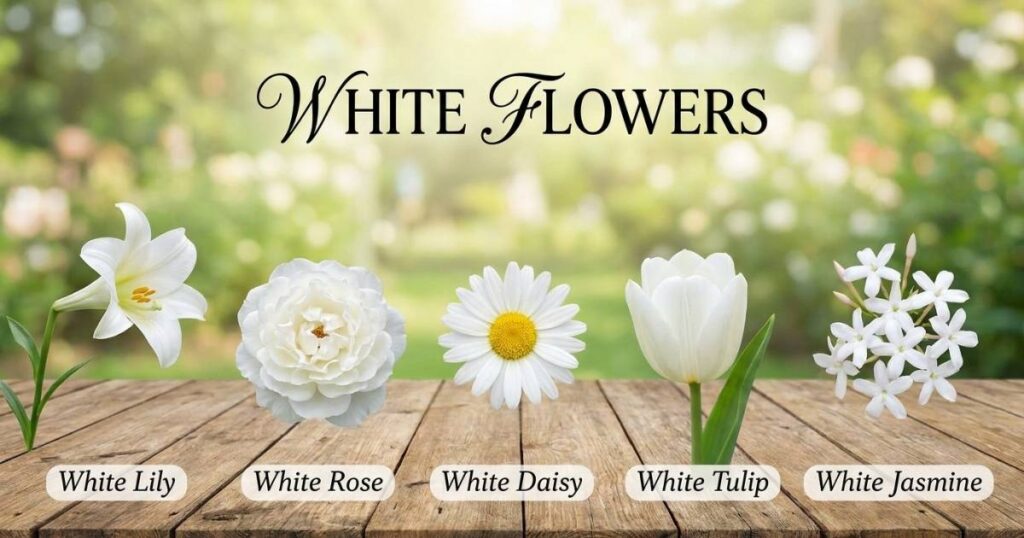
White Y flowers are often chosen for moon gardens or evening landscapes because they reflect light well after sunset. Yucca in particular produces tall white flower spikes that stand out dramatically against green foliage, making it a popular focal point in dry, minimalist garden designs.
Yellow Y Flowers
- Yellow Rose
- Yellow Iris
- Yellow Tulip
- Yellow Daisy
- Yellow Marigold
- Yellow Poppy
- Yellow Primrose
- Yellow Hibiscus
Yellow is by far the most common color in this list, making up more than half of all 65 entries. This is not a coincidence. Many flowers that already had a name, such as Rose, Iris, or Tulip, gained a Y-flower designation specifically because a bright yellow cultivar became popular enough to be listed separately.
If you want a garden that leans heavily into warm, sunny colors, focusing on this yellow group alone gives you more than 25 flower options to mix and match by bloom season and height.
Red and Warm-Coloured Y Flowers
- Yellow Bells (has orange-red hybrid varieties)
- Yew berries (technically fruit, not petals, but often mistaken for flowers)
True red Y flowers are extremely rare, which is why this category is the shortest on the list. If you specifically want a red-toned Y plant for your garden, Yew berries offer the closest visual match, though gardeners should remember that these are fruit rather than petals, and the seeds inside are toxic if eaten.
Pink and Soft-Coloured Y Flowers
- Yesterday Today and Tomorrow (young blooms)
- Yellow Ranunculus (pink hybrid cultivars exist)
Pink shades in Y flowers usually appear as hybrid variations rather than the natural wild color.
Purple Flowers Beginning With Y
- Yesterday Today and Tomorrow (fresh blooms open purple)
- Yellow Archangel (has purple spotted leaves with yellow flowers)
Purple is uncommon among Y flowers, so gardeners wanting purple tones often pair these with non-Y purple blooms for balance. Yesterday Today and Tomorrow is especially interesting for color-themed gardens because a single shrub can display purple, lavender, and white blooms simultaneously as flowers age at different rates, giving a naturally gradient look without needing to plant multiple varieties.
Meanings and Symbolism of Y Flowers
Flower meanings often depend on color rather than the specific Y name, but a few Y flowers carry unique symbolism.
- Yarrow symbolizes healing, protection, and everlasting love
- Yellow Rose represents friendship, joy, and new beginnings
- Ylang-Ylang is associated with romance and is used in wedding ceremonies in parts of Asia
- Yellow Iris symbolizes passion and courage in Western flower language
These meanings make Y flowers a thoughtful choice for gifts, tattoos, or ceremony decor when you want something less common than a standard rose bouquet.
Beyond individual flower meanings, the color yellow itself carries broad symbolism across most flower types, generally representing optimism, friendship, and energy. Since so many Y flowers are yellow, gifting or planting them often sends a cheerful, welcoming message even when the specific flower’s individual meaning is unknown to the recipient.
For anyone planning a themed event around Y flowers, pairing Yarrow with Yellow Rose creates a combination that symbolizes both lasting friendship and protective well wishes, making it a popular choice for housewarming gifts and graduation bouquets.
Perennial Flowers Beginning With Y
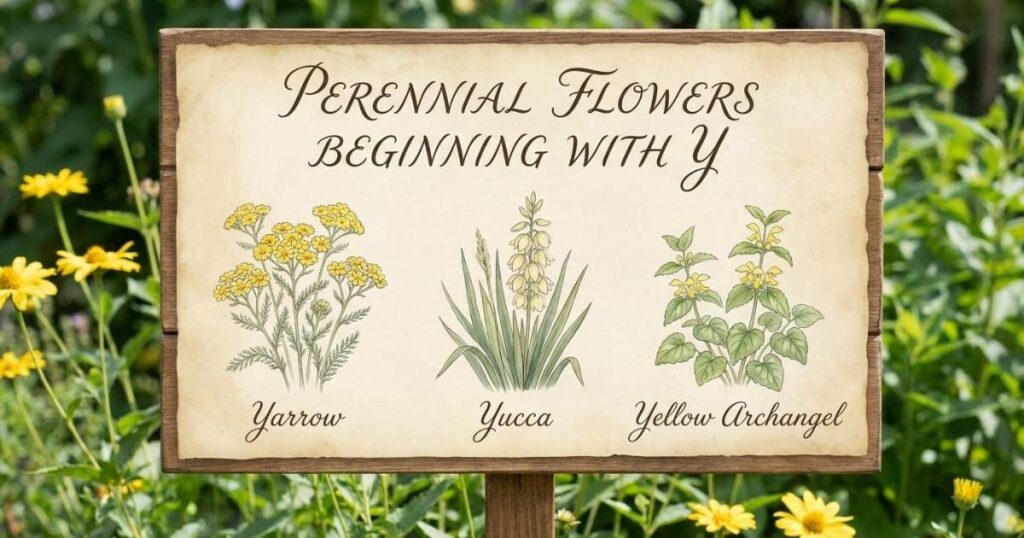
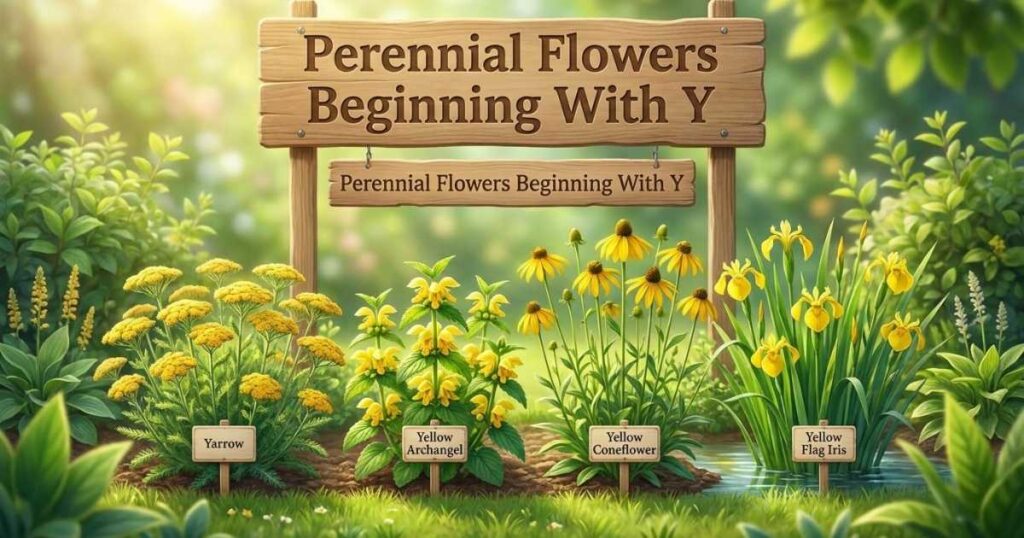
Perennials return year after year, making them a smart long-term investment for any garden.
- Yarrow
- Yellow Iris
- Yellow Peony
- Yellow Columbine
- Yellow Loosestrife
- Yucca
- Yellow Gentian
- Yellow Lady’s Slipper Orchid
Most perennial Y flowers prefer well-drained soil and at least partial sun, and many are drought tolerant once established.
Planting perennials means less yearly replanting work, but it also means you should think carefully about placement from the start, since these plants will occupy the same spot for years. Yucca and Yarrow, in particular, spread over time, so leave extra space around them when planting to avoid overcrowding your bed within a few growing seasons.
A simple perennial Y flower bed could combine Yarrow for ground-level color, Yellow Columbine for mid-height interest, and Yucca as a taller structural anchor, giving you layered visual depth without needing to replant anything the following spring.
Annual Flowers That Start With Y
Annuals complete their life cycle in one season, which makes them ideal for gardeners who like to change their layout every year.
- Yellow Zinnia
- Yellow Petunia
- Yellow Pansy
- Yellow Cosmos
- Yellow Snapdragon
- Yellow Nasturtium
Annual Y flowers generally bloom faster than perennials and work well for filling gaps in a new garden bed during the first year.
Because annuals need to be replanted each season, they are also a good testing ground if you are unsure whether a Y flower will suit your climate before committing to a longer-term perennial version. Yellow Zinnia, for example, often blooms within eight weeks of sowing, giving you fast feedback on how well it performs in your specific soil and light conditions.
Most annual Y flowers also make excellent cut flowers, so planting a dedicated row specifically for indoor arrangements is a common strategy among home gardeners who enjoy fresh bouquets throughout the growing season.
Can You Grow Y Flowers Indoors?
Yes, several Y flowers adapt well to indoor conditions.
- Yucca thrives indoors with bright, indirect light and minimal watering
- Yellow Orchid varieties do well in humid bathrooms or kitchens with filtered light
- Ylang-Ylang can be grown indoors while young, though it eventually needs to move outdoors as it matures into a tree
Indoor Y flowers generally need less frequent watering than outdoor garden varieties, so overwatering is the most common mistake beginners make.
A few extra indoor growing tips can help these plants thrive:
- Place Yucca near a south or west-facing window for the strongest light exposure
- Rotate Yellow Orchid pots every week or two so growth stays even on all sides
- Keep Ylang-Ylang seedlings away from cold drafts, since sudden temperature drops can stunt growth
If your home has low natural light, a simple grow light can make a noticeable difference for indoor Y flowers, particularly orchids, which often struggle to rebloom without sufficient light intensity.
Best Y Flowers for Beginner Gardeners
If you are new to gardening, start with these forgiving Y flowers.
- Yarrow tolerates poor soil and irregular watering
- Yellow Marigold resists most common pests
- Yellow Zinnia grows quickly from seed with minimal care
- Yucca survives neglect and thrives in dry conditions
These four flowers give beginners quick visible results without demanding advanced gardening knowledge.
A simple beginner routine for these flowers looks like this:
- Water deeply once the top inch of soil feels dry, rather than on a fixed daily schedule
- Remove spent blooms regularly to encourage new flowers, a process known as deadheading
- Avoid overly rich soil for Yarrow and Yucca, since both actually prefer leaner conditions
Starting with just one or two of these beginner-friendly flowers before expanding to the rest of the list is a practical way to build confidence without risking a large amount of time or money on plants that may be harder to keep alive.
Y Flowers Suitable for Containers and Patio Pots
Not every Y flower needs a garden bed. Several do well in pots and patio containers.
- Yellow Petunia spills nicely over hanging basket edges
- Yellow Pansy handles cooler container conditions well
- Yellow Marigold stays compact and container friendly
- Yellow Snapdragon adds height to mixed container arrangements
Container Y flowers generally need a pot with good drainage holes and a well-draining potting mix to prevent root rot.
Because container soil dries out faster than garden beds, potted Y flowers usually need more frequent watering, especially during hot summer months. A general guideline is to check soil moisture daily during peak summer and reduce watering frequency as temperatures cool in fall.
For patio gardeners short on space, combining Yellow Petunia as a trailing edge plant with Yellow Snapdragon for height in the same large container creates a balanced, layered look using only Y flowers.
Which Y Flower Has the Best Fragrance?
Ylang-Ylang is widely considered the most fragrant Y flower. Its essential oil is used in high-end perfumes and aromatherapy for its sweet, floral scent.
- Yellow Honeysuckle is a close second, known for its evening fragrance
- Yellow Jasmine varieties, when included in regional Y lists, also offer strong sweet scents
If fragrance is your top priority, Ylang-Ylang and Yellow Honeysuckle are the two Y flowers worth prioritizing in a scent garden.
Fragrance intensity in both flowers tends to peak during warm evenings, which is why they are often planted near patios, windows, or outdoor seating areas rather than tucked away in back garden beds. Ylang-Ylang, in particular, releases its strongest scent at night, making it a popular choice for gardens designed to be enjoyed after sunset.
Y Plants vs. Y Flowers: Understanding the Difference
Not every plant that starts with Y produces a flower people commonly recognize, and not every flowering Y plant is grown for its blooms.
- Yucca is often grown as a structural plant, but it does produce tall flower spikes
- Yew is grown mainly as a hedge or ornamental shrub, though it does flower briefly before producing berries
- Ylang-Ylang is grown specifically for its flowers and their fragrance
Knowing this difference helps you set the right expectations. If you want a flower-focused display, prioritize the ones in Group 1 and Group 2 of the full list rather than shrubs like Yew.
This distinction also matters for buying decisions. A nursery listing for Yucca or Yew is usually sold as a landscaping plant, with the flowers treated as a seasonal bonus rather than the main selling point. In contrast, plants like Yellow Rose or Yellow Orchid are marketed and priced specifically around their bloom quality, so it pays to know which category a plant falls into before setting expectations for how much flowering you will actually see.
Choosing the Best Y Flower for Your Garden
Your ideal Y flower depends on your goals, climate, and experience level. Use this quick decision guide:
- Want low maintenance? Choose Yarrow or Yucca
- Want fragrance? Choose Ylang-Ylang or Yellow Honeysuckle
- Want fast color? Choose Yellow Zinnia or Yellow Marigold
- Want a wetland or pond feature? Choose Yellow Iris or Yellow Water Lily
- Want a rare collector’s plant? Choose Yellow Lady’s Slipper Orchid
Matching the flower to your specific garden condition, rather than picking based on name alone, leads to better long-term results.
Before making a final choice, it also helps to consider your local climate zone, since a flower that thrives in a warm coastal region, such as Ylang-Ylang, may not survive a harsh winter without being grown as an indoor or seasonal plant instead. Checking your regional hardiness zone against each flower’s growing requirements before purchasing will save both money and disappointment down the line.
Frequently Asked Questions (FAQs)
How many flowers start with the letter Y?
There are approximately 65 commonly recognized flowers and flowering plants that start with Y in English.
What is the most popular flower that starts with Y?
Yarrow and the Yellow Rose are the two most searched and widely grown Y flowers.
Are there any purple flowers that start with Y?
Yes, Yesterday Today and Tomorrow opens purple before fading to white, and Yellow Archangel has purple-toned foliage.
Is Ylang-Ylang easy to grow at home?
Ylang-Ylang can be grown indoors while young, but it needs a warm, humid climate to fully mature outdoors.
What does a Yellow Rose symbolize?
A Yellow Rose symbolizes friendship, joy, and new beginnings rather than romantic love.
Can Y flowers be grown in containers?
Yes, flowers like Yellow Petunia, Yellow Pansy, and Yellow Marigold all grow well in patio pots and hanging baskets.
Which Y flower is best for beginners?
Yarrow and Yellow Marigold are ideal for beginners because they tolerate poor soil and irregular care.
Final Thoughts
Flowers that start with Y may be fewer in number than other letters, but they are far from boring. From the fragrant Ylang-Ylang to the hardy Yarrow and the vivid Yellow Iris, this list offers something for every garden style and skill level.
Use the categories above to pick flowers that match your climate, space, and experience. Whether you want fast color from annuals or a fragrant perennial that returns every year, there is a Y flower ready to fill that role in your garden.
Start small if you are new to this letter’s flower family. Pick one or two entries from the beginner-friendly list, get comfortable with their care routine, and expand into rarer or more fragrant varieties once you have a feel for how they grow in your specific space. With 65 options to choose from, the letter Y offers far more variety than most people expect, and this guide gives you everything needed to explore it with confidence.