
Flowers that start with Z are rare, which makes them a fun challenge for gardeners, quiz lovers, and flower namers alike. From the bold Zinnia to the elegant Zantedeschia (calla lily), this letter hides more variety than most people expect.
This guide covers 45 Z flower names, sorted by type, color, climate, and use case. You will also find growing tips, symbolism, and safety notes so you can pick the right flower with confidence.
Z is one of the least represented letters in flower naming, so most articles online recycle the same handful of names. This guide goes further by separating true flowering plants from foliage plants, trees, and vegetables that only start with the same letter, so you get an accurate, usable reference rather than a padded list.
Whether you are building a themed garden, doing a school project, choosing a baby name, or simply curious about botany, this list is organized so you can jump straight to the section that matters to you, from color and climate to indoor growing and safety.
Quick Answer: What Are Flowers That Start With Z?
The most common flowers that start with Z are Zinnia, Zantedeschia, Zephyranthes, Zaluzianskya, and Zenobia. These span annuals, bulbs, perennials, and flowering shrubs.
Most Z flowers fall into a small number of plant families, which is why the same few genus names repeat across almost every list you will find online.
In short, if someone asks you to name one flower starting with Z on the spot, Zinnia is the safest and most recognizable answer. It is widely grown, easy to identify, and sold in nearly every garden center during spring and summer.
Beyond the common names, botanists and gardeners also use Z names for orchids, night blooming annuals, and native wildflowers, which is why this letter shows up more often in specialist plant catalogs than in everyday flower shops.
Best Z Flowers To Know First
If you only remember five names, remember these:
- Zinnia – easy, colorful annual for beginners
- Zantedeschia – calla lily, elegant cut flower
- Zephyranthes – rain lily, low maintenance bulb
- Zaluzianskya – night phlox, evening fragrance
- Zenobia – flowering shrub with bell-shaped blooms
These five cover sunny beds, containers, cut flower gardens, and fragrant evening gardens between them.
Zinnia works well because it flowers within weeks of sowing and keeps blooming until the first frost. Zantedeschia adds a formal touch to any planting and is often the flower people picture when they think of a modern bouquet.
Zephyranthes rewards low effort gardeners since it can go unwatered for long stretches and still bloom reliably after rain. Zaluzianskya is a smaller niche pick, but it earns its place because few other white flowers offer real evening fragrance. Zenobia is the structural option, giving height and spring interest that the others cannot provide on their own.
At A Glance: Flowers That Begin With The Letter Z
| Flower Name | Type | Bloom Color | Sun Need |
| Zinnia | Annual | Red, pink, orange, white | Full sun |
| Zantedeschia | Bulb/Rhizome | White, yellow, pink | Full sun to part shade |
| Zephyranthes | Bulb | White, pink, yellow | Full sun |
| Zaluzianskya | Annual | White with purple back | Full sun |
| Zenobia | Shrub | White | Part shade |
| Zygopetalum | Orchid | Purple, green | Bright indirect light |
| Zauschneria | Perennial | Orange-red | Full sun |
| Zelkova (foliage tree, listed for context) | Tree | Not a showy flower | Full sun |
How This List Was Built
This list was compiled using botanical genus names, common garden trade names, and regional wildflower references. Only names that are genuinely used for flowering plants were included, and plant types that only produce foliage were labeled clearly rather than mixed in as flowers.
Species were cross-checked against genus level naming so that varieties, cultivars, and subspecies of the same core plant were grouped together rather than listed as if they were unrelated flowers. This keeps the count of 40 to 45 names honest rather than inflated with near duplicates.
Where a name is more commonly known as a foliage plant, tree, or vegetable, it has been placed in the borderline section further down this guide instead of being counted as a true flower.
Why Z Flower Lists Often Feel Messy
Many online lists mix true flowers with foliage plants, trees, or vegetables that simply start with Z, such as Zucchini or Zea mays (corn).
This happens because there are genuinely few flower genus names starting with Z. To pad out a list, some sites include non-flowering plants or repeat the same species under slightly different names.
This guide keeps true flowering plants separate from borderline names, so you always know what you are looking at.
Another reason Z flower lists feel messy is spelling variation. Names like Zantedeschia are often misspelled as Zanthedeschia or Zandeschia, which creates duplicate looking entries across different websites.
Regional naming also adds confusion. A plant called a rain lily in the United States may appear under a different local name in South Africa or Australia, even though it is the same Zephyranthes species.
Types of Flowers That Start With Z
Annual Flowers
Annual Z flowers complete their life cycle in one growing season and need to be replanted each year.
- Zinnia elegans
- Zinnia angustifolia
- Zinnia haageana
- Zaluzianskya capensis
Annual Z flowers are the easiest entry point for new gardeners because they grow fast, tolerate mistakes, and give quick visual feedback within a single season. Most can be direct sown once the soil has warmed.
Perennial Flowers
Perennial types return year after year from the same root system in suitable climates.
- Zauschneria californica (California fuchsia)
- Zinnia grandiflora (in warm, dry climates)
- Zephyranthes species (in frost free zones)
Perennial status for several Z flowers depends heavily on climate zone. A plant treated as a perennial in a warm coastal region may need to be grown as an annual or dug up and stored over winter in a colder zone.
Orchid And Specialty Types
Orchid growers often look for Z names for variety in a collection.
- Zygopetalum
- Zygostates (a smaller, less common miniature orchid genus)
Zygopetalum orchids stand out for their fragrance, which is unusual among orchids, and their mottled purple and green petals. They are typically grown in bright, indirect light rather than direct sun, which makes them a good fit for indoor collections.
Native And Wildflower Types
Some Z names are tied to native plant lists, especially in North America and South Africa.
- Zigadenus (death camas, native but toxic, see safety notes)
- Zauschneria californica (native to western North America)
- Zaluzianskya (native to South Africa)
Native Z flowers are often overlooked by mainstream nurseries because they are less showy than hybridized garden varieties. However, they tend to support local pollinators better and require less irrigation once established.
Shrub And Structural Types
These add height and structure rather than low bedding color.
- Zenobia pulverulenta
- Zieria (Australian native shrub)
Shrub type Z flowers are useful for gardeners who want year round structure rather than a bed that disappears once the blooming season ends. Zenobia, for example, keeps attractive foliage even after its bell shaped flowers fade.
Common Flowers That Start With Z
The flowers gardeners actually plant most often are Zinnia, Zantedeschia, and Zephyranthes.
- Zinnia is common in home gardens because it is easy to grow from seed.
- Zantedeschia is common in florist arrangements and wedding bouquets.
- Zephyranthes is common in warm climate borders because it needs very little care.
These three names appear consistently across garden centers, seed catalogs, and florist supply lists, which is why they are considered the backbone of any Z flower collection. If a nursery only stocks one Z flower, it is almost always Zinnia.
Popular Flower Names Starting With Z
Some Z flower names are popular specifically because they sound elegant or unusual, which makes them appealing for naming, branding, or creative writing.
- Zinnia
- Zantedeschia
- Zephyranthes
- Zoe’s Delight (a cultivar name sometimes used for Zinnia varieties)
- Zaluzianskya
Popularity here does not always match how often a flower is planted. Zantedeschia, for instance, is more popular as a name and image reference than as a plant found in the average backyard, since it is more commonly bought as a cut flower than grown at home.
How To Choose The Right Flower For Your Garden
Choosing the right Z flower depends on sunlight, maintenance level, pollinator goals, and available space.
Before picking a plant, it helps to check your local frost dates and average summer temperatures, since several Z flowers, like Zephyranthes and Zauschneria, perform very differently depending on climate. Matching the plant to your actual conditions matters more than picking the most popular name on a list.
Best Choices For Sunny Beds
- Zinnia elegans
- Zauschneria californica
- Zinnia grandiflora
Best Choices For Low-Maintenance Gardens
- Zephyranthes species
- Zinnia angustifolia
- Zaluzianskya capensis
Best Choices For Pollinator Gardens
- Zinnia elegans (attracts butterflies)
- Zauschneria californica (attracts hummingbirds)
- Zaluzianskya capensis (attracts night moths)
Best Choices For Small Spaces
- Zinnia in containers
- Zephyranthes in pots
- Compact Zinnia angustifolia varieties
Small space gardeners should look for dwarf or compact cultivars where available, since standard Zinnia elegans varieties can grow tall and leggy if not given enough room to spread.
Growing Guide Snapshot For The Most Important Z Flowers
| Flower | Water Need | Soil | Bloom Season |
| Zinnia | Moderate | Well drained | Summer to frost |
| Zantedeschia | High | Rich, moist | Late spring to summer |
| Zephyranthes | Low | Well drained | Summer, after rain |
| Zaluzianskya | Low to moderate | Sandy, well drained | Spring to summer |
| Zenobia | Moderate | Acidic, moist | Late spring |
| Zauschneria | Low | Sandy, well drained | Late summer to fall |
| Zygopetalum | Moderate | Orchid bark mix | Fall to winter |
A few practical notes make these plants easier to manage. Zinnia benefits from good air circulation to avoid powdery mildew, so avoid crowding plants too closely together.
Zantedeschia bulbs should be planted with the growing point facing up and benefit from a layer of mulch in cooler climates. Zephyranthes bulbs are often left undisturbed for years, since they bloom best when slightly root bound.
Best Z Flowers By Climate And Site
Gardeners in hot, dry climates should lean toward Zinnia and Zauschneria, since both tolerate heat and low water once established.
Gardeners in cooler, wetter climates get better results with Zantedeschia and Zenobia, which prefer consistent moisture.
Gardeners in frost free or mild winter zones can grow Zephyranthes as a true perennial rather than replanting each year.
Coastal gardeners tend to have the most success with Zenobia and Zygopetalum, since both prefer the milder temperature swings found near coastlines compared to inland extremes.
Gardeners in humid, tropical climates should watch Zinnia closely for fungal issues, since high humidity combined with wet foliage encourages disease in this genus more than in most other Z flowers.
How To Read The Labels In This Guide
Throughout this guide, plant names are given by genus first, followed by the common name in brackets where one exists.
- Sun need refers to full sun (6 or more hours), part shade (3 to 6 hours), or shade (under 3 hours).
- Type refers to whether the plant is an annual, perennial, bulb, shrub, or orchid.
- Entries marked as borderline are not true flowering ornamentals, or the flower is minor compared to the rest of the plant.
- Water need is described as low, moderate, or high, based on typical establishment needs rather than the first few weeks after planting, when most new plants need extra water regardless of type.
Understanding these labels helps you compare entries quickly without needing to look up each species individually before deciding whether it suits your garden.
The Full List Of 40 Flowers That Start With Z
The list below combines core, widely recognized Z flowers with related species and cultivars that share the same genus but offer different colors, sizes, or growing habits.
Core Z Flowers
- Zinnia elegans
- Zinnia angustifolia
- Zinnia haageana
- Zinnia grandiflora
- Zinnia marylandica
- Zinnia peruviana
- Zantedeschia aethiopica
- Zantedeschia elliottiana
- Zantedeschia rehmannii
- Zephyranthes candida
- Zephyranthes grandiflora
- Zephyranthes citrina
- Zephyranthes rosea
- Zephyranthes atamasca
- Zephyranthes drummondii
- Zaluzianskya capensis
- Zaluzianskya ovata
- Zenobia pulverulenta
- Zauschneria californica
- Zygopetalum (hybrid orchids)
Related Z Flowering Plants And Garden Use Names
- Zephyranthes tubispatha
- Zinnia tenuifolia
- Zaluzianskya villosa
- Zenobia marina
- Zieria cytisoides
- Zephyranthes minuta
- Zinnia acerosa
- Zauschneria garrettii
- Zaluzianskya elongata
- Zygostates lunata
- Zephyranthes primulina
- Zinnia violacea
- Zaluzianskya microsiphon
- Zenobia species hybrids
- Zieria arborescens
- Zephyranthes traubii
- Zinnia pumila
- Zaluzianskya spathacea
- Zephyranthes simpsonii
- Zinnia americana
Not every name on this list will be available at a standard local nursery. Several, particularly the less common Zephyranthes and Zaluzianskya species, are best sourced from specialty seed suppliers or native plant societies rather than big box garden centers.
Borderline Z Flower Names You May See In Other Lists
Some sites include these names, but they are either foliage focused, only lightly known for flowers, or better classified as trees, vegetables, or houseplants.
- Zamioculcas (ZZ plant, grown for foliage, rarely flowers indoors)
- Zea mays (corn, produces tassels rather than showy flowers)
- Zucchini (a vegetable plant with yellow blossoms, not an ornamental flower)
- Zelkova (a shade tree with insignificant flowers)
- Zigadenus (a wildflower, but toxic, more often noted for danger than beauty)
Including these names is not wrong, since they do technically start with Z, but presenting them as flower recommendations without context can mislead readers looking specifically for ornamental blooms.
Flower Gallery: What The Top Z Flowers Look Like
Zinnia flowers have layered, daisy-like petals in bold, saturated colors, making them easy to spot from a distance in a garden bed.
Zantedeschia flowers have a smooth, trumpet-shaped bloom often called a calla, prized in bouquets for its clean, modern look.
Zephyranthes flowers are small, upright, and cup-shaped, often appearing suddenly after rainfall, which is how they earned the nickname rain lily.
Zaluzianskya flowers are star-shaped, white on top with a dark reverse side, and release fragrance mainly in the evening.
Zygopetalum orchid flowers have a distinctive mottled pattern, mixing green, brown, and purple tones across the petals, with a contrasting solid colored lip that sets them apart from most common houseplant flowers.
Zenobia flowers hang in small clusters of white, bell-shaped blooms, resembling lily of the valley, and appear against blue-green foliage that stays attractive through the rest of the season.
Meaning And Symbolism Of Flower Names Starting With Z
Flower meanings are based on long-standing cultural associations rather than strict botanical fact, but they remain popular in gift giving and garden design.
Since Z flowers are rare, they often carry a sense of individuality when used in bouquets or garden themes, simply because they stand out from the far more common A to M range of flower names.
Zinnia Meaning
Zinnia is often associated with lasting friendship and thoughts of absent friends, making it a common choice for supportive, long-distance gifts.
Zantedeschia Meaning
Zantedeschia, or calla lily, is associated with elegance, purity, and new beginnings, which is why it appears often in weddings.
Zephyranthes Meaning
Zephyranthes is linked to resilience, since the plant tends to bloom suddenly after stress such as rain following drought.
Zaluzianskya Meaning
Zaluzianskya is associated with mystery and evening beauty, tied to its habit of releasing scent only after dark.
White Flowers That Begin With The Letter Z
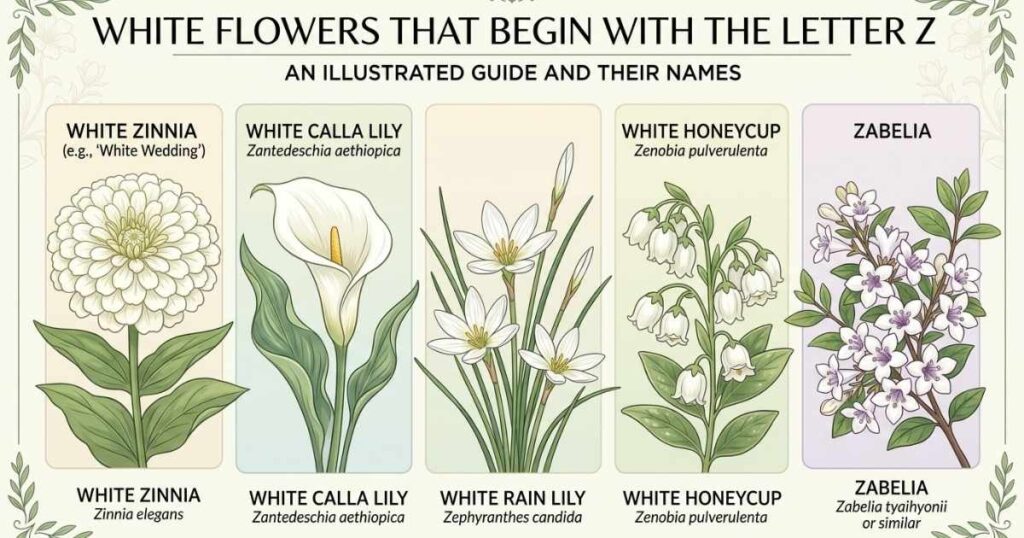
- Zantedeschia aethiopica
- Zephyranthes candida
- Zenobia pulverulenta
- Zaluzianskya capensis (white face, purple back)
Yellow Flowers That Begin With The Letter Z
- Zantedeschia elliottiana
- Zephyranthes citrina
- Zinnia elegans (yellow varieties)
Purple Flowers That Start With Z
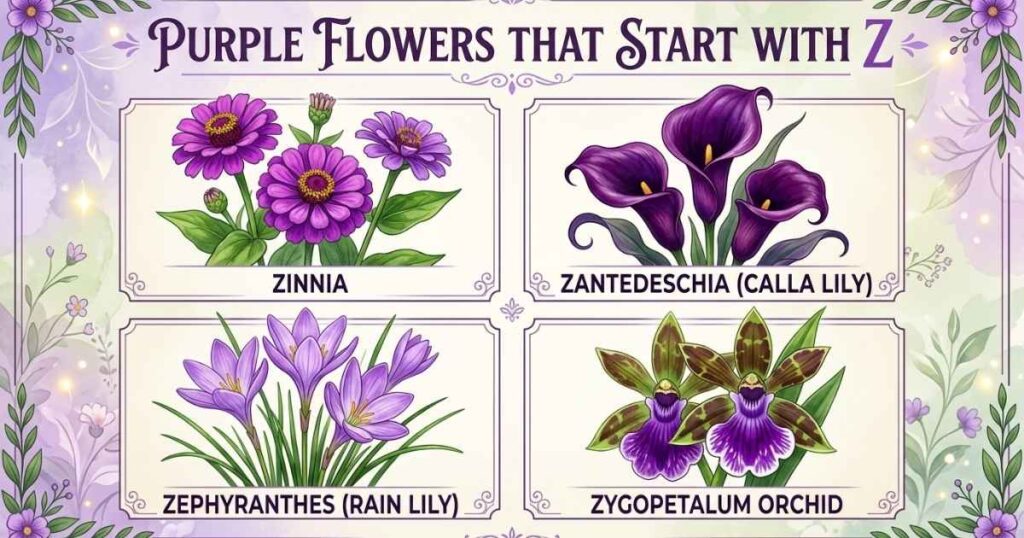
- Zinnia violacea
- Zygopetalum orchids
- Zaluzianskya reverse petal shade
Perennials That Start With Z
- Zauschneria californica
- Zenobia pulverulenta
- Zephyranthes species in mild climates
- Zygopetalum orchids (as a long term collector plant)
Annual Flowers That Start With Z
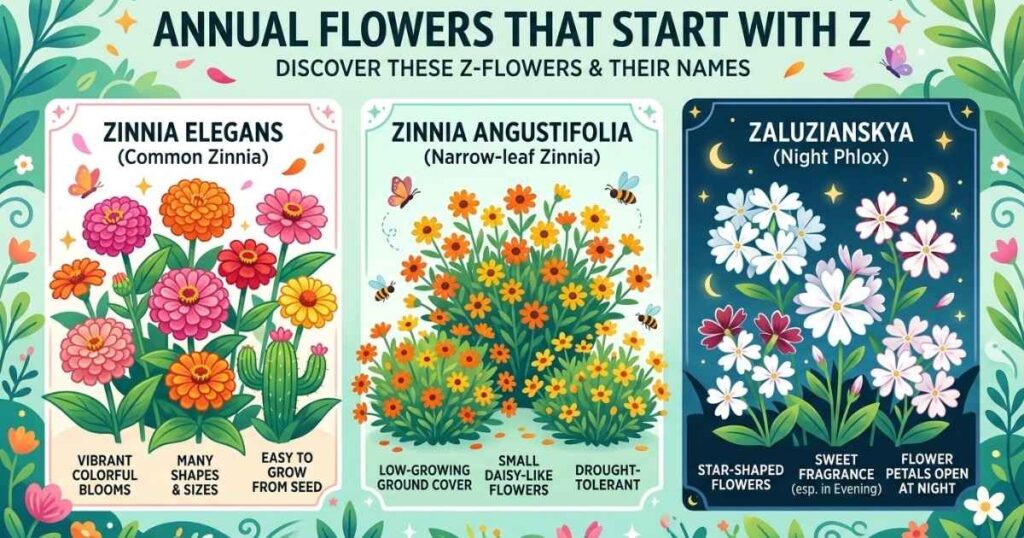
- Zinnia elegans
- Zinnia angustifolia
- Zinnia haageana
- Zaluzianskya capensis
Container Flowers That Begin With The Letter Z
Best Z Flowers For Patio Pots
- Zinnia angustifolia
- Zephyranthes species
Best Z Flowers For Balcony Containers
- Compact Zinnia varieties
- Zephyranthes citrina
Best Z Flowers For Decorative Entry Pots
- Zantedeschia in a large statement pot
- Zinnia elegans mixed colors
Indoor Or Protected Space Picks
Best Indoor Z Flowers For Bright Rooms
- Zygopetalum orchids
- Zantedeschia grown as a potted bulb
Best Indoor Z Flowers For Seasonal Display
- Zantedeschia for spring displays
- Zinnia started indoors before transplanting
Beginner Friendly Choices
- Zinnia elegans, since it grows fast from seed
- Zephyranthes, since it needs almost no attention once planted
Rare Flowers That Start With Z
- Zygostates lunata (miniature orchid, mainly known to specialist collectors)
- Zaluzianskya elongata (less common in general nurseries)
- Zenobia marina (regional variety, harder to source)
Fragrant Z Flowers
- Zaluzianskya capensis, strongest scent in the evening
- Zantedeschia, mild, fresh fragrance in some varieties
- Zephyranthes, light fragrance in a few species
Plants Vs Flowers That Start With Z
Some Z named plants are grown mainly for foliage, structure, or fruit, not for their blooms.
| Plant Type | Grown Mainly For | Flower Present |
| Zinnia | Flowers | Yes, main feature |
| Zantedeschia | Flowers | Yes, main feature |
| Zamioculcas (ZZ plant) | Foliage | Rare, minor |
| Zelkova | Shade, structure | Minor, not showy |
| Zucchini | Fruit (vegetable) | Yes, but functional not ornamental |
Quick Safety Notes For Z Flowers
- Zigadenus (death camas) is toxic if ingested and should never be planted where children or grazing animals have access.
- Zantedeschia contains calcium oxalate crystals and can irritate the mouth and skin if chewed, so keep it away from pets that chew plants.
- Zinnia and Zephyranthes are generally considered low risk for typical garden handling, but any plant sap can irritate sensitive skin.
Best Z Flowers By Use Case
Cut Flower And Bouquet Favorites
- Zinnia elegans
- Zantedeschia aethiopica
Pollinator Friendly And Meadow Picks
- Zinnia grandiflora
- Zauschneria californica
Water And Pond Flower Picks
- Zantedeschia aethiopica (tolerates boggy, moist soil near water features)
Best For Collectors
- Zygopetalum orchids
- Zygostates lunata
Conclusion
Flowers that start with Z are limited in number, but the range is still wide enough for almost any garden style, from bold Zinnia beds to elegant Zantedeschia bouquets and low fuss Zephyranthes borders.
Start with the five most reliable names covered early in this guide, then explore the full list as you get comfortable with what grows well in your climate and light conditions.
With the right pick for your sun, soil, and space, a Z flower can become one of the most distinctive plants in your garden.
FAQ’s
What is the most common flower that starts with Z?
Zinnia is the most common Z flower grown in home gardens. It is easy to start from seed and blooms all summer.
Is calla lily a Z flower?
Yes, calla lily’s botanical name is Zantedeschia. It is one of the best known Z flowers in florist arrangements.
Are there any purple flowers that start with Z?
Yes, Zinnia violacea and Zygopetalum orchids both produce purple blooms. Zaluzianskya also shows purple on the petal reverse.
Can Z flowers grow indoors?
Yes, Zygopetalum orchids and potted Zantedeschia bulbs both grow well indoors in bright light. Zinnia can be started indoors before transplanting outside.
Which Z flower is best for beginners?
Zinnia elegans is the best beginner choice. It germinates quickly and tolerates average care.
Are any Z flowers toxic?
Yes, Zigadenus (death camas) is toxic if ingested. Zantedeschia can also irritate skin and mouth tissue if chewed.
What is a rare flower that starts with Z?
Zygostates lunata is a rare miniature orchid mostly known to specialist collectors. Zaluzianskya elongata is also uncommon in general nurseries.