
Flowers that start with J are more varied than most people expect. This letter covers fragrant climbers like Jasmine, cheerful wildflowers like Johnny Jump-Up, and rare tropical showstoppers like the Jade Vine.
This guide brings together 55 J flowers in one place. You will find garden classics, native wildflowers, shrubs, vines, trees, and a few plants that need careful handling.
Each entry includes a quick fact, so you can decide what fits your garden, your climate, and your goals. Whether you want fragrance, color, or pollinator support, this list has a starting point for you.
Use the tables to compare options quickly, then jump to the detailed sections for care notes, symbolism, and growing zones. This structure is meant to save you time, whether you are planning a full garden bed or just picking one new flower to try this season.
Quick Answer: What Are Flowers That Start With J?
Flowers that start with J include well known names like Jasmine, Jonquil, and Japanese Anemone, along with lesser known picks like Jewelweed, Jacob’s Ladder, and Jacaranda.
They span many plant families, growth habits, and climates. Some are hardy perennials for temperate gardens. Others are tropical shrubs or vines that only thrive outdoors in warm zones.
- Climbing and vining flowers, such as Jasmine and Jade Vine
- Shrubs and small trees, such as Jacaranda and Japanese Camellia
- Wildflowers and native blooms, such as Jewelweed and Joe-Pye Weed
- Bulbs, such as Jonquil daffodils
- Houseplants that flower indoors, such as Jasmine Tobacco and Jade Plant
While Jasmine tends to dominate searches for this letter, the full range of J flowers covers nearly every garden style, including cottage gardens, shade gardens, desert landscaping, and tropical courtyards.
55 J Flowers At A Glance
Here is the full list in one table for quick scanning. Full details for each flower follow later in the guide.
| Flower Name | Type | Color |
| Jasmine (Common) | Vine | White |
| Arabian Jasmine | Shrub or vine | White |
| Winter Jasmine | Shrub | Yellow |
| Spanish Jasmine | Vine | White or pink |
| Star Jasmine | Vine | White |
| Downy Jasmine | Vine | White |
| Pink Jasmine | Vine | Pink and white |
| Jonquil | Bulb | Yellow |
| Japanese Anemone | Perennial | Pink or white |
| Japanese Camellia | Shrub | Red, pink, white |
| Japanese Iris | Perennial | Purple, blue, white |
| Japanese Wisteria | Vine | Purple |
| Japanese Rose (Kerria) | Shrub | Yellow |
| Japanese Quince | Shrub | Red or orange |
| Japanese Primrose | Perennial | Pink, red, white |
| Japanese Snowball | Shrub | White |
| Japanese Spirea | Shrub | Pink |
| Japanese Toad Lily | Perennial | Purple spotted |
| Japanese Peony | Perennial | Pink, white, red |
| Japanese Skimmia | Shrub | White or red buds |
| Jacob’s Ladder | Perennial | Blue or purple |
| Johnny Jump-Up | Annual or short perennial | Purple, yellow, white |
| Jerusalem Sage | Shrub | Yellow |
| Jerusalem Artichoke | Perennial | Yellow |
| Jerusalem Cherry | Shrub | White flowers, orange fruit |
| Jewelweed | Wildflower | Orange |
| Joe-Pye Weed | Wildflower | Mauve pink |
| Jacobinia (Brazilian Plume) | Shrub | Red or pink |
| Jade Vine | Vine | Turquoise |
| Jacaranda | Tree | Purple blue |
| Jatropha | Shrub | Red |
| Justicia (Shrimp Plant) | Shrub | Coral or orange |
| Job’s Tears | Grass | Green with pearl seeds |
| Jequirity (Rosary Pea) | Vine | Pink or purple |
| Jimson Weed | Annual | White or purple |
| Juniper | Conifer | Yellow cones |
| Jupiter’s Beard | Perennial | Red, pink, white |
| Jamesia (Waxflower) | Shrub | White |
| Jasione (Sheep’s Bit) | Wildflower | Blue |
| Jacobaea (Ragwort) | Wildflower | Yellow |
| Jade Plant | Succulent | White or pink |
| Judas Tree | Tree | Pink or magenta |
| Jack-in-the-Pulpit | Wildflower | Green and purple |
| Jacob’s Coat | Shrub, foliage plant | Small red |
| Java Glorybower | Shrub | Red and white |
| Jungle Flame (Ixora) | Shrub | Red, orange, yellow |
| Joseph’s Coat | Annual | Red foliage bracts |
| Jasmine Tobacco | Annual | White |
| Jelly Bean Plant | Succulent | Yellow |
| Jacobean Lily | Bulb | Deep red |
| Jasminum azoricum | Vine | White |
| Japanese Aster | Perennial | Lavender |
| Japanese Hydrangea Vine | Vine | White |
| Jamaican Poinsettia | Shrub | Red bracts |
| Justicia spicigera (Mexican Honeysuckle) | Shrub | Orange |
Types Of Flowers That Start With J
J flowers fall into several growth categories. Knowing the type helps you match a flower to the right spot in your garden.
- Vines: Jasmine varieties, Jade Vine, Japanese Wisteria
- Shrubs: Jerusalem Sage, Japanese Camellia, Jatropha
- Perennials: Jacob’s Ladder, Japanese Iris, Japanese Peony
- Annuals: Johnny Jump-Up, Jimson Weed, Joseph’s Coat
- Bulbs: Jonquil, Jacobean Lily
- Trees: Jacaranda, Judas Tree
- Succulents: Jade Plant, Jelly Bean Plant
- Wildflowers: Jewelweed, Joe-Pye Weed, Jack-in-the-Pulpit
Each category behaves differently in a garden layout. Vines need vertical support and tend to reward patience, since many take a full season to establish before producing heavy bloom.
Shrubs offer more instant structure. A young Jerusalem Sage or Japanese Camellia already looks like a finished plant the year you put it in the ground, even before it flowers.
Perennials and bulbs are the backbone of a repeat blooming garden. Once established, Jacob’s Ladder and Jonquil bulbs require little more than seasonal cleanup to keep performing.
Annuals and wildflowers move faster. Johnny Jump-Up and Jewelweed often self seed, meaning a single planting can turn into a recurring patch without extra effort.
Plants Vs Flowers That Starting With J
Some J names refer to the whole plant, while the flower is just one part of it. Others are grown mainly for the flower itself.
Jade Plant, for example, is grown mostly for its thick leaves. It flowers occasionally, but that is not the main reason people keep it.
Jasmine is the opposite. The plant exists largely because of its flower and its scent, even though the vine itself has ornamental value too.
This distinction matters when you are choosing plants for a specific purpose. If you want fragrance or cut flowers, look for J names grown specifically for their blooms. If you want a low fuss foliage plant that occasionally flowers as a bonus, Jade Plant or Jacob’s Coat fit better.
Some J names also get confused with plants that only sound similar. Jerusalem Artichoke, for instance, is grown mainly for its edible tuber, yet it still produces a genuine yellow flower that pollinators use throughout summer.
How This List Was Built
This list combines flowers commonly found in gardening references, botanical databases, and nursery catalogs. Each name was checked against its scientific classification to confirm it is a true flowering plant and not a lookalike common name.
Priority was given to flowers that gardeners can realistically source, grow, or recognize. A few rare or regionally specific names are included for completeness, and they are marked as such.
The list also separates common names from scientific names where confusion is likely. Several plants share the word Jasmine in their common name without belonging to the true Jasminum genus, such as Star Jasmine, so these are noted individually rather than lumped together.
Where possible, each entry favors information that is stable and unlikely to change with trends, such as bloom color, native range, and typical growing zone, rather than opinions about popularity.
55 Flowers Names Starting With J
Below is the full list of J flowers, grouped by familiarity and growing difficulty. Each entry includes a short fact to help you decide if it suits your garden.
Classic Garden Flowers And Familiar Favorites
- Jasmine (Jasminum officinale): A climbing vine known for its sweet evening fragrance and star shaped white flowers.
- Jonquil (Narcissus jonquilla): A daffodil relative with clustered yellow blooms and a light, sweet scent.
- Japanese Anemone: Tall, airy perennial with pink or white flowers that bloom in late summer and fall.
- Japanese Camellia: Glossy evergreen shrub with rose like blooms in winter and early spring.
- Japanese Wisteria: A vigorous vine with long, drooping clusters of purple flowers in spring.
- Japanese Iris: Elegant, flat faced blooms in purple, blue, or white, suited to moist soil.
- Jerusalem Sage: A drought tolerant shrub with whorled yellow flowers loved by bees.
- Johnny Jump-Up: A small viola with cheerful purple, yellow, and white faces, often self seeding.
- Japanese Peony: Large, ruffled blooms in pink, white, or red, prized for cut flower arrangements.
- Star Jasmine: Technically not a true jasmine, but a popular fragrant white flowered vine.
Wildflowers, Native Blooms, And Woodland Picks
- Jewelweed: A native wildflower with orange, spurred flowers that pop open when touched.
- Joe-Pye Weed: Tall native perennial with mauve pink flower clusters that attract butterflies.
- Jack-in-the-Pulpit: A shade loving woodland plant with a hooded green and purple flower.
- Jasione (Sheep’s Bit): A low growing wildflower with rounded blue flower heads.
- Jacobaea vulgaris (Ragwort): A yellow flowered wildflower common in meadows and roadsides.
- Jerusalem Artichoke: A native sunflower relative with bright yellow blooms and edible tubers.
Rare, Tropical, And Hard-To-Find J Flowers
- Jade Vine: A rare tropical vine with claw shaped turquoise flowers that hang in long clusters.
- Java Glorybower: A tropical shrub with striking red and white star shaped flowers.
- Jungle Flame (Ixora): A tropical shrub with dense clusters of red, orange, or yellow blooms.
- Jacobean Lily: A bulb with deep red, orchid like flowers, native to Mexico.
- Jatropha: A tropical shrub with small red flowers, often grown as a hedge in warm climates.
- Jamaican Poinsettia: A tropical shrub with red bracts similar to a poinsettia, native to the Caribbean.
Flowering Shrubs With J Names
Shrubs give structure to a garden while still offering seasonal color. Several J flowers fall into this category, ranging from cold hardy options like Japanese Camellia to strictly tropical picks like Jatropha.
Most shrubs on this list need a full growing season or two to reach their mature shape. Pruning right after flowering, rather than in fall or winter, helps preserve next year’s blooms on species like Japanese Quince and Japanese Snowball.
| Shrub | Bloom Color | Best Feature |
| Jerusalem Sage | Yellow | Drought tolerant, bee friendly |
| Japanese Camellia | Red, pink, white | Winter blooming |
| Japanese Rose (Kerria) | Yellow | Blooms on bare branches in spring |
| Japanese Quince | Red or orange | Early spring color |
| Japanese Snowball | White | Rounded, showy flower clusters |
| Japanese Skimmia | White or red buds | Fragrant, good for shade |
| Jacobinia (Brazilian Plume) | Red or pink | Long bloom season |
| Justicia (Shrimp Plant) | Coral or orange | Unusual bract shaped blooms |
| Jamaican Poinsettia | Red | Tropical color without frost tolerance |
| Justicia spicigera | Orange | Attracts hummingbirds |
Flowering Vines With J Names
Vines add vertical interest and can soften walls, fences, and trellises. J vines are especially known for fragrance, and several types of jasmine dominate this category.
Before planting a vine, check its mature spread. Japanese Wisteria in particular can become heavy and woody over time, so it needs a sturdy support structure rather than a light trellis.
- Common Jasmine: The classic fragrant white flowered vine used in perfumery.
- Arabian Jasmine: Used to make jasmine tea, with intensely fragrant white flowers.
- Winter Jasmine: Technically a sprawling shrub, but often trained as a vine with yellow winter flowers.
- Spanish Jasmine: Larger flowers than common jasmine, with a strong sweet scent.
- Pink Jasmine: Pink buds that open to white, with a powerful fragrance in early spring.
- Star Jasmine: A non jasmine vine with a similar scent and appearance.
- Japanese Wisteria: Long flower clusters that make a dramatic spring display on arbors.
- Jequirity (Rosary Pea): A vine with pink or purple flowers, but its seeds are highly toxic.
- Japanese Hydrangea Vine: A climbing vine with lacecap style white flower clusters.
- Jasminum azoricum: A lesser known jasmine species with fragrant white star flowers.
Flowering Trees And Landscape Plants Commonly Included In J Lists
- Jacaranda: Known for its striking purple blue flower canopy, common in warm climate landscaping.
- Judas Tree: Produces pink or magenta flowers directly on bare branches before leaves appear.
- Juniper: A conifer that produces small yellow flower like cones rather than true flowers.
Common Flowers That Begin With J
If you want reliable, widely available options, these J flowers are the easiest to find at nurseries and garden centers.
- Jasmine (several species)
- Jonquil
- Johnny Jump-Up
- Japanese Anemone
- Japanese Camellia
- Japanese Iris
- Jade Plant
These flowers show up regularly in general nursery stock because they tolerate a wide range of soil types and climates without special handling. They are a safe starting point if you are new to gardening with J names.
Rare Flowers That Starting With J
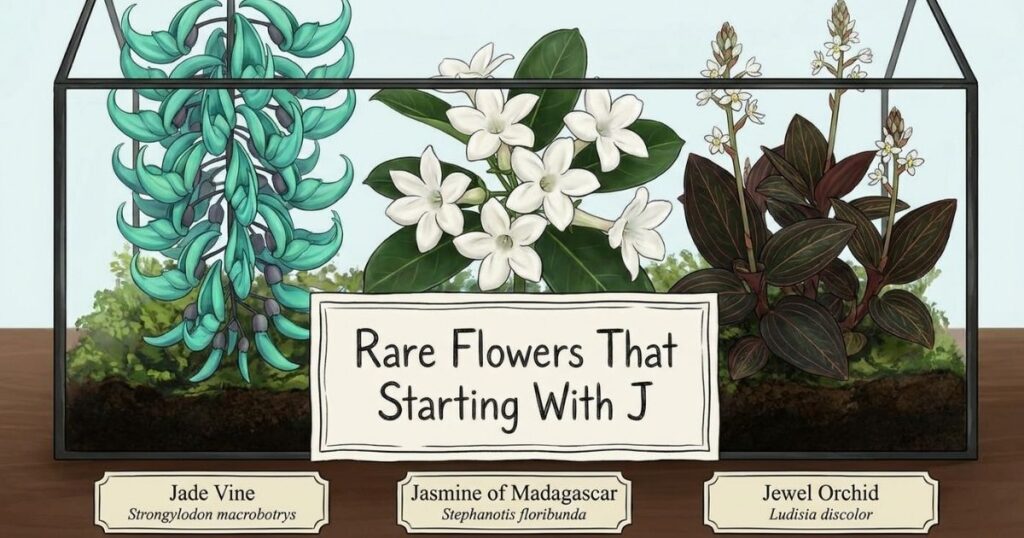
These flowers are harder to source and often require specialty growers or specific climates.
- Jade Vine
- Jacobean Lily
- Java Glorybower
- Jamesia americana
- Jamaican Poinsettia
- Jasminum azoricum
Most of these need a tropical or subtropical climate, or protection in a greenhouse during colder months. Jade Vine in particular is considered vulnerable in parts of its native range, so plants sold commercially are typically propagated rather than collected from the wild.
Purple Flowers That Start With J
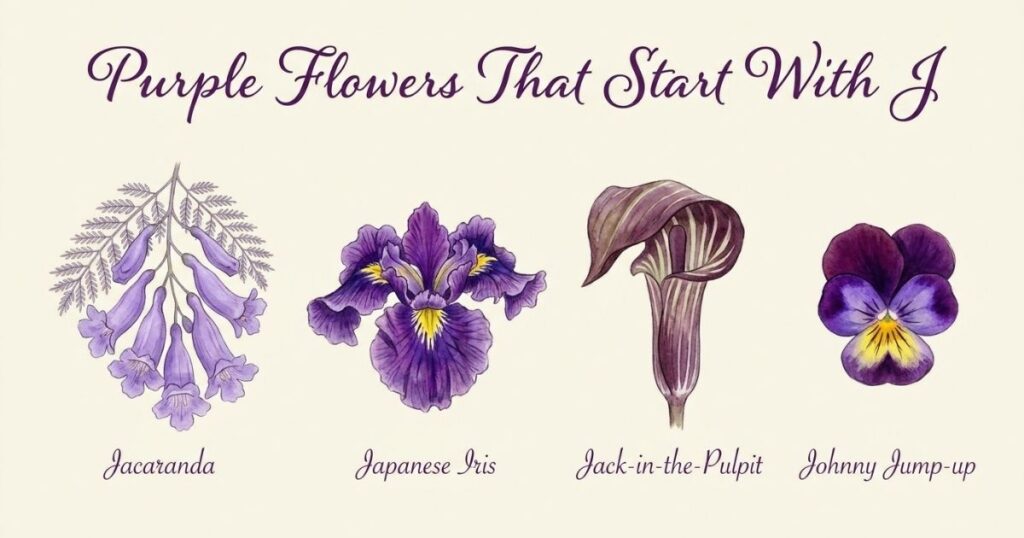
Purple is a common color among J flowers, ranging from soft lavender to deep violet.
- Japanese Wisteria
- Japanese Iris
- Jacob’s Ladder
- Japanese Toad Lily
- Jacaranda
- Japanese Aster
Perennials That Start With J
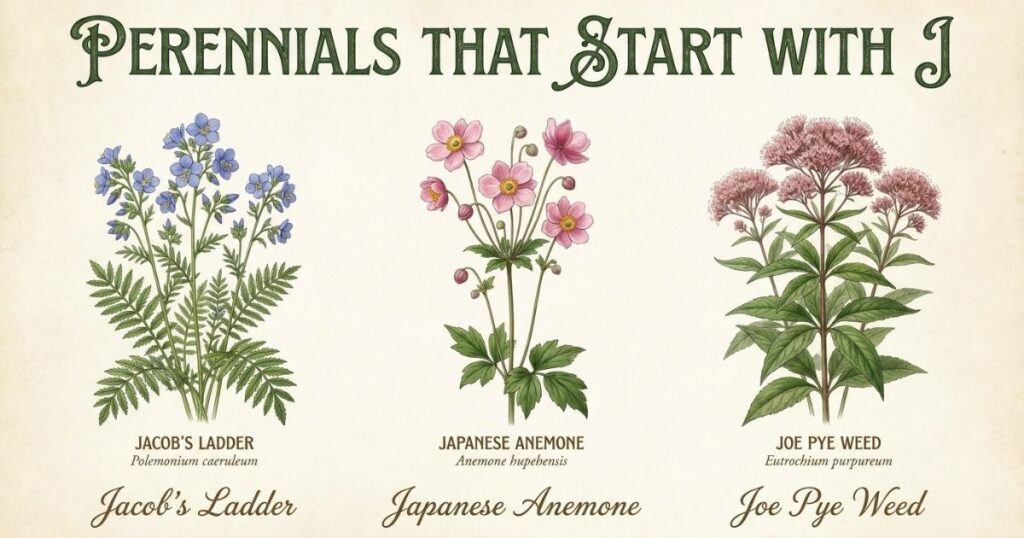
Perennials return year after year, making them a long term investment for the garden.
- Japanese Anemone
- Japanese Iris
- Japanese Peony
- Japanese Primrose
- Jacob’s Ladder
- Jupiter’s Beard
- Japanese Toad Lily
- Japanese Aster
Perennials are a good choice if you want a garden that gets fuller and more established each year without constant replanting. Most of the perennials on this list die back in winter and return from the roots in spring.
Annual Flowers That Start With J

Annuals complete their life cycle in one season, offering fast color for beds and containers.
- Johnny Jump-Up
- Jimson Weed
- Joseph’s Coat
- Jasmine Tobacco
Annuals are useful for filling gaps while slower perennials and shrubs mature. Johnny Jump-Up and Jasmine Tobacco both tend to self seed, so a single season’s planting often returns unprompted the following year.
Indoor Flowers That Start With J

Some J flowers can be grown indoors, either as houseplants or in containers near a bright window.
- Jasmine (especially Arabian Jasmine, in pots)
- Jade Plant
- Jelly Bean Plant
- Jasmine Tobacco (as a patio or sunroom annual)
- Justicia (Shrimp Plant, in bright indoor light)
Indoor J flowers generally need bright, indirect light and a spot away from cold drafts. Jasmine in particular benefits from a period of cooler night temperatures in fall, which helps trigger heavier bloom the following season.
Beginner Friendly Choices
New gardeners often want flowers that forgive mistakes. These J flowers are known for being low maintenance.
- Johnny Jump-Up: Tolerates poor soil and self seeds readily.
- Jade Plant: Needs infrequent watering and thrives on neglect.
- Jerusalem Sage: Handles drought and poor soil once established.
- Jonquil: Plant the bulbs once and enjoy blooms for years with little care.
- Jacob’s Ladder: Adapts well to average garden soil and part shade.
These five are a good place to start if you are new to gardening or unsure how much time you can commit. None of them require a strict watering schedule or frequent feeding once established.
Best J Flowers By Garden Goal
Different gardens have different goals. Here are J flowers grouped by what you are trying to achieve. Use this section if you already know what you want your garden to do, rather than starting from the flower name alone.
Indoor or Protected Space Picks
- Jade Plant
- Jasmine (potted, near a sunny window)
- Justicia (Shrimp Plant)
Container And Small Space Picks
- Johnny Jump-Up
- Jelly Bean Plant
- Jasmine Tobacco
- Jonquil (in bulb pots)
Pollinator Friendly And Meadow Picks
- Jerusalem Sage
- Joe-Pye Weed
- Jewelweed
- Jasione (Sheep’s Bit)
Cut Flower And Bouquet Favorites
- Japanese Peony
- Jasmine (for fragrance in arrangements)
- Jonquil
- Japanese Anemone
Water And Pond Flower Picks
J flowers are not commonly aquatic. Jewelweed is the closest match, since it often grows naturally along stream banks and in consistently moist soil near water features, though it is not a true aquatic plant.
Fragrant J Flowers
- Common Jasmine
- Arabian Jasmine
- Spanish Jasmine
- Pink Jasmine
- Jonquil
- Japanese Skimmia
J Flowers That Need Extra Caution
A few J flowers are toxic or otherwise risky, and it is worth knowing this before planting them, especially around children or pets.
- Jimson Weed: All parts are highly toxic if ingested, and it has a history of causing severe poisoning.
- Jequirity (Rosary Pea): The seeds contain abrin, a toxin that is dangerous even in small amounts.
- Jerusalem Cherry: The berries are attractive but toxic if eaten, particularly a concern around pets and small children.
- Jack-in-the-Pulpit: Contains calcium oxalate crystals that irritate skin and mouth tissue if chewed.
If you have curious pets or young children, it is worth researching any unfamiliar plant before adding it to an accessible part of the garden.
- Label any toxic plants clearly if you grow several species in one bed
- Keep Jimson Weed and Jequirity out of areas frequented by grazing animals
- Wash hands after handling Jack-in-the-Pulpit, especially before touching your face
- Store any berries or seed pods away from small children, since bright colors attract curiosity
None of these plants need to be avoided entirely. Most gardeners grow them safely by simply knowing where the risks are and placing the plants accordingly.
What Is The Most Popular Flower That Starts With J?
Jasmine is the most widely recognized and commercially popular flower that starts with J. It is grown around the world for its fragrance, used in perfumes, teas, and traditional ceremonies.
Its popularity comes from a combination of easy care, strong scent, and long blooming vines that suit fences, trellises, and containers alike.
Jasmine also holds cultural weight beyond the garden. It is a national flower in several countries, a common ingredient in perfumery, and a traditional element of ceremonies and gift giving across parts of Asia and the Middle East.
Beyond Jasmine, Jonquil and Jacaranda also rank among the more searched and recognized J flowers, largely because of their strong seasonal displays and wide availability in temperate and warm climates.
Flower Meanings And Symbolism
Flower meanings vary by culture, but several J flowers carry well known symbolic associations.
| Flower | Common Symbolism |
| Jasmine | Love, sensuality, purity |
| Jonquil | Desire, sympathy, affection |
| Japanese Anemone | Anticipation, protection |
| Jacaranda | Wisdom, rebirth |
| Johnny Jump-Up | Remembrance, thoughtfulness |
| Japanese Peony | Honor, prosperity |
These meanings often shift slightly between cultures and time periods, so they should be treated as general guidance rather than fixed rules. Jasmine’s association with love, for example, is strongest in South and Southeast Asian traditions, while in Victorian flower language it leaned more toward sensuality and grace.
Gardeners who plant with symbolism in mind often combine a few of these flowers deliberately, such as pairing Jonquil with Japanese Anemone to represent both affection and protection in a single bed.
Bloom Season, Growing Zones, And Habitat At A Glance
Use this table to quickly match a flower to your climate and preferred bloom time.
| Flower | Bloom Season | Typical Growing Zone | Habitat |
| Jasmine | Spring to summer | Zones 7 to 10 | Garden vine, trellis |
| Jonquil | Early spring | Zones 4 to 9 | Garden beds, naturalized areas |
| Japanese Anemone | Late summer to fall | Zones 4 to 8 | Partial shade borders |
| Japanese Camellia | Winter to early spring | Zones 7 to 9 | Woodland edges, shrub borders |
| Japanese Wisteria | Spring | Zones 5 to 9 | Arbors, pergolas |
| Jerusalem Sage | Summer | Zones 8 to 10 | Dry, sunny slopes |
| Jewelweed | Summer to fall | Zones 2 to 11 | Stream banks, moist woodland |
| Joe-Pye Weed | Summer to fall | Zones 4 to 9 | Wet meadows, ditches |
| Jacaranda | Spring | Zones 9 to 11 | Warm climate landscaping |
| Jade Vine | Spring | Zones 10 to 12 | Tropical gardens, greenhouses |
| Jack-in-the-Pulpit | Spring | Zones 4 to 9 | Shaded woodlands |
How To Use This List In A Garden Plan
Start by matching flowers to your growing zone using the table above. A flower that thrives in zone 9 will likely struggle or fail in zone 4 without protection.
Next, group flowers by function rather than just by name. Mixing a fragrant vine like Jasmine with a groundcover like Johnny Jump-Up creates layers of interest at different heights.
Finally, check the caution list before placing any flower near play areas, pet spaces, or vegetable beds. A little planning at this stage prevents problems later.
- Match zone first, then style
- Group by height, from vines and trees down to groundcovers
- Keep toxic species away from pets and children
- Plan bloom times so something is flowering across multiple seasons
A simple way to start is to pick one flower from each category relevant to your space. For example, a small backyard might combine a Jasmine vine on a trellis, Johnny Jump-Up along a border, and a potted Jade Plant near the patio.
Larger properties have room to add structural pieces like a Jacaranda tree or a Judas Tree, then fill in around them with perennials such as Japanese Iris or Jacob’s Ladder for seasonal color at ground level.
If you are working with a limited budget, prioritize perennials and self seeding annuals first. Johnny Jump-Up and Jonquil bulbs both return year after year, which reduces the need for repeat purchases compared to short lived annual flowers.
Keep a simple record of what you plant and where, including bloom time and mature size. This makes it far easier to plan next season’s additions without duplicating plants or crowding beds that are already full.
Conclusion
Flowers that start with J offer far more variety than the letter suggests, from fragrant jasmine vines to rare tropical blooms like the Jade Vine. This list gives you a practical starting point, whether you want a low maintenance groundcover or a showstopping flowering tree.
Use the tables and category lists to narrow down options that fit your climate, space, and gardening experience. With 55 flowers to choose from, there is a J flower suited to almost any garden goal.
Start small if you are unsure where to begin. Pick one flower from the beginner friendly section, confirm it suits your growing zone, and build outward from there as you get comfortable with its care needs.
FAQ’s
What is the most common flower that starts with J?
Jasmine is the most common and widely grown flower starting with J. It is popular for its fragrance and easy care as a climbing vine.
Is Jasmine easy to grow for beginners?
Yes, most jasmine varieties are beginner friendly. They need well drained soil, regular watering, and a support structure to climb.
Are there any J flowers that are toxic?
Yes, Jimson Weed, Jequirity seeds, and Jerusalem Cherry berries are toxic. Keep these away from children and pets.
What is a purple flower that starts with J?
Japanese Wisteria and Japanese Iris are both well known purple flowers starting with J. Jacaranda trees also produce purple blue blooms.
Can J flowers be grown indoors?
Yes, Jade Plant, potted Jasmine, and Justicia can all be grown indoors near bright light. They adapt well to container life.
What does the flower Jonquil symbolize?
Jonquils are commonly associated with desire, sympathy, and affection. They are often given as a gesture of caring.
Which J flower is best for pollinators?
Jerusalem Sage and Joe-Pye Weed are excellent for attracting bees and butterflies. Both produce nectar rich blooms over a long season.