
Sage green bathroom ideas begin with undertone, light, and moisture control, not with a single paint colour or a favourite photograph. A successful bathroom feels calm in daylight, warm at night, and durable beside steam and splashes.
Muted gray-green softens hard tile, porcelain, glass, and metal without making rooms feel loud or trendy. Sage works like a neutral with nature, which explains its staying power across styles and seasons.
Sage is a family, not one shade, ranging from pale celadon through mid sage and olive toward deep forest green. Depth must follow room light, because the same shade can read fresh, gray, blue, or muddy.
Warm white, wood, stone, and one consistent metal finish support sage better than competing colours or mixed metals. Materials do most decorating work, while sage provides quiet colour underneath.
Bathroom light changes sage strongly, so samples must sit beside basins, baths, floors, and mirrors. Dawn, noon, and evening checks reveal shifts that shop lighting hides completely.
Moisture decisions matter as much as colour decisions in bathrooms, because steam, splashes, and cleaning affect paint, tile, grout, and metal. Durable finishes and proper sealing protect colour far longer than beautiful photographs suggest.
What Sage Green Means in a Bathroom
Sage green combines green pigment with gray undertones to create a soft, earthy, and muted colour. Gray undertones prevent sage from feeling bright, minty, or saturated like stronger greens.
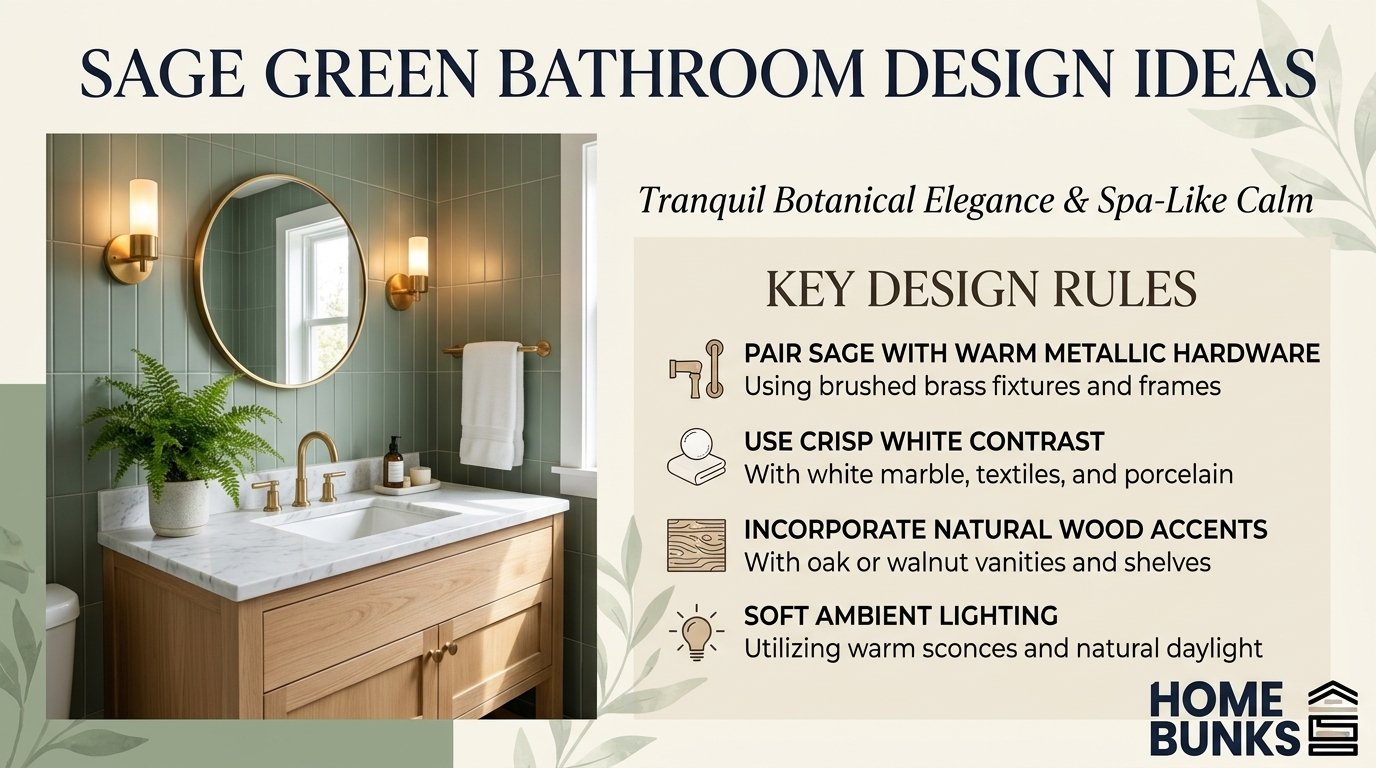
Sage suits bathrooms because it calms hard surfaces while still adding colour and personality. White fixtures, pale stone, and warm wood gain depth beside sage without visual conflict.
Sage pairs with modern, minimalist, rustic, vintage, and organic styles when undertone, light, and metal choices stay consistent. Style labels matter less than undertone matching and material harmony.
Sage should never dominate through colour alone, because texture, light, and materials create spa-like calm. Tile variation, wood grain, stone veining, and linen towels add depth beyond paint.
Sage works in small, large, primary, guest, and powder bathrooms with different depths and placements. Small rooms need lighter sage and reflective surfaces, while large bright rooms can carry deeper sage.
Sage Scale From Celadon to Forest
Pale celadon sits at the lightest end of the sage family, with silvery, almost white-green tones. Celadon suits windowless rooms, small rooms, and bathrooms needing maximum brightness.
Mid sage forms the classic middle point, with clear green character and balanced gray undertones. Mid sage suits most bathrooms with moderate daylight and white fixtures.
Olive sage adds warmer, earthier depth through yellow and brown undertones. Olive sage suits warm wood, terracotta accents, and rooms with cooler light needing warmth.
Deep forest green sits at the darkest end, with inky, dramatic depth and strong presence. Deep forest suits bright rooms, large showers, and feature walls with pale layers nearby.
Order samples from three points on the scale, pale, mid, and deep, then tape them together in the shower area. Side-by-side samples reveal depth differences far better than single swatches viewed alone.
Warm Sage Compared With Cool Sage
Warm yellow-leaning sage feels earthy and cozy through golden undertones. Warm sage suits north-facing rooms, cooler light, walnut wood, and brass fixtures.
Cool gray-blue sage feels crisp and coastal through blue and gray undertones. Cool sage suits bright rooms, modern styles, chrome or nickel fixtures, and pale oak floors.
Mixing warm sage with cool tile creates the most common clash in sage bathrooms. Warm paint beside cool blue-gray tile often reads dirty, muddy, or accidental rather than calm.
Match paint, tile, wood, and metal from the same undertone family before buying any single element. Undertone agreement matters more than exact shade matching across products.
Test warm and cool samples beside existing floors and tiles, because existing finishes often decide undertone direction. New sage must harmonise with fixed floors, tubs, and countertops.
Sage Compared With Olive, Mint, and Eucalyptus
Olive green runs warmer and deeper than classic sage, with stronger yellow and brown character. Olive suits earthy bathrooms, while sage suits softer, grayer, and calmer bathrooms.
Mint green runs brighter, cooler, and more saturated than sage, with less gray restraint. Mint can feel playful or retro, while sage feels muted, timeless, and spa-like.
Eucalyptus green sits close to sage, with soft gray-green tones and natural leaf character. Eucalyptus works as a shade name inside the sage family, not as a separate colour system.
Muted moss adds deeper, earthier green within the same subdued family as dusty and gray sage. Moss accents suit towels, plants, and ceramics better than whole-room paint.
Mix sage shades within one subdued family rather than matching everything exactly. Dusty, gray, olive, eucalyptus, and moss tones create collected depth when undertones agree.
Choose Sage by Room Light
Room light should decide sage depth before taste, trends, or photographs decide it. Bright rooms can carry deeper sage, moderate rooms suit mid sage, and dim rooms need pale sage.
Window direction changes sage more than room size in many bathrooms. North windows give cooler, weaker light, south windows give stronger, warmer light, and windowless rooms rely entirely on artificial light.
Existing tile and floor colours also change sage reading, because fixed surfaces reflect colour into walls. Red-toned tiles clash with sage, while cool gray floors push sage toward blue.
Layered lighting rescues many dim bathrooms better than lighter paint alone. Multiple warm light sources, mirrors, and reflective tile create brightness that single overhead lights cannot match.
Check sage samples under actual bathroom lighting, including daylight and evening vanity light. A shade that looks lovely at 10 a.m. can look flat or sickly under warm bulbs at night.
Window Rooms and Bright Bathrooms
Bright bathrooms with good windows can carry deep sage on shower walls, vanities, or feature walls. Daylight keeps deep sage fresh, while pale layers prevent heaviness.
Gloss tile suits bright bathrooms particularly well, because daylight catches moving gloss across walls. Gloss on deep green walls creates lively surfaces that matte finishes cannot match.
Large mirrors opposite windows bounce daylight across bright bathrooms and expand visual space. Mirror placement matters more than mirror size alone for light distribution.
Pale bedding-style towels and white fixtures provide bright notes beside deep sage in bright rooms. Bright notes prevent deep sage from reading as a dark hole.
Test deep sage samples with shower light on, because shower areas receive different light than vanity areas. Shower light reveals how deep tile will look during daily use.
Windowless and Low Light Bathrooms
Windowless bathrooms need pale sage, layered light, and reflective surfaces together. Pale sage alone cannot rescue a room with one dim overhead bulb.
Light reflectance value helps compare paint brightness, with higher values reflecting more light. One competitor guide suggests values above 40 for windowless rooms, as page guidance rather than a standard.
Use large-format tiles to minimise grout lines in windowless rooms, because fewer grout lines create smoother, brighter surfaces. Large tiles also simplify cleaning in small spaces.
Place mirrors opposite light sources to double available light in windowless bathrooms. Backlit mirrors add glow without harsh overhead brightness.
Keep sage accents only in very dark rooms when pale sage still feels heavy. White walls with sage towels, shower curtains, and accessories deliver colour without darkness.
Sample Board Protocol That Prevents Regret
Paint large sample boards, not small wall patches, before buying full paint cans. Large boards show undertone, depth, and interaction with tile, wood, and metal far better.
Move sample boards beside basin, bath, floor, and mirror to check interaction with fixed surfaces. Sage that suits one wall can clash beside a different tile or countertop.
Check samples at dawn, noon, and evening under daylight and artificial light. Morning light reveals cool undertones, noon light reveals true colour, and evening light reveals warm shifts.
Live with samples for several days when possible, because first impressions change with weather and lamp use. A calm choice after several days usually survives longer than a rushed favourite.
Order tile samples alongside paint samples and view them together in the bathroom. Paint and tile must agree on undertone before either purchase becomes permanent.
Paint, Tile, or Vanity: Where to Put Sage
Sage placement decides commitment, cost, reversibility, and light risk more than shade choice alone. Full walls commit most, vanities commit moderately, and accessories commit least.
Full sage walls create immersive, spa-like rooms when light and size support the depth. Full walls suit larger bathrooms, bright rooms, and colour-drenched designs.
Accent walls behind vanities or tubs deliver personality with lower commitment and easier repainting. Accent walls suit small bathrooms, renters, and colour-cautious renovators.
Two-tone walls split sage low and white high to protect lower walls from water while keeping rooms bright. Two-tone walls suit small bathrooms, powder rooms, and traditional styles.
Colour drenching paints walls, trim, doors, and ceilings in the same sage shade for enveloping calm. Colour drenching suits confident renovators with good light, not dim rooms.
Vanity-only sage keeps walls white or neutral while adding colour at hand height. Vanity sage suits small bathrooms, budget refreshes, and rooms with fixed tile colours.
Full Walls and Colour Drenching
Full sage walls need consistent light and pale layers to avoid heaviness. White fixtures, pale floors, and warm lamps prevent full sage rooms from feeling closed.
Colour drenching makes small bathrooms feel wrapped and cozy rather than chopped by white ceilings. Drenching works best with mid sage, warm light, and simple fixtures.
Paint doors the same sage as walls for cohesive, architectural rooms with fewer visual breaks. Door matching suits full-wall designs better than accent-wall designs.
Paint ceilings sage with caution in low-ceiling rooms, because dark ceilings can lower perceived height. Pale sage ceilings suit wrapped designs, while white ceilings suit height needs.
Test full-wall sage with towels, mirrors, and lamps in place, because empty rooms exaggerate colour. Furnished rooms reveal whether sage feels calm or overwhelming.
Accent Walls and Two-Tone Walls
Accent walls behind tubs create elegant focal points without renovating entire bathrooms. Freestanding tubs gain drama beside sage accent walls with warm white surroundings.
Accent walls behind vanities anchor mirrors, sconces, and countertops into one composition. Vanity accent walls suit small bathrooms needing personality without full colour.
Two-tone walls divide sage low and white high at chair rail, tile, or paint lines. Lower sage protects walls near tubs and sinks, while upper white keeps rooms open.
Paneling divisions around 36 to 40 inches high suit many bathrooms, according to competitor guides. Paneling height should follow vanity height, mirror height, and room proportions.
Keep colour stops soft rather than harsh in two-tone designs, because subtle divisions feel intentional. High-contrast paneling lines can chop small rooms visually.
Vanity Only and Accessories Only
Vanity-only sage delivers the fastest designed look for plain bathrooms with white walls. Painted vanities with warm hardware transform rooms without tile or wall changes.
Paint only lower cabinets sage while keeping countertops and upper shelving white or light wood. Lower sage grounds rooms visually, while white above reflects light.
Accessories-only sage suits renters and budget refreshes through towels, shower curtains, baskets, and ceramics. Accessories change mood in minutes without tools or landlord approval.
Layer sage accessories in one shade family rather than matching every item exactly. Towels, mats, and ceramics in dusty, gray, and olive sage create collected depth.
Keep everyday products edited and hidden where possible, because bright packaging fights sage calm. Transfer unattractive packaging into simple containers for vanity styling.
Sage Green Vanities That Work
Sage vanities anchor bathrooms with subtle colour while brass, black, or chrome hardware adds character. Vanity colour, countertop, mirror, and lighting must work as one composition.
Satin or matte painted vanity finishes hide fingerprints and water marks better than high-gloss finishes. High-gloss vanities show marks around sinks faster in family bathrooms.
Solid wood cabinets suit painted sage finishes through durability and repairability. Laminate vanities suit budget refreshes, but painted wood often ages more gracefully.
Ask for colour samples on actual vanity doors, not just paint chips, before committing. Green changes substantially on vertical surfaces with shadow lines and cabinet detailing.
Pair sage vanities with white marble or quartz countertops for timeless contrast and brightness. White counters reflect light, while sage cabinets ground the composition.
Floating Vanities for Small Bathrooms
Floating vanities open visible floor space and make tight bathrooms feel noticeably larger. Wall-mounted vanities also simplify floor cleaning, because mops pass underneath easily.
Floating vanities suit small bathrooms, powder rooms, and guest bathrooms particularly well. Open floor space matters more than cabinet volume in compact rooms.
Choose streamlined floating vanities with handleless drawers for clean, contemporary looks. Handleless drawers suit modern bathrooms, while knobs suit traditional bathrooms.
Add concealed LED lighting beneath floating vanities for gentle evening illumination and floating effects. Under-vanity light also serves as night lighting without overhead glare.
Check plumbing and wall support before choosing floating vanities, because wall-mounted units need proper framing and plumbing access. Professional advice prevents costly installation surprises.
Freestanding Vanities and Double Vanities
Freestanding vanities suit larger bathrooms with floor space for legs, storage, and cleaning access. Freestanding vanities offer furniture-like presence and traditional character.
Double vanities suit primary bathrooms and couples through two sinks, two mirrors, and two storage zones. Double vanities need sufficient width, plumbing, and walkway clearance.
Keep double vanity sage consistent across both cabinets to avoid mismatched colour blocks. Consistent sage with one countertop material creates calm symmetry.
Use oversized mirrors above vanities to create focal points and bounce light. Oversized mirrors suit floating vanities particularly well, because mirrors expand visual space.
Balance sage vanities with warm white walls and pale stone floors for fresh, balanced rooms. Pale surroundings prevent sage cabinets from dominating small spaces.
Vanity Countertops and Sinks
White marble countertops elevate sage vanities through veining, brightness, and timeless character. Marble needs sealing and pH-neutral cleaners to prevent etching and staining.
White quartz countertops suit busy family bathrooms through durability, stain resistance, and consistent colour. Quartz avoids marble sealing and etching concerns while keeping brightness.
Vessel sinks add sculptural character above sage vanities, especially round ceramic or stone basins. Vessel sinks need careful height planning, because basin height affects faucet reach.
Undermount sinks suit clean, contemporary sage vanities through seamless counters and easy wiping. Undermount sinks hide rims and simplify counter cleaning.
Pedestal sinks suit small powder rooms with sage walls and limited storage needs. Pedestal sinks sacrifice storage, so wall shelves or baskets must compensate.
Sage Green Tiles That Hold Up
Tile decisions outlast paint decisions, so tile samples, grout, finish, and sealing deserve extra care. Tile covers wet zones where mistakes cost time, money, and disruption.
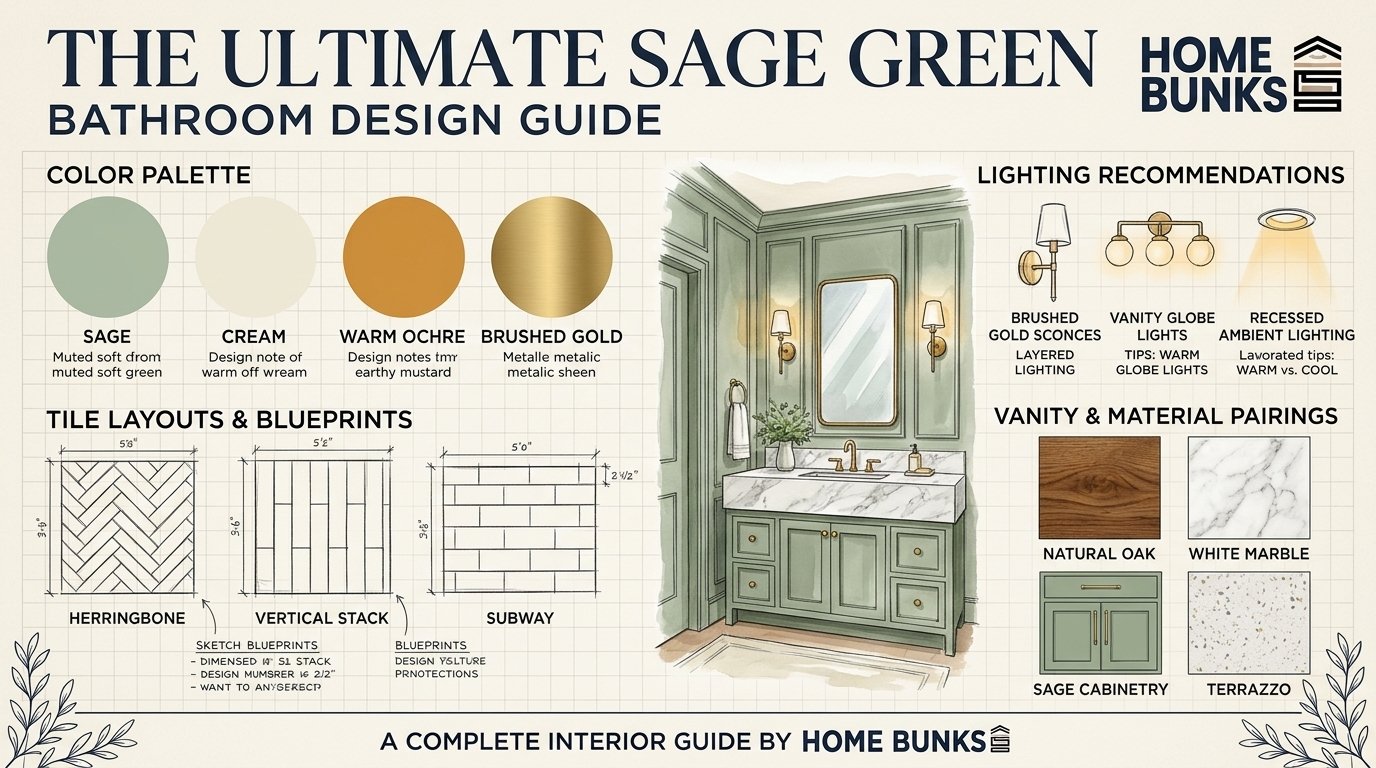
Subway tile offers classic, timeless sage shower surfaces through simple rectangular shapes and clean grout lines. Subway tile suits modern, traditional, and farmhouse bathrooms alike.
Zellige tile offers handmade variation, glaze depth, and organic charm through hand-cut clay tiles. Zellige variation reads as soft shimmer over whole showers, not busy pattern.
Square tile offers calm order in small bathrooms through simple grids that organise busy rooms. Square grids suit rooms filled with toilets, vanities, showers, towels, and bottles.
Herringbone tile adds movement and custom character through angled layouts that catch light differently. Herringbone suits shower floors, feature walls, and vanity backsplashes with extra installation time.
Mosaic tile adds texture, grip, and small-scale interest through many grout lines and tiny pieces. Mosaic suits shower floors, niches, and compact bathrooms needing slip resistance.
Zellige Tile: Variation, Lippage, and Sealing
Zellige tiles vary slightly in tone, thickness, and edge because handmade clay production creates natural variation. Variation should read as intentional texture, not manufacturing defect.
Lippage means slight height differences between neighbouring tiles, and lippage forms part of the zellige look. Tilers accustomed to flat porcelain may try correcting lippage, so discuss expectations before installation.
Seal zellige tile and grout at installation and periodically afterwards according to maker guidance. Sealing protects porous clay and grout from moisture, staining, and discolouration.
Ask for tight grout joints around 1/16 inch so glaze edges sit close and surfaces read continuously. Tight joints suit zellige better than wide joints that emphasise uneven edges.
Consider zellige-look porcelain or ceramic when cost or maintenance concerns outweigh handmade variation. Porcelain lookalikes offer wavy glazes with easier maintenance and lower variation.
Subway, Square, and Herringbone Tile
Subway tile in sage green feels clean, calming, and slightly retro, especially in classic layouts. Pair subway tile with white or light gray grout for clean, unbusy surfaces.
Square tile laid straight in stack bond reads modern, while offset layouts read traditional. Stack bond suits simple rooms, while offset layouts suit vintage and farmhouse rooms.
Add curves through sinks, mirrors, and lights when square tile dominates rooms. Round basins, round mirrors, and ribbed pendants prevent square grids from feeling rigid.
Herringbone marble mosaic adds texture without loud colour, because small rectangles catch light at different angles. Herringbone suits large bathrooms seeking spa calm rather than drama.
Budget extra installation time for herringbone layouts, because angled cuts take longer than straight layouts. Herringbone also creates more waste from cut pieces.
Grout Colour Decisions
Grout colour changes tile reading more than most readers expect, because grout lines frame every tile. White grout brightens tile, gray grout softens contrast, and matched grout creates seamless surfaces.
White or light gray grout suits sage subway tile for clean, classic results. Light grout keeps small showers bright, though light grout needs regular cleaning.
Sage-matched grout suits zellige and tonal designs by creating continuous surfaces. Matched grout hides joints and emphasises glaze variation over grid lines.
Dark grout suits modern contrast designs but emphasises grid patterns and shows soap residue differently. Dark grout needs testing beside tile under bathroom light.
Choose stain-resistant grout for shower floors and mosaics, because many small pieces create many grout lines. High-quality grout protects against discolouration and simplifies cleaning.
| Tile type | Best grout starting point | Watch out for |
|---|---|---|
| Sage subway tile | White or light gray grout | Light grout staining in showers |
| Sage zellige tile | Tight, sage-matched grout | Wide joints emphasising uneven edges |
| Sage square tile | Light gray grout for calm grids | Dark grout creating busy grids |
| Sage herringbone tile | Grout close to tile colour | Contrasting grout breaking herringbone flow |
| Sage mosaic floor tile | Stain-resistant grout | Many grout lines needing regular cleaning |
Floors, Walls, and Ceilings in Sage
Floor choices affect light, grip, cleaning, and colour harmony more than wall choices alone. Floors reflect light upward, support foot traffic, and meet water daily.
Light stone floors suit sage bathrooms through brightness, natural variation, and timeless character. Pale stone floors bounce light and balance sage walls or vanities.
Terrazzo floors add playful texture and personality through decorative stone fragments in cream, beige, gray, and muted green. Terrazzo suits contemporary bathrooms with simple walls.
Hexagon floor tiles add geometric interest without strong colour, especially in gray or sage tones. Hexagon tiles suit small bathrooms, powder rooms, and vintage-inspired designs.
Large-format floor tiles minimise grout lines and create smoother, brighter surfaces. Large tiles suit windowless rooms and modern bathrooms seeking calm expanses.
Wainscoting, Shiplap, and Paneling
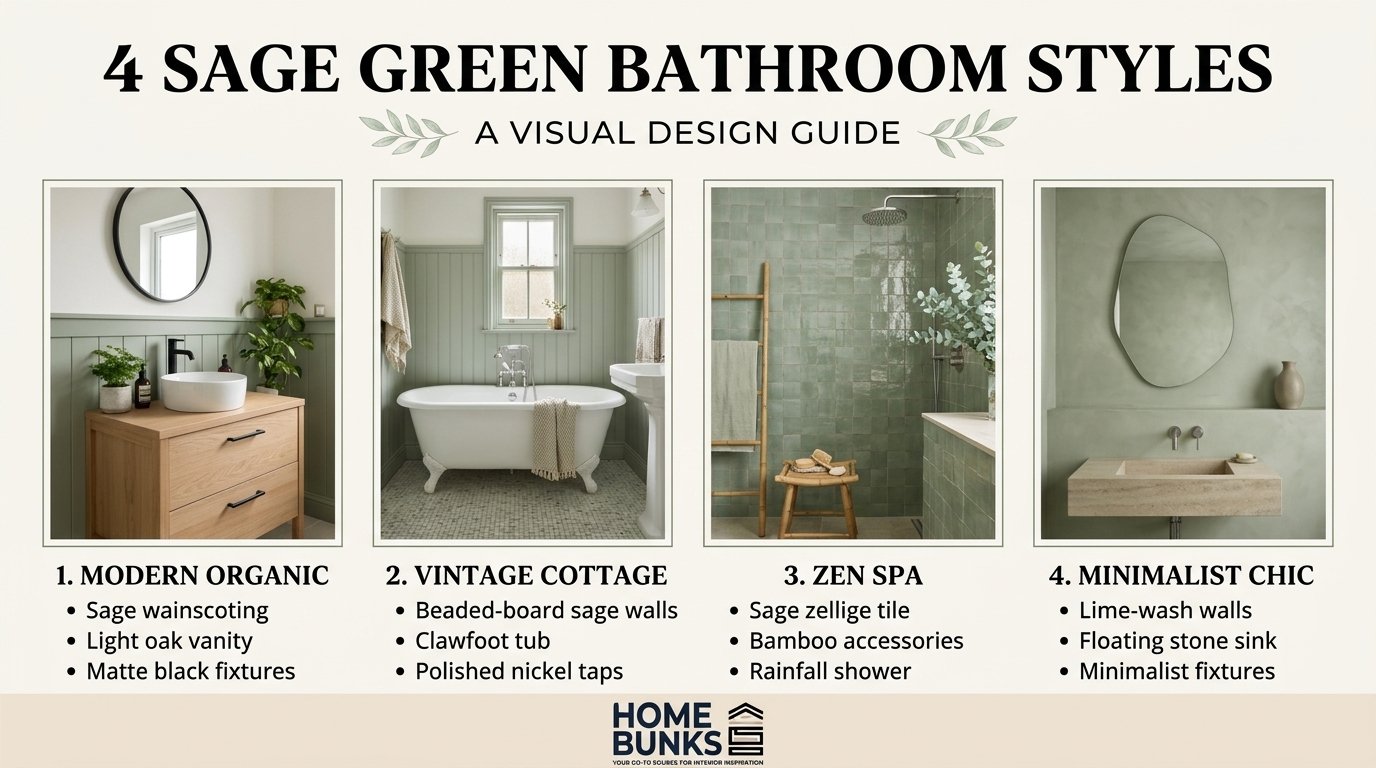
Wainscoting adds classic architectural character through painted paneling on lower walls. Sage wainscoting with white upper walls keeps rooms bright and balanced.
Shiplap adds horizontal or vertical texture through board lines that suit farmhouse and coastal bathrooms. Sage shiplap with matte black vanities creates cozy modern contrast.
Board-and-batten paneling adds contemporary structure through vertical battens and flat panels. Board-and-batten suits transitional bathrooms with simple fixtures.
Use moisture-resistant paneling materials near water, because standard wood panels warp with steam and splashes. Sealed finishes and proper ventilation protect paneling longevity.
Keep paneling divisions subtle with soft colour stops rather than harsh contrast lines. Soft divisions feel intentional, while harsh lines chop small rooms visually.
Vertical Tile and Floor-to-Ceiling Tile
Vertical slim tiles draw eyes upward and make ordinary 8-foot ceilings feel taller. Vertical orientation counters dark colour weight in narrow bathrooms particularly well.
Floor-to-ceiling tile creates immersive shower rooms with continuous surfaces and architectural presence. Floor-to-ceiling tile suits walk-in showers, wet rooms, and loft bathrooms.
Whole-shower zellige reads calmer than small zellige patches, because variation becomes one shimmering surface. Small patches can look like samples, while whole showers look architectural.
Keep floors quiet when walls use strong tile, because competing strong surfaces create visual noise. Quiet travertine, pale stone, or light wood floors balance bold tile walls.
Plan shower niches during framing and size niches to whole tile numbers to avoid thin slivers. Slope niche bases slightly toward showers so water drains out properly.
Fixture Finishes: Brass, Black, Chrome
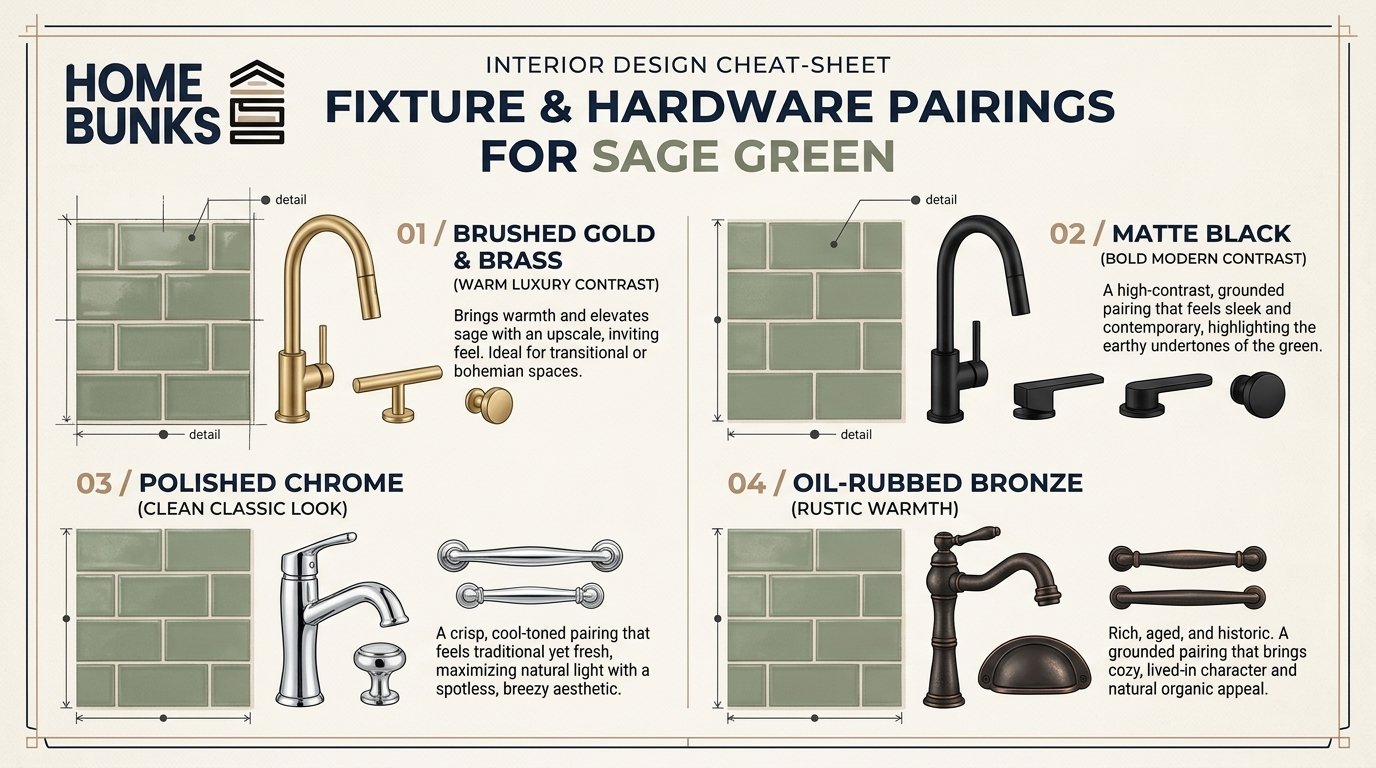
Fixture finish consistency matters more than fixture luxury in sage bathrooms. One finish across faucets, towel bars, shower fittings, and cabinet pulls creates cohesion.
Brass and bronze warm sage bathrooms through golden tones, patina, and vintage character. Aged brass suits deep sage, while brushed brass suits pale and mid sage.
Unlacquered brass develops patina over time, adding character that suits organic and vintage bathrooms. Patina should feel intentional, not neglected, through regular gentle cleaning.
Matte black fixtures create modern contrast against soft sage walls and white counters. Matte black suits minimalist and urban bathrooms, though matte finishes show water marks differently.
Chrome and nickel keep cool sage crisp and coastal through bright, reflective surfaces. Chrome suits modern bathrooms, while nickel offers softer, warmer reflections than chrome.
Brass Care, Patina, and Water Marks
Brass shows water marks more than matte finishes, especially polished brass beside pale marble. Quick wiping after use prevents buildup and preserves warm glow.
Unlacquered brass patina should develop evenly through gentle cleaning and consistent use. Harsh cleaners strip patina unevenly and create blotchy surfaces.
Brushed brass hides water marks better than polished brass, because brushed textures diffuse light and marks. Brushed brass suits busy family bathrooms better than polished brass.
Clean brass with gentle, maker-approved methods rather than abrasive pads or acidic cleaners. Abrasive cleaning scratches finishes and accelerates uneven patina.
Match brass across shower, faucet, mirror, and hardware for cohesive warmth, even when brass tones vary slightly. Consistent warm metal reads intentional, while mixed warm and cool metals read accidental.
Matte Black and Chrome Choices
Matte black fixtures suit sage bathrooms with warm lighting, because warm light softens black contrast. Cool light beside matte black can feel stark and clinical.
Choose matte black over glossy black to avoid constant fingerprint marks on faucets and handles. Matte surfaces hide fingerprints better in busy bathrooms.
Chrome fixtures suit cool sage and modern bathrooms through crisp reflections and easy cleaning. Chrome pairs well with white tile, light gray grout, and pale wood.
Nickel fixtures offer softer reflections than chrome while keeping cool, coastal character. Nickel suits transitional bathrooms that need brightness without chrome harshness.
Avoid mixing warm and cool metals casually, because mixed metals break sage calm. Choose one metal family, then repeat it across faucets, bars, mirrors, and pulls.
| Fixture finish | Best sage pairing | Cleaning note | Style note |
|---|---|---|---|
| Aged brass | Deep sage, warm wood | Gentle cleaning, patina expected | Vintage, organic, warm |
| Brushed brass | Pale and mid sage | Wipes hide marks better | Modern classic, spa |
| Matte black | Mid and deep sage | Matte hides fingerprints | Modern, urban, contrast |
| Chrome | Cool sage, white tile | Easy wiping, bright reflections | Modern, coastal, crisp |
| Nickel | Cool sage, transitional rooms | Softer reflections than chrome | Transitional, calm, bright |
Lighting That Keeps Sage Green, Not Gray
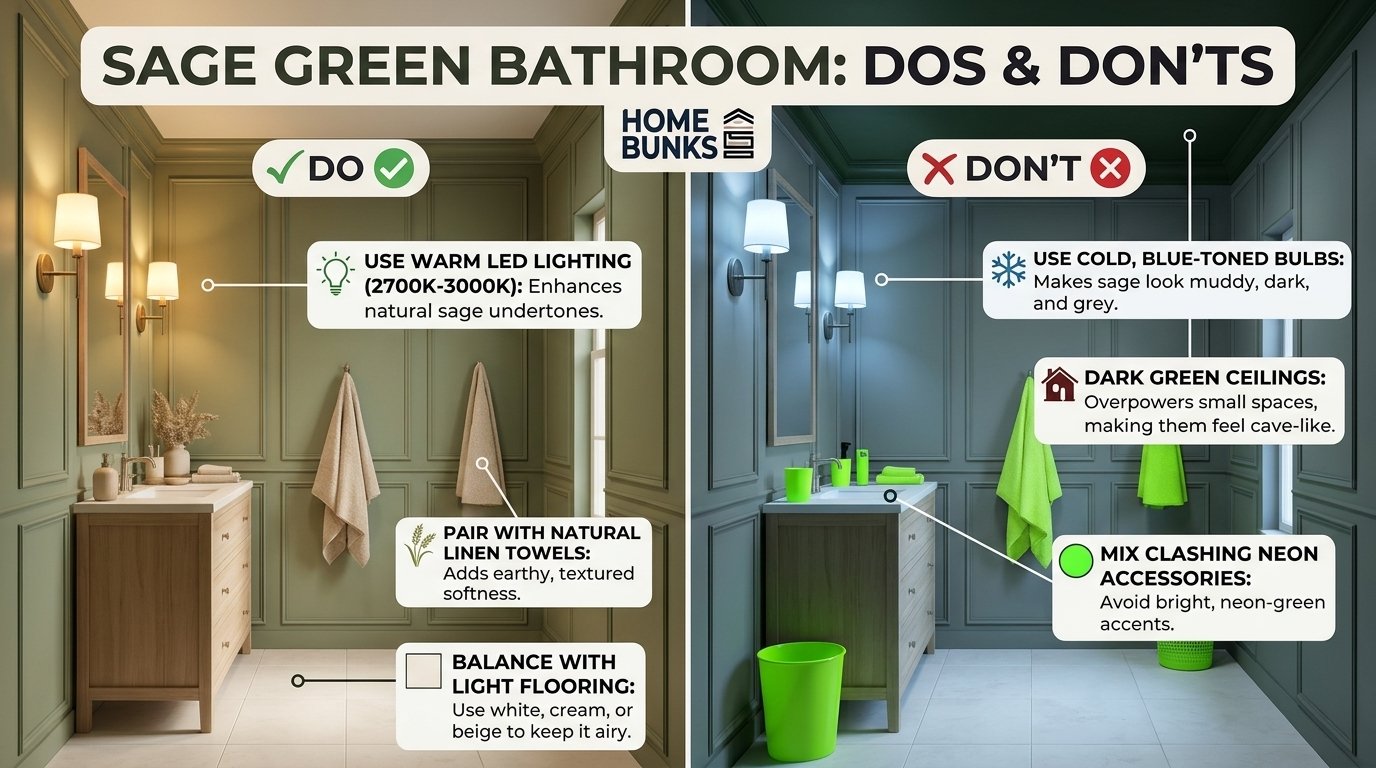
Lighting decides whether sage reads green, gray, blue, or muddy more than paint choice alone. Cool LED light can make sage appear gray, blue, or sterile.
Warm, diffused lighting makes sage softer and earthier through opal glass, linen shades, frosted glass, and warm bulbs. Warm light suits spa bathrooms, vintage bathrooms, and organic modern bathrooms.
Layer lighting through sconces, pendants, mirrors, and recessed lights rather than relying on one bright overhead fixture. Layered lighting makes even small bathrooms feel considered.
Keep bulb temperature consistent throughout rooms, ideally in warm white ranges around 2700K to 3000K. Mixed warm and cool bulbs make sage look inconsistent no matter how well paint was chosen.
Test sage samples under evening lighting as well as daylight, because vanity lights dominate morning and evening routines. Evening light reveals warm shifts that daylight hides.
Sconces, Mirrors, and Shower Light
Wall sconces beside vanity mirrors cast flattering, ambient glow that highlights sage depth. Sconces suit primary bathrooms, guest bathrooms, and powder rooms alike.
Backlit mirrors add amber glow and soft illumination without harsh overhead brightness. Backlit mirrors suit dark sage bathrooms particularly well, because amber balances cool green.
Shower lighting deserves separate attention, because shower tile receives different light than vanity areas. Lit niches with warm LEDs turn ordinary bottles into soft glows.
Recessed lighting with warm bulbs suits general bathroom illumination when dimmers control brightness. Recessed lights should supplement sconces, not replace them entirely.
Use frosted glass and linen shades to diffuse light and prevent harsh shadows on sage walls. Diffused light softens texture and colour transitions across tile and paint.
Kelvin, Dimmers, and Night Light
Colour temperature measured in Kelvin shapes sage reading more than brightness alone. Lower Kelvin values look warmer, while higher Kelvin values look cooler and more alerting.
Warm white bulbs around 2700K to 3000K suit most sage bathrooms, according to competitor guides. Warm white keeps sage earthy, while cool white pushes sage toward gray or blue.
Dimmers allow evening light to soften gradually and adapt bathrooms from morning routines to evening baths. Dimmers suit sconces, pendants, and recessed lights alike.
Under-vanity LED lighting provides gentle night illumination without waking household members or creating glare. Night light suits family bathrooms and guest bathrooms particularly well.
Avoid bright overhead light as the sole source, because single overhead lights flatten sage texture and colour. Layered warm light reveals tile variation, wood grain, and stone veining.
Small Sage Green Bathrooms
Small sage bathrooms succeed through light, floating furniture, and reflective surfaces, not through dark colour or heavy fixtures. Pale sage, glossy tile, and large mirrors expand visual space.
Floating vanities open floor space and make tight bathrooms feel larger, while large mirrors bounce light across rooms. Wall-mounted storage and slim fixtures preserve walkways.
Vertical elements draw eyes upward through vertical tile, tall mirrors, and floor-to-ceiling wallpaper prints. Vertical lines make low ceilings feel taller without structural changes.
Keep accessories minimal and purposeful in small bathrooms, because cluttered counters fight calm spacious feelings. One tray, one plant, and one soap set suffice for most small vanities.
Use wall-hung sinks and toilets when floor space matters most, because visible floor creates openness. Wall-hung fixtures suit modern small bathrooms with proper plumbing support.
Small Room Vanity and Mirror Choices
Compact floating vanities around 30 to 36 inches wide suit many small bathrooms, though exact width must follow room measurements. Vanity width should leave walkway clearance and door swing space.
Round mirrors soften rectangular small bathrooms through curves that contrast tile grids. Round mirrors suit floating vanities, pedestal sinks, and vintage-inspired rooms.
Oversized mirrors expand small bathrooms visually when placed above vanities or opposite light sources. Oversized mirrors need secure fixings and proper wall support.
Transparent shower screens maintain open layouts in small bathrooms better than opaque curtains or heavy frames. Frameless glass preserves sightlines across small rooms.
Recessed shower niches reduce clutter by holding bottles inside walls rather than on ledges or floors. Niches keep tile surfaces clean and shower routines organised.
Small Room Tile and Colour Tricks
Glossy tile reflects light around small bathrooms better than matte tile on walls. Gloss suits walls with daylight, while matte and textured tile suits floors for grip.
Split walls with sage tile low and white above to protect lower walls while keeping upper walls bright. Split walls suit small bathrooms, because white upper walls read as open space.
Use small-scale mosaic tiles in compact bathrooms for texture and grip without overwhelming rooms. Small mosaics suit shower floors, niches, and feature strips.
Avoid large-format tiles in very small bathrooms when scale feels cramped, according to some competitor guides. Large tiles suit larger rooms better, though large tiles reduce grout lines.
Keep sage shade lighter in small bathrooms unless strong daylight and pale layers support deeper sage. Light sage reflects light, while deep sage needs lamps and mirrors to avoid heaviness.
Windowless and Dark Sage Bathrooms
Windowless bathrooms need pale sage, layered light, and reflective surfaces as a complete system. Pale paint alone cannot rescue rooms with single dim bulbs.
Use bright white fixtures with sage accents in windowless powder rooms used briefly. Bright white maximises reflection, while sage towels and accessories add colour safely.
Layer sconces, mirrors, and recessed lights to create brightness from multiple angles. Layered light prevents single-bulb shadows that make sage look muddy.
Choose glossy wall tile and large mirrors to bounce artificial light across windowless rooms. Glossy surfaces act as light reflectors when daylight remains unavailable.
Keep ceilings white in windowless rooms unless pale sage ceilings suit wrapped designs with strong lamps. White ceilings maximise perceived height and brightness.
Dark Sage in Low Light: When to Avoid It
Deep sage in windowless bathrooms feels heavier than expected during daily morning routines. Deep sage suits powder rooms used briefly better than primary bathrooms used daily.
Dark floors with dark sage walls create double darkness that lamps struggle to lift. Avoid dark floors beside dark sage walls unless pale bedding-style towels and mirrors compensate.
Single ceiling fixtures turn deep green muddy in windowless rooms, because overhead light creates shadows and uneven colour. Layered sconces and mirror lights prevent muddy readings.
Save darkest sage shades for bright rooms or brief-use powder rooms, according to competitor guidance. Primary bathrooms deserve mid or pale sage when light remains limited.
Test deep sage samples with shower and vanity lights on before committing to whole rooms. Shower and vanity lights reveal how deep sage will look during actual routines.
Rental Sage Bathrooms, No Paint
Rental bathrooms can achieve sage warmth without painting, tiling, or drilling through textiles, accessories, and removable products. Portable items travel between homes and need no landlord approval.
Swap shower curtains, towels, bath mats, and ceramics for the fastest rental transformation. Linen sage shower curtains change mood in minutes and suit any bathroom.
Use sage towels and woven baskets to tie neutral rental bathrooms together instantly. Rolled sage towels on ladders, cream towels beside them, and seagrass baskets add warmth without tools.
Hang mirrors, shelves, and plants with removable strips within weight limits for lightweight items. Removable strips suit mirrors, small shelves, and hanging plants without wall holes.
Build around portable pieces such as vintage cabinets, stools, framed prints, and plants. Portable pieces bring sage into rentals without becoming part of fixed structures.
Removable Wallpaper and Peel-and-Stick Rules
Removable botanical wallpaper adds sage pattern without paint and suits renter bathrooms particularly well. Genuine removable wallpaper should lift cleanly at move-out when installed correctly.
Check lease terms before using removable wallpaper, because some landlords restrict adhesives even when products claim removability. Photograph walls before installation to document condition.
Use peel-and-stick tile only where packaging confirms suitability, because dry-zone products differ from shower products. Shower surrounds need shower-safe or fully waterproof labelling, not generic adhesive claims.
Test peel-and-stick products in inconspicuous areas before covering large surfaces. Adhesive strength, removal ease, and moisture tolerance vary by product and wall condition.
Avoid painting over white fixtures in rentals, because fixture paint rarely reverses cleanly. Add sage through textiles and decor instead of permanent fixture changes.
Rental Zones: Dry, Splash, and Shower
Dry zones allow the widest removable options, including wallpaper, framed prints, baskets, and textiles. Dry zones sit away from direct water and steam exposure.
Splash zones near sinks and tubs need moisture-resistant choices, such as sealed accessories, wipeable surfaces, and removable products rated for humidity. Splash zones exclude unsealed paper and raw wood.
Shower zones need fully waterproof products only, including shower-safe tile, sealed niches, and waterproof curtains. Generic peel-and-stick products without shower labelling should stay out of shower zones.
Check product packaging for shower-safe, waterproof, and humidity ratings before installation in wet areas. Packaging claims matter more than marketing images or influencer examples.
Photograph rental bathrooms before and after refreshes to protect deposits and document removable changes. Photographs help prove that refreshes caused no permanent damage.
| Rental zone | Safe starting options | Avoid |
|---|---|---|
| Dry zone | Towels, baskets, prints, removable wallpaper, plants | Heavy drilling without approval |
| Splash zone | Sealed accessories, wipeable trays, humidity-rated products | Unsealed paper, raw wood, generic adhesives |
| Shower zone | Shower-safe tile only, waterproof curtains, sealed niches | Dry-zone peel-and-stick, unsealed wallpaper |
Primary, Guest, and Powder Room Branches
Room branches share sage principles, yet each branch changes durability, storage, and commitment. Primary bathrooms need durability, guest bathrooms need simplicity, and powder rooms allow drama.
Primary bathrooms suit mid sage with durable finishes, because daily use demands wipeable paint, sealed tile, and sturdy hardware. Primary bathrooms benefit from double vanities and layered lighting.
Guest bathrooms suit pale sage with simple layers, because visitors need calm, clean, and easy routines. Guest bathrooms benefit from clear surfaces, fresh towels, and simple fixtures.
Powder rooms allow deeper sage and bolder choices, because brief use tolerates drama better than daily use. Powder rooms suit colour drenching, dark accents, and statement mirrors.
Family bathrooms need fingerprint-resistant finishes, because children and multiple users create marks around sinks. Satin vanity finishes, brushed metals, and wipeable paint suit family use.
Primary Bathroom Durability
Primary bathrooms need satin or eggshell paint finishes that wipe clean and resist moisture near showers. Flat paint shows water spots and wears faster in steamy rooms.
Primary bathrooms need stain-resistant grout for shower floors and high-use areas. Stain-resistant grout simplifies cleaning and prevents discolouration over time.
Primary bathrooms need durable countertops such as quartz for busy routines, or sealed marble for careful users. Countertop choice should follow cleaning habits, not photographs alone.
Primary bathrooms need layered lighting for morning and evening routines, including sconces, mirrors, and dimmers. Morning routines need bright task light, while evening baths need soft ambient light.
Primary bathrooms need closed storage for everyday products, because visible clutter fights sage calm. Closed vanities, medicine cabinets, and baskets hide products effectively.
Powder Room Drama
Powder rooms suit deep sage, colour drenching, and bold mirrors because brief visits tolerate intensity. Powder rooms can experiment with shades that primary bathrooms should avoid.
Powder rooms suit statement sinks and vintage fixtures through small-scale drama without daily durability pressure. Vessel sinks, clawfoot-inspired pieces, and brass fixtures shine in powder rooms.
Powder rooms suit patterned floors and bold tile as focal points in compact spaces. Patterned floors add personality without overwhelming larger primary bathrooms.
Powder rooms still need warm light and pale accents to prevent deep sage from feeling cave-like. Warm sconces and white towels balance deep sage drama.
Powder rooms suit one dramatic element, such as a sage ceiling, a bold mirror, or a patterned floor. Multiple dramatic elements compete and break calm focus.
Storage, Mirrors, and Vanity Styling
Storage decisions protect sage calm more than decoration decisions, because visible clutter breaks muted colour systems quickly. Solve storage before styling surfaces.
Closed vanity storage hides everyday products and keeps counters calm for sage styling. Drawers, cabinets, and medicine cabinets suit primary bathrooms better than open shelves alone.
Open shelves suit limited, calm displays with neutral ceramics, rolled towels, and plants. Open shelves fail when everyday products, colours, and shapes pile up without order.
Vanity styling should form one restrained arrangement, such as a tray, soap dispenser, bottle, and small plant. One arrangement beats scattered products across counters.
Transfer unattractive packaging into simple containers where practical, because bright packaging fights sage calm. Ceramic dispensers, amber bottles, and linen towels create cohesive vanity scenes.
Mirror Shapes and Placement
Round mirrors soften rectangular bathrooms and suit floating vanities, pedestal sinks, and vintage rooms. Round mirrors add curves that contrast tile grids and straight vanities.
Arched mirrors add old-world, romantic character through soft curves above vanities and tubs. Arched mirrors suit sage bathrooms with vintage fixtures and warm metals.
Oversized mirrors expand small bathrooms and create focal points above vanities. Oversized mirrors need secure fixings, especially above sinks and tubs.
Bronze-framed mirrors add warm architectural silhouettes beside sage walls and floating vanities. Bronze frames suit modern sage bathrooms with terrazzo and light wood.
Backlit mirrors add glow and modern polish while providing flattering task light. Backlit mirrors suit dark sage bathrooms, because amber glow balances cool green.
Plants and Greenery in Humid Bathrooms
Plants connect sage bathrooms to nature through green life that echoes wall and tile colours. Plants soften hard surfaces and add organic shapes to rectangular rooms.
Choose humidity-tolerant plants for bathrooms, because steam, splashes, and low light challenge many houseplants. Trailing pothos, ferns, and succulents suit different bathroom light levels.
Place plants near windows when possible, because bathroom plants still need light despite humidity tolerance. Low-light plants suit windowless bathrooms better than sun-loving plants.
Use ceramic pots in sage, cream, or terracotta to echo bathroom palettes without competing colours. Ceramic pots suit vanities, shelves, and floors across bathroom sizes.
Keep plants away from direct shower spray, because constant water damages leaves and pots. Plants belong on vanities, shelves, windowsills, and floors away from spray zones.
Cleaning and Care for Sage Bathrooms
Cleaning schedules protect sage investments, because pale grout, marble, brass, and linen show wear clearly. Follow maker guidance first, then general material care.
Clean painted walls with gentle, damp cloths and avoid abrasive pads that damage satin finishes. Gentle cleaning preserves sage colour and wipeable sheen.
Clean tile with pH-neutral cleaners to protect grout, glaze, and stone surfaces. Acidic cleaners etch marble, damage grout, and dull tile finishes over time.
Seal marble at installation and periodically afterwards according to fabricator guidance. Sealing reduces staining, though sealing does not make marble stain-proof.
Seal zellige tile and grout at installation and periodically afterwards according to tile maker guidance. Sealing protects porous clay from moisture and discolouration.
Grout, Marble, and Brass Care
Clean grout regularly with gentle brushes and pH-neutral cleaners to prevent discolouration in showers. Stain-resistant grout simplifies cleaning, though regular care still matters.
Avoid acidic cleaners on marble countertops and floors, because acids etch stone surfaces permanently. Use pH-neutral cleaners and wipe spills promptly.
Wipe brass fixtures after use to prevent water mark buildup, especially polished brass beside pale marble. Gentle wiping preserves warm glow without stripping patina.
Clean matte black fixtures with soft cloths to avoid scratches that reveal underlying metal. Matte finishes hide fingerprints, but abrasive cleaning damages matte coatings.
Squeegee shower walls after each shower to prevent hard water buildup on dark glossy tile. Squeegee routines take seconds and prevent stubborn mineral deposits.
Linen, Towels, and Shower Curtains
Wash linen shower curtains and towels according to labels, because linen care varies by weave and finish. Gentle cycles preserve linen texture better than harsh washing.
Wash sage towels separately from dark clothes initially to prevent dye transfer and fading. Separate washing preserves sage tones across towels, mats, and curtains.
Replace shower curtain liners regularly to prevent mould and mildew in humid bathrooms. Liners protect decorative curtains and simplify cleaning routines.
Dry towels and mats thoroughly between uses to prevent musty odours in humid bathrooms. Heated towel rails help drying, especially in cool or windowless bathrooms.
Rotate towels and accessories seasonally to refresh sage bathrooms without repainting or retiling. Seasonal rotation keeps rooms feeling current with minimal cost.
When Sage Green Fails, and How to Fix It
Sage failures usually trace to undertone, light, or existing finishes, not to sage itself. Diagnosis before repainting saves money and prevents repeated mistakes.
Gray shift signals cool light, cool tile, or cool grout pushing sage toward gray. Warm light, warm wood, and brass fixtures often restore green warmth.
Blue shift signals cool LED light or blue-leaning sage in bright, modern rooms. Warm bulbs, warm wood, and terracotta accents often soften blue readings.
Muddy shift signals warm sage beside cool tile, or yellow sage beside red-toned floors. Undertone matching and neutral grout often fix muddy readings.
Too-dark readings signal deep sage in low light without layered lamps or pale layers. Pale towels, mirrors, and additional warm lamps often lift dark rooms.
Clashing floors signal fixed tile or wood colours that fight new sage undertones. Neutral rugs, pale towels, and accessory sage often bridge clashes without retiling.
Diagnosis Table for Sage Problems
| Problem | Likely cause | Try this first |
|---|---|---|
| Sage looks gray | Cool light, cool grout, cool tile | Warm bulbs 2700K to 3000K, warm wood, brass |
| Sage looks blue | Cool LED, blue-leaning sage | Warm light, terracotta accents, warm wood |
| Sage looks muddy | Warm sage beside cool tile | Match undertones, neutral grout, pale layers |
| Sage looks too dark | Deep sage, low light, dark floor | Pale towels, mirrors, layered warm lamps |
| Sage clashes with floor | Red-toned tile, cool gray floor | Neutral rug, pale towels, accessory sage |
| Sage looks dated | Trendy pattern, mixed metals | Simple tile, one metal finish, timeless stone |
Fix by Light, Grout, and Metal
Fix by light first, because light changes sage more cheaply than repainting or retiling. Replace mixed bulbs with consistent warm bulbs and add sconces or mirror lights.
Fix by grout second, because grout colour frames tile reading strongly. Test grout samples beside tile under bathroom light before regrouting or resealing.
Fix by metal third, because metal finishes shift sage warmth or coolness. Brass warms sage, chrome cools sage, and matte black adds modern contrast.
Fix by towels and accessories fourth, because textiles add colour and warmth without permanent changes. Sage towels, cream towels, and terracotta accents adjust palette quickly.
Repaint or retile only after light, grout, metal, and textile fixes fail, because permanent changes cost most. Diagnosis prevents repeated permanent mistakes.
Sage Green Budget, Verified Live
Budget decisions should follow impact and reversibility, not decoration impact alone. Refresh items cost least and reverse easiest, while tile and remodels cost most.
Refresh tiers suit renters and budget renovators through shower curtains, towels, baskets, mirrors, and accessories. Refresh tiers deliver visible change without paint or tile.
Vanity tiers suit homeowners with plain bathrooms through painted vanities, hardware, countertops, and mirrors. Vanity tiers improve focal points without full remodels.
Shower tile tiers suit homeowners ready for wet-zone commitment through subway, zellige, or herringbone tile. Shower tile tiers need samples, grout decisions, and professional installation.
Full remodel tiers suit empty rooms or major renovations through paint, tile, vanity, fixtures, lighting, and storage. Full remodels need audits, samples, and professional scope first.
Budget Tiers and Scope Checks
Refresh scope includes textiles, accessories, mirrors, and lighting bulbs without plumbing, tiling, or painting. Refresh scope suits weekends and rental rules.
Vanity scope includes painting or replacing cabinets, hardware, countertops, and mirrors with plumbing checks for sinks and faucets. Vanity scope needs finish and hardware consistency.
Shower tile scope includes tile, grout, sealing, niches, and waterproofing checks with professional installation for wet zones. Shower tile scope needs sample testing and drain planning.
Full remodel scope includes layout, plumbing, electrical, ventilation, waterproofing, and finishes with licensed professionals and local code checks. Full remodel scope needs permits where local rules require them.
Verify every budget price live at purchase time, with retailer, date, and delivery terms. Competitor-reported prices change frequently and should never serve as current quotes.
Spend and Save Decisions
Spend where daily touch and water occur: faucets, shower fittings, tile, grout, and countertops. Daily touch and water justify durability and professional installation.
Save where visual impact stays low: trays, ceramics, baskets, and extra towels. Simple versions support sage looks without premium prices.
Spend on lighting quality, because warm, consistent bulbs and dimmers affect sage reading daily. Lighting quality beats decorative objects when budgets tighten.
Save on extra accessories initially, because accessories accumulate naturally over time. One tray, one plant, and one soap set suffice for most sage bathrooms.
Avoid trendy patterns that date quickly, because sage stays freshest with timeless materials. Marble, classic subway tile, and simple hardware outlast geometric wallpaper trends.
Sage Compared With Other Greens and Styles
Style comparisons prevent costly mixing mistakes, because sage shares traits with olive, mint, forest, Scandinavian, farmhouse, and modern styles. Shared traits do not make styles interchangeable.
Scandinavian bathrooms use sage with pale wood, white fixtures, and warm light for calm, natural rooms. Scandinavian sage suits light oak, linen towels, and simple fixtures.
Farmhouse bathrooms use sage with shiplap, vintage fixtures, and warm wood for cozy, traditional rooms. Farmhouse sage suits beadboard, clawfoot tubs, and brass fixtures.
Modern bathrooms use sage with matte black, frameless glass, and simple tile for clean, architectural rooms. Modern sage suits floating vanities, large mirrors, and minimal accessories.
Vintage bathrooms use sage with clawfoot tubs, brass fixtures, and patterned floors for romantic, traditional rooms. Vintage sage suits ornate mirrors, marble counters, and floral accents.
Organic modern bathrooms use sage with travertine, terrazzo, and natural wood for warm, textured rooms. Organic modern sage suits handmade tile, stone basins, and woven baskets.
| Style | Sage depth | Wood and stone | Metal finish | Key feature |
|---|---|---|---|---|
| Scandinavian | Pale to mid sage | Light oak, pale stone | Brass or nickel | Light, linen, simple forms |
| Farmhouse | Mid sage | Warm wood, beadboard | Aged brass | Shiplap, clawfoot tub |
| Modern | Mid to deep sage | Pale stone, quartz | Matte black | Floating vanity, frameless glass |
| Vintage | Mid sage | Marble, warm wood | Aged brass | Clawfoot tub, ornate mirror |
| Organic modern | Pale to mid sage | Travertine, terrazzo, oak | Brushed brass | Zellige tile, stone basin |
Decision System for Every Bathroom
A decision system beats a shopping list for sage bathrooms, because rooms differ by light, size, existing finishes, and budget. Decide light first, then undertone, placement, tile, metal, lighting, and storage.
Light decides depth: bright rooms allow deep sage, moderate rooms suit mid sage, dim rooms need pale sage. Existing floors and tiles adjust depth further.
Undertone decides paint, tile, wood, and metal: warm sage pairs with walnut and brass, cool sage pairs with pale oak and chrome. Undertone agreement prevents muddy results.
Placement decides commitment: full walls commit most, accent walls commit moderately, vanities commit at hand height, accessories commit least. Placement should follow light and budget.
Tile decides wet-zone durability: zellige needs sealing, marble needs pH-neutral care, porcelain needs grout decisions. Tile choices should follow maintenance willingness.
Metal decides warmth or coolness: brass warms sage, chrome cools sage, matte black adds contrast. One metal finish should repeat across fixtures and hardware.
Lighting decides final colour reading: warm consistent bulbs keep sage green, while mixed cool bulbs push sage gray or blue. Lighting checks should precede final paint purchases.
Room Type Decision Table
| Room type | First decision | Key move | Avoid |
|---|---|---|---|
| Small bathroom | Light and floor space | Floating vanity, large mirror, glossy tile | Dark sage, heavy fixtures, clutter |
| Windowless bathroom | Layered light | Pale sage, mirrors, warm lamps | Deep sage, single overhead bulb |
| Rental bathroom | Portability | Textiles, removable wallpaper, portable pieces | Paint, permanent tile, fixture painting |
| Primary bathroom | Durability | Satin paint, sealed tile, quartz or sealed marble | Flat paint, unsealed stone, mixed metals |
| Guest bathroom | Simplicity | Pale sage, clear surfaces, fresh towels | Personal clutter, complex systems |
| Powder room | Drama | Deep sage, bold mirror, patterned floor | Multiple dramatic elements competing |
Shopping Order That Prevents Waste
Order purchases by reversibility and impact: samples and bulbs first, textiles second, paint third, vanity fourth, tile fifth, fixtures last. Reversible choices should precede permanent choices.
Samples and bulbs return to old setups quickly, so wrong choices stay cheap. Paint costs more time, while tile costs more money and disruption.
Textiles test sage palettes cheaply before paint or tile commitments. Towels, shower curtains, and accessories reveal undertone preferences without permanent risk.
Paint comes before vanity purchases when both change, because wall colour decides compatible cabinet colours. Vanities bought before paint can clash with walls.
Tile comes after paint and vanity decisions when budgets allow staging, because tile permanence demands undertone agreement. Tile samples should sit beside paint and vanity samples.
Fixtures come last, after sage, tile, and countertops work together. Fixture finishes should repeat one metal family chosen during earlier decisions.
Quick Answers for Common Decisions
Best sage depth for a windowless bathroom: pale sage with layered warm light and large mirrors. Pale sage reflects light, while deep sage needs lamps that windowless rooms often lack.
Best paint finish near steam: satin or eggshell wipeable finishes, not flat paint. Satin and eggshell resist moisture, wipe clean, and hold colour near showers.
Best tile for a small shower: sage subway or square tile with light grout for calm order. Small mosaics add grip on floors, while subway tile suits walls.
Best grout starting point: white or light gray for subway tile, sage-matched for zellige tonal designs. Grout samples should sit beside tile under bathroom light.
Best metal for warm sage: aged or brushed brass for warmth and vintage character. Brass suits walnut wood, terracotta accents, and warm light.
Best metal for cool sage: chrome or nickel for crisp, coastal character. Chrome suits white tile, pale oak, and modern bathrooms.
Best rental move: linen shower curtain, sage towels, woven baskets, and removable wallpaper in dry zones. Portable items transform rentals without paint or drilling.
Best fix for gray-looking sage: consistent warm bulbs around 2700K to 3000K, warm wood, and brass fixtures. Light fixes cost less than repainting.
Key Takeaways
- Light first: window, no window, and lamp layers decide sage depth.
- Undertone first: warm and cool sage must match tile, wood, and metal families.
- Samples first: large boards beside basin, bath, floor, and mirror prevent regret.
- Satin first: wipeable finishes suit steam better than flat paint.
- One metal first: consistent finishes create cohesion across fixtures and hardware.
- Sealing first: zellige, marble, and grout need sealing according to maker guidance.
- Rental zones first: dry, splash, and shower zones decide removable product safety.
Frequently Asked Questions
What is a sage green bathroom?
A sage green bathroom pairs muted gray-green walls, tiles, or vanities with warm white, wood or stone, one metal finish, and warm light. Sage softens hard surfaces while keeping rooms calm, fresh, and timeless.
Sage bathrooms suit small, primary, guest, and powder rooms with different depths and placements. Pale sage suits dim rooms, while deeper sage suits bright rooms with pale layers.
What color is sage green in a bathroom?
Sage green in bathrooms means soft gray-green, not bright green, mint, or saturated emerald. Gray undertones mute green pigment into earthy, calming tones that pair with white, wood, and stone.
Sage shades range from pale celadon through mid sage and olive toward deep forest, with warm and cool undertone branches. Depth and undertone must follow room light and existing finishes.
Is sage green a warm or cool color?
Sage green can lean warm or cool depending on undertone. Warm yellow-leaning sage feels earthy, while cool gray-blue sage feels crisp and coastal.
Warm sage suits north rooms and brass fixtures, while cool sage suits bright rooms and chrome fixtures. Undertone agreement with tile, wood, and metal matters more than warm or cool labels alone.
What is the difference between sage green and olive green in a bathroom?
Olive green runs warmer and deeper than classic sage, with stronger yellow and brown character. Sage runs softer and grayer, with calmer, more muted presence.
Olive suits earthy bathrooms with warm wood and terracotta, while sage suits spa-like bathrooms with white fixtures and pale stone. Olive can serve as a deeper sage family accent.
What is the difference between sage green and mint green in a bathroom?
Mint green runs brighter, cooler, and more saturated than sage, with less gray restraint. Mint can feel playful or retro, while sage feels muted and timeless.
Mint suits accent tiles and retro bathrooms, while sage suits whole-room colour, vanities, and showers. Mint needs stronger contrast control to avoid playful overload.
Does sage green work in a small bathroom?
Yes, sage green works well in small bathrooms when shade stays light and reflective surfaces support brightness. Pale sage, glossy tile, large mirrors, and floating vanities expand visual space.
Avoid deep sage in very small dim bathrooms without layered lamps and pale layers. Deep sage needs light and contrast to avoid heaviness in compact rooms.
Does sage green work in a windowless bathroom?
Yes, sage green works in windowless bathrooms with pale shades, layered warm light, and reflective surfaces. Large mirrors, glossy tile, and backlit mirrors double artificial light.
Avoid deep sage in windowless primary bathrooms used daily, because deep sage feels heavier without daylight. Deep sage suits brief-use powder rooms better than daily primary bathrooms.
Does sage green make a bathroom look bigger?
Pale sage can help small bathrooms feel larger when paired with glossy tile, large mirrors, and white fixtures. Light reflection and open floor space matter more than colour alone.
Dark sage can make rooms feel smaller without strong light and pale layers. Colour alone cannot expand rooms, though light sage supports brightness and openness.
What is the best sage green paint for a bathroom?
The best sage green paint carries undertone matching existing tile, floor, and light, rather than one universal shade name. Warm sage suits cool light rooms, while cool sage suits bright modern rooms.
Test large sample boards beside basin, bath, floor, and mirror at dawn, noon, and evening before buying full cans. Sample testing matters more than shade names or photographs.
How do you choose sage green paint for a north-facing bathroom?
Choose warm yellow-leaning sage for north-facing bathrooms, because warm undertones counter cooler northern light. Warm sage prevents rooms from reading gray or blue.
Test warm samples under evening vanity light as well as daylight, because north rooms rely heavily on artificial light. Warm bulbs around 2700K to 3000K support warm sage readings.
How do you test sage green paint in a bathroom?
Paint large sample boards and move them beside basin, bath, floor, and mirror for dawn, noon, and evening checks. Large boards reveal undertone shifts that small patches hide.
Live with samples for several days and view them with towels, mirrors, and lamps in place. Furnished rooms reveal whether sage feels calm or overwhelming.
What is LRV, and does it matter for a sage green bathroom?
Light reflectance value measures how much light paint reflects, with higher values reflecting more light. Higher values suit windowless rooms, while lower values suit bright rooms.
One competitor guide suggests values above 40 for windowless rooms, as page guidance rather than a standard. Layered light matters more than any single reflectance number.
What paint finish is best for a sage green bathroom?
Satin or eggshell finishes suit sage bathrooms best near steam and splashes, because wipeable finishes resist moisture and clean easily. Flat paint shows water spots and wears faster.
Avoid high-gloss paint on imperfect walls, because gloss amplifies bumps and flaws. Satin balances moisture resistance with subtle sheen for most bathroom walls.
Can you paint a bathroom vanity sage green?
Yes, bathroom vanities paint well sage green with proper preparation, primer, and moisture-resistant finishes. Satin or matte finishes hide fingerprints and water marks better than gloss.
Ask for colour samples on actual vanity doors before committing, because green changes on vertical surfaces with shadow lines. Proper preparation prevents peeling in humid bathrooms.
What hardware goes with a sage green vanity?
Brass hardware warms sage vanities, chrome hardware keeps cool sage crisp, and matte black hardware adds modern contrast. Choose one finish and repeat it across faucets, bars, and pulls.
Match hardware undertone to sage undertone, with brass for warm sage and chrome or nickel for cool sage. Consistent hardware creates cohesion across vanities and showers.
Brass or black fixtures for a sage green bathroom?
Brass fixtures warm sage bathrooms through golden tones and vintage character, while matte black fixtures add modern contrast. Brass suits warm sage and wood, while black suits modern sage and white counters.
Use warm light with matte black fixtures to soften contrast and prevent stark readings. Cool light beside matte black can feel clinical in sage rooms.
Brass or chrome fixtures for a sage green bathroom?
Brass fixtures warm sage bathrooms, while chrome fixtures keep cool sage crisp and coastal. Brass suits warm sage, walnut wood, and terracotta accents.
Chrome fixtures suit bright modern bathrooms with white tile, pale oak, and light gray grout. Chrome offers bright reflections and easy cleaning for busy bathrooms.
What countertop goes with a sage green vanity?
White marble countertops elevate sage vanities through veining and brightness, though marble needs sealing and pH-neutral cleaners. White quartz countertops suit busy bathrooms through durability and stain resistance.
Pale stone and light wood countertops also suit sage vanities, because pale surfaces reflect light and balance sage cabinets. Countertop choice should follow cleaning habits and budget.
What tile goes with a sage green bathroom?
Subway, zellige, square, herringbone, and mosaic tiles all suit sage bathrooms with different textures and scales. Subway suits classic rooms, zellige suits organic rooms, and herringbone suits custom rooms.
Pair sage tile with white, light gray, or sage-matched grout depending on desired contrast and cleaning tolerance. Grout samples should sit beside tile under bathroom light.
What is sage green zellige tile?
Sage green zellige tile means handmade glazed clay tile with slight variation in tone, thickness, and edge. Variation creates soft shimmer over whole showers, not busy pattern.
Zellige needs sealing at installation and periodically afterwards according to maker guidance. Lippage, or slight height differences, forms part of the handmade look.
How do you seal sage green zellige tile?
Seal zellige tile and grout at installation and periodically afterwards according to tile maker guidance. Sealing protects porous clay and grout from moisture, staining, and discolouration.
Ask installers about sealant type, cure time, and resealing intervals before installation. Sealing schedules vary by tile, grout, and bathroom use.
What grout color goes with sage green subway tile?
White or light gray grout suits sage green subway tile for clean, classic results. Light grout keeps small showers bright, though light grout needs regular cleaning.
Test grout samples beside subway tile under bathroom light before committing, because grout colour shifts with light and tile glaze. Light gray grout softens contrast without darkening grids.
What grout color goes with sage green zellige tile?
Sage-matched grout suits sage green zellige tile for continuous, tonal surfaces. Tight grout joints around 1/16 inch help glaze edges sit close together.
Avoid wide contrasting grout with zellige, because wide joints emphasise uneven handmade edges. Matched grout emphasises glaze variation over grid lines.
Is gloss or matte tile better for a sage green bathroom?
Gloss tile suits sage bathroom walls with daylight, because gloss catches moving light and brightens deep green. Matte tile suits floors for grip and softer contemporary looks.
Keep gloss on walls and matte or textured tile underfoot, because glossy floors slip when wet. Satin glazes offer middle ground for walls needing light without full gloss.
Is sage green tile slippery on bathroom floors?
Glossy sage tile can slip on bathroom floors when wet, especially large-format glossy tiles. Matte, textured, and small mosaic tiles offer better grip through surface texture and grout lines.
Choose floor tile by slip guidance and maker data, with local code checks for wet areas. Small mosaics and textured porcelain suit shower floors better than glossy large tiles.
What floor goes with a sage green bathroom?
Light stone, pale tile, terrazzo, and hexagon tile suit sage bathrooms through brightness and texture. Light floors bounce light upward and balance sage walls or vanities.
Avoid dark floors beside dark sage walls without pale rugs, towels, and mirrors to lift rooms. Dark floors absorb light and increase heaviness in small bathrooms.
Conclusion
Sage green bathroom ideas succeed when undertone, light, placement, tile, metal, and moisture control work as one system. Bright rooms, dim rooms, small rooms, rental rooms, and primary rooms all share those principles, with different first moves.
Start with large samples beside basin, bath, floor, and mirror, then test them at dawn, noon, and evening. Choose warm or cool sage by existing finishes, pick one metal finish, and layer warm light consistently.
Choose sage green bathroom ideas for calm mornings, relaxing baths, and durable daily use, not for showroom colour alone. A bathroom that stays green under real light, resists steam, and cleans easily will serve far longer than a bathroom that only photographs well.
Begin with samples and bulbs this weekend, test textiles for undertone preference, and verify tile, grout, and fixture choices live before committing. Small, reversible decisions first will protect budgets, rentals, and long-term satisfaction while the full sage bathroom comes together.