
Cream bedroom ideas start with undertone and light reflectance, not with a single paint chip. A cream that looks soft in a shop can turn yellow, gray, pink, or dirty once it meets your trim, floor, and light.
Cream works because it softens white without adding strong color. It adds warmth to walls, bedding, and furniture while keeping a bedroom calm, bright, and easy to live with.
Cream fails when undertone, depth, trim, and lighting pull in different directions. A yellow cream beside cool gray floors, or a pink cream beside golden oak, can look wrong even when each piece looks good alone.
What Cream Really Is
Cream Versus White, Beige, Ivory, and Greige
Pure white reflects the most light and shows the sharpest contrast. It can feel clean and modern, but it can also feel cold, stark, and clinical in a bedroom at night.
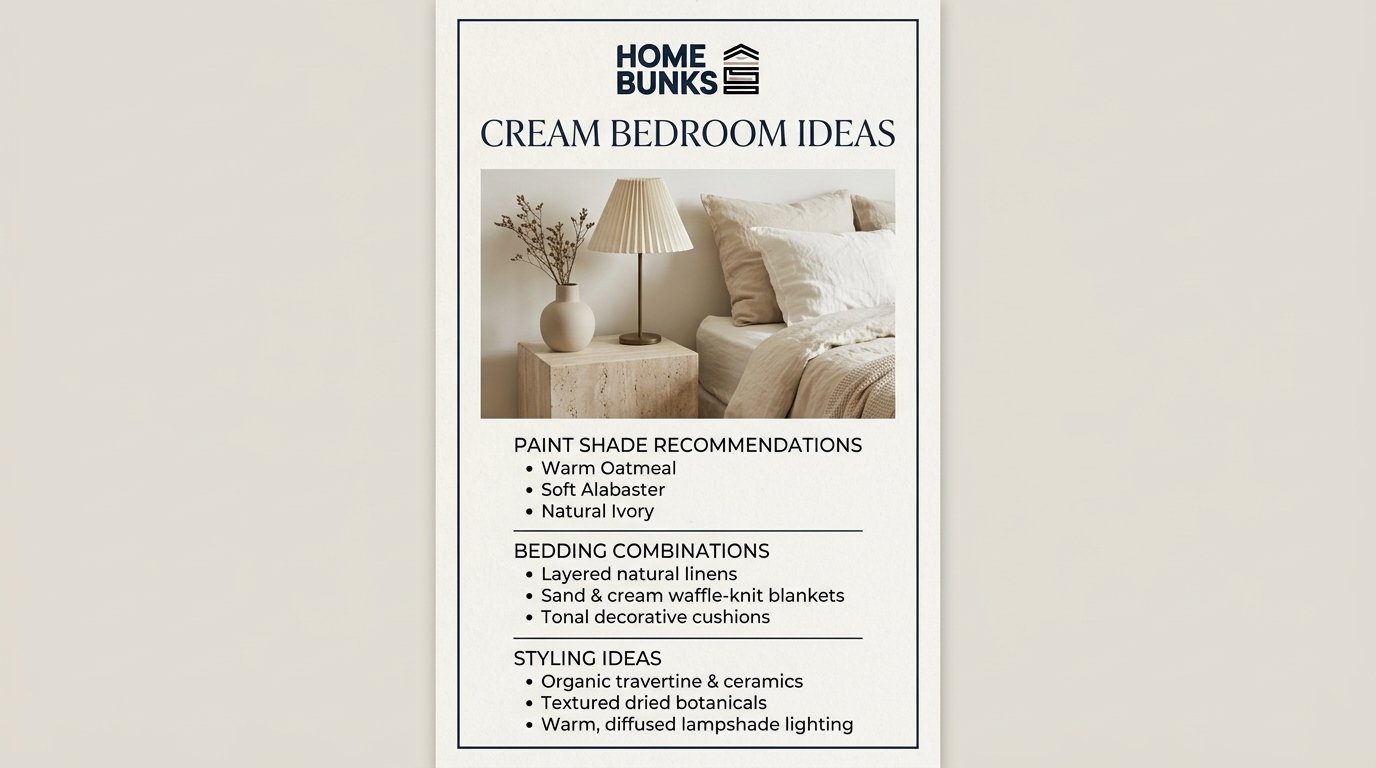
Cream sits just below pure white in warmth, with a visible yellow, pink, or beige lean. It keeps brightness while adding softness, depth, and a lived-in feeling.
Beige is deeper and browner than most creams, with more visible color on the wall. Beige can feel rich and earthy, but deep beige can darken a small or north-facing bedroom.
Ivory is a pale, soft cream with a gentle yellow lean and very little saturation. Ivory often reads as a refined off-white, especially beside warm wood and brass.
Greige blends gray and beige, so it can read warm or cool depending on light and nearby finishes. Greige suits modern rooms, but it can turn gray in low light if the beige lean is weak.
Undertone Decides the Whole Room
Undertone is the hidden color inside a neutral paint. It becomes visible on a large wall, beside trim, under lamps, and next to wood floors.
Yellow undertone creams feel buttery, sunny, and traditional. They suit warm wood, brass, and golden light, but they can look too yellow in strong south light.
Pink undertone creams feel rosy, soft, and romantic. They suit walnut, bronze, blush textiles, and warm white trim, but they can clash with golden oak or green-gray stone.
Beige undertone creams feel grounded, neutral, and easy to pair. They suit oak, linen, and earthy accents, but they can look flat without texture and contrast.
Gray-green undertone creams feel muted, calm, and modern. They suit cool stone, sage accents, and matte black, but they can turn gray in north light or under cool bulbs.
- Yellow cream: honey oak, brass, warm linen, terracotta accents
- Pink cream: walnut, bronze, blush, warm white trim
- Beige cream: light oak, natural jute, cream bedding, tan accents
- Gray-green cream: stone, sage, matte black, cool wood tones
How to Test Undertone in Your Room
Compare beside trim first, because trim is the largest white surface in most bedrooms. A cream that matches trim too closely can disappear, while a cream beside stark cool trim can look dirty.
Compare beside flooring next, because floors cover more area than any other finish. Hold a large sample against oak, walnut, gray wood, carpet, or tile, and check the edge where paint meets floor.
Compare beside bedding last, because bedding can be changed more easily than walls or floors. Cream bedding should share warmth with walls, but it does not need to match walls exactly.
Check in daylight and lamplight before deciding, because undertone shifts with light temperature. A cream that looks balanced at noon can look yellow under warm lamps or gray under cool daylight.
Cream Paint by Light Reflectance Value
What LRV Means in Plain Language
Light reflectance value, often shortened to LRV, runs from 0 for absolute black to 100 for pure white. It tells how much light a color reflects back into a room.
Higher LRV means more reflected light, brighter walls, and a lighter visual weight. Lower LRV means more absorbed light, deeper walls, and a warmer, more enveloping feeling.
Manufacturer pages publish LRV for many paint colors, and those numbers should be checked before buying. A small chip can hide a 10 point LRV gap that changes a whole room.
Room light interacts with LRV, so the same cream can glow in a bright room and fade in a dark room. LRV does not replace sampling, but it helps narrow choices before sampling.
Light Creams: LRV About 81 to 85
Light creams behave like warm whites, with strong brightness and gentle warmth. They suit small rooms, dark rooms, and north-facing rooms where light is limited.
Light cream walls pair well with warm white trim, pale wood, and linen bedding. They need texture to avoid a washed-out look, because high LRV walls show little color depth.
Bright rooms can wash light creams out, especially with large south windows and pale floors. In very bright rooms, a mid cream often holds warmth better than a very light cream.
Ceilings in light cream rooms can use a flat warm white to keep height and brightness. A cream ceiling in a low room can feel lower, while a lighter ceiling can lift the room visually.
Mid Creams: LRV About 63 to 75
Mid creams give the most useful bedroom warmth, with visible color that still reflects good light. They suit master bedrooms, guest rooms, and rooms with moderate daylight.
Mid cream walls pair well with tonal trim, wood furniture, and layered bedding. They show enough depth to anchor a bed, a headboard, and a rug without darkening the room.
North-facing rooms benefit from mid creams with a warm yellow or beige lean, because cool north light can push pale creams gray. Warm mid creams hold character better in cool light.
South-facing rooms need care with mid creams, because warm sunlight can push yellow creams too yellow. A muted mid cream, with a beige or gray lean, often works better in strong sun.
Deeper Warm Neutrals: LRV About 58 to 64
Deeper warm neutrals read as beige or greige rather than light cream. They suit large bedrooms, bright rooms, and accent walls where depth is wanted.
Deep cream accents can anchor a bed wall, a fireplace wall, or a reading corner. A full room in a deep warm neutral can feel cozy in a large room, but heavy in a small room.
Trim contrast matters more with deeper walls, because trim defines edges and prevents a muddy look. Warm white trim, wood trim, or a lighter cream trim can frame deeper walls cleanly.
Lighting must be warm and layered for deeper walls, with lamps at bedside, a ceiling light on a dimmer, and a reading light where needed. Single overhead light can make deep walls look flat.
A Useful LRV Band for Bedrooms
A page guide from recent warm neutral research suggests a useful wall band of about 55 to 70 for an enveloping bedroom feel. Above about 72, warm neutrals can drift toward off-white and lose warmth.
That band is a planning guide, not a manufacturer standard, and it should not replace sampling. Room size, facing, ceiling height, and lighting all shift the best LRV for a given room.
Small rooms often need the higher end of the band, or a light cream above it, to keep brightness. Large rooms can use the lower end, or a deep accent, without feeling cramped.
Dark rooms need higher LRV plus warm lighting, not just lighter paint alone. Paint cannot create light, but it can reflect the light that exists more effectively.
Cream by Room Facing and Light
North-Facing Bedrooms
North light is cool, soft, and gray-leaning in many US climates. It can push cream walls gray, especially pale creams with a gray-green lean.
Warm yellow or beige creams hold character better in north light, because warmth balances cool daylight. A mid cream with a clear warm lean often beats a very pale cream in a north room.
Warm lighting is essential in north rooms, with 2700K to 3000K bulbs, fabric shades, and dimmers. Cool daylight bulbs can make north cream rooms feel cold and clinical.
Wood and brass help north cream rooms, because warm materials add glow where daylight cannot. Light oak, walnut, brass lamps, and warm textiles all support north cream walls.

South-Facing Bedrooms
South light is warm, bright, and golden for much of the day. It can push yellow creams too yellow and make light creams look washed out.
Muted creams with a beige or gray lean often work better in south rooms than strong yellow creams. A mid cream with restrained warmth can stay soft without turning sunny yellow.
Sheer curtains help south rooms, by softening direct sun while keeping brightness. Linen sheers, light cotton panels, and a light rug can balance strong south light.
Cool accents can balance south warmth, with sage, soft blue, gray-green, or matte black in small doses. Accents should stay secondary, so cream remains the dominant calm base.
East-Facing and West-Facing Bedrooms
East light is bright and warm in the morning, then softer in the afternoon. East bedrooms suit morning routines, with cream walls that glow early and calm later.
West light is softer in the morning, then warm and strong in the late afternoon. West bedrooms can feel golden at sunset, which suits cream walls with a warm lean.
Bed placement matters in east and west rooms, because morning or evening sun can hit the bed directly. Curtains with a blackout layer help sleep, while sheers keep daytime softness.
Sample checks should include morning, afternoon, and evening in east and west rooms. A cream that looks perfect at noon can shift sharply at sunrise or sunset.
Trim, Ceilings, and Finishes
Trim Colors That Work With Cream
Warm white trim is the safest partner for most creams, because it shares warmth without competing. Warm white trim keeps edges clean and prevents a dirty look.
Tonal cream trim uses a lighter or slightly deeper cream than walls, for a soft, seamless look. Tonal trim suits traditional, luxury, and small rooms where contrast should stay gentle.
Crisp white trim can work with light creams in bright, modern rooms, but it can make mid and deep creams look dirty. Crisp trim should be tested beside the exact cream, not assumed.
Dark trim in wood, charcoal, or matte black can frame cream walls with strong contrast. Dark trim suits modern, farmhouse, and glam rooms, but it needs consistent use across doors and windows.
Ceiling Rules for Cream Bedrooms
Flat warm white ceilings suit most cream bedrooms, because they reflect light and lift ceiling height visually. Flat finish also hides ceiling imperfections better than gloss.
Cream ceilings can work in tall rooms or traditional rooms, where a tonal ceiling adds warmth. In low rooms, a cream ceiling can feel lower, especially with deep wall colors.
White ceiling plus cream walls is a reliable combination, with a clear but gentle transition. A ceiling that is too stark beside mid cream walls can create a harsh line, so warm white beats cool white.
Beams and molding in cream rooms should share trim warmth, with wood beams adding contrast and painted molding adding softness. Beams should not compete with a busy headboard or patterned rug.
Paint Finishes by Surface
Matte finish suits bedroom walls, because it hides imperfections and reduces glare. Matte walls feel soft and calm, but they can mark more easily than higher sheens.
Eggshell finish suits bedroom walls where cleaning matters, with a soft glow and better wipeability than matte. Eggshell is a good default for most cream bedrooms.
Satin finish suits trim, doors, and high-touch areas, with more durability and a gentle shine. Satin trim beside matte or eggshell walls creates a subtle, clean contrast.
Semi-gloss finish suits trim in busy households, with strong durability and easy cleaning. Semi-gloss can show brush marks and surface flaws more than satin, so prep matters.
Cream Pairings
Wood Tones With Cream
Light oak pairs beautifully with cream, adding warmth without darkness. Light oak beds, nightstands, and floors keep cream rooms bright and airy.
Walnut adds richness and contrast, with deep brown tones that frame cream walls elegantly. Walnut suits traditional, luxury, and modern cream rooms where depth is wanted.
Pine adds a soft, rustic warmth, especially in farmhouse and cottage cream rooms. Pine can lean yellow, so it should be tested beside yellow creams to avoid overload.
Gray wood can clash with warm creams, because gray wood pulls cream yellow or pink. Gray wood suits gray-leaning creams better than strong yellow creams.
Metal Finishes With Cream
Brass and gold warm cream rooms instantly, with lamps, mirrors, frames, and hardware adding glow. Brass suits traditional, glam, and luxury cream rooms.
Bronze adds a softer, earthier warmth than bright gold, with a vintage feeling. Bronze suits farmhouse, traditional, and transitional cream rooms.
Matte black adds modern contrast, with bed frames, lamps, and hardware framing cream walls. Black should stay as an accent, not a dominant color, in most cream rooms.
Chrome and silver suit cool-leaning creams and modern rooms, with a crisp, clean feeling. Chrome beside strong yellow cream can feel cold, so it needs a warm balance elsewhere.
Accent Colors With Cream
Sage green is a top cream partner, adding calm, nature, and soft contrast. Sage bedding, curtains, or art can refresh cream without breaking its serenity.
Soft blue adds a coastal, airy feeling, with pale blue pillows, throws, or art. Soft blue suits light creams and bright rooms, but deep navy should stay as an accent.

Blush pink adds romance and softness, with blush pillows, throws, or flowers. Blush suits pink-leaning creams best, while yellow creams may need a muted blush.
Terracotta and rust add earthy warmth, with terracotta pots, rust throws, or warm art. Terracotta suits beige creams and farmhouse rooms, but it should stay secondary.
Navy and charcoal add depth and drama, with navy pillows, charcoal throws, or a dark headboard. Dark accents should be used in small doses, so cream stays dominant.
Texture: The Secret to Cream Rooms
Why Texture Matters More Than Color
Tonal cream rooms use similar colors across walls, bedding, and furniture. Without texture, tonal rooms can look flat, boring, and unfinished, even with expensive pieces.
Texture creates depth through touch and shadow, with linen, wool, bouclé, jute, wood, and metal each adding a different surface. A cream room with five textures feels richer than a cream room with five colors.
Layering should start with the bed, then add curtains, rug, pillows, and throws in different textures. Each layer should add a new surface, not just a new shade of cream.
Contrast in texture matters more than contrast in color for cream rooms. A smooth duvet, a chunky knit throw, a woven rug, and a linen curtain can create depth without breaking calm.
Bedding Layers for Cream Rooms
Base layer should be a breathable sheet in cream, ivory, or soft white, with a simple weave. A good base layer keeps sleep comfortable and makes upper layers easy to change.
Middle layer can be a quilt, coverlet, or light duvet in cream or a soft accent. A quilt adds pattern and stitching detail, while a duvet adds loft and softness.
Top layer can be a throw in chunky knit, wool, or velvet, folded at the foot of the bed. A throw adds color, texture, and warmth without a full bedding change.
Pillows should mix sizes and textures, with sleeping pillows, standard shams, and two or three decorative pillows. Too many pillows can clutter a bed, while too few can look unfinished.
- Linen bedding: airy, textured, relaxed, best for summer and coastal rooms
- Cotton bedding: crisp, easy care, versatile, best for everyday use
- Bouclé bedding: soft, nubby, cozy, best for winter and luxury rooms
- Velvet pillows: rich, soft, glam, best as accents, not full bedding
- Wool throws: warm, chunky, cozy, best for winter and farmhouse rooms
Curtains, Rugs, and Wall Texture
Curtains should use linen or cotton for softness, with sheers for daytime light and blackout panels for sleep. Cream curtains should share wall warmth, but they can be a shade lighter or deeper for definition.
Rugs anchor cream bedrooms, with jute, wool, and cotton rugs adding texture underfoot. A rug should extend beyond the bed sides, so feet land on soft texture, not cold floor.
Wall texture can come from shiplap, panel molding, beadboard, or textured wallpaper. Wall texture adds shadow and interest without adding strong color, which suits cream rooms perfectly.
Headboards add a focal texture, with upholstered, wooden, rattan, or iron headboards each changing room feel. An upholstered cream headboard needs a contrast trim or a darker wall to avoid disappearing.
Cream by Style
Modern Cream Bedrooms
Modern cream rooms use clean lines, minimal pattern, and matte black or wood accents. Walls stay light or mid cream, with tonal trim and simple bedding.
Furniture should be low, simple, and functional, with a platform bed, floating nightstands, and a simple dresser. Clutter should stay hidden, with closed storage and minimal decor.
Accents should be limited to one metal and one accent color, such as matte black plus sage, or brass plus soft blue. Too many accents can break modern calm.
Lighting should be layered but simple, with recessed lights on a dimmer, bedside lamps, and a simple pendant or sconce. Warm bulbs keep modern cream soft, not clinical.
Farmhouse Cream Bedrooms
Farmhouse cream rooms use shiplap, wood, iron, and natural textiles for a cozy, lived-in feeling. Walls can be light or mid cream, with whitewashed or natural wood accents.
Furniture should feel collected and practical, with a wooden bed, matching nightstands, and a bench at the foot. Vintage-inspired pieces, woven baskets, and ceramic pitchers add farmhouse character.
Textiles should include linen curtains, grain sack pillows, chunky knit throws, and woven rugs. Farmhouse cream should feel warm and touchable, not polished and formal.
Lighting should use wrought iron, wood, or ceramic lamps with warm bulbs. A simple chandelier or pendant can anchor a farmhouse room without glam overload.
Traditional Cream Bedrooms
Traditional cream rooms use panel molding, crown molding, classic furniture, and layered bedding. Walls can be mid cream, with warm white trim and a refined palette.
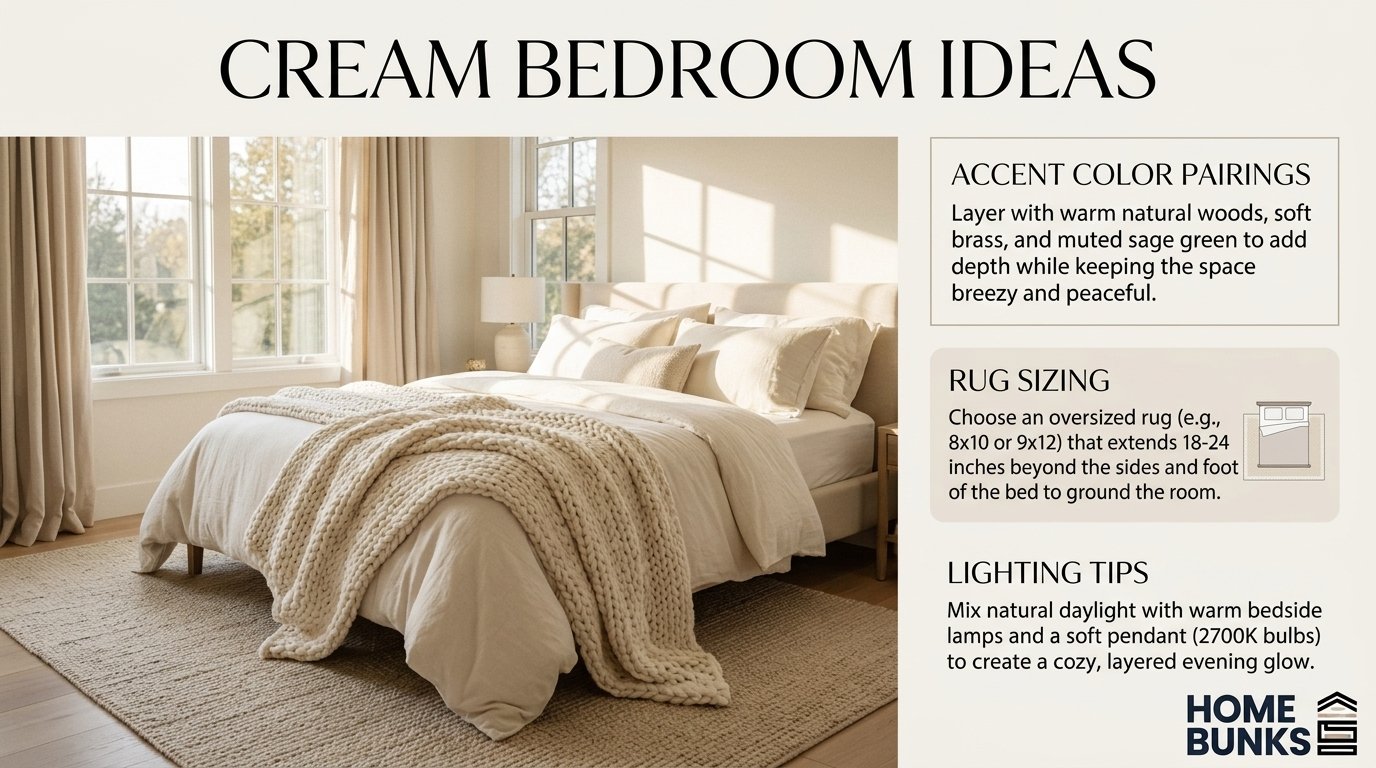
Furniture should include a classic bed frame, matching nightstands, a dresser, and a bench or chair. Symmetry helps traditional rooms, with matched lamps and balanced art.
Textiles should include tailored bedding, a quilt or coverlet, and curtains with a simple header. Traditional cream should feel polished, calm, and timeless.
Accents can include brass, gold, walnut, and soft floral or botanical art. Traditional rooms suit cream best when accents stay muted and classic.
Coastal Cream Bedrooms
Coastal cream rooms use pale wood, linen, rattan, and soft blue or sage accents. Walls stay light cream, with white or tonal trim and airy curtains.
Furniture should be light and natural, with rattan, pale oak, and whitewashed wood. Heavy dark furniture can weigh down a coastal cream room.
Textiles should be breathable and light, with linen bedding, cotton throws, and a jute rug. Coastal cream should feel fresh, bright, and relaxed.
Decor can include shells, driftwood, botanical prints, and woven baskets in small doses. Coastal rooms should feel beach-inspired, not theme-park literal.
Boho Cream Bedrooms
Boho cream rooms use layered textiles, plants, rattan, and global patterns in muted tones. Cream walls provide a calm base for pattern, texture, and color.
Furniture can mix wood, rattan, and vintage pieces, with a low bed, a bench, and open shelving. Boho rooms should feel collected, not matched.
Textiles should layer heavily, with quilts, throws, pillows, and rugs in cream, tan, rust, and sage. Pattern should stay muted, so cream remains the anchor.
Plants add life and color, with hanging plants, floor plants, and small pots on shelves. Plants suit boho cream rooms because they add organic shape without strong color.
Glam Cream Bedrooms
Glam cream rooms use reflective surfaces, plush textures, and metallic accents for a luxurious feeling. Cream walls keep glam elements from looking chaotic or overwhelming.
Furniture can include mirrored nightstands, an upholstered headboard, and a velvet bench. Mirrored pieces should stay limited, so the room feels elegant, not flashy.
Textiles should include satin, velvet, and faux fur in cream, ivory, and soft gold. A plush rug, a satin duvet, and velvet pillows can create glam softness.
Lighting can include a chandelier, crystal accents, or gold lamps as a focal point. Glam lighting should be dimmable, so the room can shift from bright to intimate.
Minimalist Cream Bedrooms
Minimalist cream rooms use very few pieces, clean lines, and tonal layers. Walls stay light or mid cream, with simple bedding and one or two accents.
Furniture should be essential only, with a bed, a nightstand, and closed storage. Every piece should earn its place, with no extra decor for its own sake.
Textiles should be simple and high quality, with a plain duvet, a simple throw, and a plain rug. Texture should come from fabric quality, not pattern overload.
Color should stay tonal, with cream, ivory, tan, and one soft accent at most. Minimalist cream rooms feel calm when texture is rich and clutter is low.
Cottage and Luxury Cream Bedrooms
Cottage cream rooms use floral patterns, painted furniture, and soft, romantic details. Walls can be light cream, with floral bedding, lace curtains, and vintage art.
Luxury cream rooms use tailored bedding, brass, marble, and high-quality textiles for a hotel feeling. Walls can be mid cream, with tonal trim and layered lighting.
Cottage luxury blends both, with soft florals, tailored bedding, and brass accents. The key is restraint, with one floral pattern and one metallic finish, not many competing details.
Cream by Room Type and Size
Master Bedrooms
Master bedrooms can use mid creams, layered bedding, and a full lighting plan. A master room should feel like a retreat, with a comfortable bed, a reading chair, and good storage.
Accent walls in master rooms can use a deeper warm neutral behind the bed, with cream on other walls. An accent wall should be balanced with cream bedding and warm trim.
Seating in master rooms adds luxury, with a bench, a chair, or a small reading nook. Seating should not crowd the bed path or block closet access.
Storage in master rooms should be closed and organized, with a dresser, a wardrobe, and bedside storage. Visible clutter can break cream calm faster than color can.
Guest Bedrooms
Guest bedrooms suit light and mid creams, because cream appeals to most guests and feels clean. A guest room should feel welcoming, not personal or cluttered.
Bedding for guests should be fresh, layered, and easy to change, with extra pillows and a throw. A carafe, a small vase, and a clear surface for personal items add hospitality.
Storage for guests needs a hook zone, a luggage bench, and a clear closet or drawer. Guests should not live out of a suitcase on the floor.
Lighting for guests should include bedside lamps, a dimmer, and a night light path to the bathroom. Guest rooms should be easy to use without instructions.
Small Bedrooms
Small cream bedrooms need light creams, tonal trim, and a rug that anchors the bed. One wall color plus two or three related shades keeps small rooms harmonious.

Furniture in small rooms should be scaled down, with a low bed, floating shelves, and a compact nightstand. Large, dark furniture can dominate a small cream room.
Mirrors can help small cream rooms, by reflecting light and extending sightlines. A mirror opposite a window, or above a dresser, can make a small room feel larger.
Ceilings in small rooms should stay light, with flat warm white and simple fixtures. A dark ceiling or a busy fixture can lower a small room visually.
Dark Bedrooms
Dark cream bedrooms need higher LRV walls, warm lighting, and contrast control. Light cream walls alone cannot fix a dark room without good lamps and light surfaces.
Lighting layers should include ambient, task, and accent light, with bedside lamps, a ceiling light on a dimmer, and a reading light. Warm bulbs at 2700K to 3000K keep cream soft at night.
Floors and rugs in dark rooms should stay light where possible, with pale wood, light rugs, and cream bedding. Dark floors can work, but they need stronger lighting and lighter walls.
Mirrors and glass can help dark rooms, by bouncing light and reducing visual weight. A glass lamp, a mirrored tray, or a light frame can add brightness without color.
Kids, Teens, and Nursery Cream Rooms
Kids cream rooms suit light creams with washable bedding, durable rugs, and playful accents. Cream walls provide a calm base that can grow with a child.
Teen cream rooms can add one accent color, such as sage, navy, blush, or terracotta, through bedding and art. Teen rooms should feel personal, not babyish or overly adult.
Nursery cream rooms suit soft, warm creams with gentle lighting and natural wood. Nursery lighting should be dimmable, with a night light for feeding and changing.
Safety and cleaning matter in kids rooms, with washable paint finishes, washable bedding, and durable rugs. Light rooms with kids need a cleaning plan, not just a color plan.
Rental Cream Bedrooms Without Painting
Rental cream rooms can use bedding, curtains, rugs, and removable wallpaper to create cream warmth without repainting. A cream duvet, cream curtains, and a light rug can shift a room dramatically.
Removable wallpaper in a soft cream pattern can add texture to one wall without landlord issues, where allowed. Always check lease rules before using adhesive products.
Furniture and textiles in rentals should stay light and movable, with a cream throw, cream pillows, and a light bench. Rental cream should be reversible and portable.
Lighting in rentals can use warm bulbs, table lamps, and plug-in sconces to warm existing walls. Warm light can make even a cool white rental wall feel softer at night.
Bedding, Curtains, Rugs, and Care
Bedding Care for Light Rooms
Washable bedding is essential for cream rooms, because light fabrics show stains, sweat, and pet hair more than dark fabrics. Choose bedding with clear wash care and durable fabric.
Stain care should start fast, with cold water, gentle detergent, and no harsh bleach on colored creams. Harsh bleach can yellow cream bedding or damage fibers.
Rotation helps cream bedding last, with two duvet covers, two sheet sets, and a spare throw. Rotation reduces wash frequency for each set and keeps a fresh set ready.
Sun drying can freshen cream bedding, but strong sun can yellow some fabrics over time. Shade drying or low-heat tumble drying suits most cream cottons and linens.
Curtain Layers for Cream Rooms
Sheer curtains soften daylight and add privacy without blocking light. Linen sheers in cream or ivory suit most cream bedrooms and keep rooms airy.
Blackout curtains help sleep, especially in east, west, and street-facing rooms. Blackout panels in cream or a soft accent can layer over sheers without darkening daytime style.
Curtain length should reach the floor or just above it, with a rod placed above the window frame to add height. Short curtains can make a cream room feel unfinished.
Curtain color should share wall warmth, with cream, ivory, tan, or a soft accent. Stark white curtains beside mid cream walls can look harsh, so warm white beats cool white.
Rug Choices for Cream Rooms
Rug size should anchor the bed, with a rug extending at least 18 inches beyond each side where possible. A rug that is too small can make a cream room feel unfinished.
Rug material should suit use, with wool for durability, jute for texture, and cotton for easy washing. Wool rugs suit master rooms, while washable cotton rugs suit kids and pet rooms.
Rug color should be cream, tan, jute, or a soft accent, with pattern kept muted. A busy, dark rug can dominate a cream room, while a tonal rug can ground it gently.
Rug care matters in light rooms, with regular vacuuming, spot cleaning, and a rug pad to prevent slipping. Light rugs show dirt faster, so a cleaning routine is part of the design.
Pets in Cream Bedrooms
Pet beds in cream rooms should be washable, with a removable cover and a dedicated spot. A pet bed that matches bedding can look intentional, while a random pet bed can clutter the room.
Pet throws can protect cream bedding, with a washable throw on the bed where pets sleep. A throw is easier to wash than a full duvet and can be changed daily if needed.
Pet hair on cream bedding needs a lint roller, a washable throw, and a regular vacuum routine. Light rooms with pets need a cleaning plan, not just a color plan.
Pet safety includes washable rugs, non-toxic plants, and cord management for lamps and chargers. Cream rooms with pets should prioritize washable, durable textiles over delicate ones.
Lighting for Cream Bedrooms
The 2700K to 3000K Rule
Warm bulbs at 2700K to 3000K keep cream walls soft, golden, and inviting at night. Warm light enhances yellow and beige creams and softens pink creams.

Cool bulbs at 4000K to 5000K can make cream walls look gray, cold, or clinical. Cool bulbs suit task areas like garages and offices better than bedrooms.
Mixed temperatures in one bedroom are a common mistake, with a warm bedside lamp beside a cool ceiling light. Mixed light can make cream walls look patchy and inconsistent.
Check bulb boxes before buying, because bulb color temperature is printed as Kelvin on most packaging. Replace mixed bulbs in one room at the same time for a consistent result.
Lighting Layers for Cream Rooms
Ambient light provides general brightness, with a ceiling light, a chandelier, or recessed lights on a dimmer. Ambient light should be warm and dimmable, not harsh and fixed.
Task light provides focused light for reading, dressing, and work, with bedside lamps, sconces, and a desk lamp. Task light should be warm, adjustable, and glare-free.
Accent light highlights art, texture, and architecture, with picture lights, wall washers, or a small lamp. Accent light adds depth to cream rooms without adding color.
Natural light should be managed with sheers, blackout layers, and mirrors, so daytime cream stays soft and nighttime cream stays warm. Light control is part of cream design, not an afterthought.
Lampshades, Dimmers, and Night Checks
Fabric shades soften light and warm cream rooms, with linen, cotton, and silk shades diffusing glare. Glass and metal shades can create harsh spots unless dimmed.
Dimmers allow cream rooms to shift from bright morning to soft evening with one control. Dimmers suit ceiling lights and bedside lamps in most cream bedrooms.
Night checks are essential, because cream walls look different under lamps than under daylight. Always check a cream sample at night, under actual bedroom bulbs, before buying gallons.
Color rendering also matters, with a high color rendering index helping cream, wood, and textiles look true. Low rendering bulbs can dull cream and distort wood tones.
Sample, Paint, and Budget Guide
Six-Step Sample Protocol
- Choose an LRV band first, with light creams for small or dark rooms and mid creams for master and guest rooms.
- Compare two neighbouring shades side by side, with different undertones, not just different depths.
- Paint two coats on a large sample board, at least 12 inches square, not a tiny chip.
- Move the board around the room, beside trim, flooring, bedding, and the headboard wall.
- Check in morning, afternoon, and night, under daylight and under actual bedroom bulbs.
- Choose the shade that stays balanced in all three checks, not the shade that looks best in one check alone.
Sample boards beat wall patches for renters and for rooms with multiple walls, because boards can move. Wall patches work well for homeowners who want a true wall test.
Two coats matter, because one coat can look lighter and patchier than a finished wall. Always sample with the same finish planned for the final wall.
Night checks should use the exact bulbs planned for the room, not shop lighting or phone flash. Phone photos can distort cream badly, so eye checks beat screen checks.
Coverage and Cost Planning
Coverage figures from competitor guides commonly cite 350 to 400 square feet per gallon per coat, with a 12 by 12 foot room needing about 2 gallons for two coats after doors and windows are deducted. Those figures are planning estimates, not guarantees.
Primer may be needed over dark walls, patched walls, or new drywall, with one primer coat often recommended before cream paint. Primer helps cream cover evenly and prevents old color showing through.
Coats for cream walls are usually two finish coats over primer where needed, with a third coat possible for deep color changes. Budget for extra paint when covering dark walls.
Sample costs should be budgeted separately from gallon costs, with two or three samples per room as a realistic starting point. Samples cost less than repainting a whole room.
Prices for paint, primer, brushes, rollers, tape, and drop cloths vary by brand, store, and region. Check current local prices before budgeting, and do not use old competitor prices as quotes.
Budget tiers can separate a refresh from a repaint, with bedding and lighting as a low-cost refresh and full paint plus trim as a higher-cost project. A refresh can transform cream warmth without a full repaint.
Mistakes to Fix, Not Just Avoid
Ten Numbered Mistakes
- Choosing cream from a phone screen, without a physical sample in the room.
- Testing only one shade, without a neighbouring undertone for comparison.
- Using one coat samples, which look lighter than a finished wall.
- Checking only at noon, without morning, afternoon, and night checks.
- Mixing bulb temperatures, with warm lamps beside cool ceiling lights.
- Using stark white trim beside mid cream, which makes cream look dirty.
- Matching everything exactly, with no texture or contrast to create depth.
- Ignoring flooring, which covers more area than any other finish.
- Painting all walls deep cream in a small room, without a light balance.
- Skipping primer over dark walls, which causes patchy, uneven cream.
Ten Numbered Tips
- Start with LRV band, then choose undertone, then choose a specific shade.
- Sample two neighbouring shades, with different undertones, side by side.
- Use large sample boards, with two coats, moved around the room.
- Check day, afternoon, and night, under actual bedroom bulbs.
- Test trim beside walls, not trim alone or walls alone.
- Use warm bulbs at 2700K to 3000K, with dimmers where possible.
- Layer five textures, with linen, wool, bouclé, jute, and wood or metal.
- Add one accent color and one dark accent, to stop cream looking flat.
- Anchor with a rug, extending beyond the bed sides for soft footing.
- Keep bedding washable, with rotation sets for light rooms and pet homes.
Room Size by Light Table
FAQs
What is the best cream paint color for a bedroom?
Best cream depends on room facing, trim, flooring, and light, not on a single universal shade. Start with an LRV band, compare yellow, pink, and beige undertones, and sample day and night before choosing.
Light rooms often suit mid creams, while small or dark rooms often suit light creams. A sample board test beats a list ranking for your specific room.
What is cream bedroom paint?
Cream bedroom paint is a warm off-white paint with a visible yellow, pink, or beige lean. It sits between pure white and beige, offering warmth without strong color.
Cream paint can range from very pale warm white to deeper warm neutrals, depending on LRV and undertone. Always check LRV and undertone, not just the name.
Is cream better than white for a bedroom?
Cream is better than pure white for most bedrooms where warmth and calm matter. Cream softens glare, adds depth, and feels more inviting at night.
Pure white suits very bright, modern rooms where sharp contrast is wanted. White can feel cold in dark or north-facing bedrooms, where cream adds needed warmth.
Is cream better than beige for a bedroom?
Cream is better than beige for small, dark, or north-facing bedrooms, because cream reflects more light. Beige suits large, bright rooms where depth and richness are wanted.
Best choice depends on room size and light, not on trend alone. A mid cream can offer beige warmth without beige darkness in many rooms.
What is the difference between cream and ivory?
Ivory is a very pale cream with a gentle yellow lean and low saturation. Cream is a broader family, including deeper, pinker, and beiger shades than ivory.
Ivory suits refined, traditional, and luxury rooms where subtle warmth is wanted. Cream suits a wider range of styles, from farmhouse to modern to glam.
Why does my cream paint look yellow?
Yellow cast usually comes from a strong yellow undertone plus warm south light or warm bulbs. South rooms and golden oak floors can amplify yellow creams.
Fix with a muted beige cream, sheer curtains, cooler accents, and a trim test. Sample a beige-leaning cream beside the same trim and floor before repainting.
Why does my cream paint look gray at night?
Gray cast at night often comes from a gray-green undertone plus cool bulbs or low light. North rooms and cool daylight bulbs can push cream gray after dark.
Fix with warm bulbs at 2700K to 3000K, warm wood accents, and a warmer cream sample. Check samples at night under actual bedroom bulbs, not shop light.
Why does my cream paint look dirty next to white trim?
Dirty look usually comes from stark, cool white trim beside a warm mid cream. The contrast makes cream look dingy, even when cream itself is clean.
Fix with warm white or tonal cream trim, tested beside the exact wall cream. A trim change can fix a dirty look without repainting walls.
What trim color goes with cream walls?
Warm white trim suits most cream walls, with tonal cream trim as a softer option. Warm white keeps edges clean without making cream look dirty.
Crisp white trim suits only light creams in bright rooms, while dark trim suits modern and farmhouse rooms as a bold frame. Always test trim beside walls.
What bedding goes with cream walls?
Cream bedding should share wall warmth, with linen, cotton, or bouclé layers in cream, ivory, and tan. Accent pillows in sage, blush, navy, or terracotta add color without breaking calm.
Bedding texture matters more than exact color match, with quilt, duvet, throw, and pillows creating depth. Washable bedding suits light rooms best.
Does cream work in a small bedroom?
Cream works very well in small bedrooms, with light creams, tonal trim, and a rug anchoring the bed. One wall color plus two or three related shades keeps small rooms harmonious.
Small rooms should avoid deep cream on all walls, large dark furniture, and busy patterns. Light cream, low furniture, and mirrors help small rooms feel larger.
Does cream work in a dark bedroom?
Cream can help dark bedrooms, but paint alone cannot create light. Higher LRV walls plus warm, layered lighting, light floors, and mirrors work together.
Dark rooms should use light or mid creams, warm bulbs, fabric shades, and dimmers. A single overhead light will not fix a dark cream room.
What lighting is best for a cream bedroom?
Best lighting for cream bedrooms is warm, layered, and dimmable, with bulbs at 2700K to 3000K. Ambient, task, and accent layers together keep cream soft day and night.
Avoid mixed bulb temperatures and cool daylight bulbs in bedrooms, because they can make cream look gray or patchy. Check bulb Kelvin on packaging before buying.
What paint finish is best for cream bedroom walls?
Eggshell is a good default for cream bedroom walls, with soft glow and better cleaning than matte. Matte suits low-traffic walls and hides flaws better.
Trim should use satin or semi-gloss for durability, while ceilings should use flat for height and flaw hiding. Finish should match surface use, not just style.
How do I test cream paint before buying gallons?
Test with two neighbouring shades on large sample boards, with two coats, moved around the room. Check beside trim, flooring, and bedding in morning, afternoon, and night.
Choose the shade that stays balanced in all three light checks, not the shade that looks best in one check. A sample board test saves repainting costs.
Can I do a cream bedroom in a rental without painting?
Rental cream can use bedding, curtains, rugs, removable wallpaper, and warm lighting to create warmth without repainting. Cream textiles and light furniture can shift a room dramatically.
Check lease rules before using adhesive wallpaper or wall products, and choose reversible, portable pieces. Warm bulbs alone can soften a cool rental wall at night.
How do I make a cream bedroom not look boring?
Cream rooms avoid boredom with texture, contrast, and one accent color, not with more color. Linen, wool, bouclé, jute, wood, and metal layers create depth.
Add one dark accent, one metallic accent, and one soft color accent, such as matte black, brass, and sage. Too many accents can break cream calm.
How do I keep cream bedding clean?
Cream bedding stays clean with washable fabrics, rotation sets, fast stain care, and a washable throw where pets sleep. Cold water and gentle detergent suit most cream cottons and linens.
Avoid harsh bleach on colored creams, and check care labels before washing. A spare duvet cover and sheet set make rotation easy.
Can I have pets in a cream bedroom?
Pets can live in cream bedrooms with washable pet beds, washable throws, and a regular vacuum routine. A dedicated pet spot keeps pet hair off main bedding.
Choose washable rugs, durable textiles, and non-toxic plants for pet rooms. Cream rooms with pets need a cleaning plan, not just a color plan.
Does cream paint help resale value?
Cream paint often helps resale presentation, because it feels clean, warm, and neutral to many buyers. Light and mid creams suit staging better than strong colors or dark walls.
Resale cream should be clean, well-lit, and paired with simple bedding and decluttered surfaces. A fresh cream repaint plus warm lighting can improve first impressions.
What is the LRV of cream paint and why does it matter?
LRV runs from 0 for black to 100 for white, showing how much light a color reflects. Light creams often sit around LRV 81 to 85, while mid creams sit around LRV 63 to 75 in competitor-reported guides.
LRV matters because it predicts brightness and depth better than a small chip. Higher LRV suits dark rooms, while lower LRV suits large, bright rooms.
What color goes with cream bedroom walls?
Best partners for cream walls include sage, soft blue, blush, terracotta, navy as an accent, gold, brass, and wood tones. Each accent should stay secondary, so cream remains dominant.
Choose one main accent and one metallic accent for most rooms, with texture doing the rest of the work. Too many accent colors can break cream serenity.
Should cream walls have white ceilings?
Warm white ceilings suit most cream walls, with flat finish for height and flaw hiding. A warm white ceiling keeps brightness without a harsh line.
Cream ceilings suit tall or traditional rooms, while low rooms benefit from a lighter ceiling. Always test ceiling white beside wall cream before painting.
Can I paint only one cream accent wall?
One cream accent wall works when other walls are a deeper color, with cream adding light and contrast. A cream accent beside a dark wall can frame a bed beautifully.
One cream wall beside other cream walls adds little, because contrast is too low. Accent walls need a clear depth or color difference to read as accents.
Can I use cream in a modern bedroom?
Cream suits modern bedrooms with clean lines, matte black accents, and minimal pattern. Light or mid creams with tonal trim keep modern rooms soft without losing simplicity.
Modern cream should avoid busy patterns, too many accents, and ornate furniture. Simple bedding, low furniture, and warm dimmable lighting define modern cream.
Conclusion of Cream Bedroom Ideas
Cream bedroom ideas work best when undertone, LRV, facing, trim, finish, and lighting are decided together, before gallons are bought. A cream that matches your trim, floor, and light will feel soft and timeless, while a cream chosen from a chip alone can turn yellow, gray, or dirty.
Order two neighbouring cream samples, paint large boards with two coats, and check them in morning, afternoon, and night light. That simple test, plus warm 2700K to 3000K lighting and layered textures, will give your cream bedroom the warmth and calm it should have.