
Farmhouse bedroom ideas work best when branch, palette, and texture are decided before buying furniture or paint. A calm base, warm wood, layered textiles, and one clear focal point can make a bedroom feel collected, cozy, and restful.
Farmhouse style is rooted in simplicity, natural materials, and practical comfort. It suits bedrooms because it values soft bedding, sturdy furniture, and pieces that can be touched, used, and lived with daily.
Farmhouse style fails when every wall, sign, and distressed item competes at once. A room with shiplap on four walls, ten signs, heavy distressing, and five patterns can feel like a theme park, not a bedroom.
What Farmhouse Bedroom Style Really Is
Classic Farmhouse
Classic farmhouse uses distressed wood, vintage finds, plaid, warm neutrals, and signs with simple wording. It feels nostalgic, cozy, and lived in, especially in older homes and country houses.
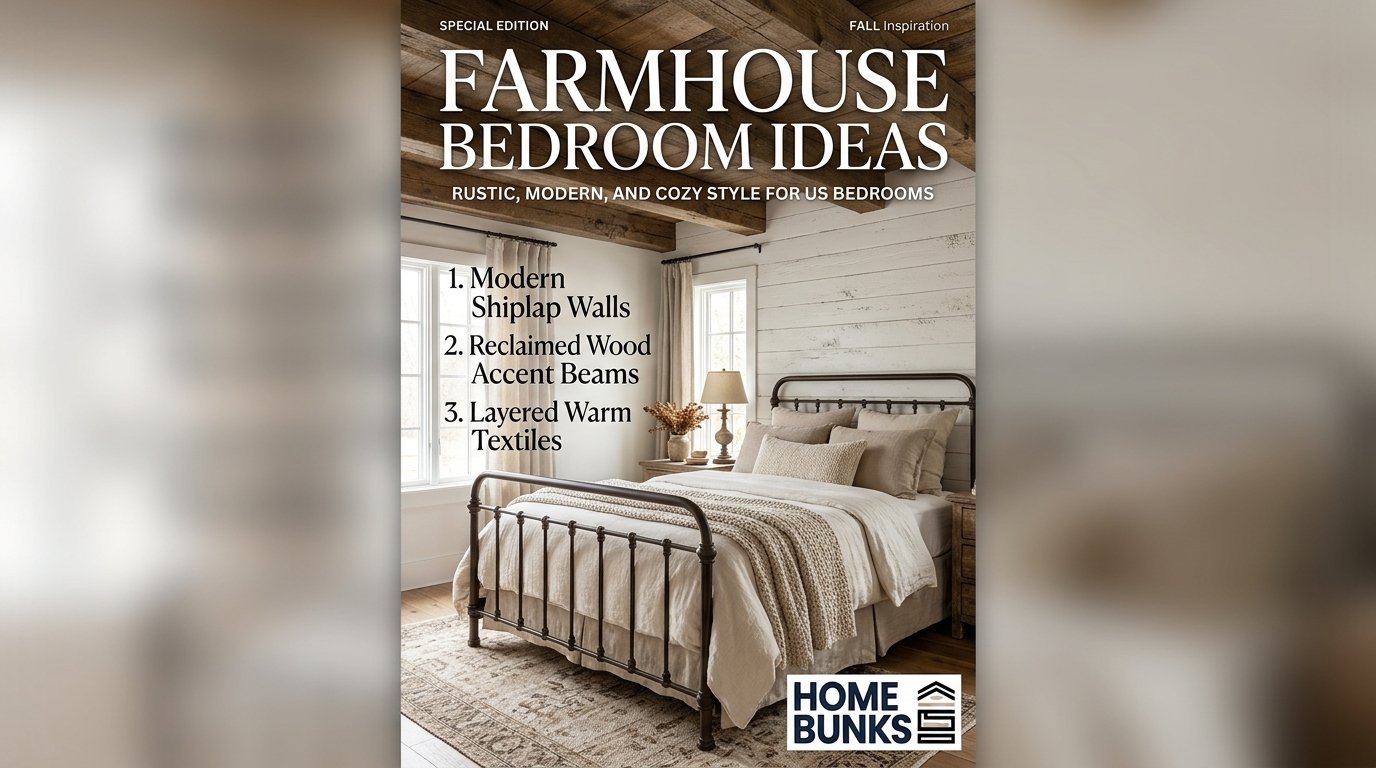
Classic farmhouse suits readers who love flea markets, heirlooms, and collected decor. It also suits large rooms, because vintage pieces and layered textiles need space to breathe.
Classic farmhouse can feel dated when distressing is heavy, signs are everywhere, and colors turn muddy. A classic room still needs editing, with one focal wall and clear surfaces.
Modern Farmhouse
Modern farmhouse uses clean lines, white shiplap, matte black hardware, simple furniture, and high contrast. It feels fresh, calm, and current, without barnyard kitsch or heavy carving.
Modern farmhouse suits apartments, new homes, and readers who want warmth without clutter. Black window frames, black sconces, and black drawer pulls give modern contrast against white walls.
Modern farmhouse can feel cold when white walls, black metal, and gray bedding dominate without wood or texture. Warm wood, linen, and a woven rug can keep modern farmhouse soft.
Rustic Farmhouse
Rustic farmhouse uses reclaimed wood, exposed beams, iron, stone, and heavy texture. It feels rugged, warm, and grounded, especially in cabins, lodges, and homes with high ceilings.
Rustic farmhouse suits large master bedrooms, vaulted ceilings, and readers who love raw wood. A reclaimed wood headboard, a wood beam, and iron lighting can anchor a rustic room fast.
Rustic farmhouse can feel heavy in small, dark rooms, where dark wood and beams close in the space. Small rustic rooms need light walls, light bedding, and one rustic anchor, not dark wood everywhere.
Coastal Farmhouse
Coastal farmhouse uses pale blue, driftwood, linen, sheer curtains, and jute for a bright, airy feeling. It feels calm, breezy, and restful, without beachy kitsch like ship wheels or rope railings.
Coastal farmhouse suits bright rooms, beach houses, and readers who want light and calm. Pale blue accents, whitewashed wood, and natural light can make a room feel larger.
Coastal farmhouse can feel washed out when pale colors dominate without grounding wood or texture. A driftwood bed, a jute rug, and brass or black accents can ground coastal light.
Industrial Farmhouse
Industrial farmhouse uses black metal, concrete, leather, exposed fixtures, and simple wood for a bold, urban feeling. It feels strong, modern, and practical, with less softness than classic farmhouse.
Industrial farmhouse suits lofts, apartments, and readers who love metal and clean lines. A metal bed frame, a concrete lamp, and leather accents can give farmhouse an industrial edge.
Industrial farmhouse can feel hard and cold when metal and concrete dominate without textiles. Layered bedding, a wool rug, and linen curtains can soften industrial farmhouse without losing its edge.
Scandinavian Farmhouse
Scandinavian farmhouse uses light wood, minimal decor, hygge softness, and geometric textiles for a calm, airy feeling. It feels simple, cozy, and intentional, with fewer items than classic farmhouse.
Scandinavian farmhouse suits small rooms, rentals, and readers who want calm without clutter. Light wood, white walls, wool throws, and one or two plants can create hygge warmth.
Scandinavian farmhouse can feel bare when minimalism removes too much texture and warmth. A chunky knit throw, a woven basket, and warm lighting can keep Scandinavian farmhouse cozy.
Choose Your Farmhouse Branch First
Choose by Room Size
Small rooms suit modern, Scandinavian, and coastal farmhouse, with light walls, low furniture, and clear surfaces. Small rooms need one focal wall, not shiplap on every wall.
Standard rooms suit classic, modern, and coastal farmhouse, with a full bed, two nightstands, and a bench. Standard rooms can handle a shiplap accent wall plus a wood dresser.
Large master rooms suit rustic, classic, and industrial farmhouse, with beams, a bench, a chair, and layered rugs. Large rooms need furniture groupings, not single pieces scattered apart.
Low ceilings suit modern and Scandinavian farmhouse, with low beds, no beams, and vertical shiplap or paneling for height. Low rooms should avoid heavy beams and dark ceilings.
Choose by Light Direction
North rooms receive cool, indirect light and need warm paint, warm wood, and warm lighting. North farmhouse rooms suit warm white, beige, sage, and terracotta accents.
South rooms receive strong, warm light and can handle cooler paint, pale blue, and gray. South farmhouse rooms suit coastal, modern, and gray palettes with sheer curtains.
East rooms receive bright morning light and soft evening light, suiting warm white and sage. East rooms can use light bedding and linen curtains for morning brightness.
West rooms receive strong afternoon light and warm evening light, suiting cool neutrals and light wood. West rooms need blackout layers for sleep and sheer layers for daytime.
Choose by Existing Furniture
Dark wood furniture suits rustic, classic, and industrial farmhouse, with light walls and light bedding for balance. Dark furniture in a small room needs light textiles and mirrors.

White furniture suits modern, coastal, and Scandinavian farmhouse, with wood accents and warm textiles for warmth. White furniture can look cold without wood, brass, or black accents.
Metal bed frames suit modern, industrial, and classic farmhouse, with layered bedding and wood nightstands for warmth. Metal beds need soft textiles to avoid a hard feeling.
Upholstered beds suit modern, classic, and coastal farmhouse, with linen or cotton upholstery and wood legs. Upholstered beds add softness and suit readers who read in bed.
- Small room: modern, Scandinavian, coastal, light walls, low furniture
- Large room: rustic, classic, industrial, beams, bench, chair, layered rugs
- Dark furniture: light walls, light bedding, wood accents, mirrors
- White furniture: warm wood, brass or black accents, warm textiles
- Metal bed: layered bedding, wood nightstands, woven rug
- Low ceiling: low bed, vertical paneling, no heavy beams
Farmhouse Bedroom Color Palettes
Warm White and Cream Base
Warm white walls suit most farmhouse bedrooms, with a calm base for wood, linen, and pattern. Warm white keeps rattan, oak, and pine looking natural, while cool white can look stark.
Cream bedding in cotton or linen adds softness and warmth, with white sheets for contrast. Cream plus white bedding can look layered without adding color.
Beige and taupe add depth to warm white rooms, with beige throws, taupe pillows, and tan rugs. Beige should stay muted, so it reads as warmth, not as a new color family.
Trim color should be crisp white or warm white, matching wall undertones, not fighting them. Trim that is cooler than walls can make walls look yellow, while trim that is warmer can make walls look gray.
Gray Farmhouse Palettes
Gray farmhouse uses light gray walls, white trim, and warm wood for a modern, calm feeling. Gray suits modern farmhouse, but gray alone can feel cold without wood and texture.
Warm gray with beige undertones suits north rooms and dark furniture better than cool gray. Cool gray with blue undertones suits south rooms and white furniture better.
Gray bedding in linen or cotton should mix textures, with a gray quilt, white sheets, and a chunky knit throw. Gray bedding that is all one texture can look flat.
Gray plus black accents in hardware, sconces, and frames give modern farmhouse contrast. Gray plus black needs wood and linen to avoid a cold, industrial feeling.
Sage, Blue, and Earthy Accents
Sage green suits farmhouse bedrooms because it feels natural, calm, and restful. Sage walls, sage bedding, or sage pillows can add color without breaking a neutral base.
Pale blue suits coastal farmhouse and modern farmhouse, with white trim and driftwood accents. Pale blue should stay muted, so it reads as calm, not as a bright beach color.
Navy blue suits farmhouse bedrooms as an accent wall, bedding accent, or rug accent, not on every wall in small rooms. Navy plus white shiplap gives classic contrast, while navy plus wood gives rustic depth.
Yellow and earthy accents in mustard, terracotta, and clay add warmth to farmhouse bedrooms. Yellow accents should stay small, in pillows, throws, and art, not on large walls in most rooms.
Paint by Light Direction
North rooms need warm paint samples tested in daylight and lamplight, because north light cools colors. A warm white that looks creamy in a store can look gray in a north room.
South rooms need cool paint samples tested in strong afternoon light, because south light warms colors. A pale blue that looks soft in a store can look bright in a south room.
East and west rooms need samples tested in morning and evening light, because light changes fast. A gray that looks balanced in the morning can look warm or cool by evening.
Sample protocol should use large painted boards, not small chips, moved around the room at different times of day. Paint samples should be checked against bedding, wood, and flooring, not alone.
- Step 1: Paint two large boards, not small chips
- Step 2: Move boards to bed wall, window wall, and dark corner
- Step 3: Check boards in morning, afternoon, and lamplight
- Step 4: Check boards against bedding, wood, and flooring
- Step 5: Choose the shade that stays calm in all lights
Paint sheen guidance from paint makers and home guides commonly recommends eggshell for walls and satin for trim in bedrooms. Eggshell hides small wall flaws better than satin, while satin cleans better on trim and doors.
Low-VOC paint guidance from environmental agencies recommends checking product labels for VOC content and ventilating during painting. Always check the current product label, because VOC rules and product formulas change.
Shiplap, Beadboard, and Wall Paneling
Horizontal Versus Vertical Shiplap
Horizontal shiplap is the classic farmhouse look, with long horizontal lines that widen a room visually. Horizontal shiplap suits bed walls, large rooms, and classic farmhouse style.
Vertical shiplap feels more tailored and current, with vertical lines that add height to a room. Vertical shiplap suits low ceilings, small rooms, and modern farmhouse style.
Shiplap trend tension should be taught honestly, because some recent guides say horizontal shiplap feels less trendy, while other guides still present it as classic. Neither view is a settled rule, and both can work when done well.
Shiplap color should usually be white, warm white, or soft gray, with wood tones left natural only as an accent. Dark shiplap on every wall can close in a room, especially a small room.
V-Groove, Beadboard, and Board and Batten
V-groove paneling has a V-shaped groove between boards, giving a tailored, slightly more formal look than shiplap. V-groove suits modern farmhouse and Scandinavian farmhouse, especially in vertical orientation.
Beadboard has narrow boards with a small bead detail, giving a cottage, coastal, and classic farmhouse feeling. Beadboard suits bathrooms, wainscoting, and lower wall sections in bedrooms.
Board and batten uses flat boards plus vertical battens, giving a clean, architectural look without shiplap grooves. Board and batten suits modern farmhouse, with white paint and simple trim.
Wainscoting with beadboard or board and batten on the lower wall can add farmhouse character without a full accent wall. Wainscoting suits small rooms, because it adds texture without covering the whole wall.
One-Wall Rule and Renter Alternatives
One accent wall behind the bed is the safest farmhouse rule, especially in small rooms. One wall gives a focal point, while four shiplap walls can feel busy and dated.
Full-room shiplap can work in large, bright rooms with light bedding and minimal decor. Full-room shiplap in a small, dark room usually needs light paint and clear surfaces to avoid a closed feeling.
Shiplap cost and install vary by material, room size, and labor, with plywood and MDF options cheaper than solid wood. Always get a current local quote, because material and labor prices change by region and year.
Renter alternatives include peel and stick wallpaper with a shiplap look, leaning panel boards, and fabric wall hangings. Renter options should be lease approved, removable, and tested in a hidden spot first.
Shiplap cleaning needs dusting in grooves with a soft brush or vacuum brush, plus spot cleaning with mild soap. Shiplap grooves collect dust, so a monthly dusting routine keeps walls looking fresh.
- Permanent: solid wood or MDF shiplap, nailed to studs, painted
- Semi-permanent: plywood shiplap, glued and nailed, painted
- Renter: peel and stick wallpaper, leaning boards, fabric panels
- No wall change: bedding, rug, wood furniture, linen curtains, art
Farmhouse Furniture and Layout
Bed Frames and Headboards
Wood bed frames in oak, pine, walnut, or reclaimed wood anchor most farmhouse bedrooms. Wood beds suit classic, rustic, and modern farmhouse, depending on finish and line.

Metal bed frames in black iron or aged metal add nostalgia and contrast, especially with white bedding. Metal beds suit classic, industrial, and modern farmhouse, with wood nightstands for warmth.
Upholstered headboards in linen or cotton add softness and comfort for readers who sit up in bed. Upholstered headboards suit modern and coastal farmhouse, with wood legs for contrast.
Reclaimed wood headboards add a strong focal point, with weathered gray or warm brown planks. Reclaimed headboards need stable mounting, smooth edges, and a check for splinters and pests.
Low platform beds make small rooms feel larger, with a lower visual height and more wall space. Low beds need under-bed storage planning, because low frames leave less clearance.
Nightstands, Dressers, and Benches
Nightstands should match bed scale, with a lamp, a book, and water as the usual trio. Nightstands that are too tall or too small can break bed balance and make reading light awkward.
Dressers can be vintage, wood, or painted, with a collected look rather than a matched set. A vintage dresser with simple hardware can add character without a full furniture set.
Benches at the foot of the bed add seating, storage, and a place for throws. A wood bench, a woven bench, or an upholstered bench can anchor a farmhouse bed zone.
Chairs for reading nooks should be comfortable and textured, with wood, rattan, or upholstered options. A chair that is only decorative will not support a real reading habit.
Trunks and hope chests add storage and vintage character, with blankets, linens, and seasonal items inside. Trunks should be checked for smell, pests, and hinge safety before use.
Layout by Room Size
Small room layout should place the bed against the longest unbroken wall, farthest from the entry where possible. Small rooms need walkways, not just furniture, with at least 24 inches of open floor around major pieces as a planning guide.
Standard room layout can use a bed plus two nightstands plus a dresser plus a bench, with a rug anchoring the bed. Standard rooms should keep a clear path from door to closet and window.
Master room layout can add a reading chair, a bench, and a rug layer, with zones for sleep, dressing, and reading. Master rooms need furniture groupings, not single pieces scattered apart.
Guest room layout should prioritize a comfortable bed, fresh bedding, a nightstand, a lamp, and a luggage spot. Guest rooms should feel welcoming, not overly personal or cluttered.
Mixing Wood Tones Without Clashing
Wood tone mixing works when one wood tone dominates and other tones repeat in small doses. A dominant oak bed plus walnut nightstands plus pine accents can work, if tones share warmth.
Warm wood tones in oak, pine, and walnut mix better together than warm plus cool gray wood. Gray wood should pair with gray, white, and black, not with warm honey wood, unless a rug or textile bridges them.
Painted wood in white or cream can bridge different wood tones, with a painted dresser between two wood pieces. Painted wood should match trim undertones, not fight them.
Metal and wood mixing works when metal repeats, with black hardware, black sconces, and a black bed frame sharing one finish. Mixed metals should stay to two finishes at most in a bedroom.
- Dominant wood: one tone for bed and largest piece
- Secondary wood: one tone for nightstands or dresser
- Accent wood: one tone for bench, shelves, or frames
- Bridge: painted wood, rug, or textile that shares both tones
- Metal: one or two finishes, repeated, not random
Farmhouse Bedding and Textiles
Bedding Layering System
Base layer should be breathable sheets in white, cream, or soft gray, with cotton or linen. A good base layer keeps sleep comfortable and makes upper layers easy to change.
Middle layer can be a quilt, coverlet, or duvet in a pattern or solid accent. A patchwork quilt adds pattern and history, while a plain duvet adds loft and calm.
Top layer can be a throw in chunky knit, wool, or cotton, folded at the foot of the bed. A throw adds color, texture, and warmth without a full bedding change.
Pillows should mix sizes and textures, with sleeping pillows, standard shams, and two to four decorative pillows. Too many pillows can clutter a bed, while too few can look unfinished.
Buffalo Check, Plaid, and Floral Patterns
Buffalo check in black and white, or muted red and cream, is a classic farmhouse pattern for bedding and throws. Buffalo check should appear once or twice, not on bedding plus curtains plus rug at once.
Plaid in muted tones suits classic and rustic farmhouse, with plaid throws and pillows adding cozy pattern. Plaid should share a color with bedding or walls to stay connected.
Floral patterns in muted, vintage tones suit classic farmhouse, with floral quilts and pillow shams. Floral patterns should stay muted, because bright florals can break farmhouse calm.
Ticking stripe in blue, gray, or cream stripes suits modern and classic farmhouse, with a clean, tailored feeling. Ticking stripe works well on pillows, duvet covers, and curtains.
Gingham in small checks suits coastal and classic farmhouse, with a light, fresh feeling. Gingham should stay in one or two items, not on every textile at once.
- Buffalo check: bedding or throw, once, muted tones
- Plaid: throw or pillows, muted tones, shared color
- Floral: quilt or shams, muted vintage tones
- Ticking stripe: pillows, duvet, curtains, tailored feeling
- Gingham: pillows or curtains, light fresh feeling
- Solid breaks: plain duvet, plain curtains, plain wall
Curtains, Rugs, and Rug Layering
Linen curtains in cream, white, or soft gray add texture and drape, with a relaxed look. Linen curtains suit farmhouse rooms because they feel natural and unforced.
Cotton curtains in white or cream add crispness and easy care, with a clean farmhouse feeling. Cotton curtains suit modern farmhouse and rentals, because they wash easily.
Cafe curtains suit small windows and kitchens, with a charming, vintage feeling. Cafe curtains in bedrooms should still give privacy at night, with a shade or blackout layer behind them.
Blackout layers help sleep, especially in east, west, and street-facing rooms. Blackout panels in cream or a soft accent can layer behind sheers without darkening daytime style.
Rug sizing should anchor the bed, with a rug extending beyond bed sides where possible. A rug that is too small can make a bed look floating and unfinished.
Rug over carpet works when the rug is thick enough to avoid rippling, with a rug pad underneath. Rug over carpet should be large, flat, and anchored by bed legs where possible.
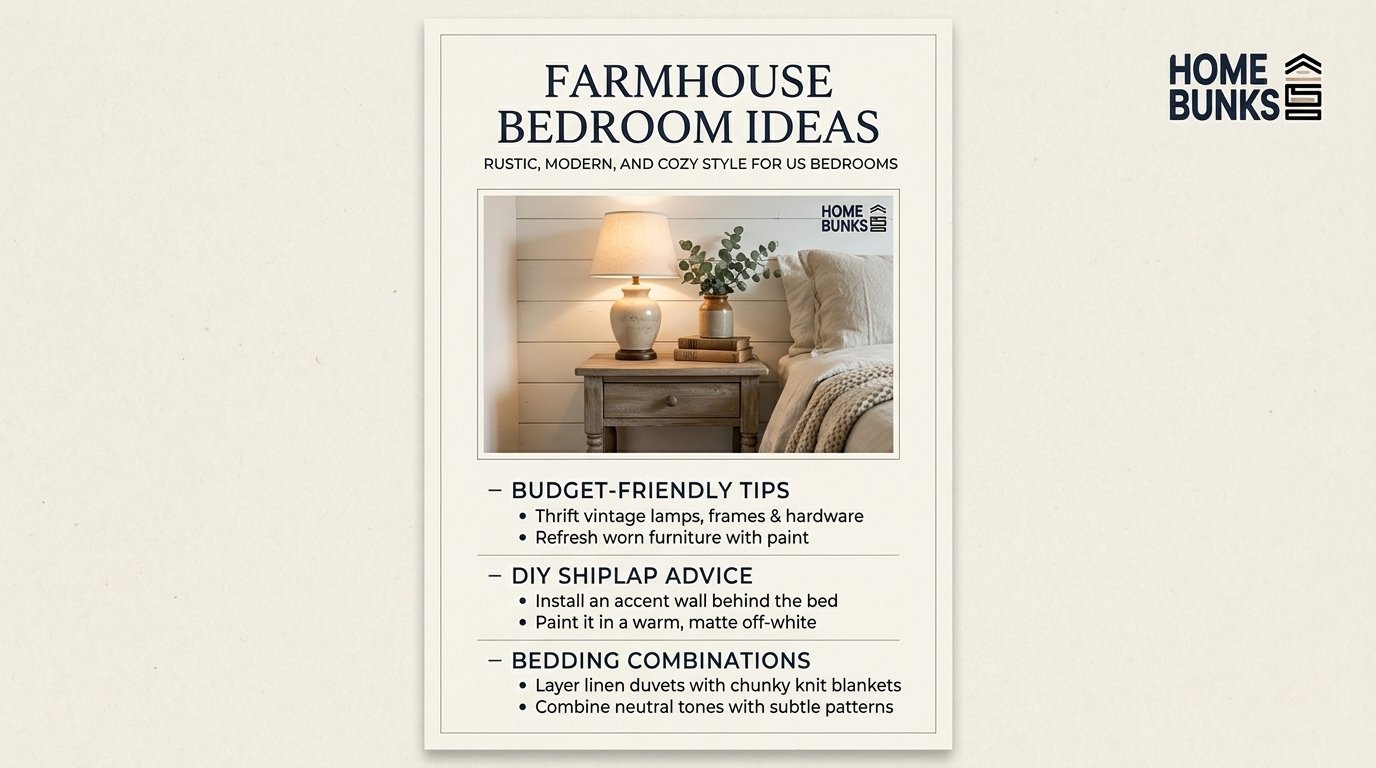
Rug materials in jute, wool, cotton, and braided wool each suit different rooms. Jute suits dry rooms and light traffic, wool suits bedrooms and comfort, cotton suits washable needs.
Farmhouse Lighting
Ambient, Task, and Accent Layers
Ambient light provides general brightness, with a ceiling pendant, chandelier, or recessed lights on a dimmer. Ambient light should be warm and dimmable, not harsh and fixed.
Task light provides focused light for reading and dressing, with bedside lamps, sconces, and a floor lamp. Task light should be warm, adjustable, and glare-free.
Accent light highlights art, texture, and shiplap, with picture lights, small lamps, and lanterns. Accent light adds depth to farmhouse rooms without adding color.
Natural light should be managed with sheer curtains, mirrors, and light walls, especially in north rooms. Natural light plus warm lamps can keep farmhouse rooms soft day and night.
Chandeliers, Pendants, and Sconces
Wrought iron chandeliers add rustic farmhouse drama, with black metal and candle-style bulbs. Iron chandeliers suit large rooms and high ceilings, with a dimmer for evening mood.
Wood and iron pendants add warmth and texture, with a wooden beam chandelier or a single pendant over a reading chair. Pendants should clear heads and beds, with warm bulbs.
Wall sconces save nightstand space and add symmetry, with plug-in sconces for rentals and hardwired sconces for permanent rooms. Sconces should be at reading height, not too high or too low.
Mason jar lamps add classic farmhouse charm, with glass, metal, and warm bulbs. Mason jar lamps suit nightstands and shelves, but they should not be the only light source.
Table lamps with ceramic, wood, or metal bases add balance and warmth, with linen shades for soft diffusion. Matching lamps create symmetry, while mixed lamps add a relaxed, collected feeling.
Warm Light Rule and Lighting Mistakes
Warm bulbs at 2700K keep farmhouse rooms soft, golden, and inviting at night. Warm light enhances wood, linen, and terracotta, while cool bulbs can make earthy palettes look gray.
Mixed bulb temperatures in one room can make farmhouse palettes look patchy, with warm lamps beside cool ceiling lights. Check bulb Kelvin on packaging and replace mixed bulbs together.
Harsh overhead light alone can flatten farmhouse texture and make wood look dull. Overhead light should always pair with lamps and dimmers for evening mood.
No dimmers can force a room to be either too bright or too dark, with no evening middle ground. Dimmers suit ceiling lights and bedside lamps in most farmhouse bedrooms.
Fabric near hot bulbs is a fire risk, with curtains, bedding, and lantern shades kept away from hot bulbs. LED bulbs run cooler, but fabric should still not touch any bulb.
Farmhouse Wall Decor Without Kitsch
Anchor Plus Layers Formula
Anchor piece above the bed should be the largest wall item, such as a large mirror, a large landscape print, a large wood frame, or a large botanical print. Anchor pieces give a bed wall a clear focal point.
Layers around the anchor can include smaller framed prints, a shelf with a candle or plant, and a woven basket. Layers should stay within palette and texture rules, not introduce new colors.
Spacing matters, with anchor pieces centered above the bed and smaller pieces spaced evenly. Random spacing can look accidental, while intentional spacing can look collected.
Dimension can come from a wood frame, a woven basket, or a mirror that bounces light. Dimension adds depth without adding clutter when heights vary intentionally.
- Anchor: one large mirror, landscape, botanical, or wood frame above bed
- Layers: two to three smaller prints, one shelf, one basket or plant
- Dimension: one wood frame, one mirror, one basket at different height
- Spacing: centered anchor, even gaps, no crowded corners
Mirrors, Art, and Architectural Salvage
Vintage mirrors in wood, iron, or brass frames add light, depth, and history. Mirrors opposite windows bounce light, while mirrors above dressers anchor a dressing zone.
Botanical prints in wood frames add natural, farmhouse character without kitsch. Botanical prints suit bedrooms because they feel calm, natural, and timeless.
Landscape prints in muted tones add depth and calm, with farmland, coast, and forest scenes. Landscape prints should stay muted, so they read as art, not as a bright poster.
Architectural salvage like old window frames, shutters, and crates adds personality and history. Salvage pieces should be cleaned, checked for lead paint where relevant, and mounted securely.
Family photos in wood or black frames add personal meaning, with black and white photos for a timeless feeling. Family photos should be grouped intentionally, not scattered randomly.
Signs: When to Stop
Signs can add farmhouse charm, with simple wording, wood frames, and muted colors. Signs work best as one piece, not as a gallery of signs on every wall.
Sign overload happens when signs cover bed walls, dresser walls, and shelves at once. Sign overload can make a modern farmhouse room feel dated and theme-like.
Sign wording should be personal and simple, not generic phrases repeated in every home. A sign with family meaning, a place name, or a simple word can feel personal.
Modern farmhouse signs should be fewer, larger, and simpler, with wood or metal frames and no distressed overload. Modern rooms often skip signs entirely, using art and mirrors instead.
Farmhouse Bedrooms by Room Type
Small Farmhouse Bedrooms
Small farmhouse rooms need light walls, airy curtains, one statement piece, and basket storage. A large wood headboard, a woven pendant, or a large mirror can anchor a small room without crowding it.
Furniture scale should stay low and light, with a low bed, a compact nightstand, and a small chair or pouf. Large, dark furniture can dominate a small farmhouse room.
Vertical storage uses wall height, with tall shelves, hanging organizers, and wall hooks. Vertical storage suits small farmhouse rooms because it frees floor space.
Floating shelves as nightstands free floor space in small rooms, with a small shelf holding a lamp, a book, and water. Floating shelves need secure mounting and weight limits.
Master, Guest, Kids, and Teen Rooms
Master farmhouse rooms can use richer textures, larger furniture, and a full lighting plan. A master room should feel like a retreat, with a reading nook, good storage, and layered bedding.
Guest farmhouse rooms suit light palettes, fresh bedding, and simple decor, because cream and sage appeal to most guests. Guest rooms should feel welcoming, not overly personal.
Kids farmhouse rooms need washable textiles, sturdy baskets, soft floor cushions, and non-toxic plants. Kids rooms should avoid fragile glass, sharp stands, and small parts that can break.
Teen farmhouse rooms can add personal art, photos, and one bold accent, with a study corner and a cozy bed zone. Teen rooms should feel personal, with space for friends and study.
Rental Farmhouse Bedrooms
Rental farmhouse should use textiles first, with bedding, curtains, rugs, and baskets creating style without paint or nails. Textiles are portable and lease-friendly.
No-drill options include leaning mirrors, adhesive hooks, removable wallpaper, and freestanding shelves. Always check lease rules before using adhesive products, because some leases limit them.
Portable pieces in rentals should include a wood chair, a woven basket set, and a favorite lamp that can move to the next home. Portable farmhouse pieces make rental styling feel like an investment, not a loss.
Lease checks should cover paint, nails, hooks, wallpaper, and plant damage to floors. A rental farmhouse room that respects lease rules will save deposit money and stress.
Farmhouse Bedrooms With Carpet
Carpet farmhouse rooms can still feel farmhouse, with wood furniture, linen curtains, and layered bedding. Carpet adds warmth and softness, especially in cold rooms and kids rooms.
Rug over carpet should use a thick rug plus a rug pad, with bed legs anchoring the rug where possible. A thin rug over carpet can ripple and trip, so thickness and pad matter.
Carpet color should stay neutral, with beige, gray, or cream carpet suiting farmhouse palettes. Dark or patterned carpet needs light bedding and light walls for balance.
Carpet cleaning needs regular vacuuming and spot cleaning, with rugs rotated to prevent wear. Carpet plus rug rooms need extra vacuuming, because dust collects in both layers.
Farmhouse on a Budget and DIY
Textiles First System
Textiles first is the best budget rule, with new bedding, a throw, pillow covers, and a rug transforming a room without furniture. Textiles change color, texture, and mood for the lowest cost.
One second-hand piece second, such as a wood dresser, a vintage mirror, or a wooden stool, adds character without a full furniture set. Second-hand pieces should be checked for stability, smell, and pests before bringing them home.
DIY third includes painted nightstands, a wood headboard, floating shelves, and a blanket ladder. DIY should prioritize safety and stability, not just looks.
Keep the rest simple after textiles and one statement piece, with clear surfaces and existing furniture. A budget farmhouse room that stays simple often looks more expensive than a crowded room.
Thrift and Repaint System
Thrift shopping can lower costs sharply, with wood dressers, mirrors, baskets, and vintage art often available second-hand. Thrift pieces should be cleaned, checked for damage, and repaired before use.
Chalk paint and milk paint can transform old furniture with a distressed, farmhouse look. Painted furniture should be sanded, primed where needed, sealed, and tested for lead paint on very old pieces.
Hardware swaps can transform furniture fast, with bin pulls, knobs, and hinges in black, brass, or bronze. Hardware swaps should match existing holes where possible, to avoid extra drilling.
Retail shopping offers new, washable, and warrantied pieces, with higher prices but easier returns. Retail farmhouse should still follow palette and texture rules, not just trend lists.
DIY Projects by Difficulty
DIY safety matters, with stud finding, anchor weight limits, and electrical safety for sconces and pendants. Electrical work should follow local codes, with a licensed electrician for hardwired work where required.
Budget scope table below uses competitor-reported ranges from recent research, not quotes, and mixes DIY, thrift, and retail scopes. Always check current local prices and itemize scope before budgeting.
Cleaning, Safety, and Care
Shiplap, Beam, and Basket Cleaning
Shiplap cleaning should include monthly dusting in grooves with a soft brush or vacuum brush. Shiplap grooves collect dust, so a routine keeps walls looking fresh and prevents buildup.
Beam cleaning needs dusting with a soft cloth or vacuum brush, plus a check for cracks, pests, and moisture. Decorative beams should be checked for mounting stability, especially in older homes.
Basket cleaning needs dusting, spot cleaning, and dry storage, because baskets can mold in damp rooms. Baskets in bathrooms and laundry rooms need extra ventilation and dry storage.
Textile washing should follow care labels, with linen and cotton washed in cool water and dried naturally where possible. Wool and chunky knits often need spot cleaning or gentle cycles.
Anchor, Cord, and Paint Safety
Furniture anchoring matters for tall dressers, shelves, and mirrors, with maker guidance and safety organization advice followed. Anchoring should use studs where possible, with weight limits checked.
Cord safety matters for lamps, sconces, and string lights, with cords kept away from walkways and bedding. Damaged cords should be replaced, not taped and reused.
Paint safety includes ventilation, low-VOC product labels, and lead paint checks on very old furniture and walls. Always check current product labels and local rules for lead paint work.
Lantern and candle safety includes LED candles as a safer glow, with real candles never left unattended and kept away from fabric. Lanterns with real candles need stable, heat-safe surfaces and clearance.
Pet, Kid, and Allergy Safety
Pet-safe textiles should be washable, durable, and easy to vacuum, with pet throws protecting bedding. Pet beds should be washable and placed in a dedicated spot.
Kid-safe farmhouse should use washable textiles, sturdy baskets, soft floor cushions, and fabric wall art instead of glass. Kids rooms should avoid small beads, fragile mirrors at low heights, and unstable shelves.
Allergy care includes dusting shiplap, washing bedding regularly, vacuuming rugs, and avoiding overwatered plants. Allergy sufferers should choose washable textiles and low-dust decor.
Mistakes, Tips, and Checklist
Ten Numbered Mistakes
- Using shiplap on every wall, without a focal wall or clear surfaces.
- Adding ten signs, with generic wording on every wall and shelf.
- Heavy distressing everywhere, with every furniture piece distressed and chipped.
- Mixing five patterns, on bedding plus curtains plus rug plus art at once.
- Crowding every surface, with small items on nightstands, dressers, and shelves.
- Using cool bulbs only, making wood, linen, and earthy palettes look gray.
- Choosing a rug that is too small, leaving the bed floating and unfinished.
- Skipping storage, with baskets and closed storage missing from the plan.
- Mixing warm and cool wood randomly, without a dominant tone or bridge.
- Copying a photo exactly, without checking room size, light, and lease rules.
Ten Numbered Tips
- Choose a branch first, with classic, modern, rustic, coastal, industrial, or Scandinavian.
- Use a warm white base, plus one grounding wood tone and one accent color.
- Use one accent wall, behind the bed, not shiplap on every wall.
- Layer bedding, with sheets, quilt or duvet, throw, and mixed pillows.
- Use warm 2700K lighting, with dimmers for evening mood.
- Anchor the bed with a rug, sized by bed size, with a rug pad.
- Use baskets for storage, with labels and a daily reset habit.
- Add one second-hand statement piece, such as a wood dresser or vintage mirror.
- Edit before adding, by removing one item for every new item in small rooms.
- Sample paint in all lights, with large boards moved around the room.
Farmhouse Room Checklist
- Branch: classic, modern, rustic, coastal, industrial, or Scandinavian, chosen first
- Palette: warm white base, grounding wood, one accent, repeated three times
- Walls: one accent wall, panel type chosen, renter alternative checked
- Furniture: bed scale, nightstand scale, dresser, bench, reading chair
- Textiles: layered bedding, curtains, rug sized by bed, pattern scale
- Lighting: ambient, task, accent, warm 2700K, dimmers, no mixed bulbs
- Wall decor: anchor piece, layers, spacing, sign limit, no kitsch overload
- Storage: baskets, closed storage, clear surfaces, daily reset
- Safety: furniture anchors, cord safety, paint ventilation, candle safety
- Budget: textiles first, one second-hand piece, scope and prices dated
FAQs
What is a farmhouse bedroom?
A farmhouse bedroom is a cozy, practical room with natural materials, warm neutrals, wood furniture, and layered textiles. It values comfort, simplicity, and pieces that feel collected over time.
Farmhouse bedrooms can be classic, modern, rustic, coastal, industrial, or Scandinavian, with different palettes and materials. A farmhouse room should feel restful, not like a theme park.
What is modern farmhouse bedroom style?
Modern farmhouse uses clean lines, white shiplap, matte black hardware, simple furniture, and high contrast. It feels fresh and calm, without barnyard kitsch or heavy carving.
Modern farmhouse suits apartments and new homes, with light walls, wood accents, and linen bedding. Warm wood and texture keep modern farmhouse soft, not cold.
What is the difference between farmhouse and rustic bedroom?
Rustic bedrooms emphasize raw wood, beams, iron, and heavy texture, often in cabins and lodges. Farmhouse bedrooms can be rustic, but they can also be modern, coastal, or Scandinavian.
Rustic farmhouse is one branch of farmhouse, not the whole style. A modern farmhouse room can have clean lines and no beams, while still feeling farmhouse.
Is farmhouse style out of style?
Farmhouse style is not out of style, but heavy kitsch farmhouse feels dated. Modern farmhouse with clean lines, muted palettes, and edited decor feels current.
Classic farmhouse still works when signs, distressing, and patterns are edited. A farmhouse room that relies on one accent wall, warm wood, and layered textiles will age better than a room full of signs.
Is shiplap out of style?
Shiplap is not out of style, but horizontal shiplap on every wall feels dated to some designers. Vertical shiplap, V-groove paneling, and board and batten feel more tailored and current in recent guides.
Shiplap works best as one accent wall behind the bed, in white or warm white, with simple furniture. A well-done shiplap wall will not look bad, even if trends shift.
Should shiplap be horizontal or vertical?
Horizontal shiplap widens a room visually and suits classic farmhouse and large rooms. Vertical shiplap adds height and suits low ceilings, small rooms, and modern farmhouse.
Choose by ceiling height and branch, not by trend alone. Low rooms benefit from vertical lines, while wide rooms benefit from horizontal lines.
How many walls should have shiplap?
One accent wall behind the bed is the safest rule, especially in small rooms. One wall gives a focal point, while four shiplap walls can feel busy and dated.
Large, bright rooms can handle full-room shiplap with light bedding and minimal decor. Small, dark rooms should stick to one wall and light paint.
Can I do farmhouse with carpet?
Farmhouse with carpet works well, with wood furniture, linen curtains, and layered bedding. Carpet adds warmth and softness, especially in cold rooms and kids rooms.
Rug over carpet should use a thick rug plus a rug pad, with bed legs anchoring the rug where possible. A thin rug over carpet can ripple and trip, so thickness matters.
Can I do farmhouse in a small bedroom?
Farmhouse in a small bedroom works with light walls, airy curtains, one statement piece, and basket storage. A large wood headboard, a woven pendant, or a large mirror can anchor a small room without crowding it.
Small rooms should use low, light furniture, vertical storage, and clear surfaces. Edit before adding, by removing one item for every new item.
Can I do farmhouse in a rental?
Rental farmhouse works with textiles first, plus no-drill hooks, leaning mirrors, removable wallpaper, and portable furniture. Bedding, curtains, rugs, and baskets can transform a rental without paint or nails.
Check lease rules before using adhesive products, hooks, or wall mounts, because some leases limit them. Portable pieces like a wood chair and a favorite lamp can move to the next home.
What paint colors work for a farmhouse bedroom?
Farmhouse paint colors start with warm white, cream, light gray, sage, pale blue, and beige. Accents include terracotta, mustard, navy, and dusty pink in small doses.
Best paint depends on light direction, with warm paint for north rooms and cooler paint for south rooms. Always sample large boards in morning, afternoon, and lamplight.
What bedding goes with farmhouse decor?
Farmhouse bedding layers breathable sheets, a quilt or duvet, a throw, and mixed pillows in cream, white, and one accent. Cotton, linen, and patchwork quilts add texture and pattern.
Bedding patterns like buffalo check, plaid, ticking stripe, and muted florals suit farmhouse, but only one bold pattern per bed. Solid breaks in duvets and curtains keep bedding calm.
What rug goes in a farmhouse bedroom?
Farmhouse rugs in jute, wool, cotton, and braided wool suit most bedrooms. A rug should anchor the bed, extending beyond bed sides where possible.
Rug sizing by bed size is a planning guide, with 8 by 10 feet preferred for queen beds and 9 by 12 feet preferred for king beds. A rug that is too small can make a bed look floating.
Can I mix farmhouse with modern furniture?
Farmhouse plus modern furniture works when palette and texture repeat, with wood tones and earthy accents shared across styles. A modern bed with farmhouse bedding, a jute rug, and wood nightstands can feel cohesive.
Mixing works when one style dominates and the other adds accents, not when both compete equally. Too many competing styles without a shared thread can look random.
How do I make a farmhouse bedroom look modern, not old-fashioned?
Modern farmhouse uses clean lines, white shiplap, matte black hardware, simple furniture, and edited decor. Avoid heavy carving, heavy distressing, and sign overload.
Modern contrast comes from black hardware, black sconces, and black frames against white walls. Warm wood, linen, and a woven rug keep modern farmhouse soft.
How do I avoid kitsch in a farmhouse bedroom?
Avoid kitsch by limiting signs to one piece, limiting distressing to one or two pieces, and limiting patterns to one bold pattern per room. Art, mirrors, and botanical prints can replace signs.
Kitsch filter means asking if an item would still work without a farmhouse label. If an item only works as a joke or a theme prop, it probably does not belong in a modern farmhouse bedroom.
What lighting is best for a farmhouse bedroom?
Best farmhouse lighting is warm, layered, and dimmable, with bulbs at 2700K. Ambient pendants, task lamps, and accent lanterns together keep wood and linen soft at night.
Avoid harsh overhead light alone and mixed bulb temperatures, which can make farmhouse colors look patchy. Dimmers allow a room to shift from bright morning to soft evening.
What curtains work in a farmhouse bedroom?
Farmhouse curtains in linen or cotton, in cream, white, or soft gray, suit most bedrooms. Linen curtains add texture and drape, while cotton curtains add crispness and easy care.
Curtain length should reach the floor or just above it, with a rod placed above the window frame to add height. Blackout layers behind sheers help sleep in east, west, and street-facing rooms.
How do I do farmhouse on a budget?
Budget farmhouse starts with textiles, then adds one second-hand piece, then DIY projects. New bedding, a throw, pillow covers, and a rug can transform a room for the lowest cost.
Thrift pieces like wood dressers, vintage mirrors, and wooden stools add character without retail prices. Always check thrift pieces for stability, smell, and pests before bringing them home.
What should I buy first for a farmhouse bedroom?
Buy textiles first, with bedding, a throw, pillow covers, and a rug. Textiles change color, texture, and mood for the lowest cost and highest impact.
Buy one statement piece second, such as a wood dresser, a large mirror, or a wood headboard. Keep the rest simple, with clear surfaces and existing furniture.
How do I install a shiplap accent wall?
Shiplap install starts with measuring the bed wall, finding studs, and planning board layout. Boards are cut, nailed to studs, painted, and finished with trim, with gaps kept even.
DIY shiplap needs a saw, a nail gun or hammer, a level, and paint, plus safety glasses and dust protection. Electrical work for sconces or outlets should follow local codes, with a licensed electrician where required.
How do I clean shiplap grooves?
Shiplap cleaning should include monthly dusting in grooves with a soft brush or vacuum brush. Spot cleaning with mild soap and water can help small marks, with air drying.
Shiplap grooves collect dust, so a routine keeps walls looking fresh. Avoid excess water on MDF shiplap, because swelling can damage boards.
How do I do farmhouse in a dark north-facing room?
Dark north rooms need warm paint, warm wood, warm lighting, and light bedding. Warm white walls, beige throws, and 2700K lamps can counter cool north light.
North rooms should avoid cool gray paint, dark wood everywhere, and heavy curtains. Sheer curtains, mirrors, and light rugs can help north rooms feel brighter.
How do I update a farmhouse bedroom without starting over?
Update farmhouse by editing first, then changing textiles, then adding one new accent. Remove crowded small items, swap pillow covers and throws, and add one new mirror or art piece.
Keep the bed, rug, and large furniture, unless they clash with the new palette. A textile refresh plus a lighting change can transform farmhouse without a full makeover.
How much does a farmhouse bedroom makeover cost?
Farmhouse makeover cost varies widely by scope, material, and labor, with textiles-only scopes lowest and shiplap plus furniture scopes highest. Competitor-reported ranges in recent research put textiles-only at about $100 to $300 and full refresh at about $500 to $1,500, as estimates, not quotes.
Always get current local quotes for shiplap, furniture, and labor, and itemize scope before budgeting. A makeover that mixes DIY, thrift, and retail will cost less than a full retail makeover.
Conclusion
Farmhouse bedroom ideas work best when branch, palette, shiplap, rug, and lighting are decided together, before buying a room full of signs and distressed items. A warm white base, one grounding wood tone, one accent, layered textiles, and warm 2700K lighting can make a bedroom feel cozy, modern, and restful.
Start with textiles, sample paint in all lights, choose one accent wall, and edit surfaces before adding more. That simple order will give your farmhouse bedroom the collected, lived-in feeling it should have, without kitsch overload or a theme-park look.