Halloween decor 2025 belongs to a closed season now. Halloween fell on Friday, October 31, 2025, and every product, price and trend tied to that year is history rather than stock.
That history is worth recording properly. The 2025 season set a spending record, shifted decor toward design, and produced sellouts that still trade secondhand today.
Three kinds of readers use a record like this. Planners research last season before spending on the next one, and collectors hunt discontinued pieces by year.
Year comparers ask a third question: what changed between 2025 and 2026, and what does that predict for 2027? Every section below answers one of those jobs.
Nothing here is written as buyable. Every 2025 price appears in the past tense with its source strand attached, because a record that blurs dates misleads everyone who reads it.
Quick Answer: What This Record Is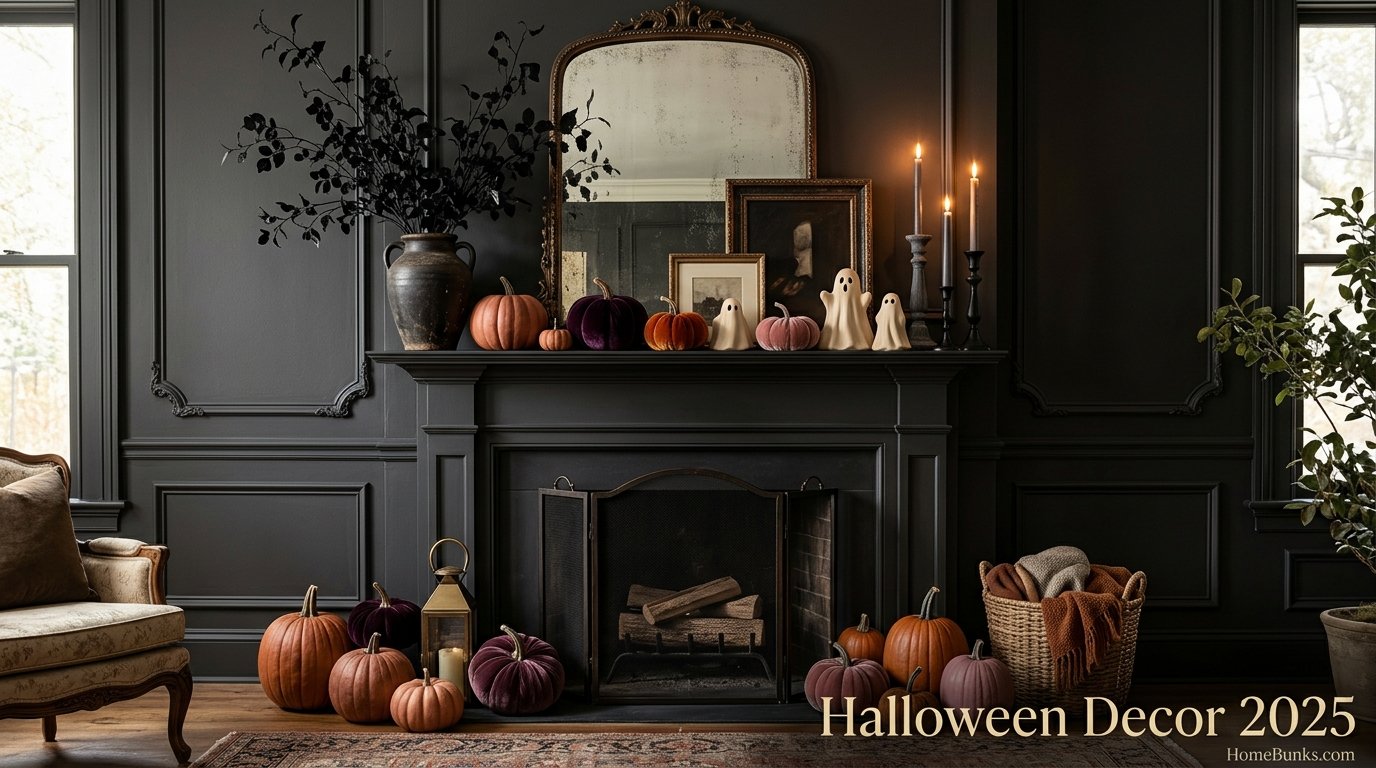
Halloween decor 2025 was the design year: a record-spending season where restraint, styling and pastel colour outsold the shock props that had defined earlier seasons.
The season’s verified headline is money. The National Retail Federation recorded $13.1 billion in total Halloween spending, with decorations alone taking $4.2 billion of it.
Its cultural headline is taste. Editorial records described cathedral styling, terracotta pumpkins and pink skeletons sharing one season, a combination no earlier year had produced.
This record page sits on HealthLeeks as a reference, not a catalogue. Where a 2025 piece can still be found today, the honest route is the secondhand market, covered near the end.
The Numbers: A Record Season on Paper
The National Retail Federation, working with Prosper Insights and Analytics, surveyed 8,045 consumers between September 2 and 9, 2025. That survey is the season’s numerical backbone, and its figures are reproduced here in full.
Total spending reached $13.1 billion, a record at the time. It passed the $12.2 billion set in 2023 and climbed well above the $11.6 billion recorded in 2024.
Spending per person also set a record at $114.45. The figure had been $103.63 in 2024 and $108.24 in 2023, so 2025 marked a clear step up rather than a rounding difference.
|
Category |
2025 spending (NRF) |
Who planned to buy |
|---|---|---|
|
Costumes |
$4.3 billion |
71% of celebrants |
|
Decorations |
$4.2 billion |
78% of celebrants |
|
Candy |
$3.9 billion |
96% of celebrants |
|
Greeting cards |
$0.7 billion |
38% of celebrants |
|
Total |
$13.1 billion |
73% planned to celebrate |
Decorations deserve their own sentence. At $4.2 billion and 78 percent of celebrants buying, decor reached more shoppers than costumes did, a first-order fact about where the season’s centre of gravity sat.
The federation’s own release carries the full ledger, published as the NRF consumer survey on record 2025 Halloween spending in September 2025. Every figure in the table above traces back to that document.
Who Celebrated and Who Decorated
Participation held near its ceiling. Seventy-three percent of consumers planned to celebrate Halloween in 2025, matching the 2023 figure and edging past 2024’s 72 percent.
Decorating reached 51 percent of celebrants, who planned to decorate a home or yard. That share explains why decor spending stayed so close to costumes despite costumes costing more per buyer.
Timing shifted earlier again. Forty-nine percent of shoppers began buying in September or earlier, and hero products pushed the real start of the season into the summer, as the chronology below shows.
Inspiration moved online. Online search was the leading source of Halloween ideas at 37 percent, ahead of in-store browsing at 27 percent, which is one reason a written record of the season still gets read.
The Tariff Condition Over the Whole Season
One condition hung over every 2025 price tag. Seventy-nine percent of consumers expected prices to be higher that Halloween specifically because of tariffs, per the same NRF survey.
Much Halloween merchandise is imported, so the expectation was grounded in the supply chain rather than in mood. Retailers answered with earlier promotions and discount-store traffic, which rose sharply in the survey’s destination figures.
The tariff strand matters for the record because it explains the season’s shape. Shoppers spent a record total while actively hunting value, and that tension pushed volume toward discount destinations and early buying.
It also matters for secondhand hunters today. Pieces bought under tariff pressure in 2025 were often bought earlier and kept carefully, which is one reason clean 2025 stock keeps surfacing in resale listings.
The Design Year: Trends as Documented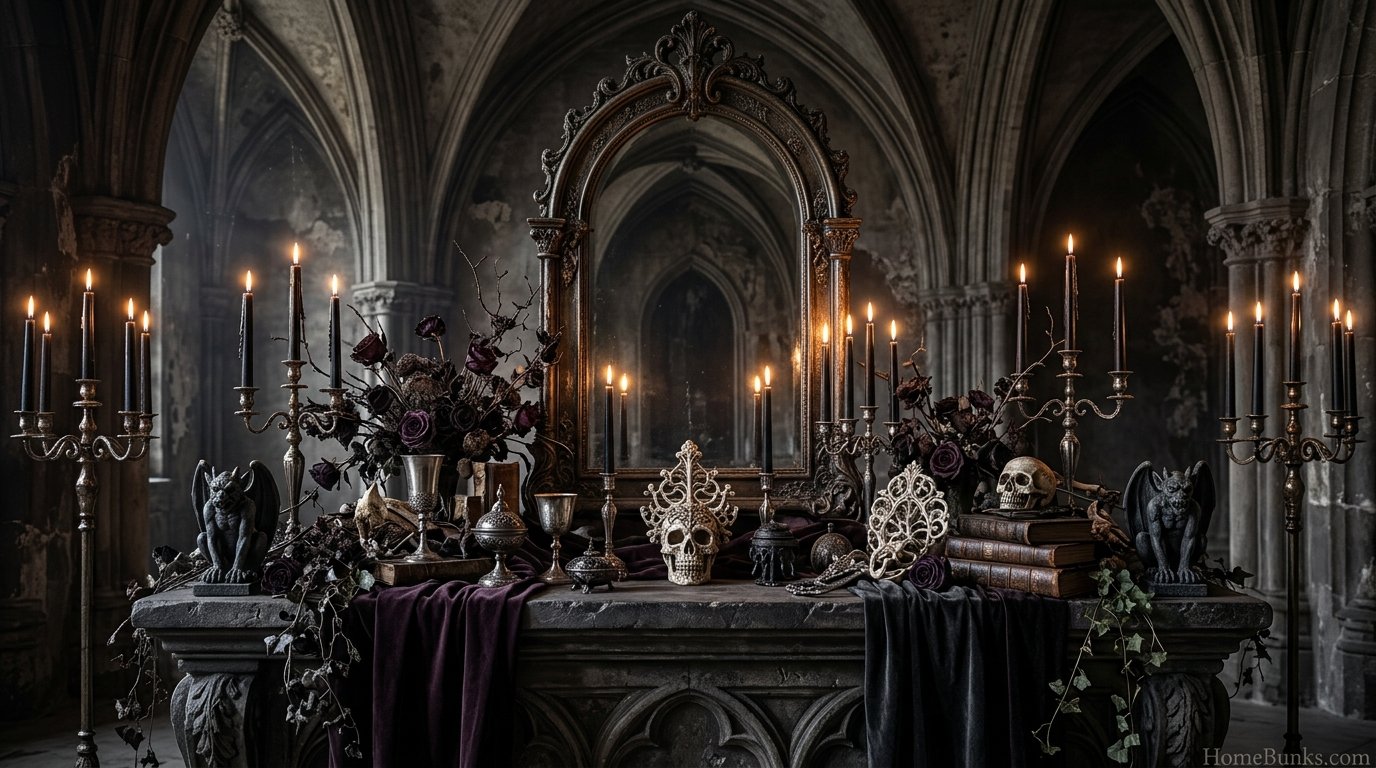
The fullest trend record of 2025 comes from PureWow, whose editors published a top ten list during the season and updated it on October 2, 2025. It is one editorial record, labelled as such, and it named the year’s direction in a single line: restraint, drama and design.
PureWow’s framing was blunt. After years of shock value, 2025 decor had matured: moodier, more collectible, and styled like interiors rather than like haunted attractions.
The trends below follow that record, with a second strand from the Rakuten 2025 guide where the two sources describe the same season from different angles. Where they disagree with each other or with the market, the disagreement is printed, not smoothed over.
Cathedral Couture and the Gothic Turn
PureWow’s lead trend was cathedral couture: vignettes borrowed from old cathedrals, with gargoyles, reliquary style objects, tall candlesticks and gothic arched mirrors arranged like candlelit altars.
The look traded plastic gore for stone tones and ceremony. A mantel styled this way read as a haunted chapel, and the pieces worked as dramatic home decor long after the night itself.
Cathedral couture mattered because it set the season’s register. Once the lead trend was interior and adult, every other trend on the list had to justify itself in design terms rather than scare terms.
Hologram Mirrors and Eyeballs Everywhere
The hologram mirror was the season’s signature tech piece in editorial coverage. Off, it hung as an elegant arched mirror; on, LED layering replaced the reflection with glowing ghosts and skeletal faces.
Eyeballs everywhere ran beside it as a motif rather than a product. West Elm and other furniture retailers turned the eyeball into ceramic vases, glowing string lights and embroidered pillows, half talisman and half joke.
Both trends shared a trait the record should note. They were display pieces for inside the house, photographed for social feeds, which matched the survey finding that inspiration had moved online.
Terracotta and Velvet Pumpkins
The pumpkin itself changed material in 2025. Terracotta pumpkins, with chalky matte finishes and muted clay tones, replaced glossy orange plastic as the editorial favourite.
PureWow described them as looking unearthed from an old harvest festival, and retailers stocked them in peach, grey washed and weathered white finishes beside the traditional orange.
Velvet pumpkins completed the same move in fabric. Velvet ruins, PureWow’s closing trend, layered jewel tone velvet pumpkins, runners and pillows into a moody, theatrical register that read as haunted parlour rather than party aisle.
Together the two pumpkin trends are the design year in miniature. The season’s most ordinary object was restyled in ceramic and cloth, at higher price points, for rooms rather than lawns.
Creepy Candleholders and Festive Glassware
Creepy candleholders gave the tablescape its drama: skeleton hands, bronze claws and coiled snakes holding tall black tapers. Candlelight stayed central to the 2025 look, but the holders became the sculpture.
Festive glassware moved decor onto the table itself. Lowballs and tumblers carried floating pumpkins, swooping bats and embossed skulls that appeared as drinks caught the light.
Both trends point the same way. In 2025, decor spending followed the dining table and the mantel, the two surfaces a host actually photographs, more than it followed the front lawn.
The Rakuten Strand: Moody Palettes and Retro Revival
Rakuten’s 2025 guide described the season through themes rather than products. Its palette call was smoky and moody: aubergine, umber, oxblood, deep green and bone replacing bright orange as the sophisticated base.
Its second theme was retro revival. Blow molds, papier mache figures, vintage pumpkins and nostalgic ceramic ghosts came back as a deliberate counterweight to licensed, high tech props.
The guide also named magical gardens and storybook surrealism: moons, crystals, witchy botanicals and apothecary jars on one side, whimsical twisted fairytale scenes on the other.
Read together, the two records agree on the essentials. Both describe a season moving away from gore toward mood, and both treat nostalgia and design as the year’s growth categories.
The Cute Economy: Pink, Pastel and the Cutie Ghost
Running against the gothic pole all season was a second Halloween: pink, pastel and cute. It was not a footnote. It produced the year’s fastest sellout and its most copied colour story.
Michaels anchored the retail side with its Sweet and Spooky collection. PureWow’s record of the line describes bubblegum pink skeletons, sequinned disco skeletons and ghosts styled like a Y2K slumber party.
The trend had a name of its own, pink Y2K grunge, and a clear demographic logic. It gave younger decorators a Halloween that matched their rooms instead of fighting them, and it photographed exceptionally well.
Pastel product strands filled in around the headline line. Velvet pink pumpkins, pastel ghost glassware and pink toned pillows circulated across marketplaces all season, most of them unbranded and trend driven rather than collected.
The cute economy’s defining event, though, belonged to Disney. It deserves its own record, because it set the pattern every later 2025 sellout followed.
The Disney Cutie Ghost Sellout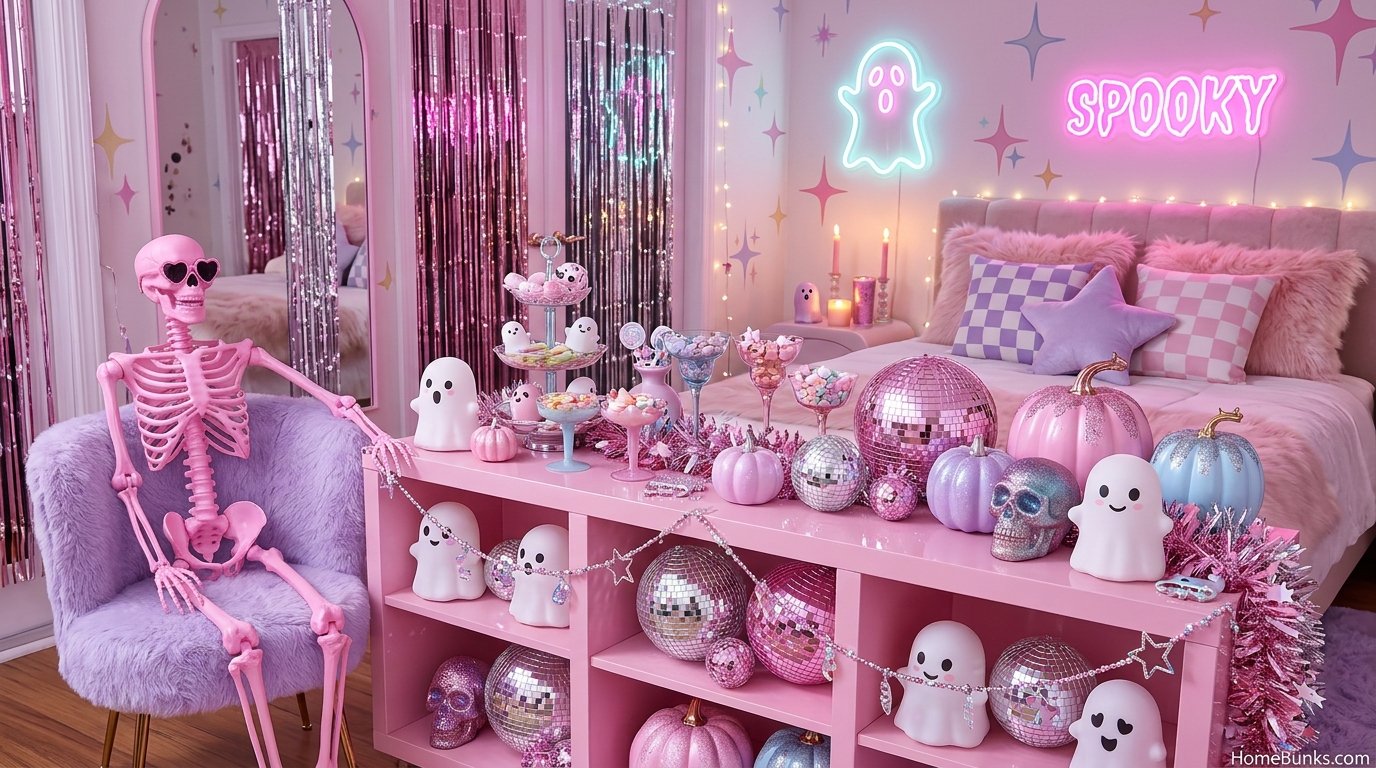
Disney Store released the pastel Cutie Ghost collection in August 2025, and the dated news record shows how fast it moved. WDW News Today reported the release on August 11, 2025, noting that most items had already sold out online at the time of writing.
The collection’s decor centrepiece was the 16 inch Minnie Mouse Cutie Ghost light up decor, priced at $59.99 at release. That figure is a dated 2025 strand, printed here as history, not as a price anyone can pay today.
Around it sat the Minnie Mouse Cutie Ghost mug at $19.99 and the Cutie Ghost Loungefly mini backpack at $100, both at release in 2025. Parks stock sold through in person as well, per the same dated record.
The full release record, with the original prices as published that August, is preserved in the WDW News Today report on the Cutie Ghost collection. It remains the cleanest single document of the sellout as it happened.
Why did a pastel ghost outsell the season’s animatronics? The record suggests three reasons: a licensed character, a palette that matched the pink trend, and a release date early enough to build a month of scarcity stories before October.
Hero Products and the Sellout Chronology
The 2025 season did not sell evenly across its calendar. It sold in waves, and the chronology below is built only from dated strands, because an undated sellout story is just a rumour with good marketing.
Summer came first. Summerween, the season’s own vocabulary for Halloween bleeding into July, described decor drops and hero buying landing in midsummer, months before the holiday.
August brought the headline scarcity. The Cutie Ghost collection released on August 11, 2025 and sold through within weeks, while hero yard pieces began their usual early disappearance from big box shelves.
September was the volume wave. The NRF survey, fielded September 2 to 9, caught 49 percent of shoppers already buying, and promotion widened across retailers through the month.
October was scarcity and display. Hero stock was largely gone, prices on what remained held firm under the tariff condition, and the season’s energy moved from buying to showing.
|
Date or window, 2025 |
What the record shows |
|---|---|
|
July 2025 |
Summerween drops; earliest decor buying of the season |
|
August 11, 2025 |
Disney Cutie Ghost collection released; most items sold out quickly |
|
September 2 to 9, 2025 |
NRF survey fielded; 49% of shoppers already buying |
|
September 2025 |
Promotions widened; volume buying peaked |
|
October 2025 |
Hero pieces scarce; displays replaced shopping as the story |
|
October 31, 2025 |
Halloween fell on a Friday; the season closed |
The chronology carries the season’s most reusable lesson. In 2025, the launch was the sale for anything licensed, pastel or oversized, and shoppers who waited for October discounts were shopping a different, smaller season.
The Giants Debate: Declared Out, Still Standing
No 2025 disagreement is more instructive than the one over size. PureWow retired supersized skeletons and inflatables outright, calling cul-de-sacs of giant figures more mall display than modern Halloween.
The same editorial record retired overly gruesome outdoor decor beside them. Its argument was about register: design minded decorators were rejecting shock in favour of layered, curated vignettes.
Other 2025 roundups simply ignored the verdict. Listicles published the same season still led with 12 foot skeletons, giant inflatables and life size animatronics as their headline picks.
Both records are printed here because both were true of their audiences. The design audience was genuinely tired of giants, and the yard display audience was genuinely still buying them.
The honest summary is a split, not a winner. In 2025 the giants lost the editorial argument while keeping the driveway, and any record that reports only one of those facts is incomplete.
Hindsight adds a footnote the 2025 writers could not have known. The verdict section below checks the OUT call against the 2026 season, where the giant class did something specific and documented.
Retailer Snapshots, 2025 Only
Retailer coverage here is deliberately shallow. Each snapshot records what that retailer represented in 2025, in a few lines, because depth on any single retailer’s Halloween range belongs to dedicated pages, not to a year record.
Disney Store: The Licensed Pastel Event
Disney Store’s 2025 Halloween story was the Cutie Ghost collection and its August sellout. The pastel licensed line showed that a character collection could behave like a fashion drop, with scarcity as the marketing.
Michaels: The Aesthetic Collections Store
Michaels carried the design year’s retail flag. Sweet and Spooky owned the pink pole, and its wider 2025 assortment leaned into themed collections that a decorator could buy as a complete look.
Spirit Halloween: The Horror Pole
Spirit Halloween held the lane the design year defined itself against: animatronics and licensed horror, sold through seasonal stores that closed when the season did. The scary end of the 2025 market never actually went away; it just stopped being the headline.
Home Depot: The Landmark Yard
Home Depot remained the address for oversized yard pieces, the giants and animatronics that filled the roundups PureWow was arguing with. Its 2025 role in the record is structural: it supplied the scale the design year reacted against.
Target: A Snapshot Only
Target’s 2025 Halloween presence ran through its own brands, with the Hyde and EEK! Boutique line carrying the volume end of the aisle. That is the whole snapshot here; Target’s Halloween depth is a subject of its own and sits outside a year record’s scope.
Hindsight Verdicts: What Carried Into 2026
A trend list written during a season is a prediction. This section scores the 2025 predictions against the documented 2026 record, and every verdict below names the 2026 evidence it rests on.
The method is strict. A trend counts as persisted only where the 2026 record shows it in collections, surveys or sellouts, and as faded only where the 2026 record shows the space it held being taken by something else.
|
2025 trend or call |
2026 evidence |
Verdict |
|---|---|---|
|
Pink and pastel Halloween |
Michaels built a named pastel collection for 2026; the pretty lane ran all season |
Persisted and grew |
|
Retro and vintage revival |
Vintage looks appeared on the 2026 trend lists; the revival ran multiple seasons |
Persisted |
|
Giants declared OUT |
The flagship 12 foot skeleton returned in two versions in 2026 and sold out again |
The call failed |
|
Inflatables on the way out |
Inflatables held their share in 2026 planning surveys as the budget focal class |
The call failed |
|
Design led, pretty pieces |
Target’s design led Threshold lane anchored its 2026 pretty offer |
Persisted |
|
Gothic and cathedral mood |
A gothic library collection headlined one Michaels universe in 2026 |
Persisted as a niche |
|
Licensed character decor |
Licensed animatronics ran the 2026 table across retailers |
Persisted and grew |
The pink verdict is the clearest. What 2025 proved with Sweet and Spooky and Cutie Ghost, 2026 institutionalised, giving pastel its own named collections rather than treating it as a novelty corner.
The retro verdict is nearly as firm. The 2026 record treats vintage styling as a standing category, and notes vintage pieces appreciating in usefulness across seasons, which is exactly what the 2025 revival predicted.
The giants verdict cuts the other way. PureWow’s OUT call was the season’s boldest prediction, and the 2026 record shows the giant class expanding, with new heights, new characters and the flagship skeleton selling out for another year.
The full season record behind these verdicts, with its own dated strands and retailer lanes, is the Halloween decor 2026 record on HomeBunks. This page borrows only its conclusions; the 2026 detail lives there.
One verdict stays open by design. Whether the design year was a permanent turn or a one season mood cannot be settled by 2026 alone, and the record says so rather than pretending otherwise.
Halloween Decor 2025 vs 2026
The comparison below is the only place in this record where 2026 figures appear, and they are labelled as reported figures from the 2026 season’s coverage. Everything outside this table is 2025 only.
|
Measure |
Halloween 2025 (NRF record) |
Halloween 2026 (reported, labelled) |
|---|---|---|
|
Total spending |
$13.1 billion, a record at the time |
$13.5 billion reported |
|
Per person |
$114.45 |
$115.14 reported |
|
Decorations |
$4.2 billion, 78% of celebrants buying |
$4.3 billion planned, 78% buying decor |
|
Season shape |
Design year: restraint, pastel pole, tariff anxiety |
Tech inside the props: app control, licensed casts, pastel institutionalised |
Read the money rows carefully. The 2026 totals grew modestly, which means 2025 was not a spike but a step: the record year became the floor the next season built on.
Read the shape row for the real change. In 2025 the argument was about taste; by 2026 it was about technology inside the props and licensing rosters, a different contest played on the base 2025 spending built.
The Secondhand Afterlife of 2025 Pieces
A closed season’s products do not vanish. They move into resale listings, collector groups and marketplace searches, where 2025 pieces trade today under their year and collection names.
The afterlife is uneven by design. Sold out and licensed pieces, Cutie Ghost above all, hold premiums because supply was cut short in August 2025 and demand never got its fill.
Mass basics behave oppositely. Generic pumpkins, string lights and unbranded pastel pieces from 2025 generally trade near or below their original prices, because nothing about them is scarce.
How to Hunt a 2025 Piece Now
Search by collection and year together, not by product type alone. “Cutie Ghost 2025” finds the afterlife; “pastel ghost decor” finds this year’s reissues wearing the same palette.
Check multiple marketplaces weekly rather than one daily. The main resale venues surface different stock, and the good 2025 pieces move fast enough that a weekly sweep across all of them beats a daily check of one.
Use the original prices in this record as your anchor, not your offer. A piece listed at triple its 2025 release price is a negotiation that starts with the dated strand, and sellers respect a buyer who knows it.
How to Verify Before Paying
Ask for seller photos of the actual piece, including the base, the battery compartment and any maker’s marks. Stock photos on a 2025 listing are the single most common sign of a reissue or a scam.
Check the release details against the record. The genuine Cutie Ghost light up figure was 16 inches, molded PVC, and ran on three AAA batteries; a listing that contradicts the documented spec is not the 2025 piece.
Separate originals from reissues deliberately. Retailers revisit successful palettes, and a 2026 or later piece in 2025 colours is a fine purchase at a reissue price and a bad one at a collector price.
What to Pay and What to Skip
Pay premiums only where scarcity is documented: licensed sellouts, limited collections, and pieces the chronology shows disappearing before October 2025. Everything else should be priced as used decor, because it is.
Skip listings that lean on the year alone. “2025” in a title is a search term, not a provenance, and unbranded basics gain no value from the calendar.
Finally, factor in condition honestly. Faded pastel finishes, tired inflatable blowers and worn animatronic motors were the 2025 season’s known weaknesses, and a cheap piece with a dead motor is expensive storage, not a bargain.
Mistakes the Record Warns Against
Mistake 1: Reading a 2025 List as a Shopping List
The most common error is treating a frozen 2025 roundup as current stock. Those pages were written for a season that closed on October 31, 2025, and their products survive only through the secondhand routes above.
Mistake 2: Quoting 2025 Prices as Current Prices
A dated strand is not a price tag. Repeating the Cutie Ghost figure’s $59.99 release price as what it costs now misleads twice: it was a 2025 figure, and the resale market has priced the piece differently ever since.
Mistake 3: Treating One Trend List as Consensus
PureWow’s list is the fullest 2025 record, and it is still one editorial voice. The giants debate shows why: the same season’s other roundups pushed the exact products that list retired, and both sides had real audiences.
Mistake 4: Claiming a Trend Lasted Without Checking
Verdicts need evidence from the next season, not vibes. Every persistence claim in this record is tied to the 2026 documentation, and any 2025 trend summary that skips that check is repeating a prediction as if it were a result.
Mistake 5: Paying Collector Prices for Reissues
Hunters lose the most money here. A later reissue in a 2025 palette is worth its own price; paying the documented original’s premium for it hands the seller a profit the record never justified.
Frequently Asked Questions
What were the biggest Halloween decor trends in 2025?
The design year defined them: cathedral gothic styling, hologram mirrors, terracotta and velvet pumpkins, creepy candleholders and festive glassware. A pastel and pink pole ran beside the gothic one, and retro blow molds revived strongly.
How much did people spend on Halloween in 2025?
The NRF recorded $13.1 billion in total spending and $114.45 per person, with decorations at $4.2 billion. The figures come from its survey of 8,045 consumers, fielded in September 2025 with Prosper Insights.
Was Halloween 2025 a record year for spending?
Yes, on the NRF record. The $13.1 billion total passed the previous record of $12.2 billion set in 2023 and climbed well above the $11.6 billion spent in 2024.
What percentage of people bought Halloween decorations in 2025?
Seventy-eight percent of celebrants planned to buy decorations, per the NRF survey. That share was up from 75 percent in 2024 and made decor the most widely bought category of the season.
Why was 2025 called the design year for Halloween decor?
Editorial records, PureWow’s above all, showed decor moving from shock props to styled looks: interior led, adult, and collectible. Restraint and design replaced gore as the season’s headline at the exact moment spending hit a record.
What Halloween decor sold out in 2025?
The Disney Cutie Ghost collection was the documented headline, selling out within weeks of its August 11, 2025 release. Hero yard pieces followed the usual pattern of disappearing well before October.
When did the Disney Cutie Ghost collection come out?
Disney Store released it in August 2025, and WDW News Today’s dated report of August 11, 2025 already noted most items sold out online. Parks stock sold through in person as well.
How much was the Minnie ghost light up decor in 2025?
It was priced at $59.99 at release in 2025, as the dated WDWNT record shows. That is a historical strand, not a current price; the piece trades secondhand today at whatever the resale market sets.
What is Summerween?
Summerween was 2025’s vocabulary for the season bleeding into July, with decor dropping and hero buying starting in midsummer. PureWow’s trend record used the word while describing how early the 2025 season had begun.
What colours defined Halloween decor in 2025?
Two poles shared the season. One was smoky and moody: aubergine, oxblood, umber, deep green and bone. The other was pastel pink, the colour of the Sweet and Spooky line and the Cutie Ghost collection.
What was the pink Halloween trend in 2025?
Pink moved from accent to full theme: bubblegum pink skeletons, velvet pink pumpkins and pastel ghost glassware. Michaels’ Sweet and Spooky collection is the retail record of the trend at its peak.
Were 12 foot skeletons out in 2025?
The record is split, and this page prints it that way. PureWow declared supersized skeletons and inflatables out, while other 2025 roundups still pushed them as headline picks. The 2026 record later showed the giants expanding, not retiring.
What are blow molds and why were they back in 2025?
Blow molds are retro tooled plastic figures, hollow and lit from inside, in the style of mid century yard decor. Rakuten’s 2025 guide tied their revival to nostalgia and collector demand for vintage looking pieces.
Did tariffs affect Halloween decor prices in 2025?
The expectation is documented even where individual prices are not. Seventy-nine percent of consumers expected higher prices because of tariffs, per the NRF survey, and shoppers answered by buying earlier and leaning toward discount stores.
When did people start shopping for Halloween 2025?
Earlier than the calendar suggests. Forty-nine percent began in September or earlier per the NRF, and Summerween buying plus the August Cutie Ghost release pulled hero purchases into the summer itself.
Where did people get Halloween decor inspiration in 2025?
Online search led at 37 percent, ahead of in-store browsing at 27 percent, per the NRF survey. Friends and family followed at 21 percent, which is why written season records kept being read after the season closed.
What carried from Halloween 2025 into 2026?
Checked against the 2026 record: pink and pastel grew into named collections, the retro revival persisted, design led pieces held their lane, and licensed decor expanded. Each verdict in this record names its 2026 evidence.
Which 2025 Halloween trends died after one season?
The clearest casualty was a prediction rather than a product: the call that giants and inflatables were finished. The 2026 season expanded the giant class instead, so the death notice itself is what did not survive.
Can I still buy Halloween decor from 2025?
Not new at retail; the season closed on October 31, 2025. The honest routes are secondhand marketplaces, resale listings and collector groups, using the verification checks in the afterlife section above.
Where can I find 2025 Halloween pieces secondhand?
The main venues are the big resale marketplaces and local listing apps, plus collector communities for licensed pieces. Search by collection name and year together, check several venues weekly, and verify seller photos before paying.
Are 2025 Halloween decorations worth money secondhand?
Selectively. Sold out licensed pieces like Cutie Ghost hold premiums because supply stopped early, while mass basics trade near or below their original prices. Scarcity documented in the chronology is what separates the two.
How much did decorations account for in 2025 Halloween spending?
Decorations took $4.2 billion of the $13.1 billion total, per the NRF. At 78 percent of celebrants buying, decor reached more shoppers than costumes, which totalled slightly more money at $4.3 billion.
How many people celebrated Halloween in 2025?
Seventy-three percent of consumers planned to celebrate, per the NRF survey. The figure matched 2023 and edged past 2024’s 72 percent, keeping participation near its recorded ceiling.
What share of celebrants decorated their home or yard in 2025?
Fifty-one percent planned to decorate a home or yard, per the NRF. That decorating share is the demand base underneath the $4.2 billion decor figure and the season’s design led direction.
What did the average person spend on Halloween in 2025?
The record figure is $114.45 per person, up from $103.63 in 2024 and above the previous per person high of $108.24 from 2023. All three figures come from the NRF survey series.
What was Halloween spending in 2024 compared with 2025?
Total spending rose from $11.6 billion in 2024 to $13.1 billion in 2025, and per person spending rose from $103.63 to $114.45. The 2025 jump was the largest single step in the recent NRF series.
What was the prior Halloween spending record before 2025?
The prior record was 2023, at $12.2 billion total and $108.24 per person, per the NRF strands. The 2025 season passed both marks, which is why it is recorded as the record year.
What Halloween decor did Target sell in 2025?
In snapshot terms, Target’s 2025 range ran through its own brands, led by the Hyde and EEK! Boutique line at the volume end. Fuller Target Halloween coverage sits outside this year record’s scope by design.
What did Spirit Halloween push in 2025?
Spirit held its standing lane: animatronics and licensed horror, sold through seasonal stores. In a design led year it was not the headline, but the scary pole of the market remained its territory throughout 2025.
What was cathedral couture in Halloween decor?
It was PureWow’s name for the season’s gothic cathedral styling: arches, gargoyles, reliquary objects, tall candlesticks and stone tones arranged like candlelit altars. It led the trend list and set the design year’s register.
What were hologram mirrors in 2025 Halloween decor?
They were mirror decor with a holographic layer, elegant and arched when off, showing glowing ghosts and skeletal faces when switched on. PureWow listed them as the season’s signature tech driven display piece.
Why were terracotta pumpkins a 2025 trend?
They embodied the design year’s trade: matte ceramic and clay finishes instead of glossy plastic orange. Editorial coverage described them as artisanal and sculptural, in muted tones that suited styled interiors and porches alike.
What Halloween glassware trended in 2025?
Festive glassware was decor for the table: ghost and pumpkin glass pieces, embossed skulls and floating motifs inside everyday tumblers and lowballs. PureWow’s record lists it among the season’s ten defining trends.
How is Halloween decor 2025 different from 2026?
The labelled comparison above carries the detail. In short: 2025 argued about taste on a record $13.1 billion, while 2026 built on that base with tech inside the props, licensed casts and pastel as an institution.
What Halloween 2025 pieces should I keep for next year?
Keep the durable and the documented: design led pieces that persisted into 2026, licensed pieces in good condition, and sturdy classics. The verdict table shows which 2025 looks the next season kept, and those are the keepers.
What 2025 decor should I sell rather than store?
Sell one season licensed themes and trend pieces the 2026 record shows did not persist, while resale interest in the year is still warm. Bulky pieces you no longer display belong on the same list.
Did Halloween decor get more expensive in 2025?
Both strands point the same way. Per person spending hit a record $114.45, and 79 percent of consumers expected tariff driven price rises, per the NRF. Shoppers paid more and knew why they were paying it.
What was the cutest Halloween decor of 2025?
The pastel economy owns the title on the dated record: the Cutie Ghost collection, the Sweet and Spooky pink lines, and the season’s pastel glassware and velvet pumpkins. Cute in 2025 was a market force, not a side note.
How early did Halloween decor sell out in 2025?
The headline case took weeks, not months: Cutie Ghost released August 11, 2025 and was largely gone within the month. Hero yard pieces followed the standing pattern of selling out before October arrived.
What should I buy in 2027 based on the 2025 record?
Three rules transfer. Buy heroes at launch, buy design pieces early while collections are complete, and treat basics as the flexible layer. The 2025 chronology shows October shoppers inheriting a smaller season.
Where is the full record of Halloween decor 2026?
On HomeBunks, whose Halloween decor 2026 hub carries the season’s surveys, retailer lanes and hero products as its own record. This page links up to it at the verdict and comparison sections rather than rebuilding it.
Who ran the 2025 Halloween spending survey?
The National Retail Federation, with Prosper Insights and Analytics conducting the fieldwork. The 2025 survey covered 8,045 consumers between September 2 and 9, 2025, and every spending figure in this record traces to it.
Conclusion
Halloween decor 2025 closed as the season decor grew up: a record $13.1 billion spent under tariff pressure, on cathedral styling, terracotta and velvet, pink skeletons and a pastel ghost that vanished in August.
Its lessons are already working. The trends that persisted into 2026 are visible in the verdict table, the giants debate is settled by evidence rather than editorials, and the sellout chronology is now the standard warning for every launch season.
For the season that followed, the Halloween decor 2026 record on HomeBunks carries the story forward in full. Read the two records together, and the 2027 plan almost writes itself: heroes at launch, design early, and no trust in October stock.