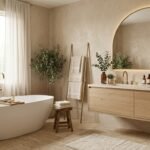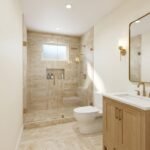
Beige bathroom ideas work best when you stop treating beige as one color. It is a family of colors, and the member you choose decides everything that follows.
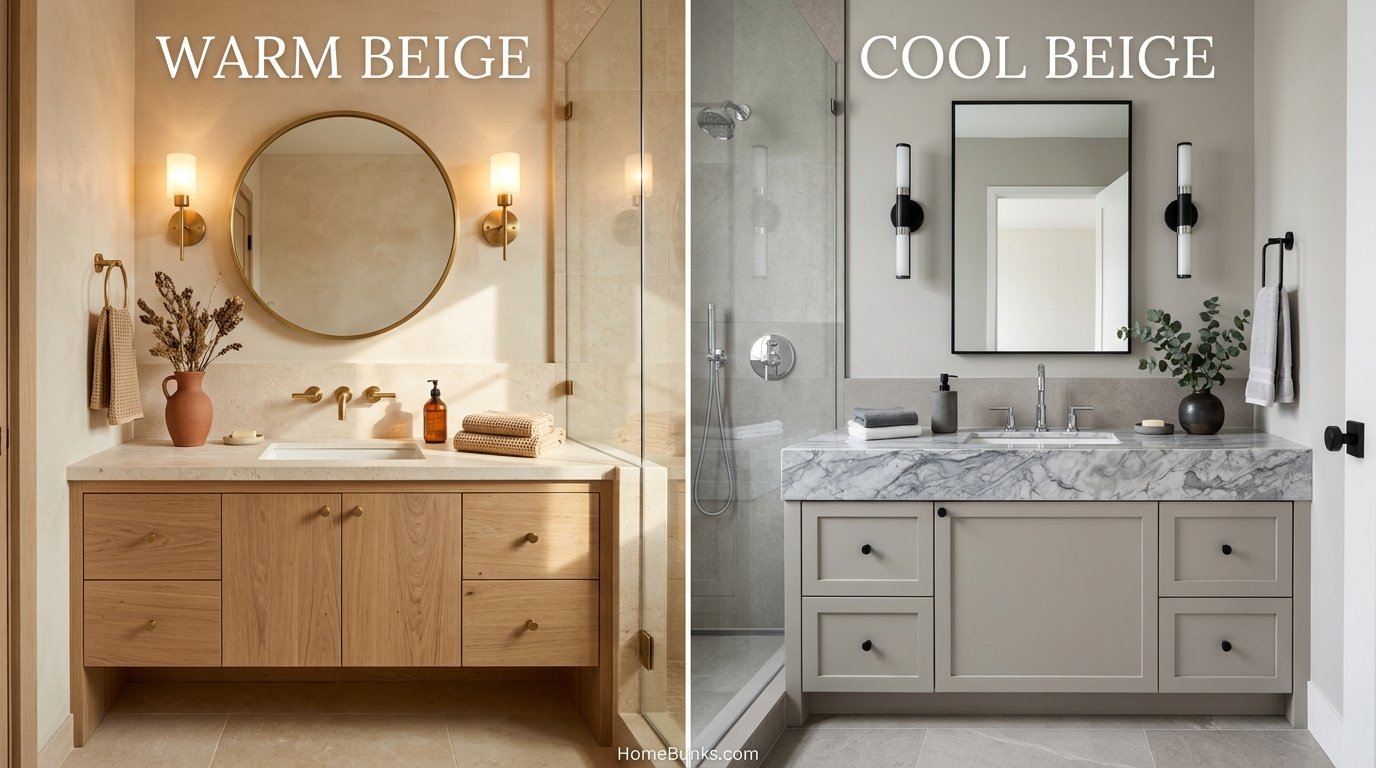
Pick a warm beige and brass, oak and terracotta fall into place. Pick a cool beige or greige and chrome, gray stone and black behave instead.
Most failed beige bathrooms are not ugly colors. They are two family members forced into one room, fighting quietly through their undertones.
What follows is the complete map: the family first, then the pairing system, then ideas by style, surface and room, each written as a formula you can copy.
Beige Is a Family, Not a Color
Every beige carries an undertone lean. Learn to name the lean and the whole topic becomes predictable.
|
Family |
Undertone lean |
Pairs best with |
Light it loves |
Headline examples |
|---|---|---|---|---|
|
Warm beige |
Yellow, gold, soft red brown |
Brass, white oak, terracotta, cream |
Warm white 2700K to 3000K |
Accessible Beige, deeper tans |
|
Cool beige |
Gray, sometimes violet |
Chrome, gray stone, black, crisp white |
Neutral daylight, careful warm light |
Mushroom and taupe ranges |
|
Greige |
Beige and gray balanced |
Both metal families, gray and warm woods |
The most forgiving in mixed light |
Agreeable Gray, Revere Pewter |
|
Cream (light layer) |
Pale yellow white |
All three families as trim and textile |
Any, it is the supporting layer |
Swiss Coffee, Alabaster |
Retailers add their own vocabulary on top: taupe, mushroom and cashmere usually name the cooler, grayer members. Treat those as family labels, not precise colors.
Warm beige, the current favorite
Warm beige is the family member driving the current cycle: spa calm, wood friendly, and forgiving in the north facing rooms where cool colors go flat.
Its full system, with verified paint data, LRVs and troubleshooting, has its own dedicated guide in our warm beige bathroom ideas.
Here it gets survey treatment only: know that warm beige plus brass and white oak is the most copied combination in design media right now, and that warm light is non negotiable for it.
Cool beige and the mushroom taupe range
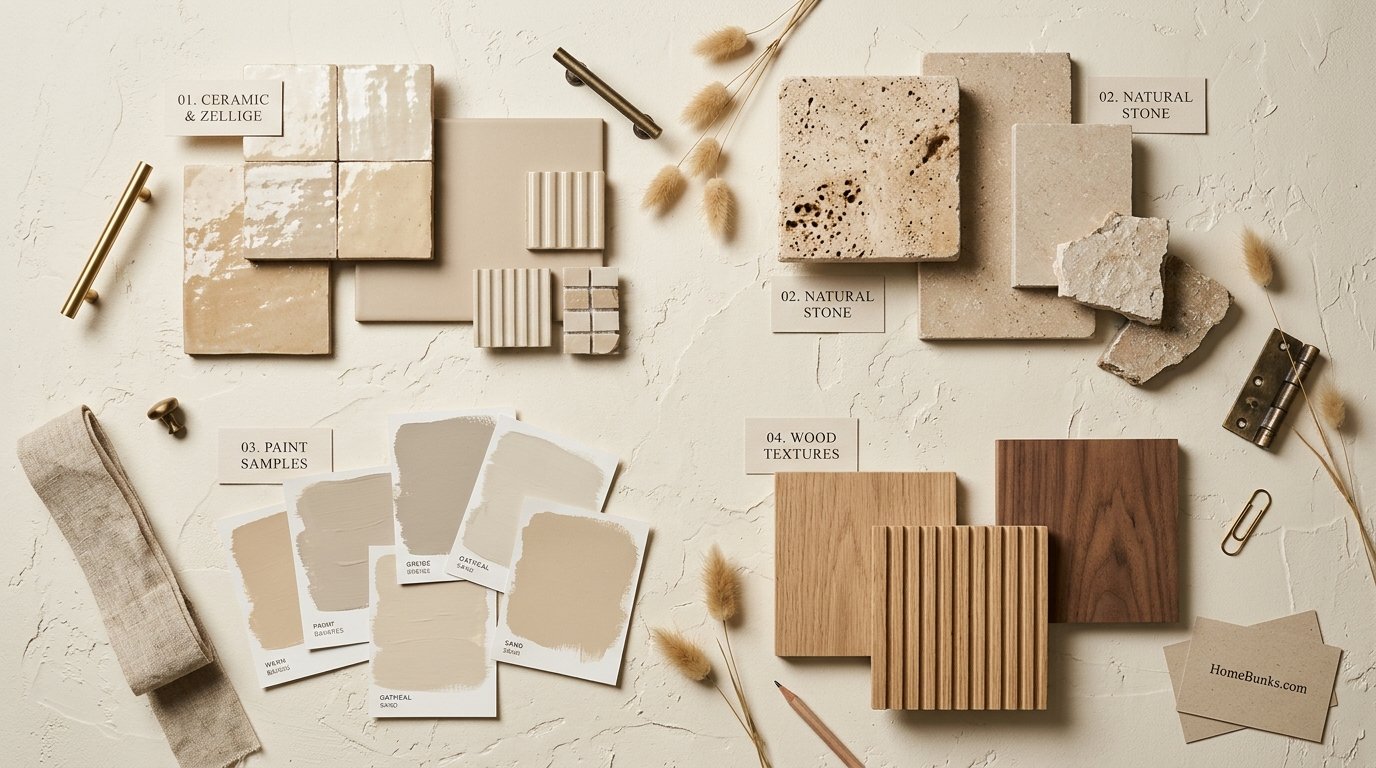
Cool beige leans gray, and it is the right answer more often than trends admit. Homes with gray stone floors, chrome fittings or a cooler brief belong here.
It reads quiet and tailored, closer to a gallery than a spa. Black hardware sharpens it; warm oak can fight it, so test wood carefully beside cool walls.
The risk is temperature drift: add warm bulbs and cream textiles in small doses, or a cool beige room can tip from tailored to chilly.
Greige, the bridge family
Greige blends beige and gray in one color, which makes it the diplomat of the family. It agrees with mixed existing finishes better than any pure beige.
That is why greige dominates whole house palettes: a greige bathroom connects calmly to both warm bedrooms and gray kitchens without a visible seam.
Its weakness is indecision: in a tonal room, a greige needs texture and one confident accent or it can read as neither one thing nor the other.
The Pairing System
Once the family is chosen, pairings are arithmetic, not taste. Each partner below lists its effect and its risk, so you can compose rather than guess.
|
Partner |
Effect on beige |
Best family |
Watch out for |
|---|---|---|---|
|
Warm white |
Freshens, adds light layer |
All |
Blue white makes beige look dirty |
|
Black |
Contrast, modern edge |
All, sharpest with warm |
Too many pieces turn graphic |
|
Gray |
Calm, tailored layering |
Cool beige, greige |
Warm beige beside cool gray clashes |
|
Wood |
Organic warmth, texture |
Warm beige, greige |
Orange woods push warm beige to peach |
|
Green |
Living richness, spa depth |
Warm beige, greige |
Bright greens cheapen the calm |
|
Pastels |
Soft personality, seasonal |
Warm and cool beige |
Keep to textiles, not surfaces |
|
Terracotta |
Earthy heat, Mediterranean note |
Warm beige |
A little goes a long way |
Beige with white
White is the light layer: ceilings, trim, towels, sanitaryware. Against beige it should always be a warm white, never a blue white.
The combination is the safest in the family playbook, and the one buyers and guests read as cleanest. Its only failure mode is blandness, cured by texture.
Beige with black
Black is the sharpener: shower frames, faucets, mirror frames, cabinet pulls. Against beige it supplies the contrast tonal schemes cannot generate themselves.
This pairing is popular enough to have its own full guide on the site: black and beige bathroom ideas works through the ratios room by room.
Use black as punctuation, not prose: three to five black elements, repeated, and then stop.
If your taste runs darker still, bathrooms with dark floors shows how deep floors behave under neutral walls, the boldest version of this pairing.
Beige with gray
Gray pairing succeeds or fails on temperature agreement. Warm beige with warm gray, cool beige with cool gray, greige with either.
Test the actual samples together. Gray tile is a fixed surface in most remodels, which means the beige family often has to be chosen to suit the gray, not the reverse.
Beige with wood
Wood brings grain, the texture flat beige schemes beg for. White oak suits warm beige, pale ash and bamboo suit Japandi versions, walnut supplies the deep note.
Keep the wood count disciplined: one hero wood (usually the vanity) and smaller echoes in stools, trays or frames.
The same layering logic runs beyond the bathroom: beige and brown living room ideas applies it to living spaces with the same undertone rules.
Beige with green, pastel and terracotta
Muted green is the connoisseur accent: sage towels, an olive vanity, eucalyptus in the shower. The site’s sage green bathroom ideas shows the fully committed version of the pairing.
Pastels belong in textiles and art, where they can rotate seasonally. Blush, mint and pale blue against beige read gentle rather than sweet when the base stays grounded.
Terracotta is the warm accent: a stool, a pot, a bath mat border. It deepens warm beige toward Mediterranean without touching a surface.
Ideas by Style
Style is the family’s clothing. The same beige reads five different ways below depending on shapes, finishes and restraint.
Modern and minimalist beige
Large format tiles, matched grout, frameless glass, a floating vanity and one metal. Modern beige is an editing exercise: every object earns its place.
Keep the family warm or greige here. Cool beige plus chrome plus black is the gallery version; warm beige plus oak plus brass is the spa version.
Traditional and transitional beige
Traditional beige rooms use pattern as their energy: herringbone or checkerboard floors, marble or marble look tile, shaker vanities, polished brass or nickel.
Beige suits tradition because it was always there: the timeless bathroom most buyers picture is beige, marble and white, in some order.
Japandi and zen beige
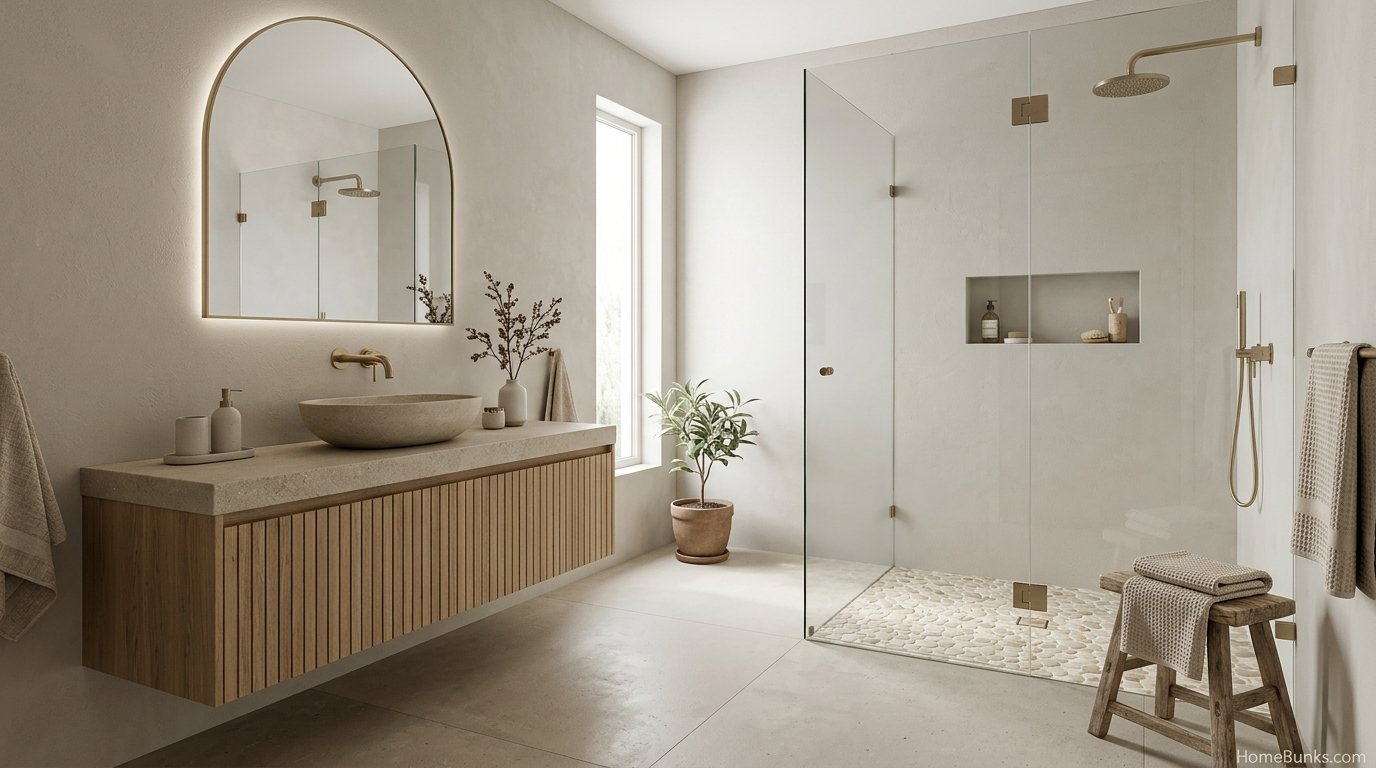
Pale warm beige or greige, pale wood, slatted textures, matte stone, low contrast. Japandi is the quietest dialect of the family and the most dependent on texture.
A pebble tile shower floor, a bamboo vanity and one unlacquered fitting carry the whole idea. Anything more is noise.
Coastal, farmhouse and boho beige
Coastal beige runs sandy and bright: white layer high, woven textures, pale woods, blue green accents used sparingly.
Farmhouse beige pairs with board and batten, black hardware and vintage style textiles, stopping the black and white farmhouse look from going cold.
Boho beige is the textile richest version: rattan, woven baskets, patterned towels, plants in quantity. The surfaces stay plain so the layers can play.
Small rustic rooms run the same play in miniature, as small cabin bathroom ideas shows: beige is the bridge that keeps heavy wood warm instead of orange.
Ideas by Surface: Tile, Stone and Paint
Surfaces are where beige becomes physical. Work floor, walls and shower as one system, because undertone clashes live at their joints.
|
Surface |
Best beige choices |
Format and finish logic |
Grout logic |
|---|---|---|---|
|
Floor |
Stone look porcelain, travertine, limestone, warm wood look vinyl |
Large format calms; matte for grip and calm |
Match closely for a seamless field |
|
Walls |
Paint, limewash look, ceramic tile part height |
Paint is the flexible, changeable layer |
Not applicable for paint; tile walls follow floor logic |
|
Shower |
One hero tile: zellige look, stone look, gloss small format |
Gloss returns light; texture adds grip on floors |
One shade deeper hides wear |
|
Vanity zone |
Backsplash tile or painted wall plus mirror |
The most seen surface; spend the texture budget here |
Keep joints minimal behind sinks |
Floors first, because they are fixed
Choose the floor’s beige family before the paint, always. Floors cost the most to change and their undertone is the room’s constitution.
Travertine and its porcelain look alikes anchor warm schemes; gray veined marble looks anchor cool and traditional schemes; wood look floors soften everything.
Walls and shower, the texture budget
A tonal room needs its texture somewhere visible. The shower or vanity wall is the usual place: one hero tile, everything else quiet.
Gloss tiles return light in small or dark showers; matte stone looks read calmer in large ones. Mixing the two deliberately is a designer staple.
Stacking tiles vertically draws the eye upward in low rooms, a retailer trick worth stealing for 5 by 8 bathrooms with standard ceilings.
Paint, the flexible surface
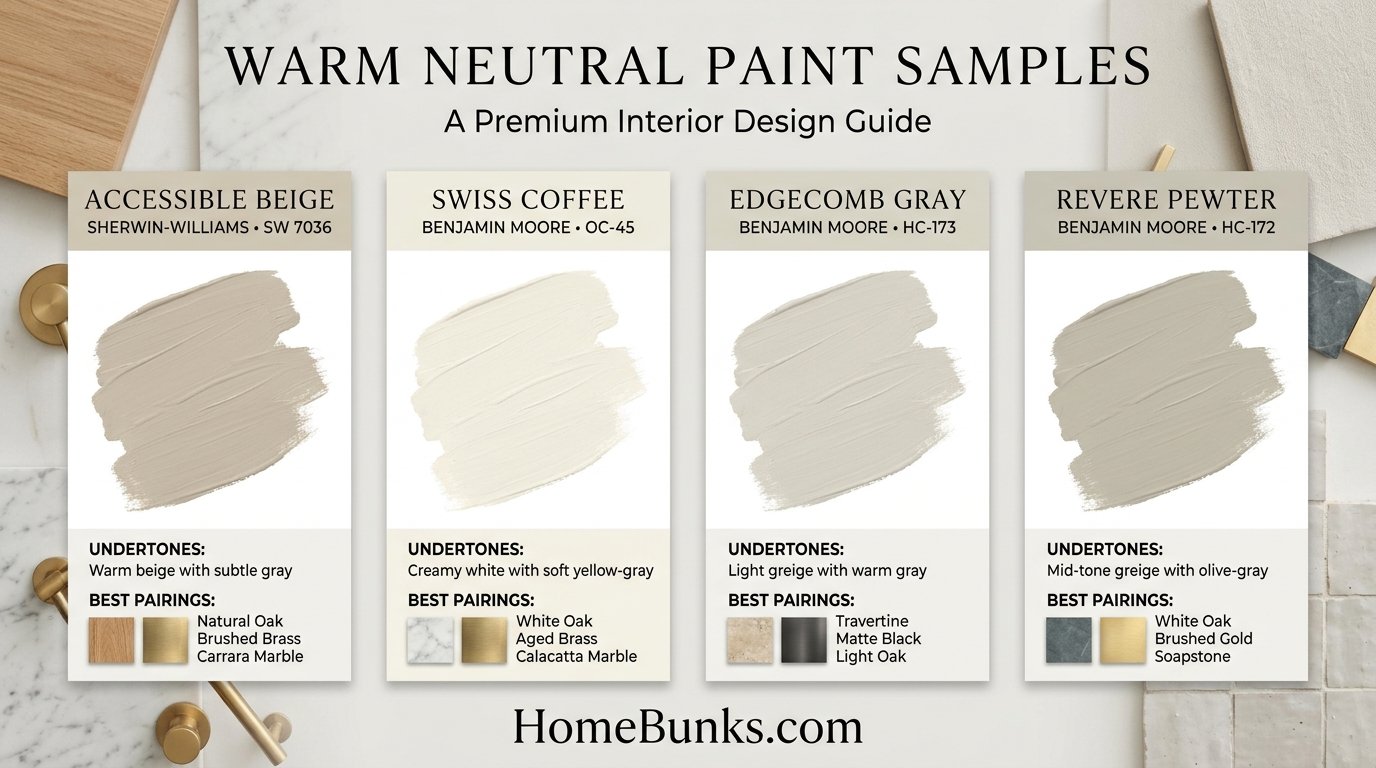
Paint is where the family gets named precisely. The headline colors, with their data, sit on the manufacturers’ own pages: the Sherwin Williams listing for Accessible Beige SW 7036, and the Benjamin Moore listing for Swiss Coffee OC-45.
Two disciplines matter more than any specific color. First, brand plus code, never name alone, because names repeat across brands. Second, sample beside your fixed floor and tile, in your light.
If warm is your family, the deep data lives in the warm guide linked earlier. If cool or greige is your family, Agreeable Gray and Revere Pewter are the benchmark starting samples.
Layout still governs how much surface any of this needs: guidance from the National Kitchen and Bath Association on clear floor space applies before a single tile is chosen.
Ideas by Room
Small bathrooms and powder rooms
Small rooms want light to mid beige, matched grout, big mirrors and one texture. Color drenching, walls trim and ceiling in one family, removes the choppy contrasts that shrink them.
Powder rooms are the family’s mood room: they can carry the deepest beige, the boldest mirror and the most dramatic sconce in the house.
When two sinks tempt you in a small footprint, study double vanity ideas for small bathrooms before you commit the layout.
Mirror choice is half the small room battle; mirror over pedestal sink ideas are a practical detour worth taking before you order anything.
Primary bathrooms
Primary rooms can hold the family’s full sentence: a hero stone, a long wood vanity, a freestanding tub as sculpture, layered lighting.
This is where tonal layering at full depth pays: three to five beige tones across surfaces, with walnut or black as the single deep note.
Guest and family bathrooms
Guests need legibility: bright warm light, obvious storage, towels that read clean. Mid beige with a warm white layer is the crowd pleaser.
Family bathrooms need forgiveness: matte porcelain, mid tone floors that hide hair and dust, and textiles that wash hot. Beige outperforms white and black here on pure practicality.
Eight Copyable Formulas Across the Family
Theory is only useful attached to rooms you can steal. Each formula names its family, surfaces and accent, so the system above becomes a shopping list.
Formula 1: Warm spa classic
Warm beige walls, honed travertine floor and shower, white oak vanity, brushed brass everywhere. The most copied beige bathroom in current design media.
Formula 2: Cool gallery modern
Cool beige walls, gray veined marble look tile, chrome fittings, black framed mirror. Tailored, quiet, and the right answer for homes with gray stone elsewhere.
Formula 3: Greige bridge family bathroom
Greige walls, warm wood look floor, mixed but deliberate metals, cream textiles. Built for open plan homes where the bathroom must agree with every other room.
Formula 4: Color drenched powder room
One mid beige on walls, trim and ceiling, arched mirror, stone or wood vanity, warm sconces. Small, cocooning and dramatic out of proportion to its size.
Formula 5: Traditional marble beige
Warm mid beige, herringbone marble look floor, subway tile, shaker vanity, polished brass. The timeless formula buyers have trusted for decades.
Formula 6: Japandi pale
Pale greige, bamboo or pale oak, pebble shower floor, matte stone, one black line or none. The quietest formula in the set, and the most texture dependent.
Formula 7: Beige and black edge
Any beige family, matte black shower frame, faucets and mirror, warm white layer high. The modern contrast formula, ratio controlled as the pairing section describes.
Formula 8: Rental refresh beige
Verified beige paint, warm bulbs, cream textiles, wood stool and tray, one plant, existing tile untouched. The formula that proves the palette is about agreement, not demolition.
Choosing Your Family: Four Questions
If the family map left you undecided, answer these in order. Most readers are decided by question two.
Question 1: What is already fixed?
Gray stone or cool floors point to cool beige or greige. Warm wood floors and brass fittings point warm. Fixed surfaces vote first.
Question 2: Which way does the room face?
North facing and windowless rooms run cold; warm beige or light greige compensates. South facing rooms full of sun can carry cool beige beautifully.
Question 3: What metals do you already own?
Chrome and stainless throughout the home argue cool or greige. Brass, gold and black argue warm or greige. Matching the house beats matching a trend.
Question 4: What feeling do you want at 7 a.m.?
Spa and cocoon means warm. Gallery and tailored means cool. Easy and agreeable means greige. Name the feeling and the family names itself.
Patterns and Layouts That Carry Beige
A restrained palette borrows its energy from pattern and geometry. These are the proven carriers.
Herringbone floors add movement without color, in marble look porcelain for tradition or wood look tile for warmth.
Checkerboard in beige and white, or beige and stone, is the classic pattern revival of this cycle, strongest in traditional and transitional rooms.
Vertical stacking of subway or kit kat tiles modernizes instantly and lifts low ceilings, which is why retailers push it for small beige bathrooms.
Wood slat walls behind vanities bring rhythm and shadow lines, the Japandi and organic modern signature, in real timber or convincing look alikes.
Arches, in mirrors, doorways or shower entries, soften the tile grid. One arch per room is the current proportion; two is a theme.
Lighting by Family
Light is the family’s translator: the same beige reads warm or cool depending on the bulbs above it.
Warm beige wants 2700K to 3000K and suffers visibly above 4000K, turning gray and tired. Cool beige tolerates 3000K to 3500K and can look muddy under very warm bulbs.
Greige is the forgiving middle, stable across the widest bulb range, one more reason it dominates whole house schemes.
Whatever the family, layer the sources: ceiling ambient, mirror height task light, and one soft accent. A single overhead source flattens every member of the family equally.
High CRI bulbs, 90 or above, keep beige and skin tones honest at the mirror. Cheap bulbs are the silent cause of many “the paint looked different in the store” stories.
Three Rooms, Three Budgets
The rental one bed: existing white tile, warm beige paint on the dry walls, cream textiles, a wood stool, black hardware swapped on the vanity. Total effect: a new room, fully reversible, for hundreds.
The family 5 by 8: greige walls, wood look floor, white oak look vanity, brushed brass, large mirror, gloss shower tile kept from the previous decade because its undertone agreed. Mid thousands, one week of work.
The primary suite build: warm beige and travertine at full depth, walnut vanity, unlacquered brass, layered lighting, freestanding tub. Benchmark money, spent on surfaces and waterproofing first, styling last.
Notice what did not change across the three: family chosen first, one metal, three textures. Budget moved the materials, never the system.
Styling, Storage and the Practical Layer
Ideas photographs omit the objects of daily life. A beige bathroom that stores well and styles calmly is what survives contact with a family.
Storage that respects the palette
Closed storage in the vanity keeps the tonal calm intact; open shelves earn their place only with disciplined, matching containers.
Shower niches tiled in the wall tile disappear into the scheme, which is the point. A niche in the hero tile is the one deliberate exception.
Mirror cabinets solve the small room equation: storage and reflection in one object, in the room’s metal or wood finish.
Styling in three groups
Group one is textiles: towels and mats in two depths of the family, never five. Group two is wood and weave: stool, tray, basket.
Group three is one living thing and one scent: a humidity tolerant plant, eucalyptus in the shower, a warm cedar or vanilla note. Three groups, then stop.
Countertop discipline is a tray, not a collection. Everything loose lives on one tray, and the palette reads calm at a glance.
Seasonal rotation
Beige’s hidden talent is seasonal range: rust and olive textiles in autumn, fresh green and white in spring, the same room re-dressed for the cost of towels.
That rotation is why the palette photographs well for listings year round, and why families keep it through a decade of changing tastes.
How Long Beige Stays Current
Neutral cycles run in long waves: warm beige in the 2000s, cool gray through the 2010s, warm neutrals again now, with better texture discipline than the first wave.
The practical reading is reassuring. Permanent surfaces in beige age slowly; trend movement happens in textiles, metals and accessories, which are the cheap layers to change.
Build the bones in a family you have chosen deliberately, and a future shift costs a weekend, not a remodel.
The Budget Ladder
Beige is budget democratic: the palette reads at every rung, because its power comes from agreement, not from expensive materials.
Industry Cost vs Value reporting puts a midrange bathroom remodel at roughly 25,000 dollars in recent editions. That reported benchmark anchors the top rung; the palette’s best trick is how far below it the look survives.
|
Rung |
What changes |
Planning range |
|---|---|---|
|
Beige paint, warm bulbs, textiles, accessories, one metal swap |
Hundreds to low thousands of dollars |
|
Vanity, mirror, faucets, lighting, paint |
Low thousands to around 10,000 dollars |
|
Tile, flooring, shower rebuild, fixtures |
Around 10,000 to 25,000 dollars |
|
Layout change, premium stone, wet room work |
25,000 dollars upward, benchmark anchored |
Rung 1 is the revelation for renters and sellers: a verified beige on the walls retemperatures the whole room, and everything else is reversible.
Rung 2 resets the read of a sound but dated room. Rung 3 is where the tile system decisions in the surface section earn their money.
Spend on waterproofing and tile before decor at the top rungs. Surfaces outlive styling by decades, which is also why their family choice matters most.
Rescue: Updating a Dated Beige Bathroom
Half the beige bathrooms in America are 2000s builder beige: one flat tone, chrome everything, no texture. The color is rarely the problem; the company it keeps is.
Work the ladder in order. Each rung is cheaper than the next, and many rooms are rescued by rung 2.
Rung 1: Change the light and textiles
Fit 2700K to 3000K bulbs and swap blue white towels and mats for warm cream. Dated beige under warm light already looks five years younger.
Rung 2: Change the metal story
Replace chrome with one repeated finish, brushed brass for warmth or matte black for edge, across faucets, pulls and mirror frame. This is the highest impact single change.
Rung 3: Add wood and one living thing
A wood stool, tray or vanity swap, plus a real plant, breaks the all hard surface flatness that defines the dated look.
Rung 4: Add one texture surface
A limewash look wall, a zellige look backsplash or a woven wallpaper on one wall gives light something to do. One surface only; the room is calming down, not dressing up.
Rung 5: Repaint inside the family
If the existing beige itself leans pink or muddy, repaint, but stay in a neighboring family member rather than jumping to gray or white, which would fight the fixed tile.
The rescue usually costs hundreds, not thousands, because the bones were never the problem. Flatness was.
Beige vs the Alternatives
Beige vs white: white wins on brightness and gallery crispness; beige wins on warmth, calm and forgiveness with water spots and wear. Most winning rooms use both.
Beige vs gray: gray suits chrome, cool stone and a tailored brief; beige suits wood, brass and a warm brief. Greige exists precisely for the homes caught between them.
|
Decision factor |
Points to beige |
Points to white |
Points to gray |
|---|---|---|---|
|
Light |
Low or north facing rooms |
Bright rooms that need no help |
Bright rooms with cool briefs |
|
Fixed finishes |
Wood floors, brass, warm stone |
Any, white is neutral ground |
Chrome, gray stone, concrete |
|
Maintenance feel |
Hides water spots and wear best |
Shows everything, reads cleanest |
Middle ground |
|
Mood |
Warm, calm, cocooning |
Crisp, gallery, clinical risk |
Tailored, cool, distant risk |
Choose by your fixed surfaces and your light, not by trend charts. The trend cycle will move again; your floor tile will not.
Most real homes land on a blend: beige as the room’s body, white as its light layer, gray only where greige carries it. The table is a compass, not a border.
Mistakes That Flatten Beige Bathrooms
Mixing families unknowingly is mistake one: warm beige paint over cool gray tile is the most common beige failure in existence, and it is a selection error, not a taste error.
Matching one tone everywhere is mistake two. Identical beige on every surface is the dated builder look; tonal layering exists precisely to prevent it.
Blue white anything is mistake three. Stark grout, towels or bulbs inject cold into warm and greige schemes and make the beige itself look dirty.
Too many metals is mistake four. One finish repeated is design; four finishes is a parts bin.
Ignoring the floor is mistake five. Choosing paint before checking the floor’s undertone guarantees the family fight this whole article exists to prevent.
Skipping texture is mistake six. A tonal room without stone variation, grain, weave or relief has nothing for light to describe, and no color choice can rescue it.
Frequently Asked Questions
Are beige bathrooms in style in 2026?
Yes. Beige is the current lead neutral, having replaced the cool gray cycle, and it appears across modern, Japandi, coastal and traditional designs. Its staying power comes from pairing flexibility, not novelty.
What colors go with beige in a bathroom?
White for freshness, black for contrast, warm woods for organic feel, brass for warmth, muted greens and soft pastels as accents, and gray when the beige leans greige. Undertone agreement is the rule behind all of them.
How do I make a beige bathroom look modern?
Clean lines, large format tiles with minimal grout, one metal repeated, a floating vanity or frameless glass, and one deliberate contrast. Modern is editing, not adding.
How do I stop a beige bathroom looking boring?
Layer at least three beige tones and three textures, then add one deep or living accent. Flat beige is a texture and contrast shortage, not a color failure.
Is beige a good color for a small bathroom?
Yes, one of the best. Light to mid beiges reflect light, feel warmer than white and hide water spots better. Gloss tiles, large mirrors and large format floors amplify the effect.
What is the difference between warm beige, cool beige and greige?
Warm leans yellow or gold, cool leans gray, and greige sits between beige and gray. The family decides which woods, metals and grays will agree with it.
What tile is best for a beige bathroom?
By job: large format stone look calms and enlarges, subway suits traditional rooms, gloss small format returns light in small showers, and pebble or mosaic gives shower floors grip and texture.
Should grout match beige tile?
For a seamless modern field, yes: close matched grout makes the surface read as one plane and small rooms feel larger. Contrasting grout is a deliberate graphic choice for traditional or patterned layouts.
Does beige make a bathroom look bigger?
Light and mid beiges help, with matched grout, big mirrors and restrained contrast. Deep beiges make rooms feel smaller but more cocooning, which suits powder rooms.
What metal goes with a beige bathroom?
Brass flatters warm beiges, matte black sharpens any beige, and chrome suits cool beiges and greiges. One finish repeated reads as design; several read as leftovers.
Can I mix beige with gray in a bathroom?
Yes, through the greige bridge and temperature agreement: warm with warm, cool with cool. Temperature matters more than the color names on the chips.
Is a beige bathroom good for resale?
It is one of the safest choices. Buyers read beige and warm neutrals as clean, current and easy to personalize, which is why stagers default to them.
How do I update a dated 2000s beige bathroom?
Change the signals around the color: warm bulbs, one modern metal repeated, a new mirror, wood and plant layers, one texture surface. The rescue ladder above works through it in order.
What is color drenching in a beige bathroom?
Painting walls, trim, ceiling and sometimes the vanity in one beige family so the room reads as a single cocooning volume. It removes the choppy contrasts that shrink small rooms.
What flooring works in a beige bathroom?
Stone look porcelain for durability, real travertine or limestone for authenticity with sealing, warm wood look vinyl for budget and rentals, and marble looks for classic luxury.
Can beige work in a windowless bathroom?
Yes, with lighter beiges, layered warm lighting and mirrors doing the daylight work. Texture matters more, not less, because flat light flattens tonal schemes.
What is the best beige for a traditional bathroom?
Mid tone warm beiges with marble or marble look tile, subway tile, shaker vanities and brass or polished nickel. Pattern, herringbone or checkerboard, keeps it lively.
What is the best beige for a Japandi bathroom?
Pale warm beiges and greiges with pale wood, slatted textures and matte stone, at low contrast. Japandi runs lighter and quieter than other beige styles.
Are beige and cream the same in a bathroom?
No. Cream is a pale yellow white, far lighter than beige. Cream plays the light layer on trim, ceilings and textiles while beige carries walls or tile.
What accent color is strongest with beige?
Muted green is the most used partner, sitting opposite beige’s warmth. Black is the strongest contrast; terracotta is the warmest accent.
How many beige tones should one bathroom use?
Three to five across paint, tile, stone, wood and textiles. Fewer reads flat; more reads accidental.
Gloss or matte tiles for a beige bathroom?
Gloss returns light and suits small or dark rooms; matte reads modern and spa like and hides water marks. Many strong rooms mix them deliberately, gloss in the shower, matte on floors.
Can I do a beige bathroom on a budget?
Yes. Paint, warm bulbs, cream textiles, wood accessories, a new mirror and one repeated metal deliver most of the look for hundreds rather than thousands.
What size tiles make a small beige bathroom feel bigger?
Large format tiles with matched grout reduce visual breaks, and vertical stacking draws the eye up in low rooms. Both are standard designer and retailer practice for small beige bathrooms.
Does beige hide dirt better than white?
Generally yes on floors and textiles. Mid tone beiges disguise hair, dust and water spots better than both white and very dark floors, part of the palette’s hotel appeal.
What vanity color suits beige walls?
White oak for organic schemes, white for freshness, walnut or black for contrast, and painted greige or sage for a designed note. The vanity usually carries the room’s one deeper tone.
Can beige bathrooms work for kids and family use?
Very well. The palette hides wear, suits every age and refreshes with textiles as children grow. Matte finishes and porcelain surfaces handle the traffic best.
What lighting suits beige bathrooms?
Warm white 2700K to 3000K for warm schemes, layered as ambient, mirror task and accent. Cool beiges tolerate slightly cooler light, but 4000K plus drains most beige rooms.
Is travertine still popular in beige bathrooms?
Yes, it is the signature stone of the current beige cycle, specified filled and honed for wet areas, with porcelain look versions covering the budget and low maintenance end.
What is mushroom or taupe in bathroom colors?
The cooler, grayer members of the beige family. Retailers use names like taupe, mushroom and cashmere for the soft gray beige range bridging beige and gray schemes.
Can beige bathrooms feel luxurious?
Yes, through materials and restraint: real or convincing stone, unlacquered or brushed metals, thick towels, layered warm light and very little on the counters. Luxury in beige is quiet, which is why hotels use it.
What is the easiest beige bathroom idea to copy first?
The rental refresh formula: verified beige paint, warm bulbs, cream textiles, a wood stool and one plant. It delivers the family’s calm in a weekend, reversibly, and teaches you your light before any bigger spend.
Should the ceiling be beige too?
In color drenched small rooms, yes: one family across walls, trim and ceiling is the cocoon effect. In standard rooms, a warm white ceiling keeps the light layer working and the height readable.
Quick Start: Your First Five Decisions, in Order
Decision 1, family. Answer the four questions in the choosing section and commit. Every later choice gets easier the moment this one is closed.
Decision 2, floor. The floor’s family is the constitution. If a floor already exists, its undertone makes decision 1 for you.
Decision 3, metal. One finish, chosen to suit the family and the house. Order nothing metallic until this is written down.
Decision 4, hero texture. Pick the one surface that carries texture: shower tile, stone, slats or limewash. The rest of the room stays quiet around it.
Decision 5, light layer. Warm whites for trim and textiles, bulbs matched to the family, one plant. This is the cheapest decision and the one visitors feel first.
Five decisions, in that order, are the entire article in miniature. Everything else is decoration on a structure that already agrees with itself.
Conclusion
Beige bathroom ideas succeed when the family is chosen first and everything else agrees with it. That single decision quietly determines your metals, your woods, your grays and your light.
From there the system runs itself: pair deliberately, layer three tones and three textures, give the room one accent, and let surfaces be chosen floor first.
Warm, cool or greige, spa or gallery, hundreds or tens of thousands: the family has a member for every brief. Choose yours on purpose, and the room will look like it was always meant to be beige.
For the rooms around the bathroom, explore the HomeBunks home ideas library and its other color led guides.