
Looking for flowers that start with E? You’re in the right place. This guide covers 75+ E flowers, from garden favorites like Echinacea and English Lavender to rare finds most gardeners have never heard of.
Each entry includes growing tips, color options, and simple facts you can use right away. Whether you’re planning a flower bed, picking a bouquet, or just curious about botanical names, this list has you covered.
Quick Answer: What Are Some Flowers That Start With E?
The most popular flowers that start with E include Easter Lily, Echinacea, English Daisy, Evening Primrose, English Lavender, and English Bluebell.
These flowers are widely grown because they’re easy to care for and adapt to many climates.
Other well-known picks include Edelweiss, Eryngium, Eremurus, and Eustoma (commonly called Lisianthus). Each of these brings something different to a garden, from bold color to unique shape.
Best Picks At A Glance
Short on time? Here are the top E flowers worth knowing.
- Echinacea — hardy, drought tolerant, attracts pollinators
- English Lavender — fragrant, compact, great for borders
- Easter Lily — classic white bloom, popular for gifts
- Evening Primrose — opens at dusk, low maintenance
- English Bluebell — woodland favorite, spring bloomer
- Eustoma (Lisianthus) — rose-like petals, long vase life
- Edelweiss — alpine native, symbolic and rare
Complete List of 75 Flowers That Start With E
Below is the full list of flowers that start with E, organized for easy scanning.
- Easter Lily
- Echinacea
- English Daisy
- Evening Primrose
- English Lavender
- English Bluebell
- Edelweiss
- Eryngium
- Eremurus
- Eustoma (Lisianthus)
- Erica
- Echeveria (flowering succulent)
- Elephant Ear Flower
- English Rose
- Empress Tree Flower
- Euphorbia
- Everlasting Flower
- Egyptian Star Cluster
- Emu Bush
- English Marigold
- English Wallflower
- Elderflower
- Eelgrass Flower
- Elk Thistle
- English Iris
- Eastern Redbud
- Eastern Shooting Star
- Eastern Blue Star
- Elephant’s Foot Flower
- Erigeron (Fleabane)
- Edging Lobelia
- Estrellita
- Eternity Flower
- Elk Weed
- Emerald Feather
- Ebony Spleenwort Flower
- Eucomis (Pineapple Lily)
- Eucharis Lily
- Eranthis (Winter Aconite)
- Erysimum
- Erodium
- Eutrochium (Joe Pye Weed)
- Escallonia
- Epimedium
- Erica Carnea
- Erica Cinerea
- Erythronium (Trout Lily)
- Evolvulus
- Exacum (Persian Violet)
- Eranthemum
- Everlasting Daisy
- Egyptian Lotus
- Emerald Ripple Peperomia Flower
- Elephant Bush Flower
- English Primrose
- Everflowering Gardenia
- Erythrina (Coral Tree)
- Eucrosia
- Encyclia (Orchid genus)
- Epidendrum (Orchid genus)
- Eria (Orchid genus)
- Eranthemum Pulchellum
- Emilia (Tassel Flower)
- Eichhornia (Water Hyacinth)
- Echium
- Edraianthus
- Erinus
- Erica Arborea
- Elymus Flower Spike
- English Cowslip
- Eastern Purple Coneflower
- Ecballium (Squirting Cucumber Flower)
- Elsholtzia
- Elettaria (Cardamom Flower)
- Enkianthus
This list mixes common garden flowers with rare botanical species, so there’s something here for every skill level.
Quick Comparison
| Flower | Type | Sun Needs | Bloom Season |
| Echinacea | Perennial | Full sun | Summer |
| English Lavender | Perennial shrub | Full sun | Summer |
| Easter Lily | Bulb | Partial sun | Spring |
| Evening Primrose | Biennial | Full sun | Summer to fall |
| English Bluebell | Bulb | Shade to partial sun | Spring |
| Eustoma | Annual | Full sun | Summer |
| Edelweiss | Perennial | Full sun | Summer |
This table gives you a fast way to compare care needs before choosing what to plant.
Featured Flower Profiles
These flowers stand out for their beauty, ease of care, or unique history.
Echinacea is a native North American perennial known for its medicinal roots and pollinator appeal. It handles heat and drought well, making it a low-maintenance choice.
English Lavender is prized for its scent and use in oils, sachets, and cooking. It prefers dry soil and full sun, and it doesn’t like wet feet.
Eustoma, better known as Lisianthus, looks like a rose but lasts far longer in a vase. Florists often choose it for weddings because of its clean, layered petals.
Edelweiss grows in rocky alpine terrain and has long symbolized rugged beauty in European folklore. It needs excellent drainage and cool temperatures to thrive.
Flower Meanings And Symbolism
Flowers that start with E carry meanings tied to purity, courage, and remembrance.
- Easter Lily symbolizes hope and new beginnings
- Echinacea represents strength and healing
- Edelweiss stands for courage and devotion
- Evening Primrose symbolizes quiet strength, since it blooms after dark
- English Bluebell is linked to gratitude and everlasting love
- Eustoma represents charisma and appreciation
These meanings make E flowers popular choices for sympathy arrangements, weddings, and gifts with personal significance.
Common Flowers That Start With E
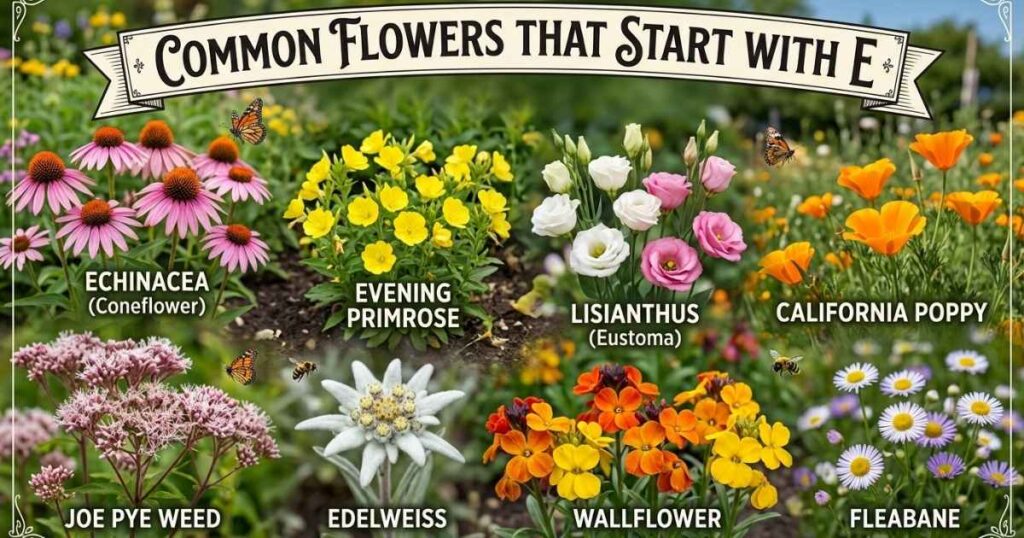
The flowers below are the ones most people already recognize, either from gardens or floral shops.
Easter Lily
The Easter Lily produces large, trumpet-shaped white blooms with a strong, sweet fragrance.
It’s commonly grown indoors in pots and is a traditional symbol during spring holidays.
Growing tips:
- Plant bulbs in well-draining soil
- Keep soil moist but not soggy
- Provide bright, indirect light
- Toxic to cats, so keep away from pets
Echinacea
Also called Coneflower, Echinacea has daisy-like petals surrounding a raised, spiky center.
It’s a favorite for pollinator gardens and is also used in herbal supplements for immune support.
Growing tips:
- Full sun for best blooms
- Tolerates poor, dry soil
- Deadhead to encourage more flowers
- Divide clumps every three to four years
English Daisy
English Daisy is a small, low-growing flower with white or pink petals and a yellow center.
It’s often used as ground cover or border planting in cottage-style gardens.
Growing tips:
- Prefers cool weather, struggles in heat
- Water regularly but avoid overwatering
- Works well in containers
- Self-seeds easily in mild climates
Evening Primrose
Evening Primrose opens its yellow petals at dusk and closes by midday, attracting night pollinators like moths.
The plant’s seed oil is widely used in supplements for skin and hormonal health.
Growing tips:
- Full sun to partial shade
- Tolerates sandy or poor soil
- Drought tolerant once established
- Can self-seed aggressively, so monitor spread
English Lavender
English Lavender is known for its silvery green foliage and purple flower spikes with a calming scent.
It’s a staple in herb gardens, borders, and dried flower arrangements.
Growing tips:
- Needs full sun and dry soil
- Avoid overwatering to prevent root rot
- Prune after blooming to maintain shape
- Grows well in containers with good drainage
English Bluebell
English Bluebell produces nodding, bell-shaped blue flowers that carpet woodland floors in spring.
It’s a protected species in parts of the UK due to habitat loss.
Growing tips:
- Prefers partial to full shade
- Plant bulbs in fall for spring blooms
- Keep soil moist during growing season
- Avoid disturbing bulbs once established
Common Names And Scientific Names
Knowing both names helps when shopping at nurseries or researching plant care.
| Common Name | Scientific Name |
| Easter Lily | Lilium longiflorum |
| Echinacea | Echinacea purpurea |
| English Daisy | Bellis perennis |
| Evening Primrose | Oenothera biennis |
| English Lavender | Lavandula angustifolia |
| English Bluebell | Hyacinthoides non-scripta |
| Edelweiss | Leontopodium alpinum |
| Eustoma | Eustoma grandiflorum |
Quick Identification Guide
Use these traits to identify E flowers quickly.
- Cup or trumpet shaped blooms point to Easter Lily or Eucharis Lily
- Daisy-like petals with a raised center suggest Echinacea or Erigeron
- Small bell-shaped flowers indicate English Bluebell or Eranthis
- Spiky purple flower stalks are typical of English Lavender or Erica
- Star-shaped clusters often belong to Egyptian Star Cluster or Exacum
Expanded List Of Flowers Starting With E
Beyond the common names, gardeners exploring more variety can look into these options.
- Eremurus (Foxtail Lily) — tall flower spikes ideal for back-of-border planting
- Erysimum (Wallflower) — fragrant, cool-season bloomer
- Erythronium (Trout Lily) — woodland flower with mottled leaves
- Eucomis (Pineapple Lily) — unique pineapple-shaped bloom cluster
- Escallonia — flowering shrub used for hedging
- Epimedium — shade-loving ground cover with delicate flowers
- Erodium — small, geranium-like blooms good for rock gardens
These varieties add texture and structure that common E flowers don’t always provide.
Rare Flowers That Start With E
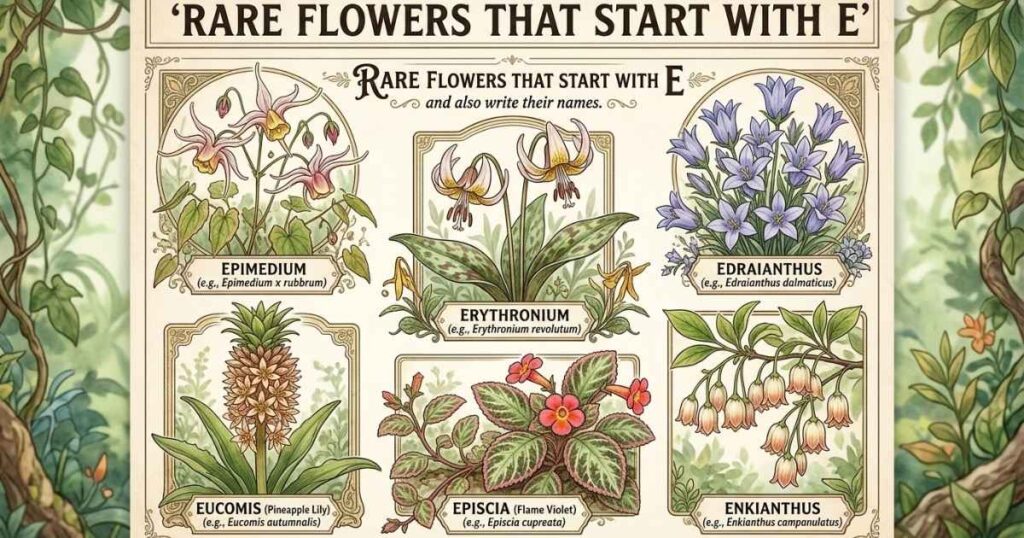
Some E flowers are harder to find but worth the search for collectors and enthusiasts.
- Eucrosia — a South American bulb with spidery orange-red petals
- Encyclia — an orchid genus with fragrant, waxy blooms
- Eria — another orchid genus, mostly found in tropical Asia
- Ecballium (Squirting Cucumber) — known for its unusual seed-dispersal method
- Elsholtzia — an aromatic flowering herb used in traditional medicine
- Enkianthus — a shrub with bell-shaped flowers and vivid fall foliage
These rare picks are ideal for gardeners looking to diversify beyond typical nursery stock.
Best E Flowers By Color
Color is often the deciding factor when choosing flowers for a specific space.
Purple Flowers That Start With E
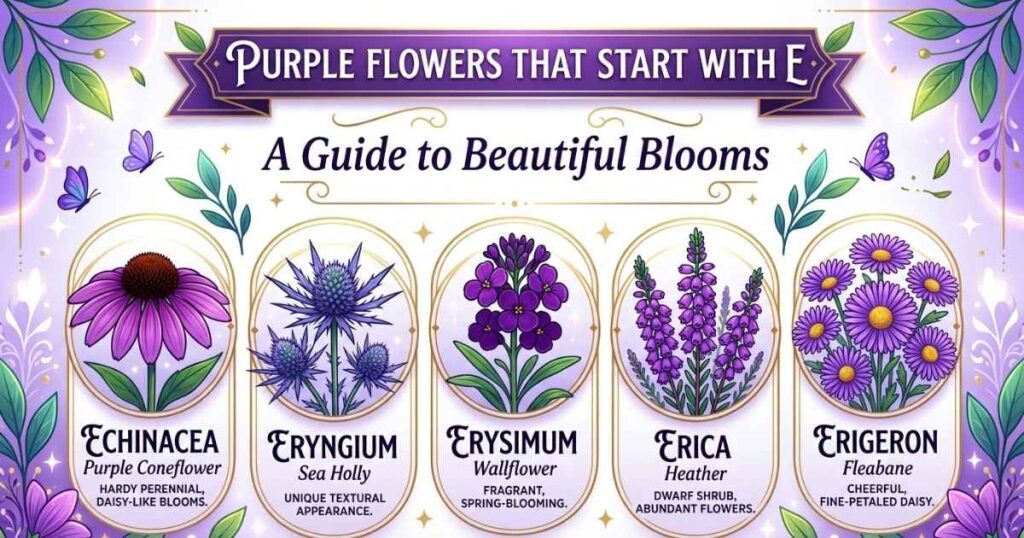
- English Lavender
- Erica
- Echium
- Eustoma (purple varieties)
- Erigeron
Perennial Flowers That Start With E
- Echinacea
- English Lavender
- Erysimum
- Epimedium
- Eryngium
Annual Flowers That Start With E
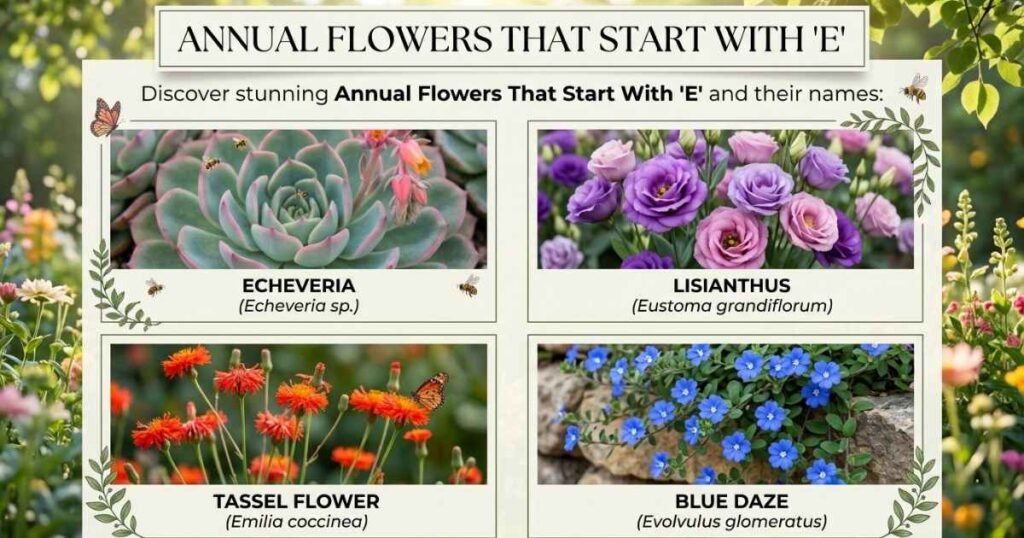
- Eustoma
- English Marigold
- Exacum
- Emilia
Indoor Flowers That Start With E
- Easter Lily
- Eucharis Lily
- Exacum
- Echeveria
Fragrant E Named Flowers
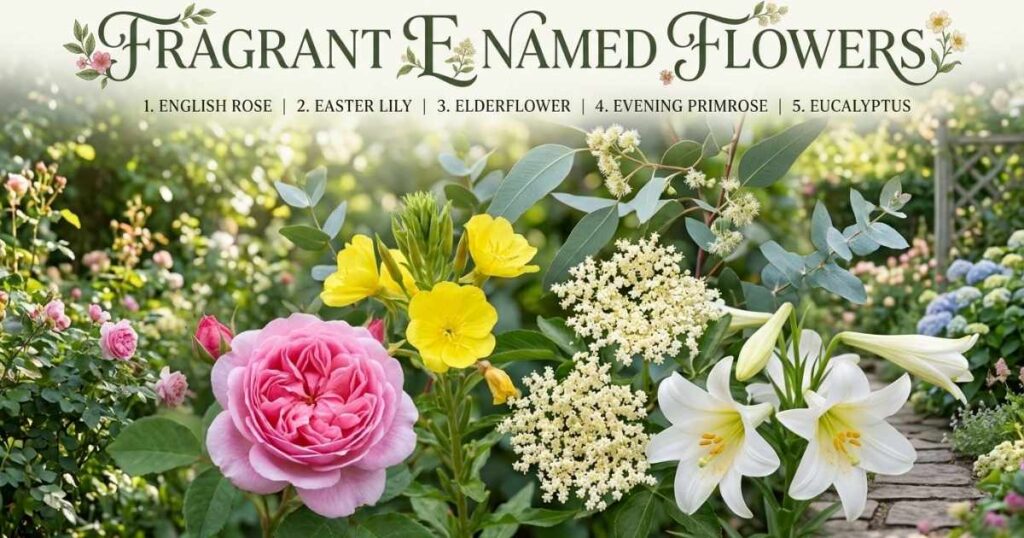
- English Lavender
- Easter Lily
- Elderflower
- Erysimum
Which E Flowers Are Good For Beginners?
Beginners should start with flowers that tolerate mistakes and need little upkeep.
- Echinacea handles drought and poor soil well
- English Marigold grows quickly from seed
- Evening Primrose thrives with minimal care
- English Daisy is forgiving in most soil types
These choices reduce the risk of early gardening setbacks while still producing reliable blooms.
Plants Vs Flowers That Start With E
Not every plant that starts with E produces a flower people typically notice, and the distinction matters for garden planning.
Plants like Elephant Ear are grown mainly for their large leaves, though they do produce small, less showy flowers.
Euphorbia is another example. Some species are grown for foliage and structure, while their flowers are small and often overlooked.
In contrast, flowers like Echinacea and Eustoma are grown specifically for their blooms, with foliage playing a secondary role.
Knowing this difference helps when selecting plants for visual impact versus plants for texture or greenery.
Types Of Flowers That Start With E
E flowers fall into several categories based on growth habit and use.
- Bulbs: Easter Lily, English Bluebell, Eucomis
- Perennials: Echinacea, English Lavender, Erysimum
- Annuals: Eustoma, English Marigold, Emilia
- Shrubs: Erica, Escallonia, Enkianthus
- Orchids: Encyclia, Epidendrum, Eria
- Wildflowers: Eastern Shooting Star, Elk Thistle, Erigeron
Understanding the type helps set realistic expectations for bloom time, care level, and garden placement.
Best E Flowers By Growing Condition
Matching a flower to your specific growing conditions leads to better results.
| Growing Condition | Recommended E Flowers |
| Full sun, dry soil | Echinacea, English Lavender, Erica |
| Shade or partial shade | English Bluebell, Epimedium, Erythronium |
| Wet or moist soil | Eichhornia, Eutrochium |
| Rocky or alpine soil | Edelweiss, Edraianthus, Erinus |
| Indoor pots | Easter Lily, Exacum, Echeveria |
Choosing based on your actual conditions, rather than appearance alone, prevents common growing failures.
How To Choose The Right E Flower By Garden Use
Different garden goals call for different flower choices.
- For pollinator gardens: Echinacea, Erigeron, English Lavender
- For cut flower arrangements: Eustoma, Easter Lily, Elderflower
- For ground cover: English Daisy, Epimedium, Erinus
- For borders and edging: English Lavender, Erysimum
- For rock gardens: Edelweiss, Erodium, Edraianthus
- For shaded woodland areas: English Bluebell, Erythronium, Eranthis
Matching flower choice to garden purpose saves time and reduces trial-and-error planting.
FAQ’s
What is the most popular flower that starts with E?
Echinacea is one of the most popular E flowers due to its easy care and pollinator appeal.
Are there any E flowers that grow well indoors?
Yes, Easter Lily, Exacum, and Eucharis Lily all grow well as indoor potted plants.
What does the Evening Primrose flower symbolize?
Evening Primrose symbolizes quiet strength, since its blooms open only after dark.
Is English Lavender the same as French Lavender?
No, English Lavender has a milder scent and different leaf shape compared to French Lavender.
Can Echinacea grow in poor soil?
Yes, Echinacea tolerates poor, dry soil and still produces reliable blooms each season.
What is a rare flower that starts with E?
Eucrosia is a rare South American bulb known for its unusual spidery orange-red petals.
Do English Bluebells need shade to grow?
Yes, English Bluebells grow best in partial to full shade, typically under woodland canopy.
Conclusion
Flowers that start with E offer a wide mix of beauty, meaning, and practicality, from common garden staples like Echinacea and English Lavender to rare finds like Eucrosia and Encyclia.
Whether you’re planting for pollinators, choosing cut flowers, or filling a shaded corner of your yard, this list gives you options for nearly every condition and skill level.
Start with a few beginner-friendly picks, then expand into rarer varieties as your garden grows.