
Choosing a flower by its first letter sounds like a small thing, but it solves real problems. Maybe you’re naming a baby, building an alphabet-themed garden, planning a wedding with a specific letter theme, or just curious what blooms start with G.
This guide answers that question in full. It covers common garden favorites, rare finds, indoor bloomers, and flowers safe for pets, along with care basics and styling ideas.
Every flower listed here is real, verifiable, and grouped so you can find what you need fast, whether that’s a fragrant cut flower or a drought-tough perennial.
Quick Picks By Need
Use this table to jump straight to a flower that fits your specific goal.
| Need | Best G Flower Pick |
| Fragrant indoor bloom | Gardenia |
| Easy container plant | Geranium |
| Long-lasting cut flower | Gladiolus or Gerbera Daisy |
| Drought tolerant | Gaillardia or Gazania |
| Pollinator garden | Goldenrod or Globe Thistle |
| Ground cover | Grape Hyacinth |
| Filler for bouquets | Gypsophila (Baby’s Breath) |
| Shade tolerant | Gloxinia |
| Pond or water garden | Golden Club |
| Beginner gardener | Marigold-style ease with Gaillardia |
Quick Answer: What Are Flowers That Start With G?
Flowers that start with G are blooms whose common or botanical name begins with the letter G, such as gardenia, geranium, gladiolus, and gerbera daisy.
They span nearly every category: annuals, perennials, bulbs, shrubs, and houseplants. Many are garden staples, while others, like the ghost orchid, are rare and hard to find in the wild.
This list focuses on common English names, since that’s how most gardeners and shoppers search for and buy these plants.
Quick Count: Flower Names Starting With G
There are more than 65 recognized flowers, plant varieties, and common name variants that start with G. That count grows further when you include cultivars and regional names.
Some, like the geranium, actually refer to two different plant groups (true geraniums and pelargoniums), which adds to the naming variety within this single letter.
How To Use This List
Scan the category headings first. Each section groups flowers by a specific use case such as color, rarity, or growing type, so you don’t have to read the whole article to find an answer.
Use the tables for quick comparison. Use the detailed profiles section when you’re ready to actually grow or buy a specific flower.
If you’re short on time, start with Quick Picks By Need above, then jump to the Detailed Plant Profiles section.
List Of Flowers That Start With G
Here is the full list of flowers and flowering plants that start with G:
- Gardenia
- Geranium
- Gerbera Daisy
- Gladiolus
- Gazania
- Gaillardia (Blanket Flower)
- Gloxinia
- Gentian
- Grape Hyacinth
- Gypsophila (Baby’s Breath)
- Garden Stock
- Geum
- Goldenrod
- Globe Amaranth
- Globe Thistle
- Gloriosa Lily (Flame Lily)
- Garden Phlox
- Gayfeather (Liatris)
- Golden Poppy (California Poppy)
- Gumamela (Hibiscus)
- Ginger Lily (Hedychium)
- Golden Trumpet Vine
- Godetia
- Guzmania
- Galanthus (Snowdrop)
- Guernsey Lily
- Gentianella
- Globeflower (Trollius)
- Golden Shower Tree (Cassia fistula)
- Ground Orchid
- Grevillea
- Greek Anemone
- Ghost Orchid
- Acidanthera (Peacock Lily, sometimes called Gladiolus callianthus)
- Green Carnation
- Golden Aster
- Golden Columbine
- Gomphrena
- Goatsbeard
- Golden Ragwort
- Grass Widow
- Golden Chain Tree (Laburnum)
- Gaura
- Gunnera
- Globe Mallow
- Golden Wave (Coreopsis)
- Golden Bells (Forsythia)
- Golden Marguerite
- Guelder Rose
- Golden Lace Flower
- Green Rose
- Grand Duke Jasmine
- Golden Everlasting (Strawflower)
- Golden Groundsel
- Grape Leaf Anemone
- Golden Yarrow
- Goldband Lily
- Garland Flower (Daphne)
- Golden Club
- Gerald’s Rose (heritage rose cultivar)
- Gladiolus murielae (Abyssinian Gladiolus)
- Gerbera Jamesonii
- Golden Trumpet (Allamanda)
- Garden Balsam
- Green Zinnia
- Gooseneck Loosestrife
- Golden Fleece (Dyssodia)
- Golden Spider Lily
That’s over 65 names, covering common garden picks, trees with flowers, wildflowers, and rare botanical finds.
Most Recognizable G Flowers
A handful of G flowers show up in nearly every garden center and florist shop. These are the ones most people picture first.
- Gardenia, known for its heavy, sweet fragrance
- Geranium, a container and bedding plant staple
- Gerbera Daisy, popular in bouquets for its bold colors
- Gladiolus, tall spikes often used at weddings
- Golden Poppy, California’s state flower
These five alone account for most retail sales among G-named flowers, based on general nursery and florist industry patterns.
Common Flowers That Starting With G
Common G flowers are ones you can find at almost any garden center, grocery store floral section, or online seed shop. They’re easy to grow and widely available.
- Geranium
- Gerbera Daisy
- Gladiolus
- Gaillardia
- Gazania
- Garden Stock
- Marigold-adjacent Golden Poppy
- Goldenrod
These plants tolerate a range of climates and don’t need specialty growing conditions, which is why they’re so common in home gardens.
Plants Vs Flowers That Starting With G
Not every G plant is grown for its flower. Some are grown for foliage, fruit, or structure, even though they do produce blooms.
Grown primarily for flowers:
- Gardenia, Geranium, Gerbera Daisy, Gladiolus, Gazania
Grown for other traits, with flowers as a bonus:
- Gunnera (grown for giant leaves)
- Golden Chain Tree (grown as an ornamental tree)
- Ginger Lily (sometimes grown for fragrance and foliage)
- Guelder Rose (grown for berries and fall color)
Knowing this distinction matters if you’re shopping for a specific bloom versus a general ornamental plant.
Types Of Flowers That Start With G
G flowers fall into several structural types:
- Daisy-form: Gerbera Daisy, Golden Aster
- Spike-form: Gladiolus, Gayfeather, Goldenrod
- Cluster or umbel-form: Gypsophila, Globe Amaranth, Golden Lace Flower
- Trumpet or funnel-form: Gloxinia, Golden Trumpet Vine, Gumamela
- Bell or nodding-form: Grape Hyacinth, Snowdrop (Galanthus)
Recognizing the form helps you match a flower to the right garden design role, such as a vertical accent versus a filler.
Best G Flowers At A Glance
| Flower | Type | Sun Needs | Bloom Season |
| Gardenia | Shrub | Partial shade | Summer |
| Geranium | Annual/Perennial | Full sun | Spring to fall |
| Gerbera Daisy | Perennial | Full sun | Spring to summer |
| Gladiolus | Bulb (corm) | Full sun | Summer |
| Gazania | Annual/Perennial | Full sun | Summer to fall |
| Gaillardia | Perennial | Full sun | Summer to fall |
| Gloxinia | Tuberous | Bright indirect light | Summer |
| Gentian | Perennial | Partial sun | Late summer to fall |
| Grape Hyacinth | Bulb | Full sun to part shade | Early spring |
| Gypsophila | Annual/Perennial | Full sun | Summer |
Popular Flower Names Starting With G For Gardens And Bouquets
For garden beds, gardeners most often reach for geraniums, gaillardia, and gazania because of their long bloom windows and low maintenance.
For cut flower arrangements, gladiolus, gerbera daisy, and gypsophila are the most requested. Gladiolus adds height, gerbera adds bold color, and gypsophila adds airy filler.
- Gladiolus: structural height in vases
- Gerbera Daisy: focal-point color
- Gypsophila: soft, romantic filler
- Garden Stock: adds fragrance to arrangements
- Goldenrod: rustic, wildflower-style bouquets
Common Vs Rare G Flowers
| Common G Flowers | Rare G Flowers |
| Geranium | Ghost Orchid |
| Gerbera Daisy | Gentianella |
| Gladiolus | Guernsey Lily |
| Gazania | Green Rose |
| Goldenrod | Golden Spider Lily |
Common flowers are widely cultivated and sold commercially. Rare G flowers are either hard to cultivate, geographically limited, or slow to propagate.
Rare Flowers That Beginning With G
The ghost orchid is one of the rarest flowers in the world, found in a handful of Florida and Cuban wetland habitats, and it has no visible leaves.
The green rose is a genetic curiosity where the petals are replaced with sepal-like green structures, making it a novelty for collectors rather than a mainstream cut flower.
The Guernsey lily, native to South Africa but naturalized on the Channel Islands, produces shimmering pink flowers in autumn and remains uncommon outside collector circles.
Gentianella species are alpine wildflowers that are difficult to cultivate outside their native mountain habitats, which keeps them rare in home gardens.
Color And Design Highlights
Color is often the first filter gardeners and florists use when picking a flower. Here’s how G flowers break down by color family.
Purple Flowers That Start With G
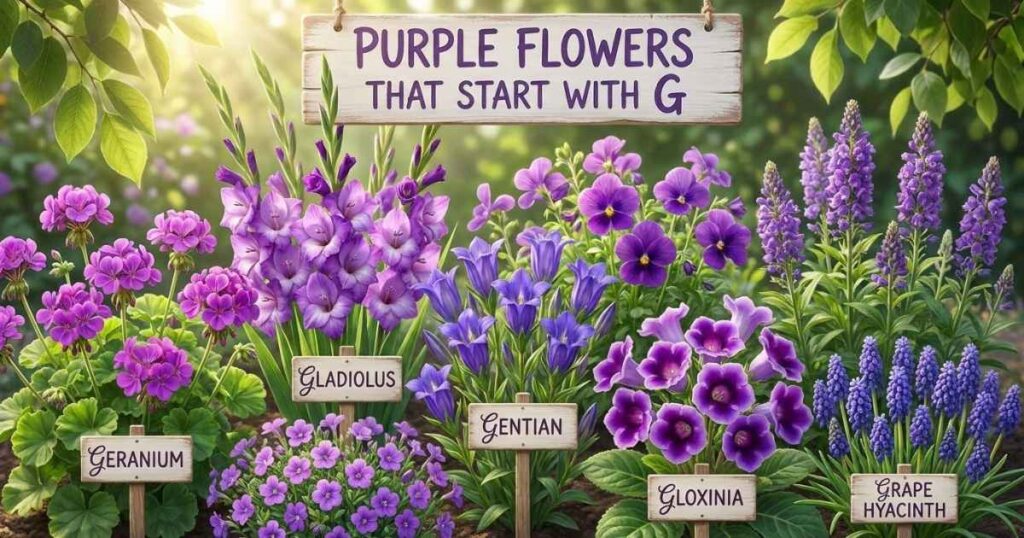
- Gentian, known for its deep blue-purple trumpet blooms
- Grape Hyacinth, with small purple bell clusters
- Globe Thistle, with spiky steel-purple flower heads
- Garden Phlox, available in purple and violet shades
White Flowers With G Names
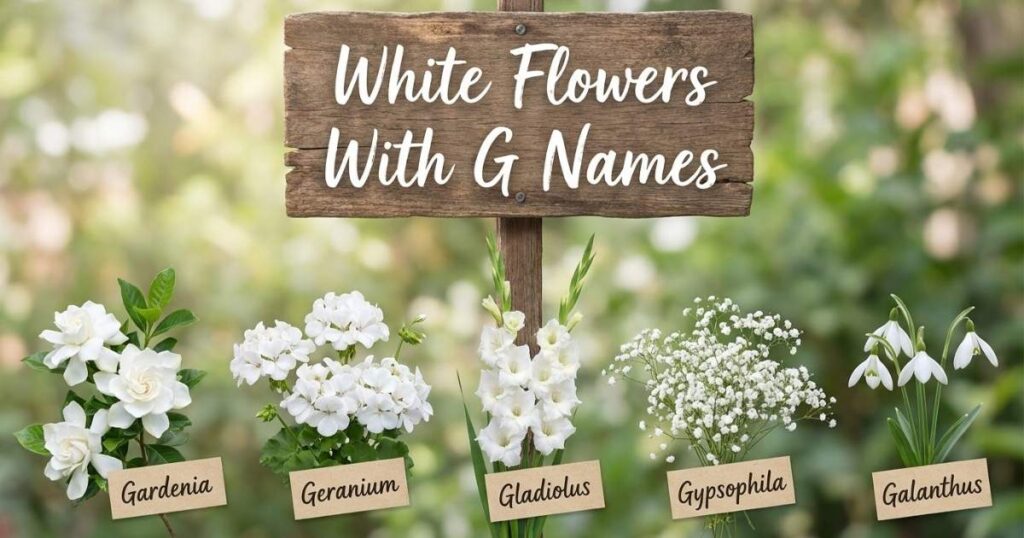
- Gardenia, prized for its pure white, waxy petals
- Gypsophila, the classic white filler flower
- Snowdrop (Galanthus), an early spring white bloomer
- Ground Orchid, available in white varieties
Yellow And Gold G Flowers

- Golden Poppy, California’s bright orange-yellow state flower
- Goldenrod, a wildflower-yellow bloom
- Golden Trumpet Vine, with funnel-shaped yellow flowers
- Golden Marguerite, a daisy-form yellow bloom
Red, Orange, And Hot Color Picks
- Gerbera Daisy, available in vivid red and orange
- Gaillardia, known for its red and orange banded petals
- Gladiolus, sold in hot pink, red, and orange spikes
- Gumamela (Hibiscus), a tropical red bloom favorite
Perennials That Start With G
Perennial G flowers return year after year, making them cost-effective for long-term garden planning.
- Geranium (hardy types)
- Gaillardia
- Gazania (in warm climates)
- Gentian
- Geum
- Goldenrod
- Globe Thistle
- Garden Phlox
- Gayfeather
Most of these tolerate USDA zones 4 through 9, though exact hardiness varies by species and cultivar.
Annual Flowers That Start With G
Annual G flowers complete their life cycle in one season, which makes them useful for fast color and seasonal swaps.
- Godetia
- Garden Stock
- Golden Poppy (in colder climates, grown as an annual)
- Green Zinnia
- Garden Balsam
- Golden Fleece
Annuals are a good choice if you want to experiment with color schemes without a long-term commitment.
Indoor Bloomers And Bulb Types
Several G flowers thrive indoors or in containers with protection from frost.
- Gloxinia, a popular flowering houseplant with velvety leaves
- Guzmania, a bromeliad grown for its bright bracts
- Gardenia, often grown indoors in cooler climates
- Grand Duke Jasmine, a fragrant potted flowering shrub
Bulbs, Corms, And Tuberous Types
| Flower | Growing Structure |
| Gladiolus | Corm |
| Grape Hyacinth | Bulb |
| Gloxinia | Tuber |
| Galanthus (Snowdrop) | Bulb |
| Guernsey Lily | Bulb |
| Goldband Lily | Bulb |
Bulb and corm types are typically planted in fall or spring depending on the species, and most need well-drained soil to avoid rot.
Growing Conditions, Common Problems, And Safety
Light And Soil Basics
Most G flowers prefer full sun, meaning at least six hours of direct light daily. Exceptions include gardenia and gloxinia, which do better with partial shade or bright indirect light.
Well-drained soil is a common requirement across nearly all G flowers. Heavy, waterlogged soil is the top cause of bulb and root rot in this group.
- Sandy or loamy soil: best for gladiolus, gazania, grape hyacinth
- Rich, slightly acidic soil: best for gardenia
- Average garden soil: works for gaillardia and geranium
Water And Pond Flower Picks
Golden Club is a true aquatic G flower, growing in shallow ponds and slow streams with its distinctive golden spike blooms.
Most other G flowers do not tolerate standing water and need consistent but not soggy moisture.
Common Issues And Easy Fixes
- Yellowing leaves on gardenia: usually a sign of alkaline soil; fix with acidic fertilizer
- Gladiolus falling over: stake tall spikes in windy areas
- Powdery mildew on garden phlox: improve air circulation and avoid overhead watering
- Gerbera daisy root rot: switch to well-drained potting mix and reduce watering frequency
- Grape hyacinth not blooming: bulbs may be planted too shallow or overcrowded
Safety, Toxicity, And Special Cases
Some G flowers are toxic to pets or humans if ingested, so it’s worth checking before planting near children or animals.
- Gloriosa Lily: highly toxic if ingested, contains colchicine
- Grape Hyacinth: mildly toxic to pets and humans if eaten in quantity
- Gladiolus: can cause mild stomach upset in pets
- Gardenia: generally considered non-toxic but can cause mild irritation
- Geranium: mildly toxic to cats and dogs
Always check with a vet or poison control resource before assuming any flower is safe for a specific pet or child.
How To Choose The Right G Flower For Your Space
Choose By Climate, Care Level, And Purpose
Start with your climate zone, then narrow by how much maintenance you’re willing to do, and finally match to your purpose, whether that’s cut flowers, ground cover, or fragrance.
- Hot, dry climate: Gazania, Gaillardia
- Cool, temperate climate: Gentian, Garden Phlox
- Humid, tropical climate: Gumamela, Ginger Lily
Cut Flower And Bouquet Favorites
Gladiolus, gerbera daisy, and gypsophila remain the top three choices for florists because of their vase life and visual impact.
Garden stock adds a clove-like fragrance that these three don’t offer, making it a strong companion pick for scented bouquets.
Pollinator Friendly And Meadow Picks
- Goldenrod, a major late-season nectar source for bees
- Globe Thistle, attractive to bees and butterflies
- Gaillardia, a reliable pollinator magnet
- Golden Yarrow, supports beneficial insects
Container And Small Space Picks
- Geranium, one of the best container plants overall
- Gazania, thrives in pots with good drainage
- Gloxinia, suited to indoor containers
- Grape Hyacinth, works well in small bulb pots
Indoor Or Protected Space Picks
- Gloxinia
- Guzmania
- Gardenia (in cooler regions)
- Grand Duke Jasmine
Beginner Friendly Choices
- Gaillardia, tolerant of neglect and poor soil
- Geranium, forgiving of inconsistent watering
- Gazania, thrives in hot, dry conditions with minimal care
- Golden Poppy, self-seeds easily
Fragrant G Flowers
- Gardenia, one of the most fragrant flowers grown
- Garden Stock, known for a spicy, clove-like scent
- Grand Duke Jasmine, sweet and strong
- Ginger Lily, tropical and heavily scented
Detailed Plant Profiles
Gardenia
Gardenia (Gardenia jasminoides) is a broadleaf evergreen shrub known for its glossy leaves and intensely fragrant white flowers.
It prefers acidic, well-drained soil and partial shade, especially in hot climates. Overly alkaline soil is the most common cause of yellowing leaves.
Gardenias bloom mainly in late spring through summer and are popular in both outdoor gardens and indoor container growing in cooler zones.
Geranium
Geranium refers to both true geraniums (hardy perennials) and pelargoniums (the common bedding and container plant sold as “geranium”).
They’re valued for continuous blooming from spring through fall and tolerate heat, drought, and poor soil better than many flowering plants.
Deadheading spent blooms encourages more flowers and keeps the plant looking tidy throughout the season.
Gerbera Daisy
Gerbera daisy (Gerbera jamesonii) produces large, bold, single blooms in red, orange, pink, yellow, and white.
It’s one of the most popular cut flowers worldwide due to its long vase life, often lasting seven to fourteen days with proper care.
Gerbera daisies need full sun and well-drained soil, and they’re prone to root rot if overwatered.
Gladiolus
Gladiolus grows from a corm and produces tall flower spikes lined with multiple blooms that open from the bottom up.
It’s a favorite for cutting gardens and formal arrangements because of its height and dramatic presence.
Corms are typically planted in spring after the last frost and lifted in fall in colder climates to prevent winter rot.
Gazania
Gazania is a low-growing, drought-tolerant flower with daisy-like blooms that close at night and open fully in sunlight.
It thrives in poor, sandy soil and full sun, making it a strong choice for xeriscaping and coastal gardens.
Gazania is often grown as an annual in colder zones but behaves as a perennial in warm, frost-free climates.
Gaillardia
Gaillardia, also called blanket flower, features red and orange banded petals around a dark center, resembling a woven blanket pattern.
It’s extremely drought tolerant once established and attracts bees and butterflies throughout its long summer to fall bloom period.
Gaillardia self-seeds readily, which makes it a low-effort way to fill in garden gaps over time.
Gloxinia
Gloxinia is a tuberous flowering plant grown mostly indoors, known for its velvety leaves and large, trumpet-shaped blooms.
It prefers bright, indirect light and consistent humidity, making it a common choice for indoor and greenhouse growing.
Overwatering is the most common issue, since gloxinia tubers are prone to rot in soggy soil.
Gentian
Gentian produces striking deep blue to purple trumpet-shaped flowers and is often found in alpine or mountain meadow settings.
It prefers cool temperatures, partial sun, and consistently moist, well-drained soil, which makes it trickier to grow in hot climates.
Gentian blooms in late summer through fall, adding color when many other perennials are fading.
Grape Hyacinth
Grape hyacinth (Muscari) produces small, tightly clustered bell-shaped flowers that resemble upside-down bunches of grapes, usually in shades of purple or blue.
It’s a spring-blooming bulb that naturalizes easily, spreading over time to form dense colonies in lawns and borders.
Plant bulbs in fall for blooms the following spring, and expect them to multiply naturally over a few seasons.
Gypsophila
Gypsophila, commonly known as baby’s breath, produces clouds of tiny white or pink flowers on thin, branching stems.
It’s a staple filler flower in bouquets and wedding arrangements because of its airy texture and long vase life.
Gypsophila prefers full sun and alkaline, well-drained soil, and it tolerates drought once established.
Garden Stock
Garden stock (Matthiola incana) is grown for its dense flower spikes and strong, clove-like fragrance in shades of pink, purple, white, and red.
It’s a cool-season annual, meaning it performs best in spring or fall rather than peak summer heat.
Garden stock is a popular addition to cut flower gardens specifically for its scent, which most other cut flowers lack.
Geum
Geum is a compact perennial with cup-shaped flowers in red, orange, and yellow, often held above a low mound of foliage.
It prefers full sun to partial shade and moist, well-drained soil, making it suitable for borders and cottage gardens.
Geum blooms in late spring through summer and works well as a companion plant for taller perennials.
Goldenrod
Goldenrod produces feathery plumes of tiny yellow flowers and is a critical late-season nectar source for bees and butterflies.
Despite a long-standing myth, goldenrod does not cause hay fever, since its pollen is heavy and insect-carried rather than airborne.
It thrives in poor soil and full sun, often growing wild along roadsides and meadows across North America.
Globe Amaranth
Globe amaranth (Gomphrena) produces round, clover-like flower heads in purple, pink, red, and white that retain their color even when dried.
It’s heat and drought tolerant, making it a reliable summer bloomer in hot climates where other annuals struggle.
Because the flowers hold their shape and color after drying, globe amaranth is popular for everlasting arrangements and crafts.
Globe Thistle
Globe thistle features spiky, steel-blue round flower heads on tall, sturdy stems, adding a bold architectural shape to gardens.
It’s highly attractive to bees and butterflies and tolerates poor, dry soil once established.
Globe thistle works well in wildflower and pollinator gardens, and the dried flower heads add winter interest.
Gloriosa Lily
Gloriosa lily, also called flame lily, is a climbing vine with dramatic, reflexed red and yellow petals.
It grows from a tuber and needs support such as a trellis, since it climbs using tendrils at the leaf tips.
Every part of the gloriosa lily is toxic if ingested, so it should be kept away from children and pets.
Garden Phlox
Garden phlox produces dense clusters of fragrant flowers in shades of pink, purple, and white atop tall, upright stems.
It’s a mid-to-late summer bloomer that works well in cottage garden borders and cut flower arrangements.
Good air circulation is essential to prevent powdery mildew, a common issue in humid climates.
Gayfeather
Gayfeather, botanically known as Liatris, produces tall, bottlebrush-like purple flower spikes that bloom from the top down.
It’s highly attractive to butterflies, particularly monarchs during migration season, and tolerates a range of soil types.
Gayfeather is a strong choice for both pollinator gardens and cut flower arrangements due to its unique vertical form.
Golden Poppy
Golden poppy, commonly known as California poppy, is the official state flower of California, producing vivid orange to yellow cup-shaped blooms.
It thrives in poor, dry soil and full sun, and it self-seeds readily to form drifts of color.
Golden poppy is a low-maintenance choice for wildflower meadows and requires minimal watering once established.
Gumamela
Gumamela is the common name for hibiscus in parts of Southeast Asia, especially the Philippines, known for its large, showy tropical blooms.
It prefers warm temperatures, full sun, and regular watering, and it does not tolerate frost.
Gumamela flowers typically last only a day or two individually, but the plant produces a continuous succession of new blooms through the warm season.
Meaning, Symbolism, And Floral Styling
Different G flowers carry distinct symbolic meanings that are useful for gift-giving or event styling.
- Gardenia: purity, secret love, and refinement
- Geranium: comfort, positive emotion, and friendship
- Gladiolus: strength, integrity, and remembrance
- Goldenrod: encouragement and good fortune
- Gerbera Daisy: cheerfulness and innocence
For styling, gladiolus and gerbera daisy work as bold focal flowers, while gypsophila and goldenrod serve better as texture and filler in arrangements.
Companion Pairings For G Flowers
Pairing G flowers with complementary plants improves both garden design and bouquet balance.
| G Flower | Strong Companion | Why It Works |
| Gladiolus | Gypsophila | Height contrast with airy filler |
| Gaillardia | Goldenrod | Similar bloom time, pollinator support |
| Gardenia | Ferns | Shade tolerance, foliage contrast |
| Gerbera Daisy | Baby’s Breath | Classic bouquet pairing |
| Geranium | Lavender | Similar sun and drought needs |
Common Mistakes When Choosing G Flowers
- Planting gardenia in alkaline soil, which leads to chronic yellowing
- Overwatering gloxinia and gerbera daisy, causing root rot
- Assuming gladiolus is winter hardy in cold zones without lifting the corms
- Placing gazania in shaded spots, which reduces blooming significantly
- Ignoring toxicity when choosing gloriosa lily or grape hyacinth near pets
Avoiding these mistakes upfront saves time and prevents losing plants in the first growing season.
FAQ’s
What is the most popular flower that starts with G?
Geranium and gerbera daisy are the two most commonly grown and purchased G flowers worldwide.
Are all flowers that start with G safe for pets?
No, some like gloriosa lily and grape hyacinth are toxic to pets, so always check before planting near animals.
Which G flower is best for beginners?
Gaillardia is one of the easiest G flowers to grow, tolerating poor soil, drought, and minimal care.
What G flower is best for cut arrangements?
Gladiolus and gerbera daisy are the top choices for cut flowers due to their long vase life and visual impact.
Is goldenrod the same plant that causes allergies?
No, goldenrod is often blamed for hay fever, but the real cause is usually windborne ragweed pollen blooming at the same time.
Can gardenias grow indoors?
Yes, gardenias grow well indoors in containers, especially in cooler climates, as long as they get bright light and acidic soil.
What is a rare flower that starts with G?
The ghost orchid is one of the rarest G flowers, found only in a few wetland habitats in Florida and Cuba.
Conclusion
Flowers that start with G cover an unusually wide range, from the everyday geranium to the rare ghost orchid. Whether you need a fragrant indoor bloom, a drought-proof garden perennial, or a striking cut flower, there’s a G flower suited to the job.
Use the quick picks and tables above to shortlist options, then check the detailed profiles before buying or planting. Matching the flower to your climate and care level is the single biggest factor in long-term success.
With over 65 names on this list, G is one of the richest letters in the flower alphabet, and there’s likely a perfect match here for nearly any garden goal.