
Cool weather does not mean an empty garden. Many of the prettiest, hardiest, and most unique flowers actually prefer chilly soil and crisp air over summer heat.
This guide covers what cool flowers really are, how they differ from tender annuals, the best varieties for every season, and simple growing steps that work for beginners and experienced gardeners alike.
Whether you want a cutting garden full of ruffled blooms or a few frost-tolerant flowers to carry color into winter, this article gives you a complete, practical roadmap for 2026.
You will find a full plant list, a sowing calendar, zone-by-zone recommendations, and answers to the questions gardeners ask most often about growing flowers in cold weather.
Quick Answer: What Are Cool Flowers?
Cool flowers are hardy or half-hardy annuals and perennials that grow best in cool temperatures, typically between 25°F and 65°F. They tolerate light frost and often perform poorly once summer heat arrives.
Popular examples include snapdragons, sweet peas, larkspur, pansies, and stock. Gardeners plant them in fall or very early spring to get months of extra bloom time before warm season flowers take over.
Unlike tender annuals that need warm soil to germinate, cool flowers actually use cold temperatures to trigger stronger root systems. This is why experienced growers often sow them weeks before the last frost date rather than waiting for spring warmth.
The term covers a wide range of plants, from delicate violas to towering delphiniums, united mainly by their preference for cooler air and soil over summer heat and humidity.
Beautiful Flowers: At A Glance
The table below sums up the five main groups covered in this guide.
| Category | Key Trait | Example Flowers |
| Hardy Annuals | Survive light frost, self sow easily | Larkspur, poppy, bachelor’s button |
| Cold Hardy Flowers | Tolerate cold once established | Pansy, viola, hellebore |
| Frost-Tolerant Flowers | Bounce back after light frost damage | Snapdragon, calendula, stock |
| Unique Flowers | Unusual shape, color, or texture | Nigella, bells of Ireland, scabiosa |
| Beautiful Flowers | Classic garden and bouquet favorites | Sweet pea, delphinium, dianthus |
Hardy Annuals
Hardy annuals germinate in cold soil and shrug off frost. They are the backbone of any cool flower garden because they can be sown directly outdoors weeks before the last frost date.
Many hardy annuals also self-seed, meaning a single fall planting can produce volunteer seedlings the following year without any extra effort from the gardener.
Cold Hardy Flowers
Cold hardy flowers include both annuals and perennials that keep growing, and sometimes blooming, through near freezing conditions. Pansies and violas are the most common examples.
Some cold hardy perennials, like hellebore, actually bloom during the coldest months of the year, making them valuable for winter garden interest when little else is flowering.
Frost-Tolerant Flowers
These flowers can take a light frost without dying, though their foliage may wilt temporarily. Most recover fully once temperatures rise again during the day.
Frost tolerance usually depends on plant maturity. Young seedlings are far more vulnerable than established plants, so timing and protection matter most in the first few weeks after sowing.
Unique Flowers
Unique flowers stand out because of odd shapes, rare colors, or unusual textures. They add visual interest to arrangements that would otherwise look predictable.
Florists often reach for these varieties specifically to break up the monotony of round, uniform blooms in mixed bouquets.
Beautiful Flowers
This group covers timeless, universally loved blooms. They may not always be the hardiest, but they remain garden favorites for their fragrance, form, and color.
These classic flowers work well as anchor plants in a garden design, with hardier or more unusual varieties filling in around them for contrast.
Cool Season Flowers Vs Cool Looking Flowers
These two terms sound similar but mean very different things, and mixing them up leads to planting mistakes.
- Cool season flowers grow best in cool temperatures and often struggle in summer heat.
- Cool looking flowers simply have an unusual or striking appearance, regardless of the season they grow in.
A flower can be both, like nigella, but many exotic looking blooms actually need warm, humid conditions and are not cool season plants at all.
This distinction matters when shopping for seeds online, since marketing terms like “exotic” or “unique” say nothing about a plant’s actual temperature needs. Always check the hardiness zone and germination temperature before buying.
What The Cool Flowers Method Means
The Cool Flowers method, popularized by gardener Lisa Mason Ziegler, is a planting strategy rather than a plant type. It focuses on sowing hardy annuals in fall or very early spring instead of waiting until after the last frost.
This approach gives plants a longer root establishment period in cool soil, which leads to stronger stems, more blooms, and earlier flowering compared to spring-only planting.
Key principles of the method include:
- Sowing hardy annuals four to six weeks before the first fall frost, or very early in spring.
- Choosing varieties that tolerate temperatures down to 25°F once established.
- Skipping heavy mulch that traps too much moisture around young seedlings.
- Using row covers or low tunnels to buffer seedlings during harsh cold snaps.
- Watching actual soil temperature rather than relying only on the calendar date.
This method has become popular because it produces earlier, sturdier, and more productive plants than spring-only sowing. Flowers planted using the cool flowers method often bloom four to six weeks earlier than those started later in spring.
Hardy Annuals Vs Tender Annuals
Understanding this difference prevents wasted seeds and disappointing results.
| Trait | Hardy Annuals | Tender Annuals |
| Frost tolerance | Survive light to moderate frost | Killed by any frost |
| Best sowing time | Fall or early spring | After last frost date |
| Root growth | Deep, cold-triggered growth | Shallow until warm soil |
| Bloom timing | Early, often before summer heat | Mid to late summer |
| Examples | Larkspur, sweet pea, snapdragon | Zinnia, marigold, cosmos |
Hardy annuals actually benefit from a cold period, since it triggers stronger root development. Tender annuals, by contrast, will die back or stall completely if exposed to frost.
A simple rule of thumb helps here: if a seed packet recommends sowing after the last frost date, it is almost always a tender annual. If it recommends fall or very early spring sowing, it is hardy. Mixing up these two categories is one of the most common reasons new gardeners lose plants to unexpected cold snaps.
List Of Cool Flowers
Best Cool-Season Flowers
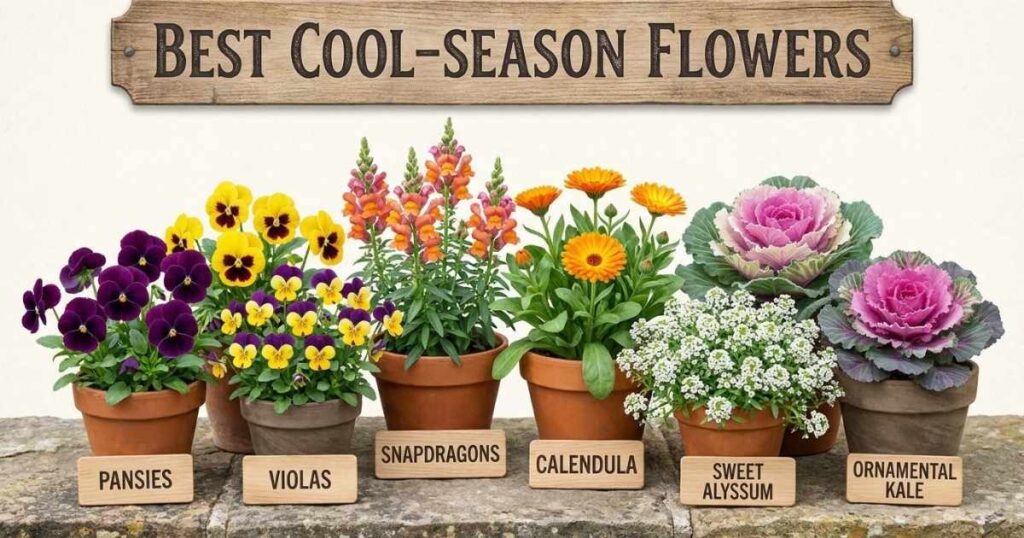
- Snapdragon
- Sweet pea
- Stock
- Calendula
- Pansy
- Viola
- Larkspur
Best Hardy Annuals For Cutting Gardens
- Bachelor’s button
- Nigella
- Bupleurum
- Bells of Ireland
- Orlaya
- Scabiosa
- Ammi
Best Cold Hardy Or Early Spring Flowers
- Iceland poppy
- Primrose
- Hellebore
- Pansy
- Viola
Best Rare And Unique Flowers
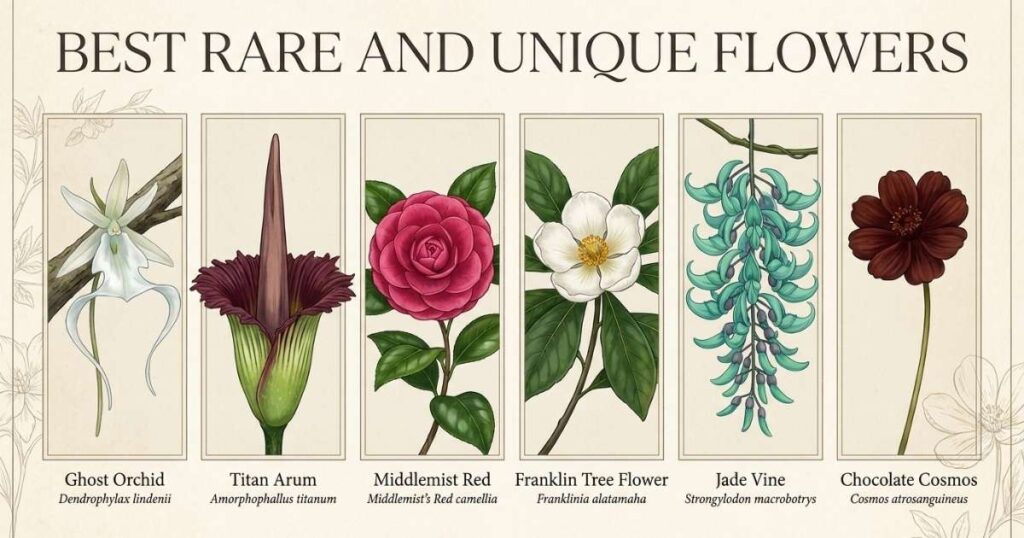
- Bells of Ireland
- Nigella
- Bupleurum
- Black dianthus varieties
- Chocolate cosmos
Best Classic Beautiful Flowers
- Sweet pea
- Delphinium
- Foxglove
- Dianthus
- Columbine
- Lupine
Top 25 Cool-Season Flowers With Growing Notes
Snapdragon
Snapdragons tolerate temperatures down to 20°F once established and rebloom repeatedly when deadheaded. They come in nearly every color except true blue.
Pinching young snapdragon plants encourages branching, which results in more flower spikes per plant and a longer overall bloom period.
Larkspur
Larkspur needs a cold period to germinate well, making it a perfect fall-sown flower. Its tall spikes attract bees and work beautifully in cut arrangements.
Larkspur dislikes being transplanted, so it should be direct sown wherever possible. Once established, it often self-seeds and returns year after year with no extra planting.
Sweet Pea
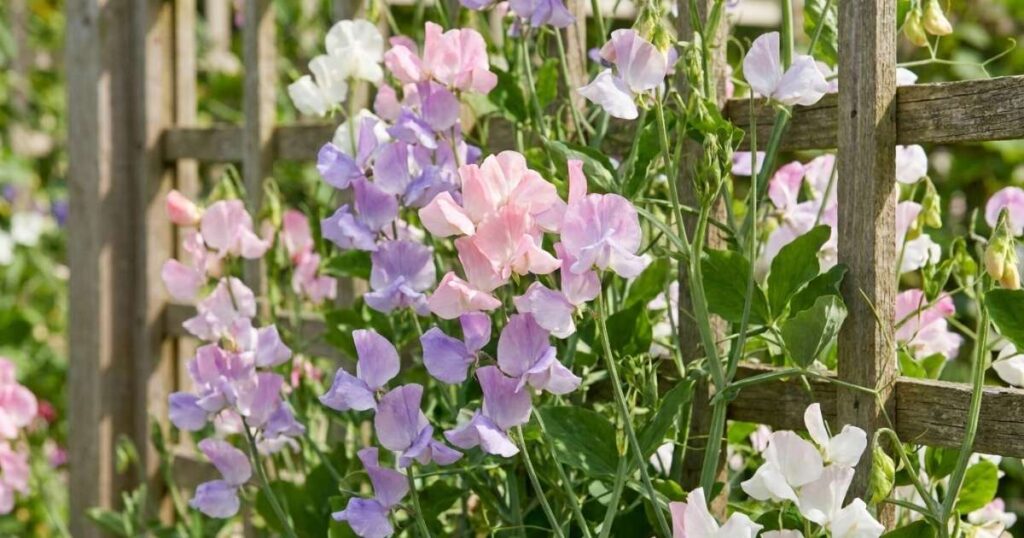
Sweet peas prefer cool roots and cool air, and they stop blooming once summer heat sets in. Soaking seeds overnight before sowing improves germination speed.
Providing a trellis or netting early gives sweet pea vines something to climb as they grow, which improves airflow and reduces the risk of powdery mildew.
Stock
Stock, also called Matthiola, offers a strong clove-like fragrance and dense flower spikes. It performs best in temperatures between 45°F and 65°F.
Look for double-flowered varieties if fragrance and fullness are the priority, since single-flowered types tend to have a lighter scent and sparser blooms.
Calendula
Calendula is one of the most forgiving cool flowers, tolerating both light frost and poor soil. Its petals are edible and often used in skin care products.
Regular deadheading keeps calendula blooming for months, and the plant often reseeds itself readily in garden beds left undisturbed over winter.
Pansy
Pansies bloom in cool weather and can survive light snow, often blooming again as soon as temperatures rise. They are among the most cold-tolerant bedding flowers available.
Removing spent blooms regularly prevents pansies from going to seed too early, which helps extend their flowering window well into late spring.
Viola
Violas are smaller cousins of pansies with the same cold hardiness. They spread easily and self sow in mild climates.
Their small size makes violas ideal for edging garden beds, filling gaps between stepping stones, or planting in window boxes and containers.
Bachelor’s Button
Also known as cornflower, bachelor’s button germinates readily in cool soil and produces fringed, papery blue blooms. It is a top choice for pollinator gardens.
It tolerates poor, dry soil better than most cool flowers, making it a low-maintenance option for gardeners with less than ideal growing conditions.
Nigella
Nigella, or love-in-a-mist, has feathery foliage surrounding delicate blooms, followed by ornamental seed pods. Both the flowers and pods are popular in dried arrangements.
Because nigella dislikes transplanting, direct sowing in early spring or fall gives the best results and the strongest root establishment.
Poppy

Poppies need light to germinate, so seeds should be surface sown rather than buried. They dislike transplanting, so direct sowing is strongly recommended.
Mixing fine poppy seeds with sand before sowing helps spread them evenly and prevents overcrowding, which can weaken individual plants.
Cornflower
Cornflower is closely related to bachelor’s button and shares the same cold tolerance and easy self-seeding habit.
Its edible petals are sometimes used as a garnish, adding a splash of blue to salads and desserts.
Bupleurum
Bupleurum has chartreuse, greenish flowers that add texture and color to bouquets without competing with brighter blooms. It is a favorite among floral designers.
Its long vase life, often two weeks or more, makes it especially valuable for wedding and event florists working with cool season blooms.
Bells Of Ireland
Bells of Ireland produces tall spikes of bright green bell-shaped calyxes rather than typical petals. It needs a cold stratification period to germinate reliably.
Chilling seeds in the refrigerator for about two weeks before sowing significantly improves germination rates for this unusual variety.
Orlaya
Orlaya, sometimes called white lace flower, resembles Queen Anne’s lace but with larger, more refined blooms. It thrives in cool spring conditions.
It pairs especially well with darker flowers in arrangements, since its delicate white lace structure creates strong visual contrast.
Scabiosa
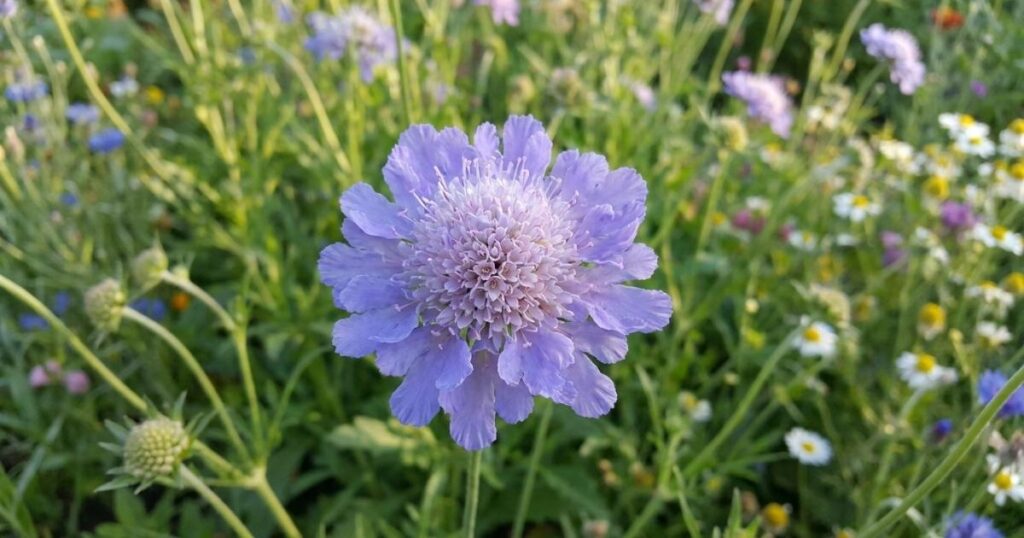
Scabiosa, or pincushion flower, blooms continuously from spring through fall in cooler climates. Its unusual pincushion-shaped center makes it a standout in cut flower gardens.
Frequent cutting actually encourages more blooms, making scabiosa one of the more productive hardy annuals for repeated harvests.
Ammi
Ammi majus offers airy, lace-like white flowers and pairs well with almost any other bloom in a bouquet. It self-sows readily once established.
Staking is often necessary, since ammi can grow quite tall and top-heavy once flowers open fully.
Feverfew
Feverfew produces small, daisy-like blooms in large clusters and is valued both as an ornamental and a traditional herbal remedy. It tolerates poor soil well.
It is a reliable filler flower for bouquets, adding volume without overpowering more prominent blooms nearby.
Foxglove
Foxglove is a biennial that produces tall flower spikes in its second year. All parts of the plant are toxic if ingested, so it should be planted away from pets and children.
Because it flowers in its second year, gardeners should plan ahead and sow foxglove seeds a full year before the desired bloom season.
Delphinium
Delphinium needs cool nights to thrive and often struggles in hot, humid climates. Its tall spires come in shades of blue, purple, pink, and white.
Staking is essential for taller varieties, since strong wind or heavy rain can easily snap their hollow stems.
Iceland Poppy
Iceland poppy is one of the most cold hardy poppy varieties, tolerating temperatures well below freezing once established. Its crepe paper-like petals come in bright, cheerful colors.
Searing the stem ends briefly in hot water right after cutting helps extend vase life significantly.
Primrose
Primrose blooms in very early spring, sometimes even through light snow cover. It prefers partial shade and consistently moist soil.
It works especially well in woodland gardens or shaded borders where few other flowers bloom so early in the season.
Hellebore
Hellebore, often called the Christmas or Lenten rose, blooms in late winter to early spring and tolerates freezing temperatures. It is a long-lived perennial that requires minimal care.
Once established, hellebore can live for decades with little intervention, making it a strong long-term investment for shaded garden areas.
Dianthus
Dianthus offers a spicy, clove-like fragrance and comes in both annual and perennial forms. Many varieties tolerate frost and light snow.
Deadheading spent blooms consistently encourages repeat flowering throughout the cooler months of the growing season.
Columbine
Columbine produces unusual spurred flowers and thrives in cooler climates with partial shade. It attracts hummingbirds and reseeds readily.
It performs best in soil enriched with organic matter, and established plants tolerate light drought once their root systems mature.
Lupine
Lupine produces tall spires of pea-like flowers and prefers cool, well-drained soil. It fixes nitrogen in the soil, making it beneficial for surrounding plants.
Because lupine has a taproot, it resents transplanting, so direct sowing or using biodegradable pots is the best approach.
Cool Flower Types And Exotic List
Beyond the common cool season varieties, some exotic types add rare texture and form to gardens and arrangements.
- Chocolate cosmos, valued for its deep maroon color and cocoa scent.
- Black dianthus, prized for its near-black petals.
- Fritillaria, known for its checkered or bell-shaped blooms.
- Amaranthus, offering dramatic trailing or upright plumes.
- Honesty plant, grown mainly for its translucent, coin-shaped seed pods.
Best Hardy Annual Flowers
Direct Sow Choices
- Larkspur
- Poppy
- Bachelor’s button
- Nigella
- Bells of Ireland
Indoor Start Choices
- Snapdragon
- Stock
- Foxglove
- Delphinium
Flexible Choices
- Calendula
- Sweet pea
- Scabiosa
- Ammi
Best Cold Hardy Flowers
Handles Cool Weather Well
- Pansy
- Viola
- Calendula
- Snapdragon
May Handle Light Frost When Established
- Sweet pea
- Stock
- Dianthus
- Larkspur
Needs Protection In Harsh Cold
- Foxglove seedlings
- Delphinium seedlings
- Young primrose
Most Beautiful Flowers And Pretty Flowers For Gardens And Bouquets
Some flowers earn their place in gardens simply because of their timeless beauty. Sweet peas, delphiniums, and foxgloves remain top choices for romantic, cottage-style plantings.
Dianthus and columbine add softness and detail, while lupine brings height and structure to mixed borders. These varieties also perform well as cut flowers, holding their form for several days in a vase.
Cute Flower For Soft Garden Color
Violas and small-flowered dianthus varieties bring a soft, delicate look to garden edges and containers. Their compact size makes them ideal for small spaces and window boxes.
Best Unique Flowers
- Nigella, for its lacy foliage and ornamental seed pods.
- Bells of Ireland, for its green bell-shaped calyxes.
- Bupleurum, for its unusual chartreuse color.
- Scabiosa, for its pincushion-shaped center.
- Honesty plant, for its translucent seed pods.
Rare Flowers In The World
Some of the rarest flowers globally are not typically grown in home gardens, but they inspire plant collectors and breeders.
- Middlemist’s Red, considered one of the rarest flowering plants, with only two known specimens surviving today.
- Ghost orchid, found in a handful of remote wetland locations.
- Jade vine, known for its striking turquoise, claw-shaped flowers.
- Kadupul flower, which blooms only at night and wilts by morning.
Weird Looking Flowers And Flowers That Look Fake But Are Real
Certain flowers look so unusual that people often assume they are artificial.
- Parrot’s beak, shaped like a curved bird’s beak.
- Monkey orchid, resembling a small monkey face.
- Bat flower, with long whisker-like bracts.
- Hydnora africana, a leafless, star-shaped ground flower with a strong odor.
- Passion flower, with intricate, layered petal structures.
Bioluminous or glowing plants and flowers.
True bioluminescent flowers are extremely rare in nature and mostly limited to certain fungi and marine organisms rather than garden flowers. Some plants marketed as glowing flowers are genetically modified in labs, such as light-emitting petunias developed through bioluminescent gene research.
Most glow-in-the-dark garden effects sold commercially come from UV-reactive pigments or coatings rather than natural bioluminescence. These plants glow under blacklight but not in normal darkness.
Rare Flowers For Home Gardens
Home gardeners can grow several rare or uncommon flowers without needing greenhouse conditions.
- Black dianthus
- Chocolate cosmos
- Fritillaria
- Corncockle
- Love-in-a-mist in unusual double forms
Exotic Flowers Care Guide
Light
Most exotic flowering plants need bright, indirect light for six to eight hours daily. Direct harsh sun can scorch delicate petals on many rare varieties.
Warmth
Tropical exotic flowers generally prefer temperatures between 65°F and 85°F. Sudden temperature drops can cause bud drop or stunted growth.
Humidity
Many exotic flowers, such as orchids, thrive in humidity levels between 50 and 70 percent. A pebble tray or humidifier helps recreate these conditions indoors.
Drainage
Well-draining soil or potting mix prevents root rot, which is one of the most common causes of failure with exotic flowering plants. Adding perlite or bark improves airflow around roots.
Container Size
Exotic flowers often bloom better when slightly root-bound, so avoid oversized pots. Move up only one container size at a time when repotting.
Winter Protection
Bring tender exotic plants indoors before nighttime temperatures drop below 50°F. Reduce watering frequency during winter dormancy periods.
Indoor Flowers That Look Unique
- Bird of paradise, known for its bright orange and blue crane-like blooms.
- Passion flower, grown indoors in bright, sunny spots.
- Orchids, prized for their long-lasting, sculptural blooms.
- Anthurium, valued for its glossy, heart-shaped spathes.
Cool Flowers By Color
Purple And Blue Cool Flowers
- Larkspur
- Delphinium
- Bachelor’s button
- Nigella
White And Soft Flowers
- Sweet pea
- Ammi
- Orlaya
- Stock
Yellow And Orange Flowers
- Calendula
- Iceland poppy
- Primrose
Dark Or Near Black Flowers
- Black dianthus
- Chocolate cosmos
- Dark scabiosa varieties
Multicolor Flowers
- Pansy
- Viola
- Snapdragon
Best Flowers For Garden Aesthetics
Cottage Garden
Sweet pea, foxglove, delphinium, and columbine create the layered, romantic look typical of cottage-style gardens.
Minimal Garden
Bupleurum, ammi, and single-color scabiosa work well in minimal designs that rely on clean lines and restrained color palettes.
Dark Or Moody Garden
Black dianthus, chocolate cosmos, and dark scabiosa varieties add depth and drama to moody garden themes.
Pollinator Garden
Bachelor’s button, calendula, and nigella attract bees and butterflies while providing long bloom windows through the cool season.
Unique Flowers For Bouquets And Gifting
- Scabiosa, for its unusual texture.
- Bells of Ireland, for height and structure.
- Ranunculus, for its densely layered petals.
- Sweet pea, for its fragrance and delicate form.
Best Cool Flowers For Pollinators
- Bachelor’s button
- Calendula
- Nigella
- Scabiosa
- Sweet pea
These flowers bloom early in the season, providing crucial nectar sources for bees and other pollinators before summer flowers take over.
When To Plant Cool Flowers?
Fall Planting
Fall planting works best for hardy annuals in USDA zones 7 and warmer, where winters stay mild enough for seedlings to survive.
Late Winter Indoor Starting
Gardeners in colder zones often start seeds indoors in late winter, roughly eight to ten weeks before the last expected frost.
Very Early Spring Direct Sowing
As soon as soil can be worked in early spring, hardy annual seeds can go directly into the ground, even if light frost is still expected.
After Frost Danger Passes
Tender cool-season varieties, along with warm season flowers, should wait until all frost danger has passed before transplanting outdoors.
Cool Flower Sowing Calendar
Fall
Sow larkspur, poppy, bachelor’s button, and nigella directly outdoors four to six weeks before the first hard frost.
Late Winter
Start snapdragon, stock, and delphinium seeds indoors under grow lights.
Early Spring Annuals
Direct sow sweet peas, calendula, and additional larkspur or poppy seeds as soon as soil is workable.
Late Spring
Transplant cool-season seedlings outdoors once they have hardened off, before summer heat arrives.
Summer
Most cool flowers finish blooming as temperatures rise, though deadheaded snapdragons and scabiosa may continue sporadically.
Fall Planting Vs Spring Planting
Fall Planting Works Better When:
- Winters are mild, generally zone 7 or warmer.
- The goal is earlier, more abundant spring blooms.
- Seeds require cold stratification to germinate well.
Spring Planting Works Better When:
- Winters are harsh, with prolonged temperatures below 10°F.
- Gardeners lack season-extending tools like cold frames.
- Soil drains poorly, risking seed rot over winter.
Best Cool Flowers By Growing Zone
Zones 3 To 5
Pansy, viola, calendula, and Iceland poppy handle the short, cold growing seasons typical of these zones well.
Zones 6 To 8
Sweet pea, larkspur, snapdragon, and stock thrive here, benefiting from both fall and early spring planting windows.
Zones 9 To 10
Delphinium and foxglove need extra care in these warmer zones, often requiring partial shade and cooler microclimates to perform well.
How To Grow Cool Flowers?
Growing cool flowers successfully comes down to timing, soil preparation, and matching each variety to its ideal temperature range.
- Prepare beds with well-draining, loose soil before sowing.
- Sow seeds at the correct depth, since some need light to germinate.
- Water consistently but avoid waterlogging cold soil.
- Thin seedlings once they reach two to three inches tall.
- Mulch lightly to regulate soil temperature without smothering seedlings.
Direct Sow Vs Start Indoors
Direct Sow
Larkspur, poppy, bachelor’s button, and nigella dislike root disturbance and perform best when sown directly into garden soil.
Start Indoors
Snapdragon, stock, and delphinium benefit from an indoor head start, since their seeds germinate slowly in cold outdoor soil.
Either Method
Calendula and sweet peas adapt well to both direct sowing and indoor starting, depending on climate and gardener preference.
Which Cool Flowers Need Cold Stratification?
Cold stratification mimics winter conditions, signaling seeds that it is safe to germinate. The following cool flowers benefit from this process:
- Larkspur
- Bells of Ireland
- Delphinium
- Some poppy varieties
Stratification can be done naturally through fall sowing outdoors, or artificially by refrigerating seeds in moist paper towels for two to four weeks before planting.
Cold Protection Checklist
Before Frost
Check weather forecasts regularly and have row covers or cloches ready for young or tender seedlings.
During Frost
Cover vulnerable plants overnight and remove covers once temperatures rise above freezing during the day.
After Frost
Inspect plants for damage, remove any blackened foliage, and resume normal watering once soil has thawed.
Common Mistakes To Avoid
Timing Mistakes
Sowing hardy annuals too late in spring skips the cool root establishment period they need, resulting in weaker plants and fewer blooms.
Plant Choice Mistakes
Treating tender annuals like hardy ones, or vice versa, leads to either frost damage or stunted summer growth.
Care Mistakes
Overwatering cold, slow-draining soil is one of the most common reasons cool flower seedlings rot before they can establish.
Why Cool Flowers Fail
Cool flowers most often fail due to poor drainage, incorrect sowing depth, or planting too late for the plant to benefit from cool soil temperatures. Overcrowding also weakens stems and increases disease risk in cool, damp conditions.
Choosing the wrong variety for a growing zone, such as planting delphinium in a hot, humid climate without shade, is another common cause of failure.
FAQ’s
What is the difference between cool flowers and warm season flowers?
Cool flowers thrive in temperatures between 25°F and 65°F, while warm season flowers need consistent heat above 60°F to grow well.
Can cool flowers survive a hard freeze?
Most hardy annuals survive light frost, but a hard freeze below 20°F can damage or kill even established cool flowers.
When is the best time to plant cool flowers?
Fall is best in mild winter zones, while very early spring works well in colder regions once soil is workable.
Do cool flowers need cold stratification to germinate?
Some, like larkspur and delphinium, need a cold period to break seed dormancy and germinate reliably.
Which cool flowers are best for cutting gardens?
Snapdragon, sweet pea, scabiosa, and bells of Ireland are top choices for long-lasting cut flower arrangements.
Can cool flowers grow in containers?
Yes, pansies, violas, and calendula all grow well in containers, provided the pots have good drainage.
Why do cool flowers stop blooming in summer?
Rising temperatures stress cool season plants, causing them to bolt, wilt, or stop producing new flowers altogether.
Conclusion
Cool flowers open up months of extra color that many gardeners overlook by planting only after the last frost. From hardy annuals like larkspur and snapdragon to rare finds like chocolate cosmos, there is a cool season bloom for nearly every garden style and growing zone.
Start small, choose varieties suited to your zone, and pay close attention to sowing timing. With the right planning, cool flowers can turn even the coldest months of the year into a genuinely beautiful season in the garden.