
Living in a small apartment or a home with limited closet space does not mean your wardrobe has to suffer. A well-built DIY clothes rack can transform a cramped corner into a clean, organized display that actually looks intentional. Whether you want a permanent wall-mounted solution or something you can move around, there is a design here that fits your room, budget, and skill level. These ideas use basic tools, affordable materials, and clever space-saving tricks to give your clothes a proper home without eating up your floor plan.
Wooden A-Frame Rack
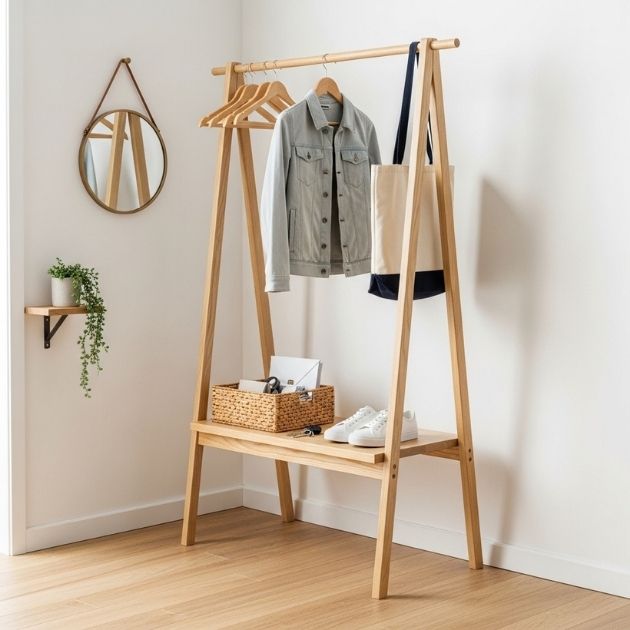
A wooden A-frame clothes rack is one of the most satisfying weekend builds you can take on. Two angled side boards connected by a horizontal dowel rod create a sturdy, freestanding structure that holds a surprising amount of clothing. The triangular shape keeps it balanced without wall support, making it ideal for renters. Add a lower shelf between the legs for shoes or folded items, and you instantly double the storage value. Sand it smooth, apply a light stain or clear coat, and it looks like something pulled straight from a boutique.
You might like:
- Hardwood round dowel rods (for the hanging rail)
- Pine wood boards (for the A-frame legs and bottom shelf)
- Wood glue and corner brackets
- Natural wood finish or matte spray paint
Simple Rolling Garment Rack
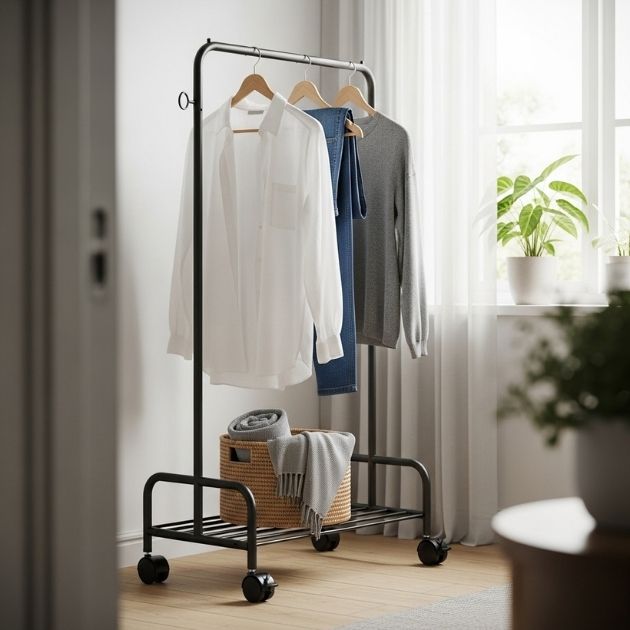
A rolling garment rack gives you flexibility that fixed storage simply cannot. Mount heavy-duty caster wheels to the base of a basic rectangular frame built from wooden boards or metal conduit, and your entire wardrobe becomes portable. Roll it to the window for airing out clothes, push it into a closet nook when guests visit, or move it room to room as your needs change. Lock the wheels once it is placed to keep it stable during daily use. This is one of the most beginner-friendly DIY garment rack builds available.
Check these products out:
- Heavy-duty swivel caster wheels with locking mechanism
- Metal conduit or wooden dowels for the frame
- PVC pipe connectors (if building a PVC version)
- Matching wooden hangers for a cohesive look
Industrial Pipe Standing Rack
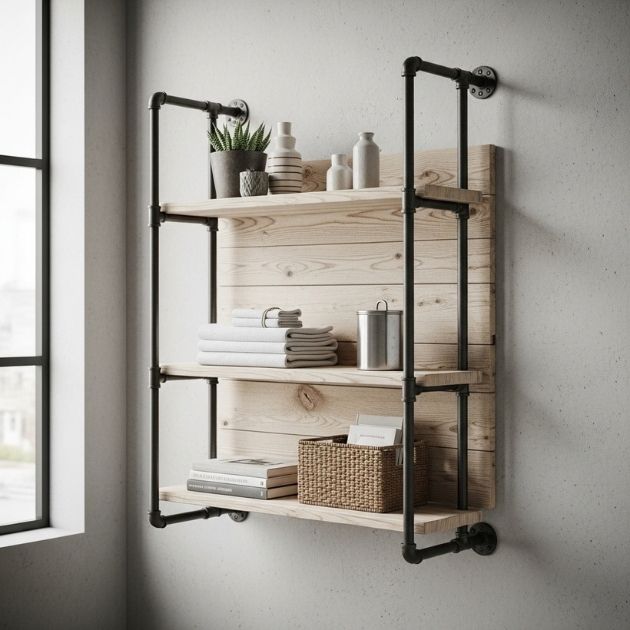
Nothing says modern open storage like an industrial pipe clothing rack. Black iron pipe fittings, floor flanges, and threaded pipe segments screw together without special tools to form a rigid, floor-standing rack. The raw metal finish pairs beautifully with exposed brick, concrete floors, and minimalist interiors. Adjust the height of the horizontal rod by choosing longer or shorter pipe sections. This design handles heavier garments like denim jackets and wool coats without bowing or shifting. It is one of the most durable DIY wardrobe rack options you can build.
Possibly handy products:
- Black iron pipe fittings and floor flanges
- Threaded pipe lengths (customizable to room height)
- Pipe cutter or hacksaw
- Rust-resistant sealant spray
Wall-Mounted Single Rail
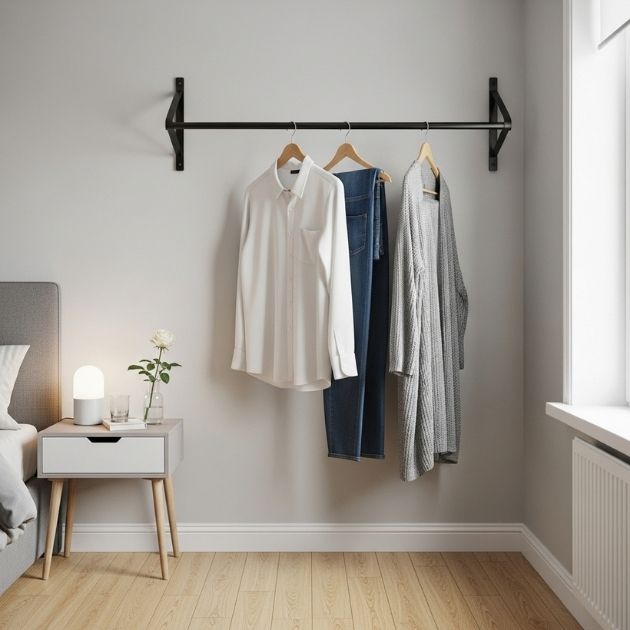
When floor space is at an absolute premium, go vertical. A wall-mounted clothes rail uses two sturdy brackets screwed into wall studs, with a wooden dowel or metal rod resting across them. It takes up zero floor space and keeps clothing at eye level for easy outfit selection. Install it in a hallway, behind a bedroom door, or in a shallow alcove. Pair it with a few wall hooks below for bags and accessories, and you have a complete hanging station in less than a foot of depth.
May just do the trick:
- Heavy-duty wall-mount shelf brackets
- Wooden closet rod or metal curtain rod
- Wall anchors and mounting screws
- S-hooks for bags and belts
Double-Hang Tiered Rack
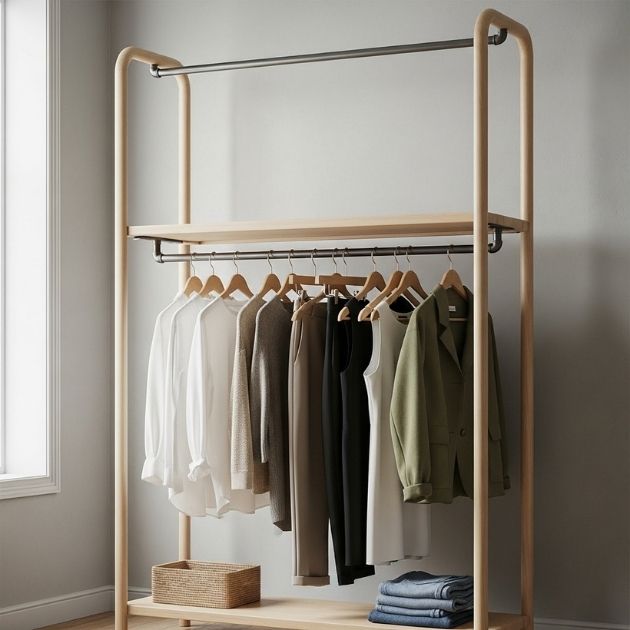
A tiered clothes rack maximizes vertical space by stacking two hanging rods, one above the other. The upper rod holds longer items like dresses and jackets, while the lower rod holds folded shirts, pants, or children’s clothing. Build the frame from plywood side panels with notched slots to hold each rod at the correct height, or use adjustable hooks so you can reconfigure the layout later. This design effectively doubles your hanging capacity in the same footprint as a single-rod rack.
Useful items to consider:
- Closet rod holders or dowel notch brackets
- Two wooden or metal hanging rods
- Plywood side panels (cut to your preferred height)
- Sandpaper and wood stain for finishing
Rack With Bottom Shoe Shelf
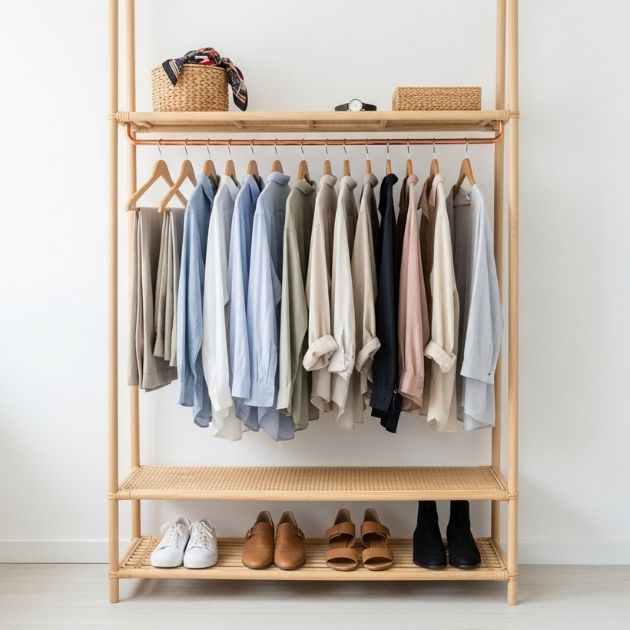
Combining a hanging rail with a shoe shelf below is one of the smartest ways to organize a small bedroom. Build a simple rectangular frame, install a horizontal rod near the top for hangers, then add slatted wooden shelves at the bottom for footwear. The visual weight of shoes grounded at the base keeps the overall structure looking balanced and intentional. This style works especially well when placed in a bedroom corner as a standalone open wardrobe alternative.
You might give these a try:
- Wooden dowels or metal rod for the hanging rail
- Slotted wooden planks for shoe shelving
- Corner metal brackets for frame stability
- Furniture feet or rubber floor pads
Minimalist Dowel Box Rack
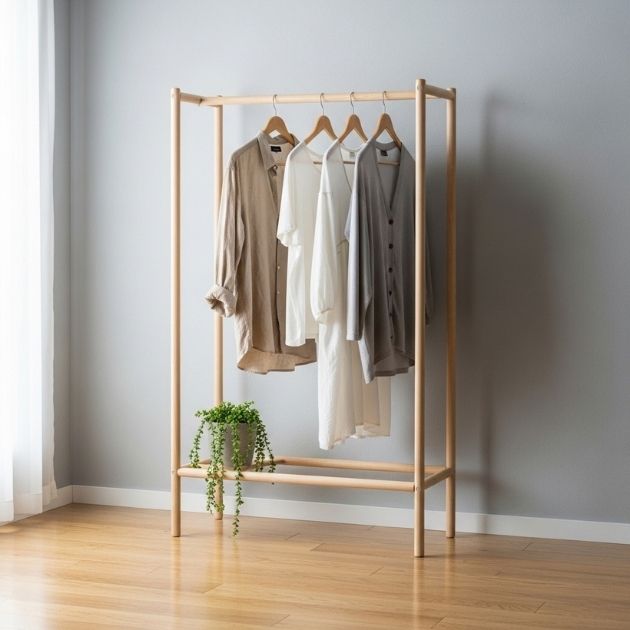
A dowel box rack is exactly what it sounds like: a simple open box frame with a single horizontal dowel running through the top portion. The enclosed sides give it a more furniture-like appearance compared to open-frame racks, and the bottom shelf created by the box base offers bonus folded storage. This minimalist closet rod design looks sharp in Scandinavian, Japanese, and modern boho interiors. Use birch plywood for a clean, light tone or walnut-stained pine for a warmer aesthetic.
Some handy options:
- Birch or pine plywood sheets
- Wooden round dowel rod
- Wood glue and pocket hole screws
- Natural oil or wax finish
Leaning Ladder Clothes Rack
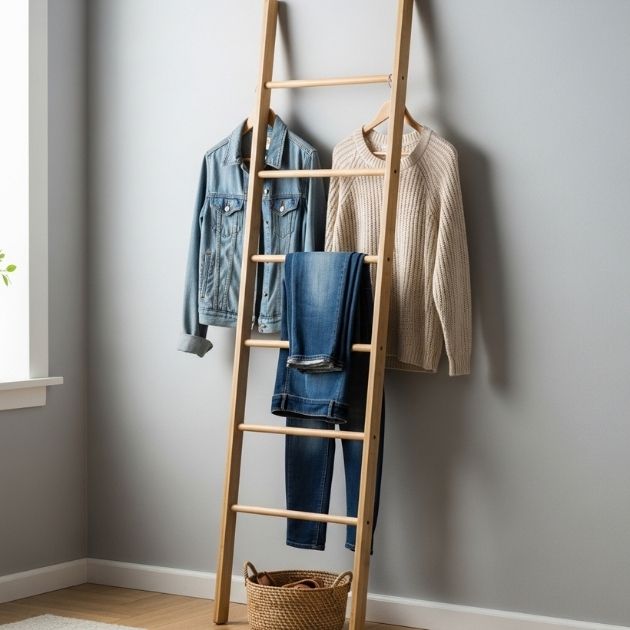
A leaning ladder rack requires no wall anchoring, making it a perfect solution for renters or anyone who moves frequently. Build two vertical side rails connected by evenly spaced horizontal rungs, then lean the whole structure against a wall at a slight angle. The rungs serve as hanging bars for multiple rows of clothing. Add a basket or crate at the base for shoes or accessories. The farmhouse and rustic aesthetic of this design fits naturally in bedrooms, entryways, and laundry rooms.
A few choices to try:
- Wooden blanket ladder (pre-built or DIY with 2×2 lumber)
- Woven storage basket for the base
- Wall-mounted coat hooks to complement the setup
- Hemp or jute rope for decorative wrapping on rungs
Corner Wraparound Rack
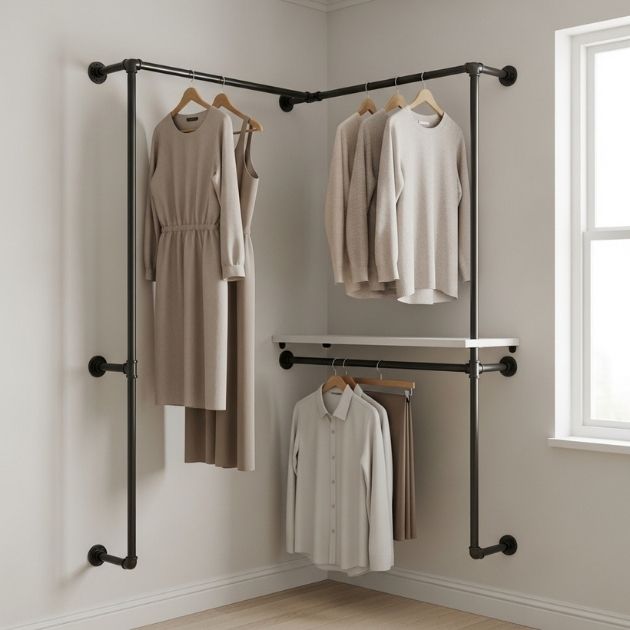
Most people treat room corners as dead space. A corner wraparound clothes rack fixes that. Mount two short metal rods or wooden rails at a right angle so they meet at the corner, creating an L-shaped hanging area that makes full use of both walls. This approach adds significant hanging capacity without projecting far into the room. It feels custom and built-in, even when constructed from basic pipe fittings and wall flanges. Style the corner with a small floor lamp and a woven rug to create a boutique dressing area vibe.
Give these a look:
- Corner garment rack frame kit
- Two industrial pipe rods with wall mount flanges
- Right-angle pipe elbow connector
- Velvet or wooden slim-profile hangers
Closet Nook Mini Wardrobe Rack
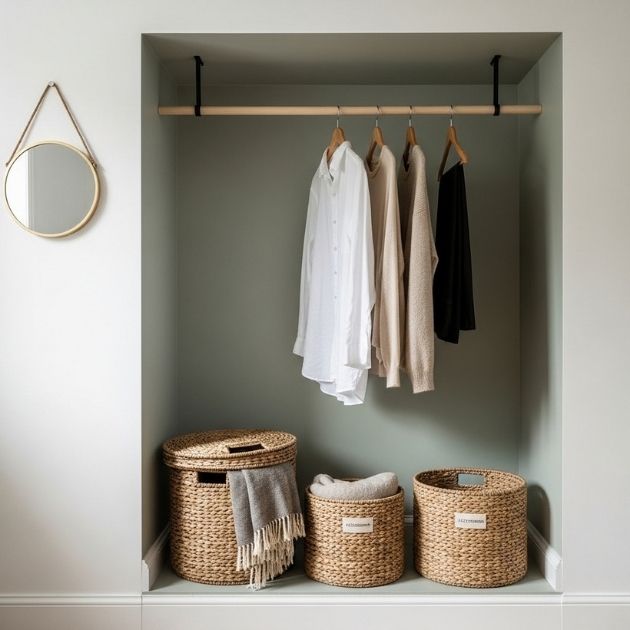
If your home has a shallow nook, recessed wall section, or awkward alcove, you are sitting on untapped storage potential. Build a mini wardrobe rack that fills the nook with a top hanging rod and a lower shelf for baskets or folded items. Add a curtain rod across the opening and hang a linen curtain to conceal the contents when not in use. This built-in style closet DIY idea looks polished, keeps dust off your clothes, and transforms wasted architectural space into practical storage.
These products might help:
- Closet rod mount brackets
- Wooden shelf board for the lower section
- Tension curtain rod and linen panel curtain
- Wicker or wire storage baskets
Kid-Height Nursery Clothes Rack
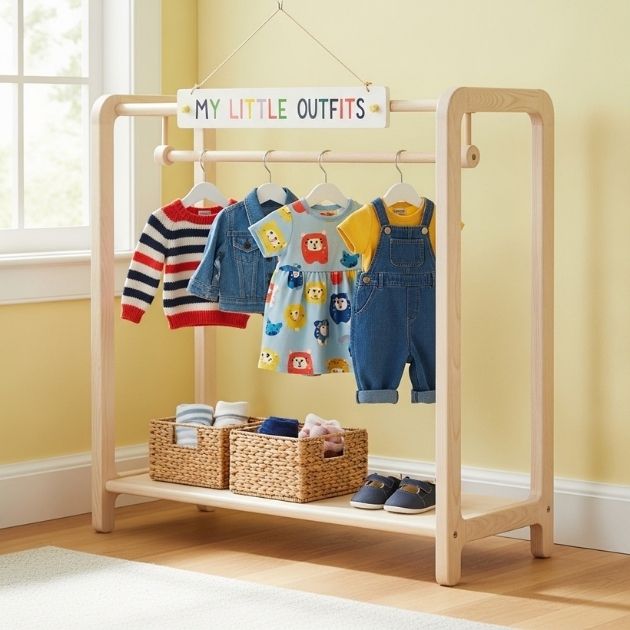
Children grow fast, and their wardrobes need to be just as accessible as they are. A kid-height DIY clothes rack built at around 36 to 40 inches tall lets toddlers and young children hang up and retrieve their own clothing independently. Use rounded edges, non-toxic finish, and smooth dowel rods without splinters. Add labeled bins or baskets underneath for shoes and toy storage. This simple project teaches independence and keeps the nursery or kids’ room tidy without bulky furniture.
These products might be useful:
- Child-safe, non-toxic wood paint or sealant
- Smooth wooden dowel rod for the rail
- Small labeled fabric bins for the base shelf
- Low-profile wooden hangers sized for kids
Entryway Coat-and-Bag Rack
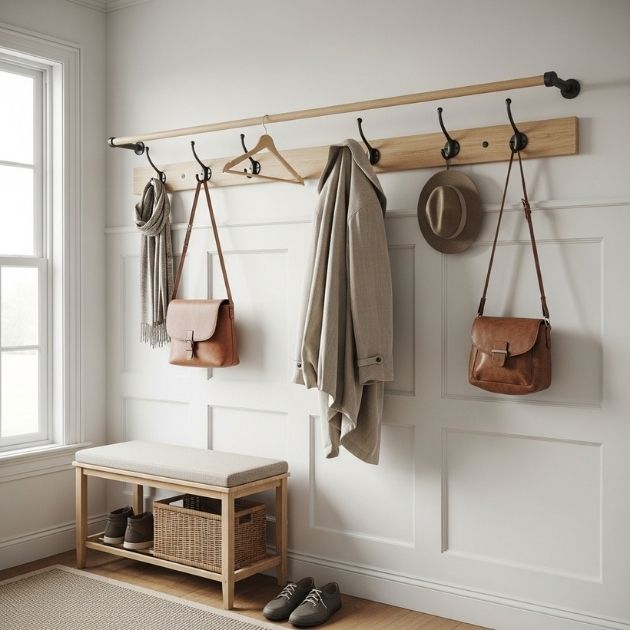
Your entryway sets the tone for your entire home, and a purpose-built coat and bag rack keeps it from becoming a dumping ground. Mount a horizontal wooden plank or pipe rail at shoulder height on the entry wall, then add a mix of double hooks and single hooks at varying heights. The lower hooks handle bags and backpacks while the upper hooks hold coats and scarves. Add a narrow shelf above for hats, sunglasses, and mail. This hardworking rack replaces a bulky coat closet in a fraction of the space.
Some ideas to consider:
- Wooden plank with pre-drilled hook mounts
- Mixed-height double and single coat hooks
- Floating shelf brackets and shelf board
- Key holder or small mail organizer
Fold-Flat Collapsible Rack
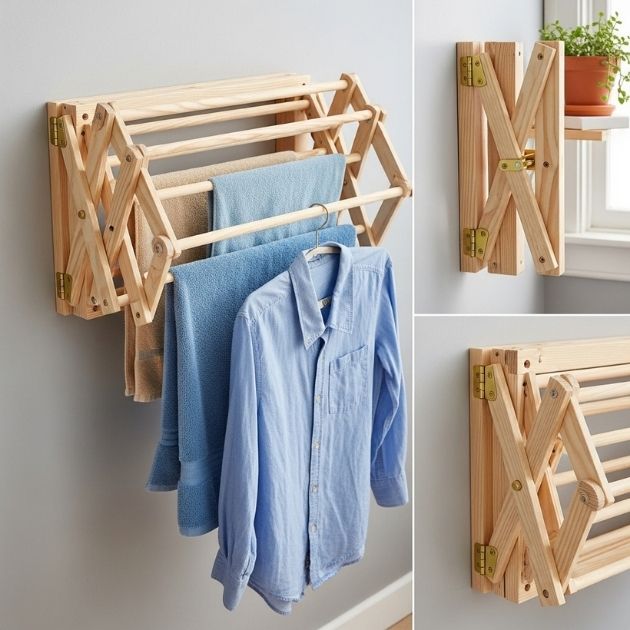
A collapsible clothes rack is the ultimate space-saving solution for truly tiny homes. When fully open it functions like a standard freestanding garment rack, and when folded it slips behind a door or under a bed. Build your own by hinging two X-shaped side frames together and connecting them at the top with a removable wooden rod. The scissor-hinge mechanism allows the whole unit to collapse flat in seconds. This portable wardrobe rack is also useful for guest rooms that double as offices or studios.
A few suggestions:
- Wooden boards with pivot bolt and wing nut for hinged joints
- Removable dowel rod to connect the two side frames
- Non-slip rubber feet for stability when open
- Storage bag or strap to keep it tidy when folded
Tension-Rod Instant Clothes Rack
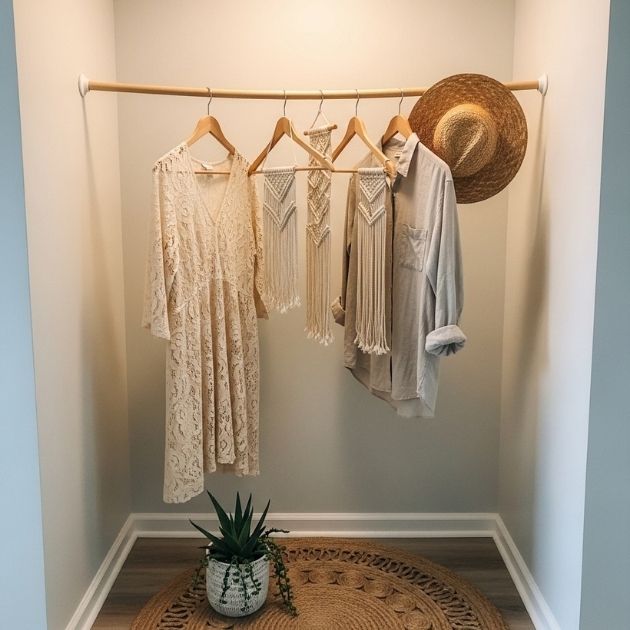
If you need extra hanging space with zero tools and zero wall damage, a tension rod clothes rack is the answer. Heavy-duty spring tension rods can span gaps between two walls, inside closet alcoves, or beneath a staircase without a single screw. For a freestanding version, build a simple wooden frame and wedge a tension rod across the top opening. The rod adjusts to fit different widths, making it incredibly versatile. This is the fastest DIY clothing storage solution on this entire list.
Explore these options:
- Heavy-duty spring tension rod (adjustable length)
- Double tension rod set (for a tiered version)
- Simple wooden frame for freestanding support
- Plastic or velvet space-saving hangers
Behind-the-Door Slim Rack
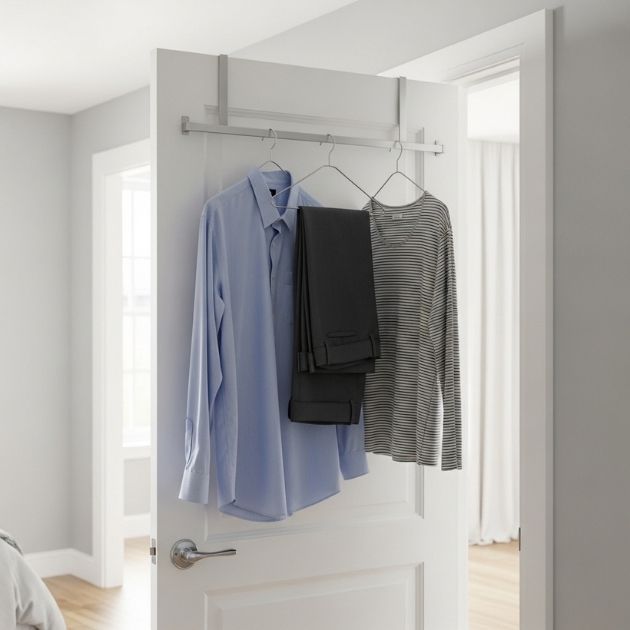
The back of a door is one of the most overlooked storage surfaces in any home. A slim over-the-door clothes rack hangs from the top edge of the door frame and provides a narrow hanging rod for the next day’s outfits, gym clothes, or items that need airing. Build one from two vertical dowels connected to over-door hooks at the top and a horizontal rod between them. The entire structure sits within an inch of the door surface and adds zero bulk to the room.
Products that could assist:
- Over-the-door double hooks (heavy duty)
- Thin wooden dowels for the vertical side rails
- Horizontal wooden rod or curtain rod for hanging
- Command adhesive hooks for a no-drill version
Floating Shelf With Under-Bar Rack
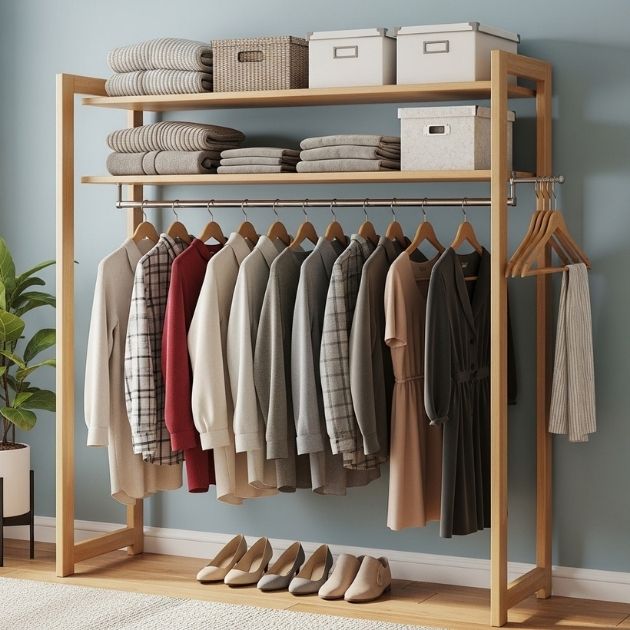
This two-in-one wall solution pairs a floating display shelf on top with a mounted hanging rod directly underneath. The shelf holds plants, books, folded items, or decor, while the rod below handles hangers for jackets, scarves, or tomorrow’s outfit. It looks more like intentional interior design than a storage hack, which is exactly the goal in small spaces where everything needs to earn its visual keep. Use matching wood tones for the shelf and rod bracket to create a unified look.
Check if these fit your needs:
- Floating shelf with hidden bracket mounts
- Under-shelf rod bracket kit
- Wooden curtain or closet rod in matching finish
- Decorative hooks to extend the hanging points
Mirror-Panel Display Clothes Rack
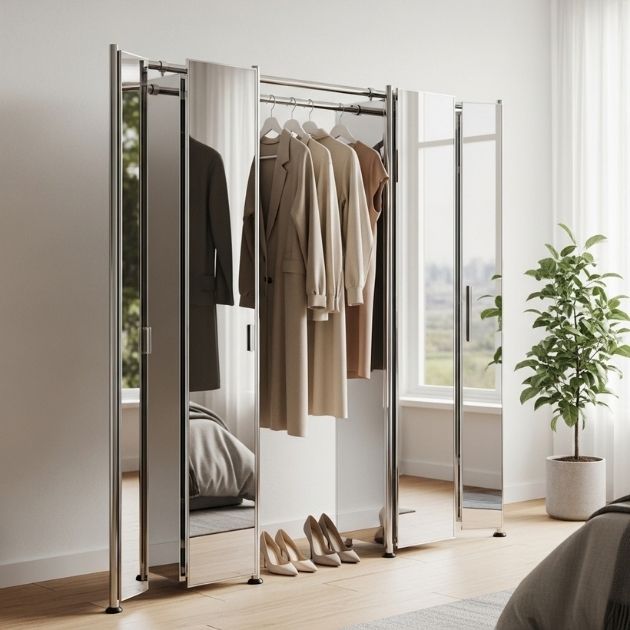
Combine two small-space essentials into one by building a clothes rack that incorporates a full-length mirror. Mount a leaning mirror to one side of a freestanding rack frame so the mirror and hanging rod work together as a single dressing station. This design makes the room feel larger through light reflection while keeping your outfit selection and storage consolidated in one spot. It works beautifully in studio apartments and bedrooms where every square foot counts.
Consider these options:
- Leaning full-length mirror with mounting brackets
- Freestanding rack frame in wood or pipe
- Wooden dowel rods for the mirror side frame
- Macrame wall hanging to complement the aesthetic
Ceiling Track Sliding Clothes Rack
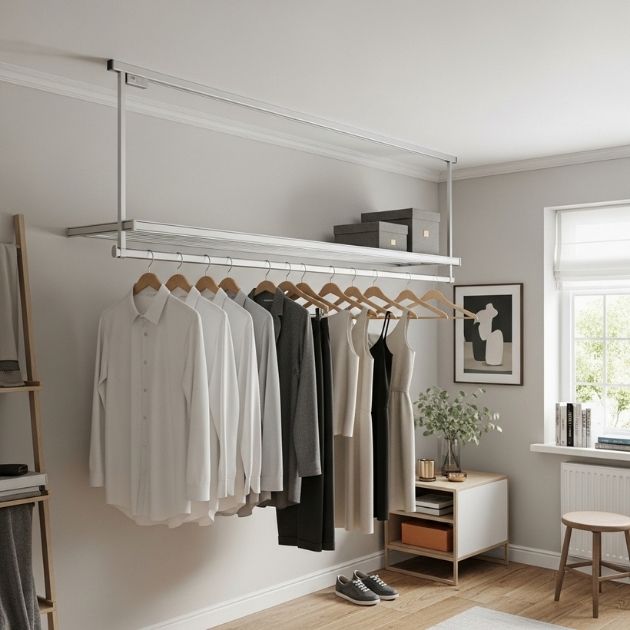
For the most space-efficient hanging storage possible, look up. A ceiling-mounted sliding clothes rack installs a curtain track or dedicated ceiling rail directly overhead. Clothes hang from the track and slide smoothly from side to side, much like a mini closet system without walls. Park the rack over a low bench or dresser when accessing clothes and slide it away when that floor space is needed for other activities. This industrial style storage idea works especially well in studio apartments and loft spaces with high ceilings.
Possibly helpful picks:
- Ceiling-mounted curtain track system (with gliding hooks)
- Industrial gold or black pipe ceiling mount kit
- Heavy-duty ceiling anchors (rated for load-bearing use)
- Slim velvet hangers to maximize rail capacity
Final Thoughts
A cramped space and a cluttered wardrobe do not have to go hand in hand. These DIY clothes rack ideas prove that thoughtful design, basic materials, and a few hours of weekend building can solve storage problems that bulky furniture never could. The best rack for your home depends on your wall space, floor area, ceiling height, and style preferences. Start with one idea, build it, and adjust from there.
Whether you go for a sleek industrial pipe standing rack, a charming leaning ladder rack, or a space-maximizing ceiling track system, the goal is the same: more organization, less clutter, and a home that feels intentional even in its smallest corners.