
Load bearing beams are one of those structural necessities that most homeowners try to hide. But what if you stopped treating them as obstacles and started seeing them as design opportunities? With the right approach, support beams can become some of the most eye-catching features in your home.
Whether you are opening up an existing floor plan or simply refreshing a space, these creative load bearing beam ideas will help you blend structural integrity with genuine style. From rustic exposed wood to sleek industrial steel, there is something here for every taste and budget.
Embrace an Open Floor Plan
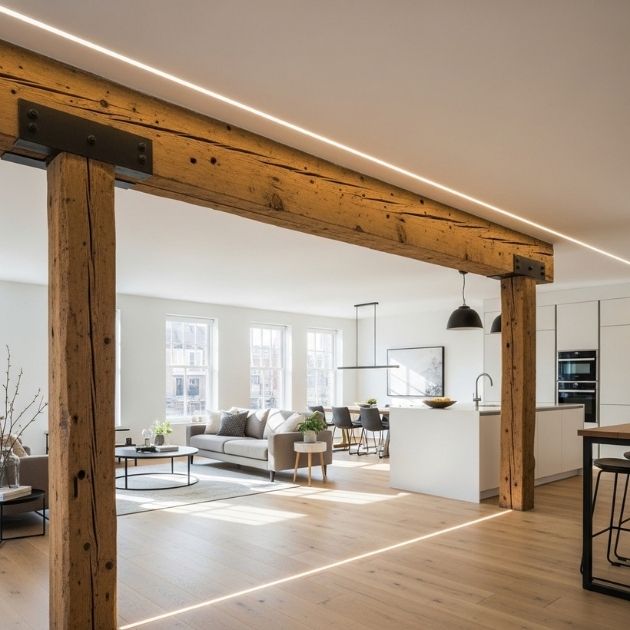
One of the most popular trends in modern home design is the open floor plan, and load bearing beams play a central role in making it possible. When you remove a wall to open up your living space, a structural beam takes over the load that the wall once carried. Rather than hiding it, lean into the design.
Installing a glulam or LVL (Laminated Veneer Lumber) beam across a wide span creates a seamless transition between rooms while maintaining full structural support. When the beam is thoughtfully finished to match your interior, it becomes a defining architectural element rather than an afterthought.
Useful items to consider:
- Glulam beams for wide spans with a clean, engineered wood look
- Steel I-beams wrapped in wood veneer for a modern-industrial feel
- Recessed beam pockets to keep the ceiling plane flush and uninterrupted
- Decorative posts or columns at each end to frame the beam and anchor the space visually
Showcase with Exposed Wooden Beams
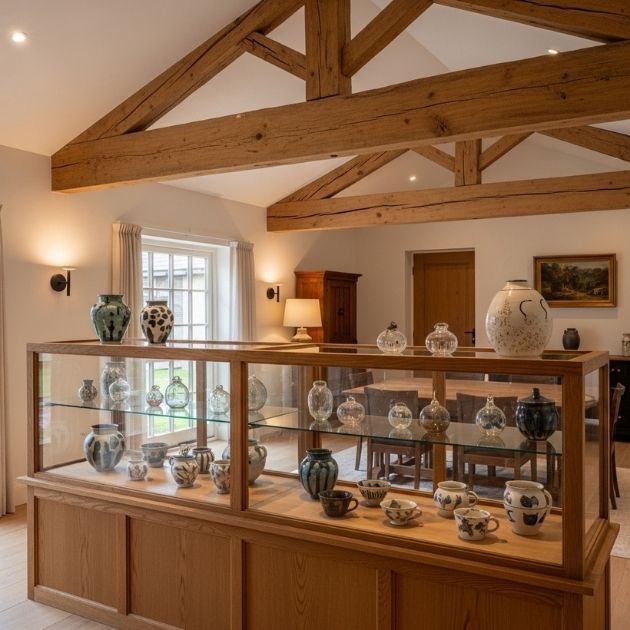
Few design choices deliver as much warmth and character as exposed wooden beams. Whether your home leans farmhouse, coastal, or craftsman, natural wood beams add a layer of texture that no other material quite replicates. Reclaimed timber is especially popular because each knot, grain variation, and natural imperfection tells a story.
Exposed wood also works exceptionally well in vaulted ceiling spaces, where angled beams follow the roofline and create a dramatic, cathedral-like effect.
Consider these options:
- Reclaimed barn wood beams for authentic rustic texture and aged character
- White oak or Douglas fir beams for a lighter, more contemporary grain pattern
- Whitewashed or limewashed finishes to brighten the wood while preserving its natural detail
- Hand-hewn distressing techniques to give newer wood a time-worn, artisanal appearance
Create a Rustic-Modern Fusion
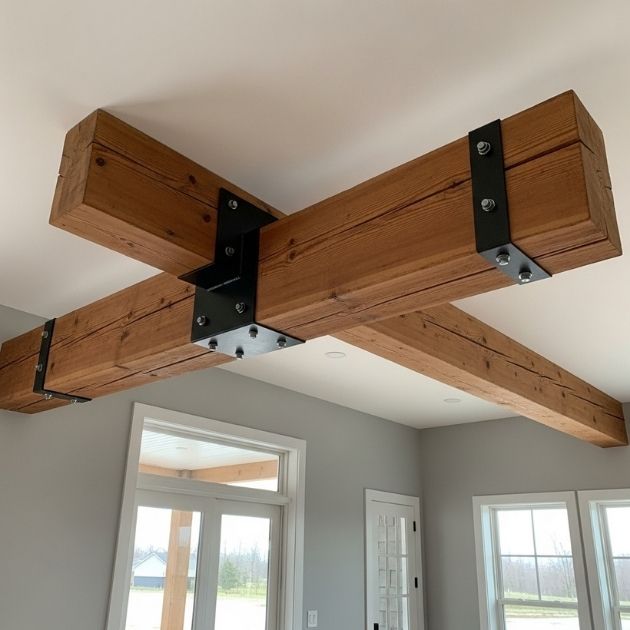
The rustic-modern aesthetic has become one of the most sought-after interior styles, and load bearing beams are the perfect vehicle for achieving it. The contrast between rough, natural materials and clean, contemporary lines creates a visual tension that feels both grounded and refined.
Pairing dark walnut beams with white walls and minimalist furniture is a classic example. The wood introduces warmth while the surrounding palette keeps the space feeling fresh and current. Metal brackets or exposed hardware at the beam connections further reinforce the industrial edge.
Some ideas to consider:
- Dark-stained beams against white or light grey ceilings for high contrast impact
- Mixed material beams that combine wood and black steel hardware for an industrial edge
- Beam-to-shelf conversions where the structural element doubles as a display ledge
- Matte black paint on steel beams to complement concrete floors or polished surfaces
Kitchen-Living Room Integration
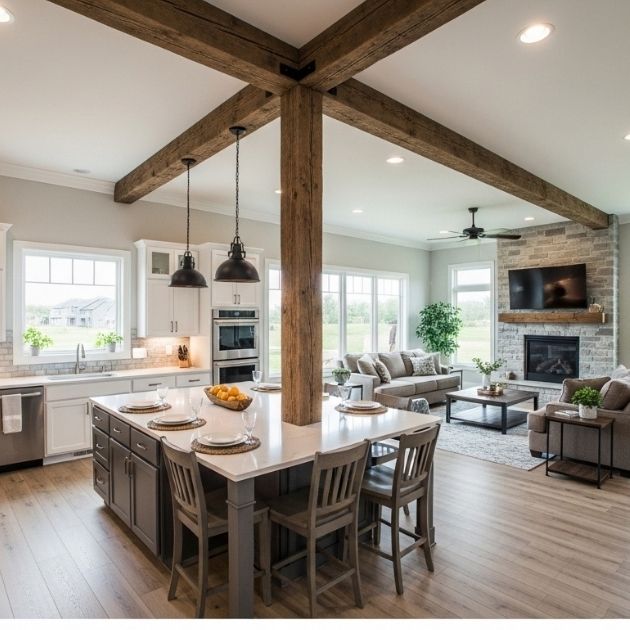
The kitchen and living room connection is where load bearing beam design choices matter most. When a wall comes down between these two heavily used spaces, the replacement beam becomes the visual anchor of the entire open-concept layout.
A well-chosen beam in this location helps define each zone without physically separating them. A heavy timber beam cutting between kitchen and living room creates a natural conversation point between the two spaces while allowing light and sightlines to flow freely.
Some handy options:
- Continuous flooring beneath the beam to unify both rooms visually
- Pendant lights hung from or near the beam to define the kitchen zone without a wall
- Peninsula or island placement aligned with the beam to reinforce the spatial division subtly
- Contrasting beam finish that echoes both the kitchen cabinetry and the living room palette
Opt for Functional Art

There is no rule that says a load bearing beam has to be purely structural in appearance. With the right treatment, your support beam can become a genuine piece of functional art that anchors the entire room.
Consider cladding a beam in decorative stone, wrapping it in carved wood panels, or illuminating it with integrated lighting channels. Some homeowners even incorporate shelving directly into the beam structure, turning a purely structural element into a display feature with real storage value.
Items that may come in handy:
- Stone or tile cladding kits to give beams a sculptural, architectural presence
- Carved wood beam wraps with decorative motifs or geometric patterns
- Integrated LED channel strips embedded along the base of the beam for ambient glow
- Built-in bracket shelving attached to the beam for books, plants, or decorative objects
Highlight with Lighting
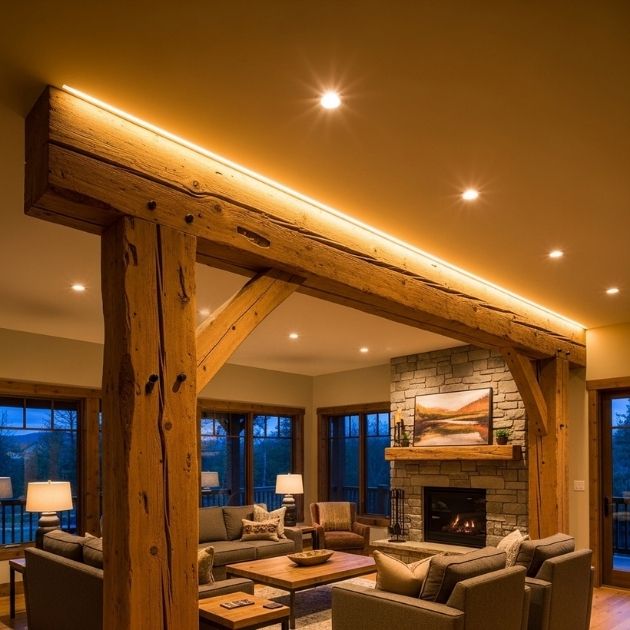
Lighting is one of the most underused tools when it comes to beam design. Strategic illumination can completely change how a beam reads in a room, making it feel intentional, warm, and architecturally significant rather than structurally incidental.
Uplighting draws the eye upward and emphasizes the beam’s height and span. Downlighting cast from the beam itself adds task or ambient light below. Either approach transforms the beam from a structural requirement into a design focal point.
A few suggestions:
- LED spotlights or track lighting mounted on or near the beam to highlight its form
- Recessed downlights built into a boxed beam for clean, directional illumination
- Dimmer switches to adjust beam lighting for different times of day and moods
- Rope or strip lights along the underside of the beam for a soft, layered glow
Incorporate Natural Elements
Bringing natural elements into your beam design connects your interior to the outdoors and creates a sense of organic calm. This approach works particularly well in homes that already incorporate plants, stone, or raw wood elsewhere in the decor.
Wrapping a beam in living moss panels, pairing it with hanging planters, or using a natural tree trunk column in an open-plan layout are all ways to make the structural element feel like part of a living, breathing space rather than a construction necessity.
A few helpful options:
- Preserved moss panels wrapped around or mounted near the beam for a biophilic accent
- Natural tree trunk columns used alongside beams for a tropical or forest-inspired look
- Jute or hemp rope wraps around the beam base for texture and earthy warmth
- Hanging planters or trailing vines suspended from beam-mounted hooks or hardware
Create a Faux Beam Look
Not every home has load bearing beams in the right places for a dramatic design statement. That is where faux beams come in. Lightweight polyurethane or hollow wood beam covers can be installed alongside real structural beams to create the illusion of a fully beamed ceiling.
Faux beams are remarkably convincing when stained or painted to match your genuine support beam. They are also significantly cheaper and easier to install than working with structural timber, making them a practical choice for budget-conscious remodels.
Give these a look:
- High-density polyurethane faux beams that mimic the look and texture of real wood
- Hollow wood beam sleeves that slide over existing structural beams for a finished look
- Coffered ceiling kits using faux beams arranged in a grid for an elegant, formal effect
- Painter’s tape and premium wood stain for achieving a realistic finish on faux surfaces
Play with Proportions
The size and placement of your beams have a significant impact on how a room feels. Oversized beams in a low-ceilinged room can feel oppressive, while slim beams in a vast, vaulted space can feel lost. Playing with proportions intentionally lets you use the beam to shape the perceived dimensions of your space.
Thin, widely spaced beams make a ceiling feel taller. Chunky, closely spaced beams in a large room create intimacy. The scale of your beam should always be considered in relation to the rest of the room’s architecture.
These products might be useful:
- Adjustable angle brackets for positioning beams at creative, non-standard angles
- Decorative wood beam covers in varying widths and profiles to match your ceiling scale
- Cathedral ceiling beam kits for vaulted spaces that need dramatic, proportional structure
- Beam sizing calculators available through structural suppliers to help plan visually balanced layouts
Incorporate Eco-Friendly Materials
Sustainable design is no longer a niche consideration. Many homeowners today want their renovation choices to reflect environmental responsibility, and beam materials are no exception. Using reclaimed, FSC-certified, or responsibly sourced timber for your load bearing or decorative beams is a meaningful way to reduce the environmental footprint of your project.
Reclaimed wood in particular brings both sustainability and authenticity. Every reclaimed beam has a history, and that character is impossible to replicate with newly milled timber.
May just do the trick:
- FSC-certified timber beams sourced from responsibly managed forests
- Reclaimed barn wood or factory beams salvaged from demolition projects
- Bamboo beam alternatives for a fast-growing, renewable structural option in lighter applications
- Low-VOC wood stains and sealers to finish your beams without compromising indoor air quality
Final Thoughts
Load bearing beams do not have to be a design compromise. With the right materials, finishes, and creative thinking, they can become the most memorable architectural feature in your home. Whether you prefer the raw warmth of exposed reclaimed wood, the bold contrast of painted steel, or the gentle illusion of faux beams across a coffered ceiling, there is a solution that fits your space and budget.
The key is to work with your beams rather than against them. Consult a licensed structural engineer before making any modifications to load bearing elements, and always factor in ceiling height, room scale, and existing design details when choosing your approach.
With the ideas above as your starting point, transforming your structural beams into genuine design assets is entirely within reach.