
Your garage does a lot more than just park a car. It stores tools, hosts weekend projects, and sometimes doubles as a workshop. But here is the problem: most garages are poorly ventilated spaces where heat, humidity, and fumes quietly build up. Without proper airflow, carbon monoxide from vehicles, volatile organic compounds (VOCs) from paints and chemicals, and moisture from condensation can create serious health and structural risks.
The good news? You do not need a major renovation to fix this. Whether you have an attached garage, a detached workshop, or a converted space, these smart garage ventilation ideas will help you create a cooler, safer, and more comfortable environment all year round.
Use Natural Ventilation Techniques
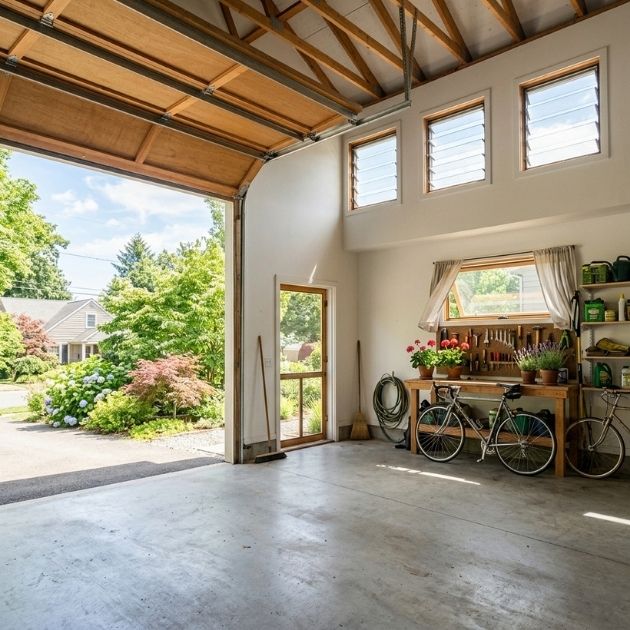
Natural ventilation is the simplest, most cost-effective way to improve garage airflow. It relies on pressure differences and temperature gradients to move air without any electricity. Hot air rises and escapes through upper openings while cooler air flows in from lower ones. This passive airflow is not just free but also completely silent.
To make natural ventilation work well, you need at least two openings on opposite sides of the garage. One should sit low to allow fresh air intake, and the other should sit higher to let warm, stale air exit. Even retrofitting screened louvers into existing walls can make a noticeable difference in air circulation and odor control.
Check if these fit your needs:
- Screened wall louvers for passive airflow without letting insects in
- Gable vents installed near the roofline for continuous hot air exhaust
- Sliding garage door hardware kits that allow partial door opening for controlled ventilation
- Magnetic door screens that keep pests out while letting fresh air flow freely
Wall-Mounted Ventilation Fans
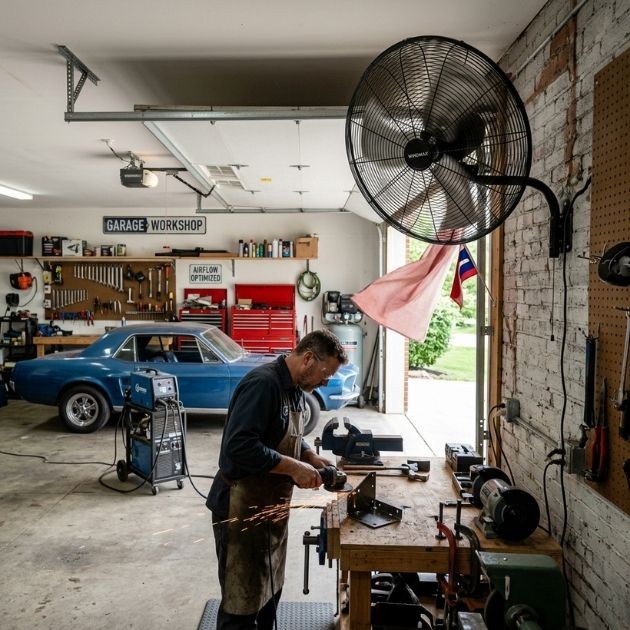
When natural airflow is not enough, a wall-mounted exhaust fan is one of the most reliable upgrades you can make. These fans actively pull stale, hot air out of the garage while drawing fresh outdoor air in through a lower vent or door gap. The EPA recommends at least 100 CFM (cubic feet per minute) for ducted fans in attached residential garages.
Position the fan high on the wall, ideally on the side opposite your main entry point. This placement ensures the fan pulls air across the full length of the space rather than just exhausting air near the door. For larger garages, pairing two fans on opposite walls creates a more powerful and balanced airflow pattern.
A few suggestions:
- Heavy-duty wall-mounted exhaust fan for high-temperature environments
- Industrial oscillating wall fan for compact garage spaces with limited wall space
- Quiet wall exhaust fan if noise is a concern, particularly in attached garages near living areas
- Garage exhaust fan with built-in timer for scheduled ventilation without manual operation
Roof Ventilation Magic
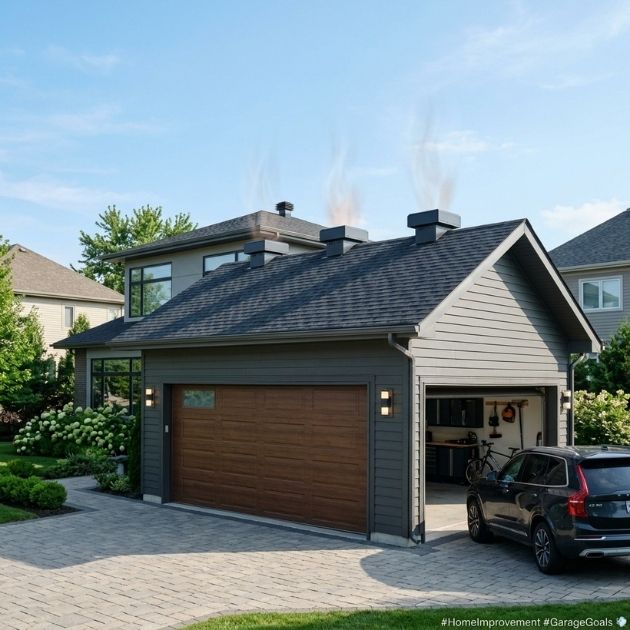
Heat rises. That is a simple fact of physics, and your garage roof is where the most heat collects. Roof ventilation takes advantage of this by allowing hot air to escape from the highest point of the space, pulling cooler air in from below. This convection loop can significantly reduce peak temperatures without any powered equipment.
Ridge vents run along the peak of the roofline and work continuously. Turbine vents use wind energy to spin and draw air upward. Both options are low-maintenance, long-lasting, and surprisingly effective. In one real-world case, adding ridge vents and wall louvers dropped garage temperatures by nearly 20 degrees Fahrenheit within a week.
Some ideas to consider:
- Turbine roof vents that harness wind to pull heat out naturally
- Ridge vent systems for continuous passive airflow along the roofline
- Roof exhaust vent caps that prevent rain and pests from entering
Add Solar-Powered Ventilation
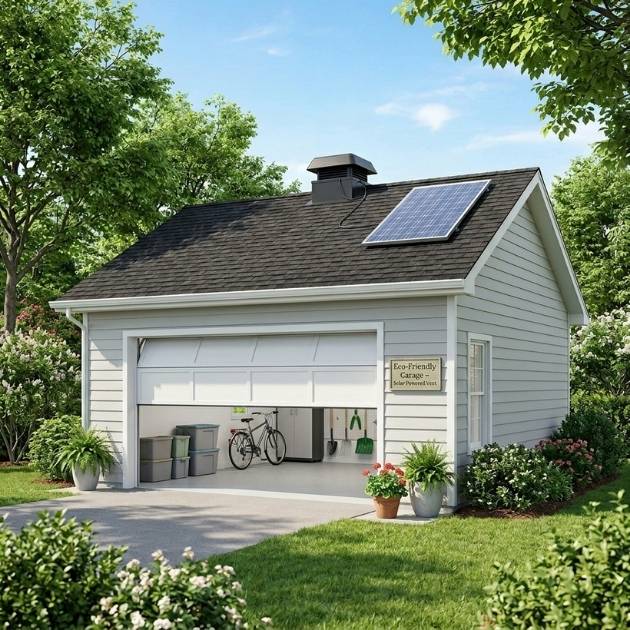
Solar-powered ventilation fans are a smart upgrade for homeowners who want strong mechanical airflow without increasing their electricity bill. These fans mount on the roof or walls and draw power directly from a built-in solar panel, making them ideal for detached garages that lack easy access to an electrical outlet.
Many solar attic and garage fans include built-in thermostats that activate the fan automatically when temperatures reach a set threshold. This hands-off approach means your garage gets ventilated exactly when it needs it most, during the hottest parts of the day, without you lifting a finger.
Possibly helpful picks:
- Solar-powered ventilation fan kit for easy, self-sufficient airflow
- Solar panel ventilation system with automatic temperature control
- Solar attic ventilator with thermostat for precise climate management in warmer climates
Incorporate Cross Ventilation
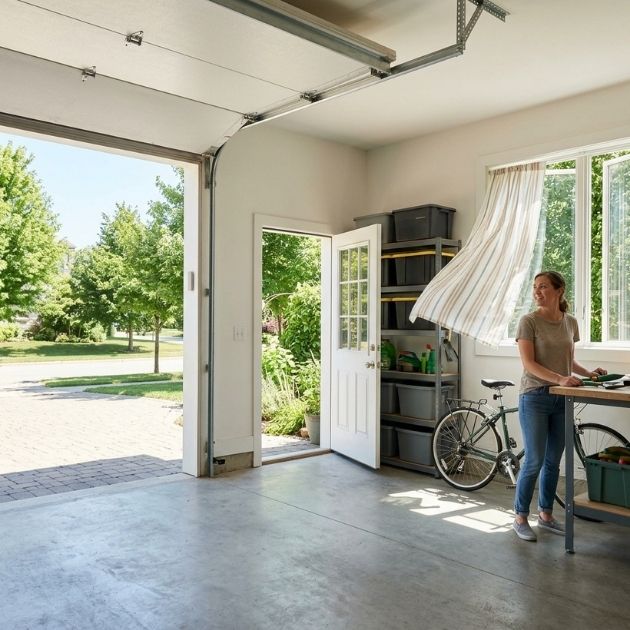
Cross ventilation is one of the most effective and budget-friendly airflow strategies available. It works by creating two opposing openings so air sweeps straight through the garage from one side to the other. This setup clears heat, fumes, and odors far more efficiently than a single vent or open door.
The key is placement. Open a window or vent on the windward side of the garage to bring fresh air in. On the opposite wall, create an exhaust point for stale air to exit. If you ventilate in the evening when outdoor temperatures drop, you can flush out heat that built up throughout the day in just a few minutes.
Give these a look:
- Operable side windows with screens for permanent cross-ventilation capability
- Vented side doors that allow airflow without fully opening the main garage door
- Adjustable wall vents for directional control over incoming airflow
Use Floor and Ceiling Fans

Sometimes a dedicated exhaust system is overkill for what you need. In garages used as light workshops or hobby spaces, a well-placed ceiling or floor fan can dramatically improve comfort by keeping air in motion. Moving air feels several degrees cooler on the skin, which makes a big difference during summer projects.
Ceiling fans work best in garages with enough overhead clearance. Set them to spin counterclockwise in summer for a downdraft cooling effect. Floor fans are portable and flexible, making them ideal if you use different parts of the garage for different tasks. Combining both types creates layered airflow that eliminates stagnant pockets.
You might like:
- High-velocity ceiling fan rated for wet or damp locations
- Industrial pedestal floor fan with multiple speed settings
- Portable oscillating fan for targeted airflow during specific tasks
Create a Ventilation Plan
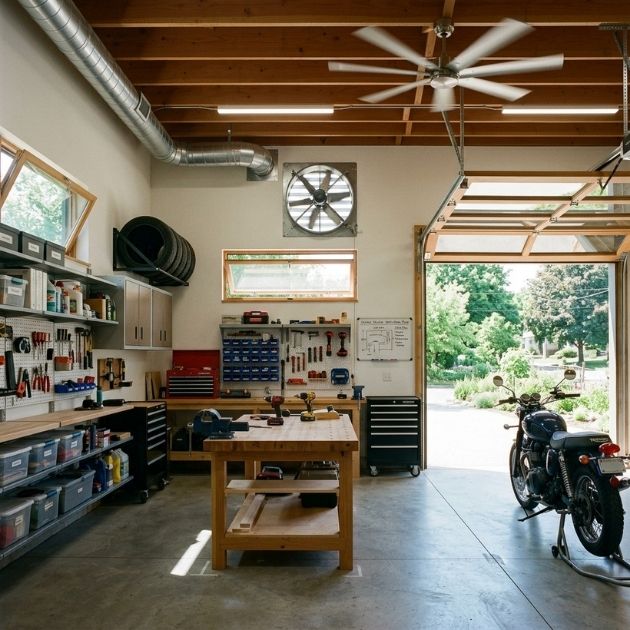
Before spending money on equipment, it pays to assess your garage systematically. A good ventilation plan considers your garage size, how it is used, local climate, and existing openings. Without this foundation, even expensive equipment can underperform because it is poorly sized or incorrectly placed.
Calculate your garage volume (length x width x height) and aim for at least 10 to 15 air changes per hour for workshops and hobby spaces. For storage-only garages, 4 to 6 air changes per hour is sufficient. Use a CFM calculator to match fan capacity to your space before making any purchases.
Products that could assist:
- Digital hygrometer and thermometer combo to monitor humidity and temperature in real time
- CFM airflow calculator app for accurate ventilation planning
- Garage ventilation consultation service for professional sizing recommendations
Open the Garage Door
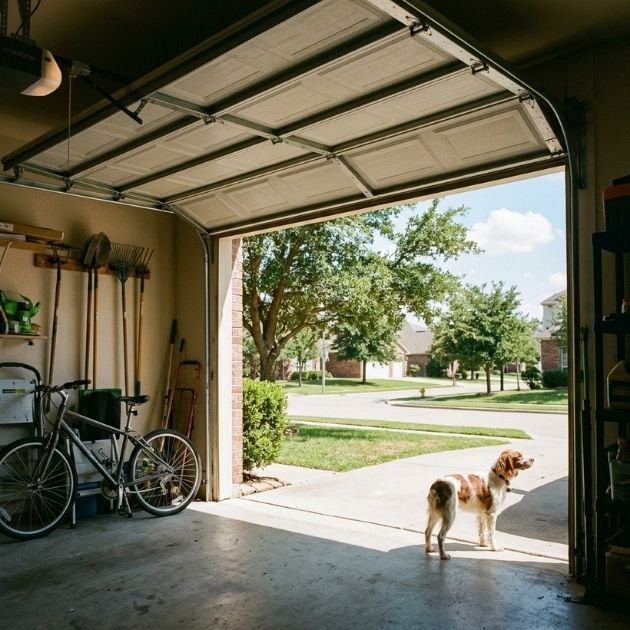
It sounds too simple, but opening the garage door remains one of the fastest and most effective ways to air out your space. Even cracking it open just six to twelve inches creates a significant pressure difference that draws fresh air in and pushes stale air out. Pair this with a rear window or wall vent for true cross ventilation.
To get the most out of this approach, time it strategically. Open the door in the early morning or evening when outdoor air is cooler and cleaner. If security is a concern, install a partial opening lock or use a screen door system that allows airflow while keeping the garage secured.
A few relevant products:
- Garage door screen kit that converts your garage opening into a screened porch-style vent
- Magnetic garage door screen for instant airflow with easy pass-through access
- Garage door partial-open lock for secure ventilation without full exposure
Use Vented Skylights

Vented skylights solve a specific problem that many garage owners face: the need for both natural light and natural airflow without adding more wall penetrations. Installed in the roof, these skylights can be opened manually or with a motorized actuator to release hot air that collects near the ceiling.
Beyond ventilation, skylights bring in daylight, reducing the need for artificial lighting during daytime work. In north-facing or windowless garages, this can be a transformative upgrade. Choose tempered or laminated glass rated for impact resistance, especially in areas prone to hail or falling debris.
A few things you might like:
- Manual vented skylight kit for simple roof installation
- Motorized skylight with rain sensor that closes automatically when it detects moisture
- Retractable window sun shade to control heat gain from skylight glazing
Install Air Conditioning
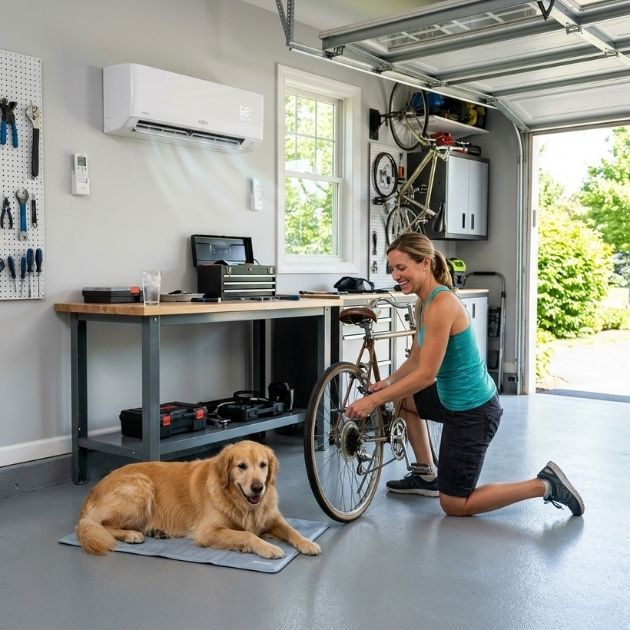
For garages used as gyms, home offices, or dedicated workshops, basic ventilation may not be enough. Air conditioning gives you full climate control, keeping the space comfortable regardless of outdoor conditions. Mini-split systems are the most popular choice because they require no ductwork, operate quietly, and can both cool in summer and heat in winter.
A 12,000 BTU mini-split is typically sufficient for a standard two-car garage. Make sure you pair it with proper insulation and air sealing to maximize efficiency. Without insulation, cooling a hot garage becomes an expensive battle against thermal gain through the walls and ceiling.
Consider these options:
- Ductless mini-split air conditioner and heater for year-round climate control
- Portable air conditioner for temporary or seasonal use without permanent installation
- Window-mount air conditioner as a budget-friendly alternative for single-car garages
Strategic Window Placement

Windows do more than let light in. Positioned thoughtfully, they become powerful ventilation tools. The best placement for ventilation purposes is on opposite walls at different heights. Low windows on the prevailing wind side bring cool air in while high windows or transom windows on the opposite wall let hot air out.
If your garage currently has no windows or only single-pane glazing, consider upgrading to double-hung operable windows. These allow you to open the top sash to release hot air while keeping the bottom closed, giving you fine-tuned control over airflow direction.
Try these:
- Double-hung vinyl garage windows for versatile ventilation control
- Louvered window inserts that maintain airflow even when closed
- Insulated window film to reduce solar heat gain through existing glazing
Install Mechanical Ventilation
Mechanical ventilation systems represent the most reliable and controllable option for serious garage users. These powered systems use a combination of supply and exhaust fans to maintain consistent airflow regardless of outdoor conditions. Advanced setups integrate humidity sensors, CO detectors, and smart thermostats to automate the entire process.
Heat Recovery Ventilators (HRVs) and Energy Recovery Ventilators (ERVs) are the gold standard for garages converted into living or working spaces. They continuously exchange indoor and outdoor air while capturing the thermal energy in the exhaust stream, keeping temperatures stable and reducing energy costs.
May just do the trick:
- Wall-mounted garage ventilation fan with smart controller for app-based airflow management
- Garage exhaust fan with CO sensor integration for automatic hazard-triggered ventilation
- Heat recovery ventilator (HRV) for garages converted to gyms or workshops
Install Air Bricks
Air bricks are a traditional yet highly effective passive ventilation solution. These are perforated masonry units installed into the lower section of garage walls. They allow continuous low-level airflow into the space without any moving parts, electricity, or maintenance. They work especially well in brick or block-built garages.
Because they sit near floor level, air bricks create the ideal intake point for a natural convection system where cooler air enters low and warm air exits high through a roof vent or upper gable. They are also an excellent way to reduce ground-level moisture that can lead to mold growth under flooring and in wall cavities.
Items that may come in handy:
- Standard terracotta air bricks for traditional block or brick garage walls
- Plastic air brick covers to regulate airflow seasonally
- Ventilation grille inserts for a more finished appearance on interior-facing walls
Opt for a Ventilation Audit
If you have already tried a few ventilation upgrades and still experience heat, moisture, or odor problems, a professional ventilation audit may be the most efficient next step. An HVAC specialist or building inspector can use diagnostic tools such as blower door tests and airflow meters to identify exactly where air is entering, exiting, and getting trapped.
The audit will also flag any safety concerns, such as carbon monoxide leakage paths between an attached garage and the living space. This is particularly important for households with elderly residents, children, or anyone with respiratory conditions. The cost of an audit is typically far less than the cost of trial-and-error equipment purchases.
Explore these options:
- Portable carbon monoxide detector for ongoing air safety monitoring
- Digital airflow anemometer for DIY airflow measurement at vents and fans
- Professional HVAC consultation service for comprehensive garage ventilation assessment
Incorporate Dehumidifiers
In humid climates or during rainy seasons, moisture can be just as damaging as heat. High humidity encourages mold growth on walls, floors, and stored items. It also accelerates rust on tools, corrosion on vehicle components, and warping in wooden workbenches or shelving. A dehumidifier tackles this specific problem directly.
The ideal relative humidity for a garage is between 30% and 50%. A standalone dehumidifier can maintain this range automatically using a built-in humidistat. For larger garages or especially damp climates, a whole-space dehumidifier that connects to a floor drain for continuous drainage is the most convenient long-term solution.
These products might be useful:
- Portable dehumidifier with auto-shutoff for small to medium garages
- High-capacity dehumidifier with continuous drain hose connection for large spaces
- Energy-efficient dehumidifier that maintains optimal humidity while minimizing running costs
Final Thoughts
Garage ventilation is not a luxury. It is a practical necessity that protects your health, preserves your tools and stored items, and keeps your space genuinely usable throughout the year. The right approach depends on your garage type, how you use the space, and your local climate.
Start with the simplest solutions first. Open the garage door and add a basic wall exhaust fan. If problems persist, layer in cross ventilation, roof vents, or a dehumidifier. For serious workshops or converted spaces, invest in mechanical ventilation or a mini-split system for full climate control.
The key principle behind every good ventilation setup is the same: give fresh air a clear path in, and give stale, hot, humid air an easy way out. Get that balance right, and your garage becomes one of the most functional and comfortable spaces in your home.