
Flowers that start with C make up one of the richest letter categories in the plant world. From the elegant camellia to the sunny calendula, this list covers common favorites, rare finds, and everything gardeners need to plant them successfully.
This guide is built for two types of readers. Some want a quick list of names to identify a flower they saw. Others are planning a garden and need practical growing advice.
Below you will find 85+ C flowers organized by type, color, season, and use. Every entry includes real growing information, not just a name and a photo caption.
Quick Answer: What Are The Most Popular C Flowers?
The most searched and most planted C flowers are camellia, carnation, chrysanthemum, cosmos, crocus, clematis, calla lily, and columbine.
These eight flowers appear most often in gardens, florist shops, and home landscaping because they are easy to source, reliable to grow, and visually striking.
- Camellia – glossy evergreen shrub with rose-like blooms
- Carnation – classic ruffled bouquet flower
- Chrysanthemum – fall garden staple
- Cosmos – airy, pollinator-friendly annual
- Crocus – earliest spring bloomer
- Clematis – climbing vine flower
- Calla lily – elegant trumpet-shaped bloom
- Columbine – bell-shaped woodland flower
Plants Vs Flowers That Start With C
Not every plant that starts with C produces a showy flower, and not every C flower comes from a plant grown mainly for its blooms. This distinction matters when shopping at a nursery.
- Flowering plants grown primarily for blooms: camellia, cosmos, chrysanthemum, carnation, clematis
- Foliage plants with minor or inconspicuous flowers: coleus, croton, caladium
- Trees and shrubs that flower seasonally: crepe myrtle, cherry (Prunus), crabapple
- Herbs with edible flowers: chives, cilantro, chamomile
Knowing this difference helps avoid disappointment. Coleus, for example, is sold for its colorful leaves, and its small blue flower spikes are usually pinched off to keep the plant bushy.
Types Of Flowers Starting With C
C flowers span nearly every plant category, which is part of why the letter is so popular in florist searches and garden planning.
- Annuals: cosmos, celosia, candytuft, calendula
- Perennials: coneflower, columbine, campanula, coreopsis
- Bulbs and corms: crocus, canna lily, crocosmia
- Shrubs: camellia, ceanothus
- Climbing vines: clematis, cup and saucer vine, coral vine
- Orchids: cattleya, cymbidium
- Wildflowers: cornflower, corn poppy, chicory
This spread means gardeners in almost any climate zone, from tropical to alpine, can find a C flower suited to their conditions.
C Flower Names At A Glance
The table below gives a fast overview of common C flowers, their plant type, and typical bloom season.
| Flower Name | Type | Bloom Season |
| Camellia | Shrub | Winter to spring |
| Carnation | Perennial | Spring to fall |
| Chrysanthemum | Perennial | Fall |
| Cosmos | Annual | Summer to fall |
| Crocus | Bulb | Late winter to early spring |
| Clematis | Vine | Spring to summer |
| Calla lily | Bulb/rhizome | Summer |
| Columbine | Perennial | Spring to early summer |
| Coneflower | Perennial | Summer |
| Candytuft | Annual/perennial | Spring |
| Canna lily | Rhizome | Summer to fall |
| Cornflower | Annual | Summer |
| Cyclamen | Tuber | Fall to spring |
| Coreopsis | Perennial | Summer |
| Celosia | Annual | Summer to fall |
Common Flowers That Start With C
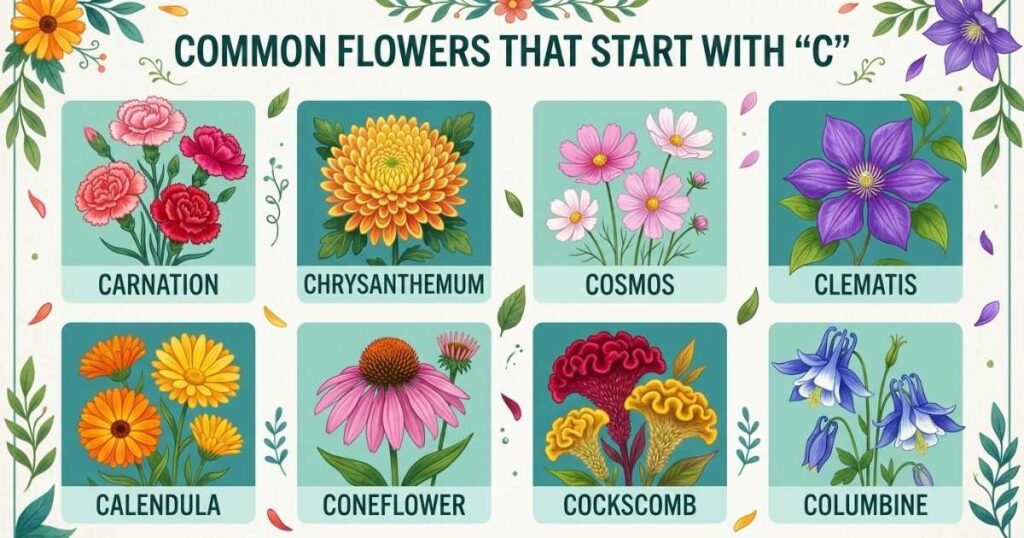
These are the C flowers most people already recognize, sold widely at garden centers and grocery florists.
- Carnation – long-lasting cut flower with ruffled petals in nearly every color
- Chrysanthemum – hardy fall bloomer in mums pots and garden beds
- Cosmos – self-seeding annual with daisy-like flowers on tall thin stems
- Camellia – shrub with waxy leaves and rose-shaped blooms in cooler months
- Crocus – small cup-shaped flower that pushes through late snow
- Calendula – edible marigold-like flower used in skincare and salads
- Coreopsis – bright yellow daisy flower, drought tolerant
- Clematis – vining flower for trellises with large star-shaped blooms
- Coneflower – purple-petaled prairie flower, also called echinacea
- Columbine – nodding bell flowers popular with hummingbirds
- China aster – daisy-shaped flower common in cut arrangements
- Canna lily – tropical-looking bloom with bold, broad leaves
Rare Flowers That Start With C
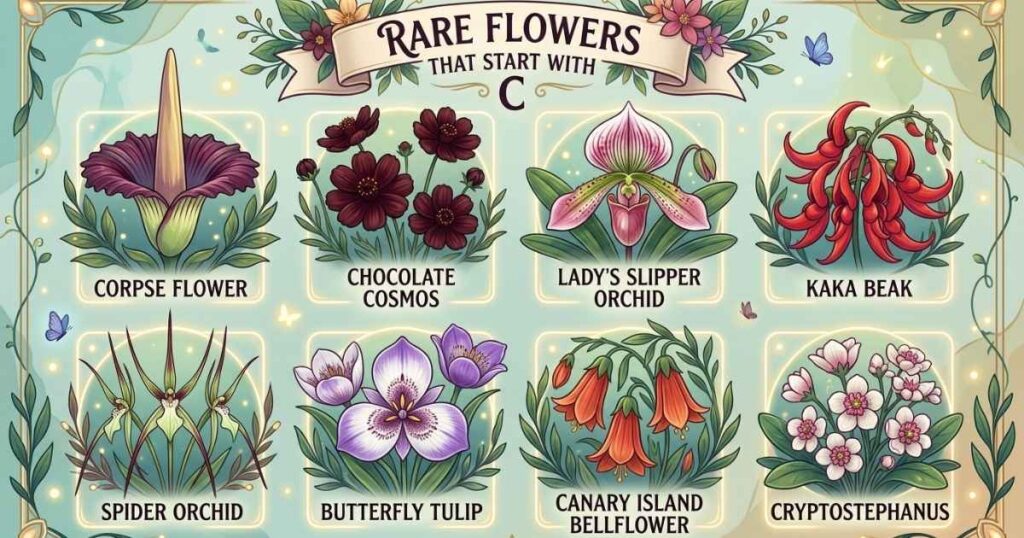
Beyond the common picks, several C flowers are less familiar but worth knowing for collectors or unique garden design.
- Chincherinchee – South African bulb with tall white star-shaped clusters
- Corydalis – ferny foliage with tubular blue or yellow flowers
- Chocolate cosmos – dark maroon bloom with a genuine chocolate scent
- Cape primrose (Streptocarpus) – shade-loving indoor bloomer
- Cistus (rock rose) – papery Mediterranean flower that blooms for one day
- Crown imperial fritillary – tall bulb flower with a musky, skunk-like scent
- Cattleya orchid – large fragrant orchid used in corsages
- Camas lily – native North American wildflower with star-shaped blue blooms
- Cupid’s dart – blue thistle-like flower rarely seen outside cottage gardens
These species are harder to find at big box stores but are often available through specialty bulb and seed catalogs.
Best C Flowers By Season
Matching flowers to season keeps a garden blooming through the year without gaps.
Spring
- Crocus
- Columbine
- Candytuft
- Camellia (late winter into spring)
Summer
- Cosmos
- Coneflower
- Canna lily
- Celosia
- Cornflower
Fall
- Chrysanthemum
- Colchicum (autumn crocus)
- China aster
Winter
- Camellia
- Cyclamen (indoor or mild climate outdoor)
- Christmas cactus
Planning a mix from each season ensures continuous color, especially useful for gardeners who want year-round curb appeal.
C Flower Names By Color
Color is often the first thing people search for when picking flowers for a bouquet or a themed garden bed.
Red
- Carnation
- Celosia
- Cardinal flower
- Camellia
Pink
- Cosmos
- Cyclamen
- China aster
- Cleome
White
- Calla lily
- Candytuft
- Chincherinchee
- Camellia (white varieties)
Yellow
- Calendula
- Coreopsis
- Corn poppy (yellow varieties)
- Craspedia (billy buttons)
Blue and Purple
- Cornflower
- Columbine
- Campanula
- Clematis
- Chicory
Orange
- Canna lily
- Crocosmia
- Cosmos (sulphureus varieties)
Grouping flowers this way is especially useful for wedding florists and gardeners designing color-block borders.
Indoor And Container Friendly C Flowers
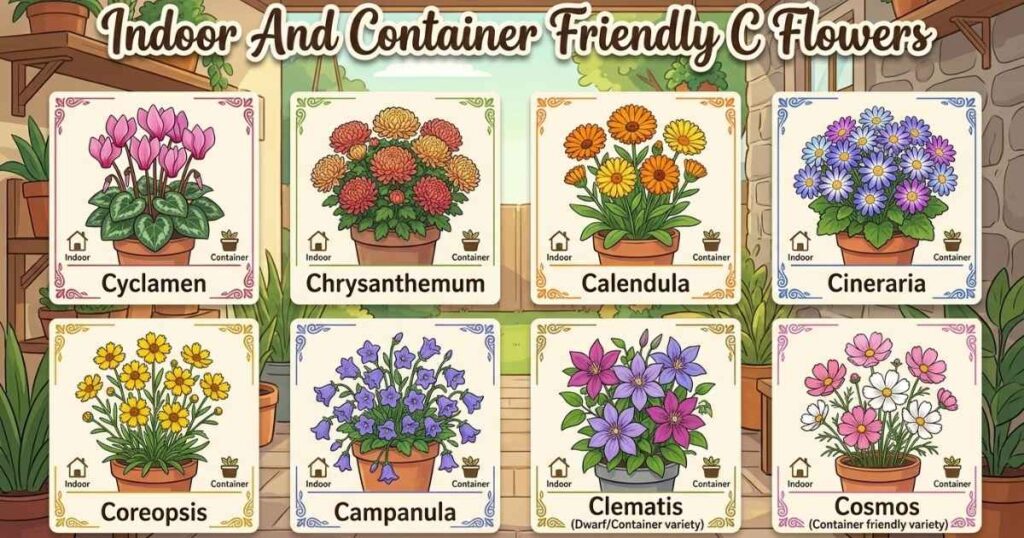
Not every C flower needs a garden bed. Several thrive in pots on balconies, patios, or indoors near a bright window.
- Cyclamen – compact indoor bloomer for cool rooms
- Christmas cactus – low-maintenance succulent with winter blooms
- Cape primrose – shade-tolerant houseplant flower
- Calla lily (dwarf varieties) – suited to large containers
- Candytuft – compact enough for window boxes
- Celosia – works well in patio pots with full sun
- Clivia – shade-loving bulb popular as a houseplant
Container growing lets gardeners with small spaces or poor soil still enjoy a wide range of C flowers.
Beginner Friendly C Flowers
Some C flowers forgive missed waterings and inconsistent care, making them ideal starting points for new gardeners.
- Cosmos – tolerates poor soil and neglect
- Calendula – reseeds itself and needs little fuss
- Coreopsis – drought tolerant once established
- Candytuft – low maintenance ground cover flower
- Zinnia-adjacent picks like celosia – heat tolerant and pest resistant
These species tend to bloom reliably from seed within one growing season, which helps build confidence for first-time growers.
Wildflowers And Pollinator-Friendly Picks
Bees, butterflies, and hummingbirds are drawn to several C flowers, making them valuable additions to pollinator gardens.
- Cornflower – a bee magnet, also called bachelor’s button
- Coneflower – attracts butterflies and later feeds birds with its seed heads
- Cardinal flower – a hummingbird favorite with tubular red blooms
- Chicory – roadside wildflower loved by native bees
- Camas lily – historically important to pollinators in prairie ecosystems
- Columbine – shaped specifically for hummingbird feeding
Planting a cluster of these rather than single stems increases visibility to pollinators and improves garden biodiversity.
Best C Flowers For Garden Use
Different garden features call for different growth habits. Here is how to match C flowers to specific garden uses.
Borders
- Candytuft
- Coreopsis
- Campanula
- Dwarf celosia
Containers
- Cyclamen
- Calla lily (dwarf)
- Celosia
- Cape primrose
Trellises And Fences
- Clematis
- Cup and saucer vine
- Coral vine
- Confederate jasmine (grown mainly for scent, not a true jasmine)
Shade Or Part Shade
- Columbine
- Cyclamen
- Clivia
- Corydalis
Dry Or Sunny Spots
- Coreopsis
- Cosmos
- Coneflower
- Cistus
Matching a flower’s natural habit to the right garden feature reduces maintenance and improves bloom performance.
C Flower Meanings And Symbolism
Flower meanings often influence gift-giving and wedding flower choices, and several C flowers carry well-documented symbolism.
| Flower | Common Meaning |
| Carnation | Fascination, love, distinction |
| Camellia | Admiration, perfection |
| Chrysanthemum | Longevity, joy (varies by culture) |
| Columbine | Foolishness or, in some traditions, resolve |
| Cornflower | Hope, delicacy |
| Calla lily | Beauty, purity |
| Clematis | Mental beauty, ingenuity |
In some East Asian cultures, white chrysanthemums are associated with mourning, so it is worth checking cultural context before including them in celebratory arrangements.
Origin And Native Range Of Popular C Flowers
Knowing where a flower originates helps predict how it will perform in a new climate.
- Camellia – native to East Asia, especially China and Japan
- Cosmos – native to Mexico and Central America
- Crocus – native to the Mediterranean, Middle East, and Central Asia
- Columbine – native to North America and Europe, depending on species
- Coneflower – native to the central and eastern United States prairies
- Camas lily – native to the Pacific Northwest of North America
- Chincherinchee – native to South Africa
- Cattleya orchid – native to Central and South America
Gardeners in dry climates often do well with Mediterranean natives like crocus, while humid regions suit East Asian natives like camellia.
Safety And Toxicity Notes For C Flowers
Some C flowers are safe around pets and children, while others carry real toxicity risks that are worth knowing before planting.
- Toxic to pets: calla lily, chrysanthemum, cyclamen, clematis (mild), canna (generally low risk but check ASPCA listings)
- Generally non-toxic: cosmos, calendula, candytuft, coreopsis
- Edible flowers: calendula petals, chive blossoms, chamomile
Chrysanthemums and calla lilies are common causes of mild pet poisoning cases reported by veterinary poison control lines, so households with curious cats or dogs should place these out of reach or choose a non-toxic alternative instead.
Always verify with a current ASPCA or Pet Poison Helpline listing before assuming a species is safe, since toxicity data is periodically updated.
Common Mistakes When Choosing C Flowers
Even experienced gardeners run into avoidable problems when picking C flowers. These are the most frequent ones.
- Confusing common names – “cape jasmine” is actually a gardenia, not a true jasmine
- Ignoring hardiness zones – camellias struggle in zones colder than USDA zone 6 without protection
- Overwatering bulbs – crocus and cyclamen rot quickly in soggy soil
- Planting sun lovers in shade – cosmos and coreopsis get leggy and bloom poorly without full sun
- Skipping deadheading – carnations and calendula slow their bloom cycle if spent flowers are left on the stem
Checking a plant’s zone, sun requirement, and mature size before buying prevents most of these issues.
Quick Identification Guide For C Flowers
A fast way to identify an unknown C flower is to check petal shape, growth habit, and bloom time together.
- Trumpet or funnel shaped – calla lily, campanula, clematis
- Daisy shaped with a central disc – cosmos, coneflower, china aster
- Cup shaped, low growing – crocus, cyclamen
- Ruffled, dense petals – carnation, chrysanthemum
- Bell shaped, nodding – columbine, canterbury bells
- Spiky or plume shaped – celosia, crocosmia
Cross-referencing the shape with the season it was seen blooming usually narrows the identification down to one or two likely species.
Fragrant C Flowers And Bouquet Favorites
Scent is a major factor in choosing cut flowers, and several C flowers are prized for their fragrance as much as their looks.
- Carnation – spicy, clove-like scent
- Cattleya orchid – sweet, strong fragrance often used in corsages
- Chocolate cosmos – genuine cocoa-like scent
- Camellia (some varieties) – light, subtle fragrance
- Confederate jasmine – heavily fragrant vine, popular near patios
- Crown imperial fritillary – strong musky scent, useful as a natural pest deterrent in gardens
For bouquets, carnations remain a top choice because they combine fragrance with a long vase life, often lasting two weeks or more with fresh water changes.
Conclusion
Flowers that start with C offer something for nearly every garden style, skill level, and climate. From beginner-friendly cosmos to rare finds like chincherinchee, this letter covers an unusually wide range of options.
Start by picking two or three flowers that match your growing conditions and skill level, then expand the collection once those are established. A small, well-matched selection will always outperform a large, mismatched one.
FAQ’s
What is the most popular flower starting with C?
The carnation is generally the most popular C flower worldwide, thanks to its long vase life and wide color range.
What C flower blooms the earliest in spring?
Crocus is typically the first C flower to bloom, often pushing through late snow in late winter.
Are C flowers generally safe for pets?
It varies by species. Calla lilies, chrysanthemums, and cyclamen are toxic to pets, while cosmos and calendula are generally safe.
What is a rare flower that starts with C?
Chincherinchee and chocolate cosmos are considered rare or uncommon C flowers outside specialty growers.
Which C flower is best for beginners?
Cosmos is one of the easiest C flowers to grow, tolerating poor soil and minimal care while still blooming reliably.
What does a carnation flower symbolize?
Carnations traditionally symbolize fascination, love, and distinction, with meanings varying slightly by color.
Can C flowers grow indoors?
Yes, cyclamen, Christmas cactus, and cape primrose are all C flowers well suited to indoor growing conditions.