
If you have ever dug through a jumbled upright freezer looking for one bag of chicken breasts, only to find three unlabeled containers of mystery soup instead, you already know why organization matters. An upright freezer offers excellent vertical storage, but without a system, that space fills up fast and turns into a frozen black hole where food gets forgotten and eventually wasted.
The good news is that a few simple habits and the right tools can transform your freezer from chaotic to functional. Below are practical, tested strategies that professional organizers, home cooks, and meal preppers rely on to keep an upright freezer easy to navigate, whether it sits in your kitchen, garage, or basement.
Flash Freeze for Easy Access
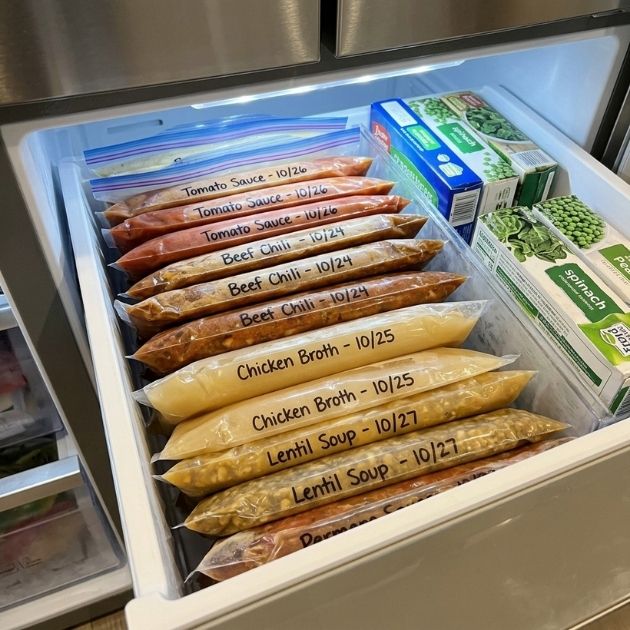
Flash freezing means freezing items individually on a tray before storing them together in a bag or bin. This simple step stops food from clumping into one solid brick, so you can grab exactly the amount you need without thawing the whole batch.
This method works especially well for berries, chopped vegetables, meatballs, cookie dough, and individual portions of leftovers. Spread the food in a single layer on a baking sheet lined with parchment paper, freeze for a few hours until solid, then transfer everything into a labeled freezer bag. You get grab-and-go portions instead of one giant frozen mass.
Flash freezing also helps preserve texture and flavor, since individually frozen pieces develop less ice crystal buildup than items frozen in a dense pile.
Some handy options:
- Rimmed baking sheets sized to fit your freezer shelves
- Reusable silicone freezer bags for portioned storage
- Flash-freeze trays with individual compartments
- Parchment paper or silicone mats for easy release
Categorize Your Foods
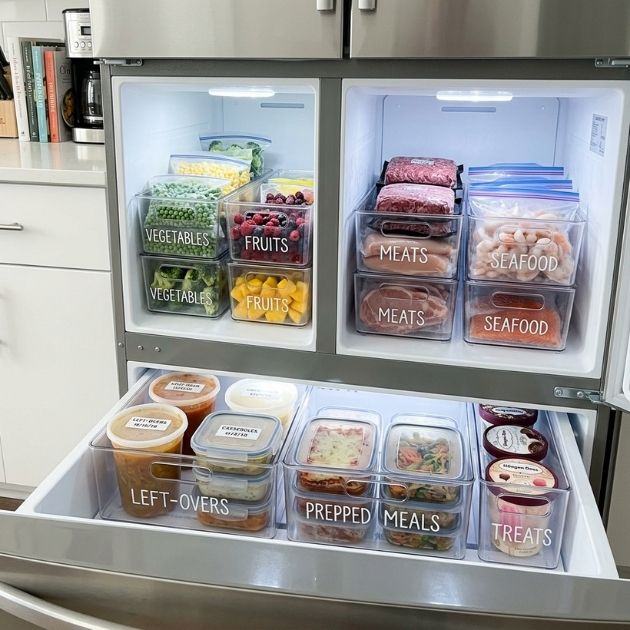
Once food is properly packaged, group it by category rather than tossing everything in wherever it fits. Assign each shelf or bin a purpose, such as proteins on one level, vegetables on another, and baked goods or leftovers on a third. This mirrors the approach many home organizers use for pantries, and it works just as well in the freezer.
Categorizing does two things. First, it prevents cross-contamination, since raw meat stays separate from ready-to-eat items. Second, it saves time and mental energy, because you always know which shelf to check for a specific ingredient instead of scanning the entire freezer.
For small households, a simple two or three category system is enough. Larger families or serious meal preppers often benefit from more detailed zones, such as separating red meat from poultry and seafood.
A few relevant products:
- Stackable wire freezer baskets
- Clear plastic bins with lids for shelf sorting
- Adjustable freezer shelf dividers
- Color-coded labels for quick category identification
Optimize Door Storage
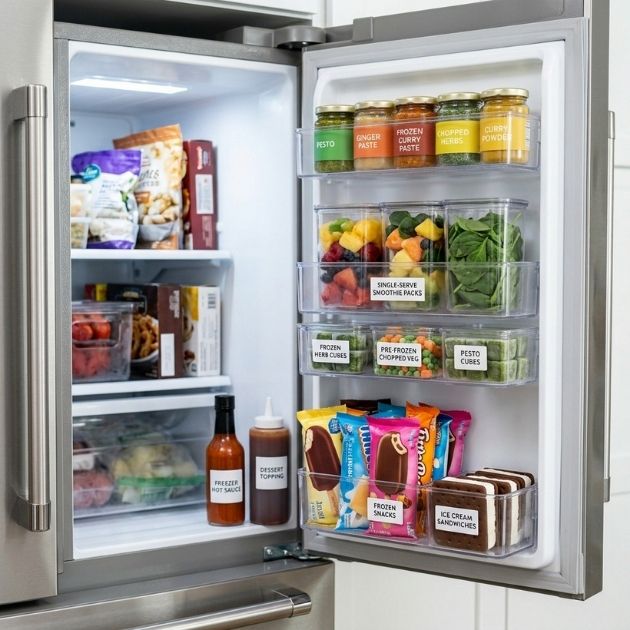
The door of an upright freezer is often underused or overstuffed with random items that fall out every time it opens. Reserve door shelves for smaller, lighter, frequently used items rather than heavy packages that can strain the shelf hinges.
Good candidates for door storage include ice packs, small bags of frozen herbs, spices, coffee, or condiments that need to stay cold. Avoid stacking heavy meat packages here, since the door experiences more temperature fluctuation than the interior shelves each time it opens.
Using narrow bins on the door also stops small items from sliding around and getting lost behind larger packages.
Might be a good match:
- Slim stackable door bins
- Adjustable door racks for small jars and pouches
- Non-slip shelf liners to keep items in place
- Mini freezer-safe baskets for loose items
Seasonal Rotation
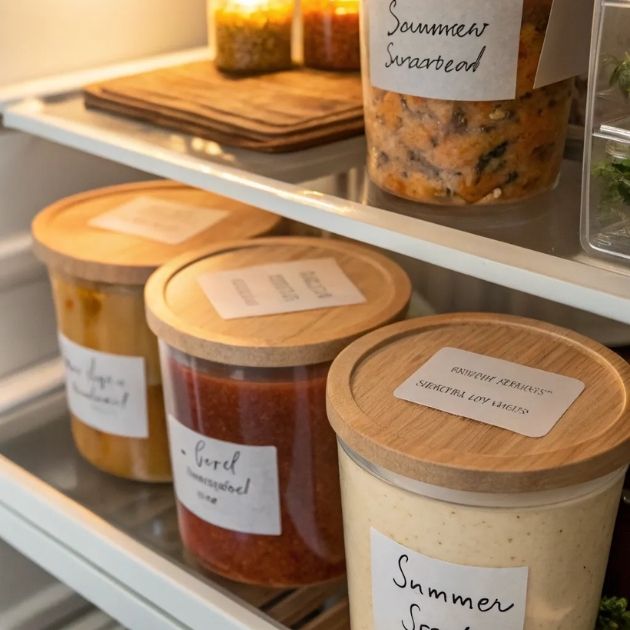
Freezers naturally accumulate seasonal items, from summer garden produce to holiday leftovers. Setting up a rotation system helps you use food before it loses quality, rather than discovering a two-year-old bag of zucchini buried in the back.
Follow the first in, first out principle, often called FIFO. When you add new items, move older ones to the front so they get used first. Labeling every package with the freezing date makes this system effortless, since you can see at a glance what needs to be cooked soon.
A quarterly freezer check is a smart habit. Every few months, take stock of what is inside, plan meals around older items, and make space for the next season’s harvest or holiday prep.
Items that may come in handy:
- Freezer-safe labels and a permanent marker
- A small whiteboard or inventory sheet for the freezer door
- Date-stamped freezer tape
- A printable freezer inventory template
Use Magazine Holders
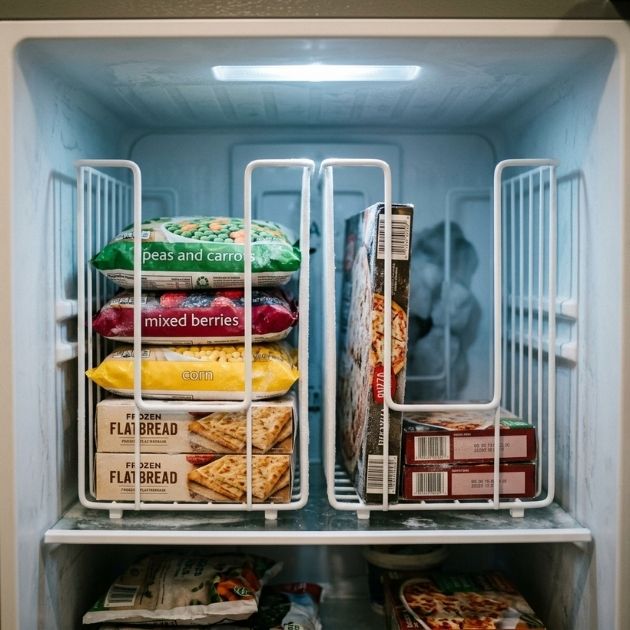
One of the most underrated upright freezer hacks borrowed from professional organizers is repurposing magazine holders as vertical file organizers. Once you flash freeze flat bags of food, standing them upright in a magazine holder keeps them from toppling into a messy pile.
This trick works particularly well for soups, sauces, ground meat, and pureed baby food that has been frozen flat in freezer bags. Each holder can represent a category, such as soups in one, ground meat in another, so you can flip through bags the way you would flip through files in a cabinet.
Magazine holders also make excellent use of narrow vertical shelf gaps that would otherwise go to waste.
A few things you might like:
- Wire mesh magazine file holders
- Plastic file organizers designed for freezer use
- Bamboo or acrylic upright sorters
- Labeled dividers to separate categories within each holder
Themed Sections
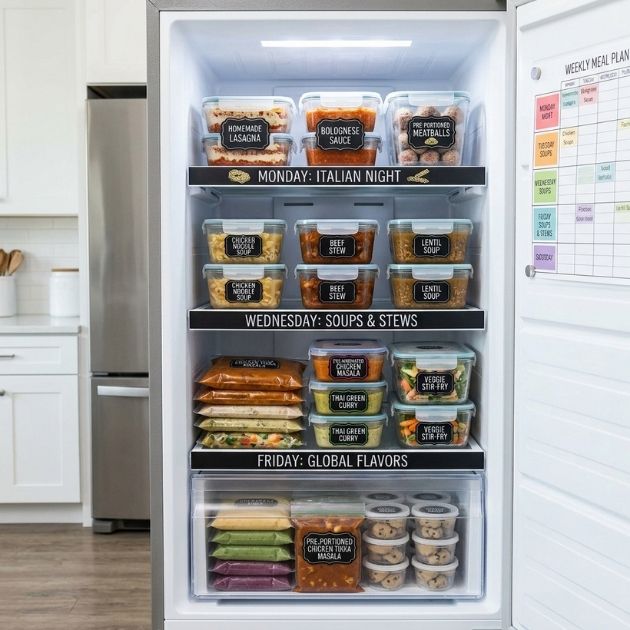
Beyond basic categories, many households find it helpful to create themed zones based on how they actually cook. Instead of a generic “meat” shelf, try a breakfast section with waffles, sausage, and breakfast burritos, or a taco night section with tortillas, ground beef, and shredded cheese.
Themed sections work particularly well for families who repeat certain meals often, since everything needed for that dish sits together. This reduces the number of trips to the freezer while cooking and makes weekly meal planning noticeably faster.
Consider building sections around your household’s actual habits rather than a generic template. A baking-focused zone with butter, pie crusts, and frozen fruit will serve a home baker far better than a rigid category system.
Check if these fit your needs:
- Labeled bins for themed meal kits
- Freezer baskets sized for grouping multiple items
- Erasable labels for sections that change seasonally
- Stackable trays for grab-and-go meal bundles
FAQ’s
How often should I clean and reorganize my upright freezer?
A quick check every one to three months keeps clutter and freezer burn from building up, with a full clean out at least once a year.
What is the best way to label frozen food?
Use freezer tape or removable labels with the item name and the date it was frozen, so you always know what to use first.
Can I use regular plastic bins in a freezer?
Only use bins labeled as freezer safe, since regular plastic can crack or become brittle at freezing temperatures.
How long can food safely stay in an upright freezer?
Most foods stay safe indefinitely at 0 degrees Fahrenheit, though quality declines over time, so aim to use items within two to twelve months depending on the food type.
Do I need an inventory list for my freezer?
A simple inventory sheet on the door helps prevent forgotten food and reduces unnecessary grocery purchases.
Final Thoughts
An organized upright freezer does more than look tidy. It saves money by preventing forgotten food from going to waste, cuts down on grocery overspending, and makes weeknight cooking far less stressful. Start small, perhaps with one shelf or a single magazine holder system, and build from there.
You do not need to overhaul everything at once. Pick one or two ideas from this list, whether it is flash freezing your next batch of soup or finally labeling those mystery bags in the back, and let the system grow naturally as you get used to it. Over time, these small habits add up to a freezer that actually works for you instead of against you.