
Exposed duct work has gone from being something homeowners tried to hide to one of the boldest design statements in modern interiors. Once banished behind drop ceilings and drywall, visible ductwork is now a celebrated feature in loft apartments, open-concept homes, restaurants, and even cozy bedrooms. When done right, it adds architectural interest, a raw industrial character, and a sense of height and openness that few other design choices can match.
Whether you are renovating a basement, updating a kitchen, or designing a new living space from scratch, these exposed duct work ideas will help you think creatively about your ceiling and turn a functional necessity into a stunning design feature.
Create an Open Ceiling Design
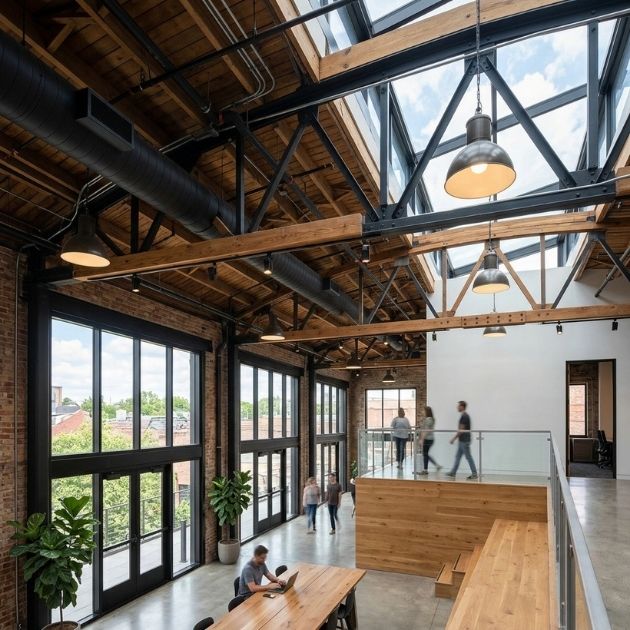
One of the most dramatic ways to use exposed ductwork is to open up the entire ceiling. Removing the drop ceiling or leaving the structural elements bare creates an airy, warehouse-style atmosphere that makes even modest rooms feel significantly larger.
This approach works especially well in rooms with lower ceilings, where every inch of vertical space matters. By leaving beams, joists, and ductwork visible, you add layers of visual texture without consuming floor space.
A few helpful options:
- Industrial pipe ceiling light fixtures to complement the raw overhead structure
- Metal ceiling beams for added architectural definition
- Decorative air duct covers to give exposed ducts a polished, intentional finish
- Matte black spray paint to unify the ceiling elements into one cohesive look
The key is consistency. Paint all ceiling elements, including ductwork, beams, and joists, in the same color to create a unified, intentional look rather than a chaotic one.
Emphasize the Industrial Aesthetic
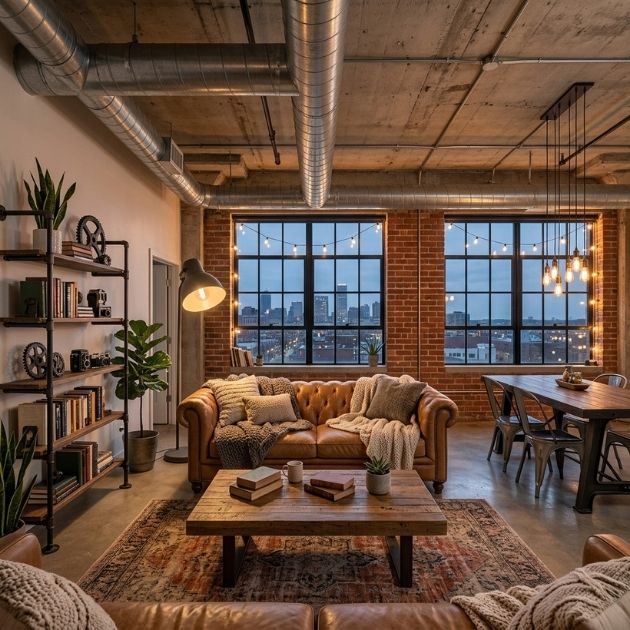
The industrial aesthetic thrives on rawness. Exposed ductwork is one of its defining elements, alongside concrete floors, metal shelving, and reclaimed wood. If your space already leans toward an urban chic or warehouse-style design, leaning into exposed HVAC systems is a natural fit.
Spiral ductwork, in particular, is the most popular choice for industrial interiors. Its uniform ridged form looks intentional and architectural, unlike the slightly unfinished look of flat sheet metal runs.
May just do the trick:
- Spiral round ductwork for a clean, symmetrical industrial statement
- Edison bulb pendant lights to complement the raw metal overhead
- Gunmetal gray or matte black paint for a moody, cohesive industrial tone
- Steel pipe shelving to carry the industrial language throughout the room
Pairing ductwork with raw materials like exposed brick and structural steel reinforces the industrial narrative and creates spaces that feel both authentic and intentional.
Blend with Loft and Modern Spaces
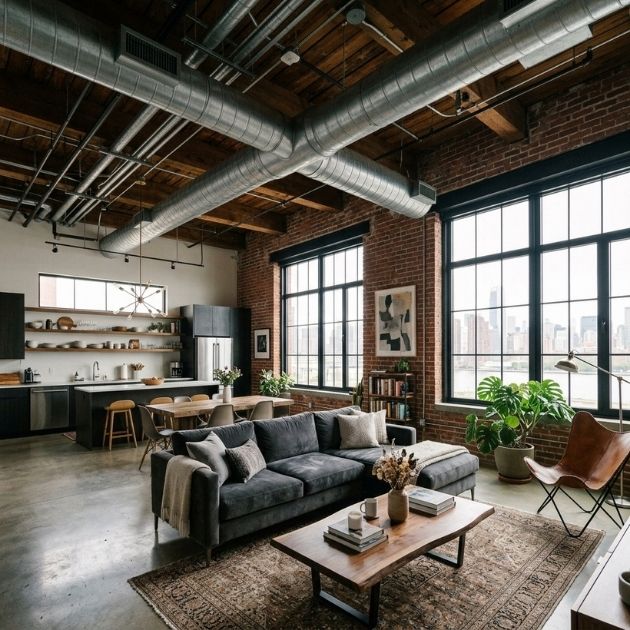
Exposed ductwork fits seamlessly into loft apartments and modern open-plan interiors. These spaces are defined by high ceilings, minimal walls, and an honest expression of structure, making visible HVAC systems feel right at home rather than out of place.
In modern settings, the trick is to keep everything clean and deliberate. Smooth rectangular ducts work well alongside minimalist furniture and polished concrete floors. The contrast between the precise geometry of modern design and the utilitarian form of ductwork creates a compelling visual tension.
A few relevant products:
- Metallic duct coverings to add a sleek, contemporary finish
- Modern industrial furniture with clean lines that complement overhead ductwork
- Minimalist ceiling fans that integrate with the open ceiling layout
- Polished concrete floor sealant to anchor the modern-industrial look below
Contrast with Wood and Brick
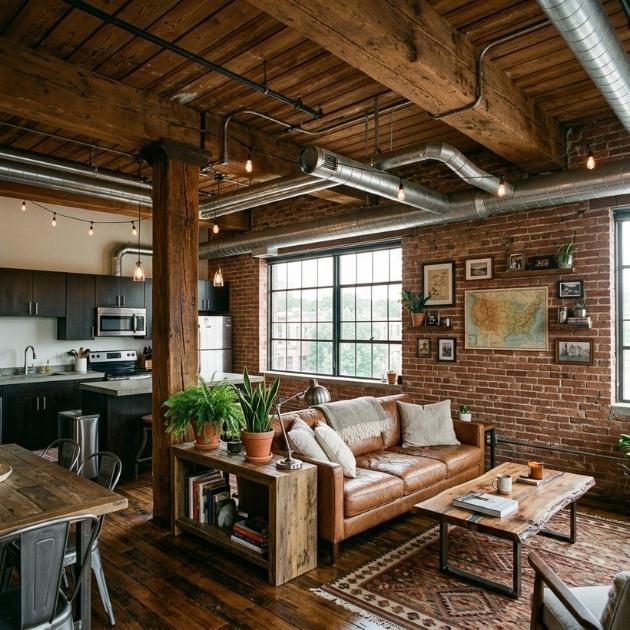
One of the most visually rewarding exposed duct work ideas is pairing cold metal ducts with warm natural materials. Wood and brick introduce texture, warmth, and color that soften the hard edges of metal ductwork, creating a balance between industrial and organic.
Think reclaimed wood accent walls, exposed brick, and oak hardwood floors alongside matte black or galvanized steel ducts. The result is a space that feels layered, lived-in, and rich with character.
These products might help:
- Rustic wood floating shelves to introduce warmth beneath exposed ceiling ducts
- Brick effect wall panels for spaces that lack original brickwork
- Raw wood ceiling planks to frame and soften the ductwork above
- Copper pipe fittings as accent elements that bridge the warmth of wood and the cool of metal
This combination works brilliantly in kitchens, dining rooms, and home offices where warmth and function both matter.
Integrate Lighting with Ducts

Ductwork and lighting are natural partners. Running pendant lights, track lighting, or LED strips alongside exposed ducts draws the eye upward, highlights the architectural structure, and adds both task and ambient light in a way that feels fully integrated.
Track lighting mounted to duct runs is particularly effective in kitchens and workshops where you need directional light that follows the layout of the room. In living spaces, pendant clusters suspended near exposed ducts create a dramatic, gallery-style effect.
A few things you might like:
- Industrial track lighting systems that mount directly alongside duct runs
- Vintage Edison bulb pendants for warmth in raw ceiling environments
- LED strip lights tucked along duct edges for indirect ambient glow
- Industrial wall sconces that connect ductwork design to the vertical walls
Experiment with Color
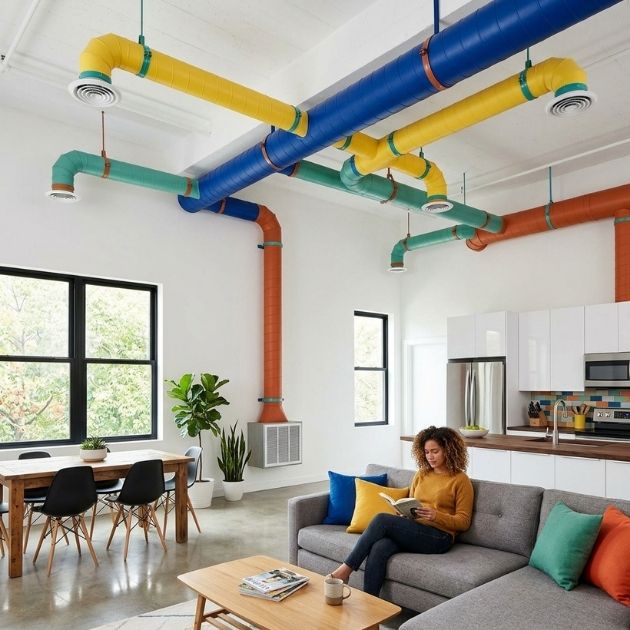
Color is one of the most powerful and affordable tools in exposed duct work design. Painting ducts to match the ceiling makes them virtually disappear, creating a seamless overhead plane. Painting them in a contrasting bold hue, on the other hand, turns them into a deliberate statement piece.
Black is the most popular choice for exposed ductwork because it recedes visually, adds depth, and pairs effortlessly with almost any interior palette. Matte finishes tend to look more intentional than gloss in raw ceiling environments.
These products might be useful:
- Matte black metal paint for a dramatic, shadow-like ceiling effect
- Ceiling paint in white or off-white to camouflage ducts in lighter interiors
- Metallic spray paint for a polished, reflective finish on spiral ducts
- All-purpose metal primer to ensure paint adheres cleanly to sheet metal surfaces
For a more playful approach, consider painting ductwork in a deep navy, forest green, or terracotta to create a bold ceiling feature that ties into the room’s color story.
Combine with False Cabinets
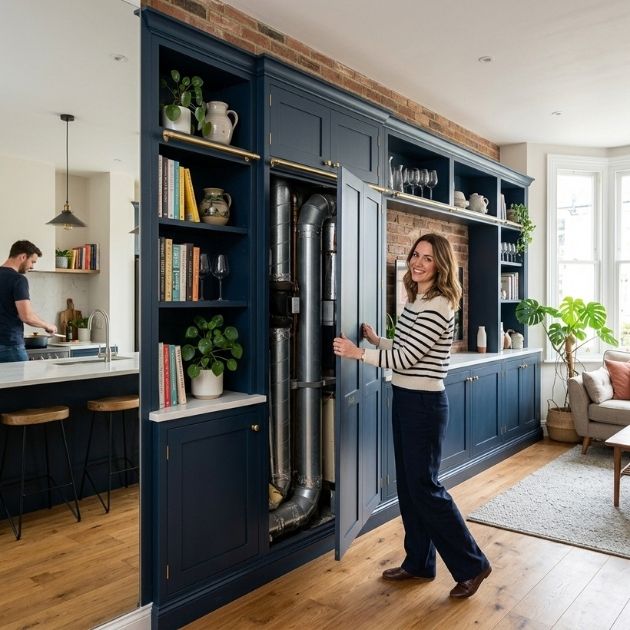
In kitchens and utility spaces where you want to keep exposed ductwork but prefer a slightly more refined look, false cabinets offer an elegant middle ground. Running cabinet fronts along the duct path conceals the mechanical elements while maintaining visual continuity with the existing cabinetry.
This approach works particularly well in kitchen designs where ductwork runs along the perimeter walls. False upper cabinets create the illusion of full-height storage while neatly concealing the HVAC infrastructure behind them.
Consider these options:
- Flat-panel false cabinet fronts for a seamless, modern kitchen ceiling
- Custom soffit panels that match existing cabinet finishes exactly
- Push-to-open mechanisms for access panels that need to remain functional
- Crown molding trim to finish the transition between false cabinets and ceiling
Highlight with Accent Lighting
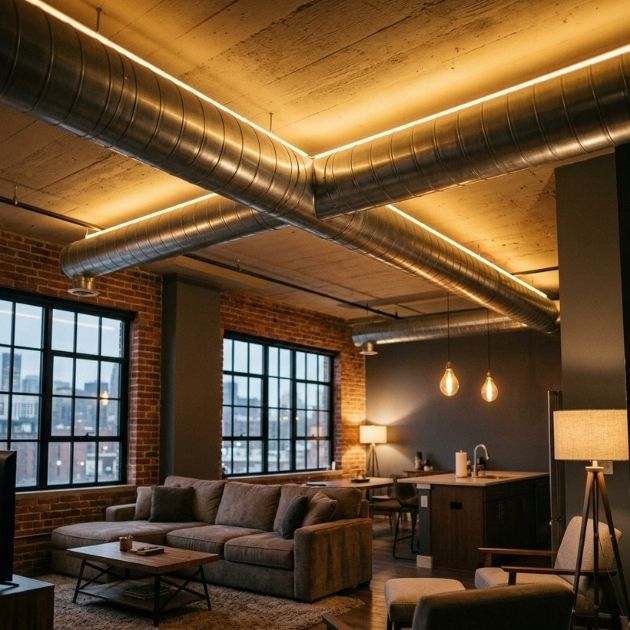
Accent lighting transforms exposed ductwork from a mechanical detail into a designed feature. Using directional spotlights, LED strips, or uplighting to illuminate duct runs creates drama and depth, especially in evening settings.
The contrast between a dark ceiling and strategically lit ductwork produces a cinematic effect that elevates any space. This technique works particularly well in restaurants, home theaters, and entertainment spaces where atmosphere matters most.
Maybe worth checking out:
- Adjustable LED spotlights for pinpoint illumination along duct paths
- Flexible LED strip lights for continuous glow along the length of a duct run
- Smart lighting systems that allow you to change intensity and color temperature
- Industrial cage light fixtures mounted directly to exposed duct sections
Utilize Multi-Level Ceilings
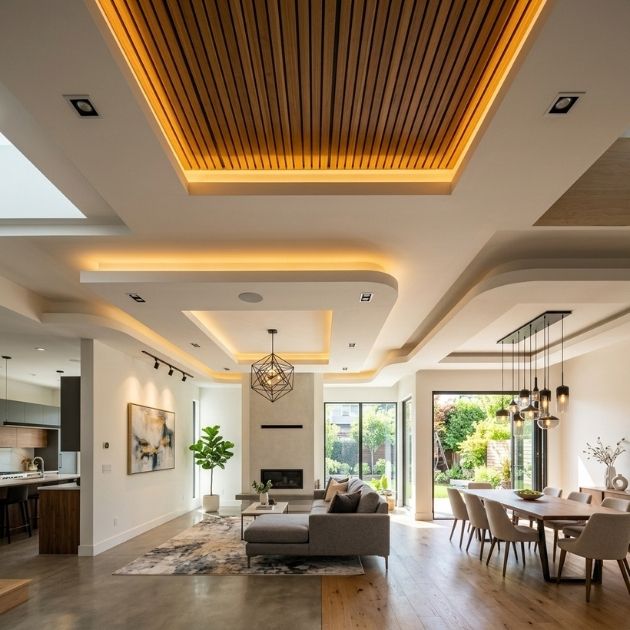
When a space has varying ceiling heights, exposed ductwork can actually help define and articulate those levels. Positioning ducts along the transition between ceiling heights frames the architectural change and gives it intentional structure.
In open-plan homes, this technique helps delineate zones like kitchen, dining, and living areas without using walls. The ductwork becomes a soft architectural divider that guides the eye and defines space.
Products that could assist:
- Custom duct elbows and fittings for clean transitions at ceiling changes
- Painted contrast colors between ceiling levels to emphasize the height difference
- Recessed lighting at lower ceiling levels to balance the visual weight of exposed ducts above
- Exposed wood beams at ceiling transitions to soften the ductwork’s geometry
Create a Vintage Vibe
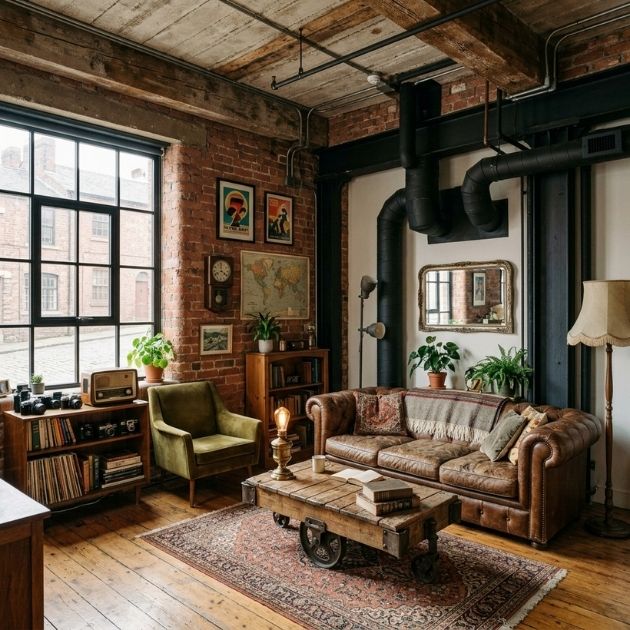
Exposed ductwork pairs beautifully with vintage and retro interior styles. The utilitarian quality of sheet metal ducts echoes the functional aesthetics of mid-century factories and warehouses, making them a natural fit for vintage-inspired design.
Think antique brass fixtures, aged leather furniture, vintage signage, and Edison bulb lighting alongside raw exposed ducts painted in warm tones like copper, bronze, or aged iron.
Possibly helpful picks:
- Antique brass vent covers to add vintage character to duct openings
- Sepia or rust-tone spray paint for an aged, patinated duct finish
- Vintage industrial furniture with distressed metal and wood surfaces
- Retro filament light bulbs to complete the old-world factory atmosphere
Incorporate Glass Partitions

Glass partitions and exposed ductwork are a sophisticated pairing frequently seen in modern offices, converted lofts, and upscale open-plan homes. The transparency of glass allows ductwork to remain visible across zones while still defining separate areas within the floor plan.
This combination creates spaces that feel simultaneously open and organized. The visual continuity of exposed ductwork running above glass partitions reinforces the architectural coherence of the whole interior.
A few choices to try:
- Frameless glass partition panels for a clean, minimalist separation between spaces
- Frosted glass panels where privacy is needed without breaking visual continuity
- Steel-framed glass partitions that match the industrial language of exposed ductwork
- Sliding glass doors that align with ceiling duct runs for a coordinated layout
Use Decorative Grilles
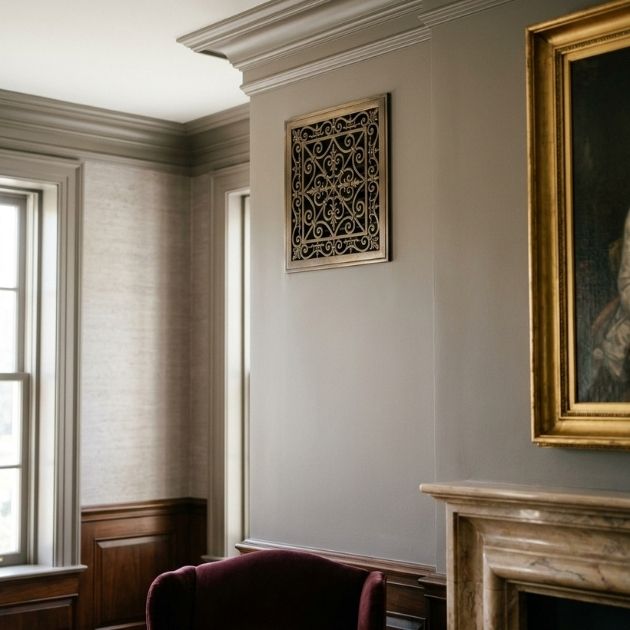
Decorative grilles are a simple but highly effective way to add character to exposed ductwork, particularly at vent openings and duct termination points. Instead of standard builder-grade vent covers, replacing them with ornate or custom grilles turns every opening into a design detail.
Cast iron, laser-cut steel, and even wooden grilles are available in a wide range of styles, from ornate Victorian patterns to clean geometric designs that suit modern interiors.
Possibly handy products:
- Cast iron decorative vent grilles for a bold, traditional industrial look
- Laser-cut steel vent covers in geometric patterns for a modern aesthetic
- Brass register covers for a warm, vintage accent at every duct opening
- Custom painted grilles in colors that complement your overall palette
Explore Eco-Friendly Options
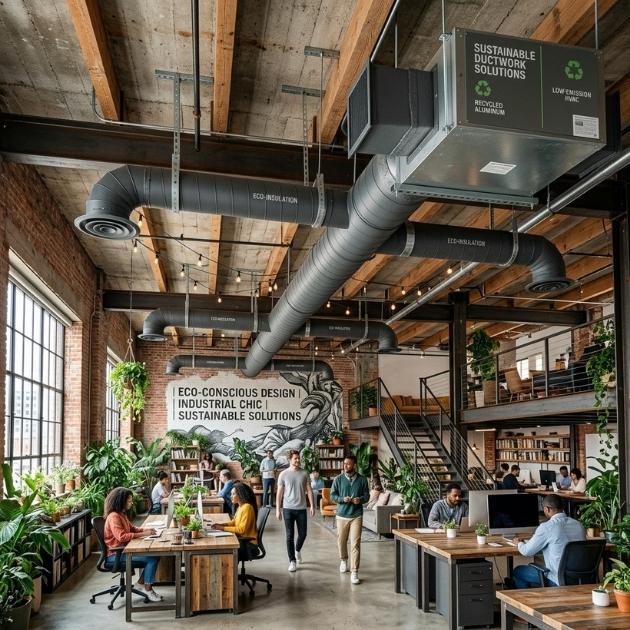
Exposed ductwork is not just an aesthetic choice. It can also be a genuinely sustainable one. Visible ductwork eliminates the need for drop ceilings and the materials required to build them. It also makes HVAC systems more accessible for maintenance, improving long-term energy efficiency.
Choosing eco-conscious materials and finishes for your exposed ducts extends the sustainability credentials further. Recycled metal duct covers, non-toxic paints, and fabric ductwork made from recycled polyester all contribute to a greener interior.
Explore these options:
- Recycled metal duct covers that reduce material waste and add an interesting patina
- Non-toxic, low-VOC metal paint for a healthier indoor environment
- Fabric ductwork in recycled polyester for large open spaces with uniform airflow needs
- Sustainable bamboo ceiling panels around duct sections for a natural, warm accent
Final Thoughts
Exposed duct work ideas span an enormous range of styles, from raw industrial minimalism to warm vintage character and sleek modern design. The common thread across all of them is intentionality. When you treat ductwork as a design element rather than something to be hidden, the results can be genuinely striking.
Start by assessing your existing ductwork type, whether it is smooth rectangular sheet metal, spiral round ducts, or flexible fabric runs, and work from there. Choose a finish, whether paint, metallic coating, or decorative cover, that ties into your broader interior palette. Then layer in lighting, materials, and accessories that reinforce the design direction you have chosen.
With the right approach, the mechanical systems running overhead can become one of the most memorable features of your home.