
Plants do more than clean the air. In feng shui, the right plant in the right spot can shift how energy, or chi, moves through your home. Some plants are said to attract wealth. Others invite calm, protection, or good fortune.
This guide covers 45 feng shui plants, where to place them, and which ones to avoid. You will also find room-by-room advice, pet safety notes, and care rules that keep the energy (and the plant) alive.
Whether you want a money plant for your office desk or a lucky plant for your front door, this list gives you practical, no-fluff answers.
Quick Answer: Best Feng Shui Plants For Home
If you only remember five plants, remember these.
| Plant | Best For |
| Money Plant (Pothos) | Wealth corner, kitchen |
| Jade Plant | Front door, office desk |
| Lucky Bamboo | Desk, entryway |
| Peace Lily | Bedroom, low light rooms |
| Snake Plant | Bathroom, protection |
These five cover the most common goals: money, luck, calm, and protection. Each is explained in more depth further down this guide.
What Are Feng Shui Plants?
Feng shui plants are living elements used to balance chi, the energy believed to flow through every space. In Chinese philosophy, plants represent the Wood element, which is linked to growth, health, and new beginnings.
Placed correctly, they soften sharp corners, fill empty spaces, and bring life into stagnant areas. Placed incorrectly, they can block doorways or trap negative energy instead of clearing it.
Feng shui plants are not just decoration. They are treated as active participants in a home’s energy flow, which is why placement matters as much as the plant itself.
What Makes A Plant Good For Feng Shui?
Not every houseplant qualifies as lucky. Feng shui practitioners generally look for a few shared traits.
- Round or soft leaves. Rounded leaves are linked to wealth and smooth energy flow. Sharp, spiky leaves are believed to create cutting energy.
- Upward growth. Plants that grow tall or climb are seen as symbols of progress and rising fortune.
- Vibrant green color. Healthy green foliage represents the Wood element and new growth.
- Longevity. Plants that live long and stay green year-round symbolize lasting prosperity.
- Low maintenance. A plant that struggles or dies often is thought to reflect poorly on the home’s energy.
A plant does not need to be exotic or expensive to work. Consistency in care matters more than rarity.
45 Feng Shui Plants At A Glance
Here is a fast reference table of 35 widely used feng shui plants, their main symbolism, and light needs.
| Plant | Symbolism | Light Needs |
| Money Plant (Pothos) | Wealth, growth | Low to bright indirect |
| Jade Plant | Prosperity, friendship | Bright indirect |
| Lucky Bamboo | Luck, fortune | Low to indirect |
| Peace Lily | Peace, purification | Low to medium |
| Snake Plant | Protection, resilience | Low to bright |
| Money Tree (Pachira) | Financial luck | Bright indirect |
| Areca Palm | Positive energy, air purity | Bright indirect |
| Orchid | Love, refinement | Bright indirect |
| Chrysanthemum | Joy, longevity | Bright light |
| Rubber Plant | Wealth, abundance | Medium to bright |
| Boston Fern | Harmony, softness | Medium indirect |
| English Ivy | Protection, healing | Low to medium |
| Basil | Prosperity, purification | Bright light |
| Marigold | Sunshine, positivity | Bright light |
| Bamboo Palm | Peace, protection | Medium indirect |
| Aloe Vera | Healing, protection | Bright indirect |
| Eucalyptus | Cleansing, health | Bright light |
| Lavender | Calm, restful sleep | Bright indirect |
| Jasmine | Romance, positivity | Bright light |
| Peony | Romance, honor | Bright light |
| Lotus | Purity, enlightenment | Full sun (water plant) |
| Hibiscus | Passion, vitality | Bright light |
| Christmas Cactus | Longevity, luck | Bright indirect |
| Citrus Tree | Wealth, abundance | Full sun |
| Pomegranate | Fertility, abundance | Full sun |
| Cherry Blossom | New beginnings | Full sun |
| Cactus (rounded types) | Protection with caution | Bright light |
| Golden Pothos | Money flow | Low to bright |
| Sunflower | Positivity, vitality | Full sun |
| Willow | Flexibility, healing | Full sun |
| Rosemary | Protection, remembrance | Bright light |
| Mint | Wealth, freshness | Bright indirect |
| Ficus Tree | Growth, stability | Bright indirect |
| African Violet | Devotion, warmth | Medium indirect |
| Spider Plant | Purification, resilience | Low to bright |
This list is a starting point. The sections below group these plants by goal so you can choose based on what you actually need.
Best Feng Shui By Goal
Different goals call for different plants. Use this table to match your intention with the right choice.
| Goal | Recommended Plants |
| Wealth and money | Jade Plant, Money Tree, Golden Pothos, Lucky Bamboo |
| Love and romance | Orchid, Peony, Jasmine, Rose |
| Health and healing | Aloe Vera, Eucalyptus, English Ivy |
| Career growth | Lucky Bamboo, Money Tree, Ficus |
| Protection | Snake Plant, Rosemary, Cactus (rounded) |
| Calm and rest | Lavender, Peace Lily, Boston Fern |
| Family harmony | Peace Lily, Bamboo Palm, Chrysanthemum |
Pick one or two plants tied to your top priority rather than filling every room at once. Overcrowding a space with plants can create clutter, which works against feng shui principles.
Common Money Plant Confusion
The term “money plant” causes more confusion than almost any other feng shui topic. Several unrelated plants share this nickname.
- Golden Pothos (Epipremnum aureum) is often called the money plant in the West.
- Chinese Money Plant (Pilea peperomioides) has round, coin-shaped leaves and is a separate species.
- Jade Plant (Crassula ovata) is also nicknamed the money plant due to its coin-like leaves.
- Money Tree (Pachira aquatica) is a braided-trunk tree, distinct from all the above.
When buying a plant labeled “money plant,” check the botanical name. Each of these four options works well in feng shui, but they have different care needs, so identifying the right one matters.
Money Attracting Plants
These plants are the most commonly recommended when the goal is specifically wealth and financial flow.
- Jade Plant stores water in thick leaves, symbolizing saved wealth. Place it near the entrance or in the southeast wealth corner.
- Money Tree is traditionally sold with a braided trunk of five stalks, each representing an element: wood, fire, earth, metal, and water.
- Golden Pothos is easy to grow and known for its vining, upward-reaching growth, symbolizing expanding fortune.
- Lucky Bamboo works best in groups of specific numbers, covered in detail later in this guide.
- Citrus Trees like small lemon or kumquat trees symbolize abundance because they bear fruit.
Place money attracting plants in the southeast corner of your home or office, which is considered the wealth zone in Bagua feng shui mapping.
Plants That Bring Positive Energy
Beyond money, many plants are chosen simply to lift the mood of a space and support general well-being.
- Peace Lily is associated with purifying negative energy and encouraging calm conversations.
- Areca Palm is known for its air-cleaning ability and soft, feathery leaves that create gentle movement.
- Lavender supports better sleep and reduces stress, aligning with a peaceful home energy.
- Boston Fern adds softness to sharp architectural lines, smoothing out harsh energy in a room.
- Spider Plant is considered a purifier, absorbing negativity while being extremely low maintenance.
These plants are ideal for shared spaces like living rooms, where the goal is comfort rather than financial gain.
Feng Shui Plant Placement
Where you place a plant changes its effect. A few core rules apply across almost every space.
- Avoid placing plants directly in walkways where they block movement or force people to step around them.
- Keep spiky or thorny plants like cactus away from seating areas, entryways, and bedrooms.
- Round-leafed plants belong in wealth corners, desks, and living rooms.
- Do not place plants directly behind where you sit, as this can feel unsupported in feng shui terms.
- Dead or dying leaves should be removed immediately, since decaying plant matter is linked to stagnant energy.
A general rule: living, thriving plants support good energy. Wilting or neglected plants tend to work against it, regardless of species.
Room By Room Feng Shui Plant Guide
Each room has a different function, so the plant choice should shift accordingly.
| Room | Recommended Plants | Avoid |
| Living Room | Areca Palm, Money Tree, Rubber Plant | Cactus near seating |
| Kitchen | Basil, Mint, Golden Pothos | Overly large plants that crowd counters |
| Bedroom | Peace Lily, Lavender, Snake Plant | Strong-scented flowering plants |
| Bathroom | Snake Plant, Bamboo Palm | Plants needing full sun |
| Office | Lucky Bamboo, Jade Plant | Wilting or artificial plants |
| Entryway | Jade Plant, Money Tree | Thorny plants |
This table is a starting map. Light availability in your specific home should still guide final choices, since even a lucky plant will not thrive in the wrong conditions.
Lucky Plants For Home
Some plants are considered universally lucky regardless of which room they sit in, mostly due to their symbolism rather than placement rules.
- Lucky Bamboo is the most recognized good luck plant across Asian households and offices.
- Jade Plant is a housewarming staple, often gifted when someone moves into a new home.
- Chrysanthemum symbolizes joy and long life, making it a popular choice for living spaces.
- Orchid represents refinement and is often placed in formal rooms to invite respect and elegance.
- Pomegranate (as a small potted tree) symbolizes fertility and abundance in family-focused homes.
These plants work well as gifts, since their symbolism is widely understood and appreciated across cultures.
Feng Shui Plants For Bedroom

Bedrooms need calm, restorative energy rather than fast growth or stimulation. Choose plants that soften the space instead of energizing it.
Peace Lily, Snake Plant, and Lavender are the top three choices for bedrooms. Peace Lily supports air quality and calm. Snake Plant releases oxygen at night, unlike most plants. Lavender’s scent is linked to better sleep.
Keep the number of plants low in a bedroom. Two or three well-placed plants are more effective than a room crowded with greenery, which can overstimulate the space.
Best Bedroom Plant Placements
- Place plants on a dresser or windowsill, not directly beside the bed.
- Avoid placing large plants at the foot of the bed, as this can feel imposing during sleep.
- A small plant on a nightstand is fine if it does not block the view of the door.
- Keep plants out of direct reach from where you sleep to avoid nighttime allergy triggers.
Bedroom Plants To Use Carefully
- Strongly scented flowers like jasmine can be overstimulating in a room meant for rest.
- Cactus and spiky plants are generally discouraged in bedrooms due to their sharp energy.
- Large trees like Ficus can feel heavy and dominant in a small sleeping space.
- Bonsai trees, despite their beauty, are sometimes avoided in bedrooms because their trimmed, restricted growth is thought to symbolize suppressed energy.
Feng Shui Plants For Office
Office plants are chosen with career growth and focus in mind, rather than romance or rest.
Best Office Plant Placement
Place plants in the far left corner of the office or desk when facing the door, since this area is associated with wealth in Bagua mapping. Avoid placing plants directly behind your chair, as this removes a sense of support.
Lucky Plants For Office Desk
- Lucky Bamboo is the most common desk plant, especially in small pots.
- Jade Plant works well on a desk corner and requires minimal care.
- Snake Plant suits offices with low natural light.
- Succulents in general are popular for desks due to low maintenance needs, though avoid overly spiky varieties near where hands rest.
Lucky Bamboo Stalk Meanings
The number of stalks in a lucky bamboo arrangement changes its meaning.
| Stalk Count | Meaning |
| 2 | Love and relationships |
| 3 | Happiness, wealth, longevity |
| 5 | Overall wellness |
| 6 | Good luck and smooth flow |
| 7 | Good health |
| 8 | Growth and wealth |
| 9 | Great luck, highest fortune |
Avoid arrangements of four stalks. In Chinese culture, the number four sounds similar to the word for death and is generally avoided in gift arrangements.
Plants For Business Reception Areas
Reception areas benefit from taller, more visible plants that create a strong first impression.
- Money Tree, placed near the entrance to welcome positive energy toward clients.
- Areca Palm, for a soft, professional look that also improves air quality.
- Orchids, often used on reception desks for their refined appearance.
Feng Shui Front Door Plants
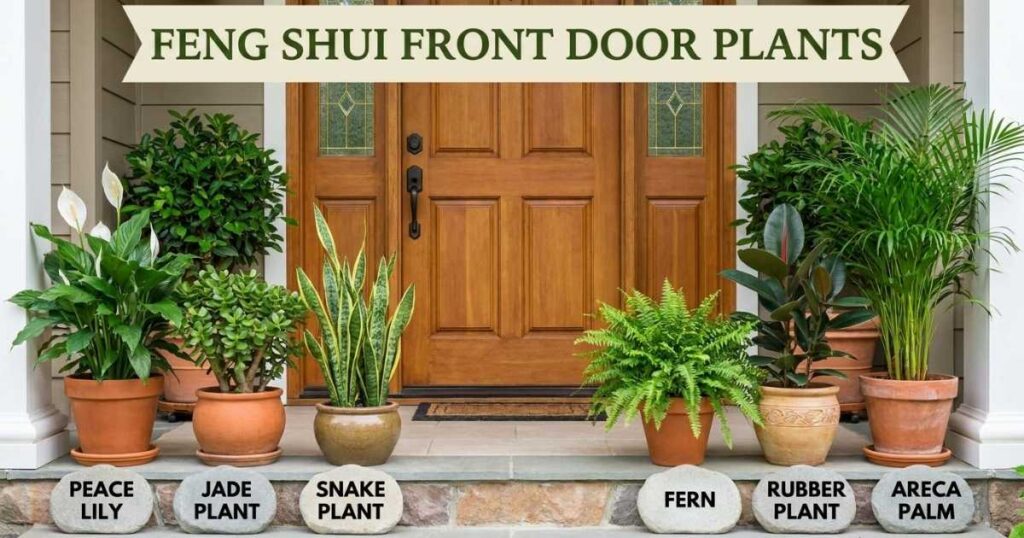
The front door is considered the mouth of chi, the main entry point for energy into a home. Plant choice here matters more than in almost any other spot.
- Jade Plant is one of the most recommended front door plants, symbolizing wealth entering the home.
- Money Tree placed just inside or beside the entrance is believed to invite prosperity.
- Marigolds in outdoor pots near the door are linked to positivity and protection.
- Snake Plant near the entryway is thought to guard against negative energy.
Avoid placing thorny plants like roses or cactus directly at the front door, since sharp energy at the entry point is believed to create tension for anyone entering.
Feng Shui Outdoor Plants
Outdoor plants shape the energy of a property before anyone even steps inside. Trees, shrubs, and garden layout all play a role.
Outdoor Plants That Bring Money And Good Luck
- Bamboo planted along a fence line is considered protective and prosperous.
- Citrus trees, especially those bearing fruit, symbolize abundance in outdoor spaces.
- Pine trees represent longevity and resilience due to staying green year-round.
- Peony bushes are linked to honor and prosperity in garden settings.
Balcony And Patio Plant Placement
- Group plants in odd numbers, such as three or five, for balanced energy.
- Keep balcony plants trimmed and healthy, since visible dead leaves from outside can signal neglect.
- Place taller plants toward the back of a balcony and smaller ones toward the front for a layered, welcoming look.
Feng Shui Garden Plants
- Willow trees are valued for their flexibility, symbolizing the ability to bend without breaking.
- Cherry blossom trees represent new beginnings and are often planted near entry paths.
- Rosemary bushes near a garden edge are believed to offer protection to the household.
Indoor Feng Shui Plants
Indoor plants generally focus on air quality, softness, and steady growth rather than the bold symbolism used outdoors.
- Rubber Plant is prized for large, glossy leaves that reflect the round-leaf wealth principle.
- Ficus Tree brings height and stability to a living room corner.
- Spider Plant is a strong indoor purifier and extremely forgiving for beginners.
- African Violet adds soft color indoors without overwhelming a room’s energy.
Indoor plants should be rotated occasionally toward light sources to keep growth even, since lopsided growth is seen as a sign of imbalance.
Plants To Avoid Or Use Carefully In Feng Shui
Some plants are traditionally avoided altogether, while others simply need thoughtful placement.
| Plant | Concern | Better Use |
| Cactus | Sharp, spiky leaves create cutting energy | Place outdoors, away from seating |
| Dried or artificial flowers | Symbolize stagnant, lifeless energy | Avoid indoors entirely |
| Bonsai | Restricted growth may symbolize suppression | Use sparingly, not in bedrooms |
| Roses (thorny stems) | Thorns near entry points create tension | Keep outdoors or trim thorns |
| Weeping Fig near seating | Can drop leaves, symbolizing loss | Place in open corners only |
If a plant on this list is a favorite, it does not need to be removed entirely. Adjusting its placement, such as moving a cactus outdoors, resolves most concerns.
Feng Shui Plant Care Rules
A neglected plant works against feng shui principles, regardless of species. These rules apply across almost every plant on this list.
- Remove yellow or dead leaves as soon as they appear.
- Dust leaves regularly so the plant can properly absorb light.
- Replace a plant that is consistently dying rather than letting it linger in poor health.
- Water according to the specific plant’s needs rather than a fixed schedule, since overwatering is a common cause of decline.
- Repot when roots become visibly crowded, as restricted growth is seen as blocked energy.
Healthy, consistent care matters more than owning a large number of plants. One thriving plant outperforms five struggling ones in feng shui terms.
Feng Shui And Pet Safety
Many popular feng shui plants are toxic to cats and dogs if chewed or ingested. Safety should be checked before placement in pet-accessible areas.
| Plant | Pet Safe |
| Money Tree (Pachira) | Yes |
| Areca Palm | Yes |
| Spider Plant | Yes |
| Boston Fern | Yes |
| Jade Plant | No |
| Peace Lily | No |
| Lucky Bamboo | Mildly toxic |
| Aloe Vera | No |
If pets have access to a room, choose from the pet safe column or place toxic plants on high shelves that are out of reach.
Best Feng Shui By Need
Different households have different priorities. Use these quick picks based on your specific situation.
Best For Beginners
Spider Plant, Snake Plant, and Golden Pothos are nearly impossible to kill and forgive irregular watering, making them ideal starting points.
Best For Low Light
Snake Plant, Peace Lily, and ZZ Plant tolerate low natural light better than most other feng shui options.
Best For Small Apartments
Lucky Bamboo, small Jade Plants, and succulents fit compact spaces without overwhelming a small room.
Best For Pet Conscious Homes
Money Tree, Areca Palm, and Spider Plant are both feng shui friendly and non-toxic to cats and dogs.
Best For Renters
Potted plants like Money Tree, Jade Plant, and Lucky Bamboo require no permanent changes and move easily between homes.
Best For Busy Homes
Snake Plant and ZZ Plant survive weeks of inconsistent watering, making them ideal for unpredictable schedules.
Common Mistakes With Feng Shui
Even well-intentioned plant choices can backfire if a few common mistakes are ignored.
- Overcrowding a room with too many plants, which creates clutter instead of flow.
- Ignoring dead leaves, letting decay sit visibly in the home for extended periods.
- Placing plants purely by trend without checking if the space actually has enough light for that species.
- Using artificial plants in wealth corners, since fake greenery is considered lifeless energy.
- Forgetting pet safety, leading to toxic plants placed within reach of curious animals.
Avoiding these mistakes matters more than memorizing every symbolic rule, since a healthy, well-placed plant will always outperform a symbolically perfect but neglected one.
How To Choose The Right Feng Shui Plant?
Selecting a plant comes down to three practical questions before symbolism even enters the picture.
- What is the light like in the space? Match the plant to actual conditions, not wishful thinking.
- What is the goal? Wealth, calm, protection, and romance all call for different plants.
- Are pets or children in the home? Toxicity should never be an afterthought.
Once these three questions are answered, use the tables in this guide to narrow down a final choice. A plant that thrives in your specific home will always deliver better feng shui results than one chosen for symbolism alone.
Frequently Asked Questions
What is the luckiest plant for feng shui?
Lucky Bamboo is widely considered the luckiest feng shui plant. Its stalk count can be adjusted to target specific goals like wealth or health.
Where should I place a money plant for wealth?
Place a money plant in the southeast corner of your home or office. This zone is considered the wealth area in Bagua feng shui mapping.
Can feng shui plants be fake or artificial?
No, artificial plants are generally avoided in feng shui. They are considered lifeless and do not support active energy flow.
Are feng shui plants safe for cats and dogs?
Not all of them. Money Tree, Areca Palm, and Spider Plant are pet safe, while Jade Plant and Peace Lily are toxic to pets.
How many lucky bamboo stalks should I get?
Choose based on your goal: 3 stalks for happiness, 8 for wealth, and 9 for overall luck. Avoid 4 stalks entirely.
Can I keep a cactus for feng shui?
Cactus plants are best kept outdoors due to their spiky leaves. Indoors, they are generally avoided near seating or entry points.
What feng shui plant is best for a bedroom?
Peace Lily and Snake Plant are top bedroom choices. Snake Plant also releases oxygen at night, supporting restful sleep.
Final Thoughts
Feng shui plants work best when chosen with intention, not impulse. A single healthy Jade Plant by the door does more for a home’s energy than five plants bought on a whim and left to wilt.
Start small. Pick one or two plants tied to a clear goal, place them correctly, and care for them consistently. The energy follows the effort.